Mostrando postagens com marcador animais congelados. Mostrar todas as postagens

domingo, 23 de fevereiro de 2020

Frozen Bird Found in Siberia is 46,000 Years Old

This 46,000-year-old 'ice bird' was so well preserved that fossil hunters mistook it for an unfortunate creature that 'died yesterday' - only to realise they had found the first ever Ice Age bird specimen CREDIT: Valeri Plotnikov /Kennedy News

Fossil hunters find 'ice bird' from 46,000 years ago that looks like it died 'yesterday'

Scientists have recovered DNA from a well-preserved horned lark found in Siberian permafrost. The results can contribute to explaining the evolution of sub species, as well as how the mammoth steppe transformed into tundra, forest and steppe biomes at the end of the last Ice Age.

In 2018, a well-preserved frozen bird was found in the ground in the Belaya Gora area of north-eastern Siberia. Researchers at the Centre for Palaeogenetics, a new research center at Stockholm University and the Swedish Museum of Natural History, haves studied the bird and the results are now published in the scientific journal Communications Biology. The analyses reveals that the bird is a 46,000-year-old female horned lark.

"Not only can we identify the bird as a horned lark. The genetic analysis also suggests that the bird belonged to a population that was a joint ancestor of two sub species of horned lark living today, one in Siberia, and one in the steppe in Mongolia. This helps us understand how the diversity of sub species evolves," says Nicolas Dussex, researcher at the Department of Zoology at Stockholm University.


The result has significance on another level as well. During the last Ice Age, the mammoth steppe spread out over northern Europe and Asia. The steppe was home to now extinct species such as the woolly mammoth and the woolly rhinoceros.

According to one theory, this ecosystem was a mosaic of habitats such as steppe, tundra and coniferous forest. At the end of the last Ice Age, the mammoth steppe was divided into the biotopes we know today -- tundra in the north, taiga in the middle and steppe in the south.

"Our results support this theory since the diversification of the horned lark into these sub species seems to have happened about at the same time as the mammoth steppe disappeared," says Love Dalén, Professor at the Swedish Museum of Natural History and research leader at the Centre for Palaeogenetics.

In the slightly longer term the researchers´ ambition is to map the complete genome of the 46,000-year-old lark and compare it with the genomes from all sub species of horned larks.

"The new laboratory facilities and the intellectual environment at the Centre for Palaeogenetics will definitely be helpful in these analyses," says Love Dalén.

The researchers at the Centre for Palaeogenetics have access to plenty of samples from similar findings from the same site in Siberia, including the 18,000-year-old puppy called "Dogor" which the researchers are are studying to determine if it is a wolf or a dog. Other findings include the 50,000-year-old cave lion cub "Spartak" and a partially preserved woolly mammoth.


The above story is based on Materials provided by Stockholm University.

sábado, 15 de junho de 2019

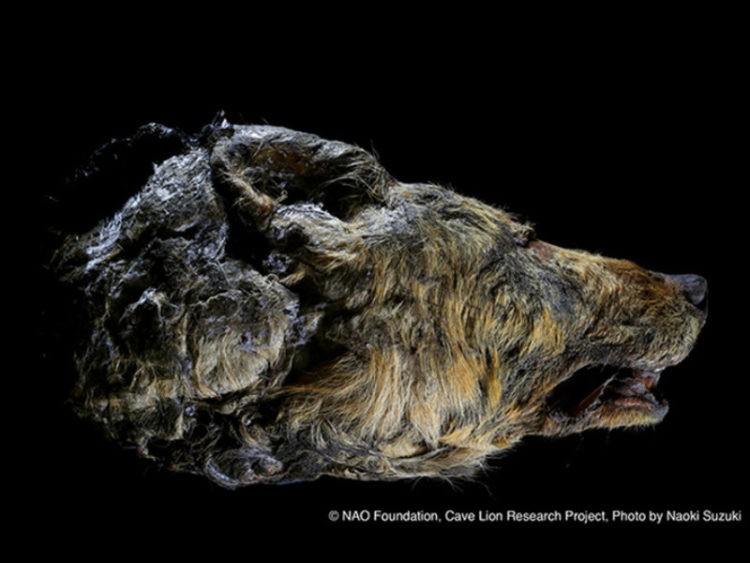
Cabeça de lobo de 32.000 anos perfeitamente preservada encontrada no permafrost siberiano

A cabeça está tão preservada que há a possibilidade de extrair DNA viável do animal.
Redação4 horas atrásFoto: Dr. Tori Herridge/Reprodução do Twitter
 
Preservado pelo permafrost da região, ou “solo permanentemente congelado”, por cerca de 32.000 anos, o espécime é a primeira carcaça parcial de um lobo adulto da estepe do Pleistoceno – uma linhagem extinta distinta dos lobos modernos – jamais encontrada.

Relatada pela primeira vez no Siberian Times, a descoberta irá ajudar os pesquisadores a entender melhor os lobos da estepe em relação aos seus colegas contemporâneos, bem como por que a espécie acabou se extinguindo.

O lobo em questão estava totalmente crescido, provavelmente entre 2 e 4 anos de idade, no momento de sua morte. Embora fotografias da cabeça decepada, ainda ostentando tufos de pelo, presas e focinho bem preservados, coloquem seu tamanho em 15,7 polegadas de comprimento – a cabeça do moderno lobo cinza, em comparação, mede 9,1 a 11 polegadas – Love Dalén, geneticista evolucionista no Museu Sueco de História Natural, que estava filmando um documentário na Sibéria, quando o caçador de bolotas chegou ao local com a cabeça a reboque, diz que relatos da mídia divulgando a descoberta como um “lobo gigante” são imprecisos.

Segundo a CNN, uma equipe russa liderada por Albert Protopopov, da Academia de Ciências da República de Sakha, está atualmente construindo um modelo digital do cérebro do animal e do interior de seu crânio.

LEIA TAMBÉM: Dinossauro “mumificado” de 100 milhões de anos descoberto

David Stanton, pesquisador do Museu Sueco de História Natural que lidera a análise genética dos restos mortais, disse à revista Smithsonian que, dado o estado de conservação da cabeça, ele e seus colegas estão esperançosos de que possam extrair DNA viável e usá-lo para sequenciar o genoma do lobo. Este trabalho, que deverá durar pelo menos mais um ano, será publicado em um periódico científico revisado por pares.

Por enquanto, ainda não está claro exatamente como a cabeça do lobo se separou do resto de seu corpo. Contudo, há evidências de que ela pode ter sido cortada por seres humanos. Porém, ainda é cedo para chegar a uma conclusão. Alguns pesquisadores ainda não acham as evidências disponíveis tão convincentes.
Foto reprodução.
Os lobos das estepes eram um pouco maiores e mais robustos que os lobos modernos. Eles tinham uma mandíbula grande e forte, equipada para caçar grandes herbívoros como mamutes e rinocerontes, e foi extinto entre 20.000 e 30.000 anos atrás, ou mais ou menos na época em que os lobos modernos chegaram ao local.

Se os pesquisadores conseguirem extrair o DNA da cabeça do lobo, eles tentarão usá-lo para determinar se os antigos lobos acasalaram com os modernos, quão inatas eram as espécies mais antigas e se a linhagem teve – ou não – adaptações genéticas que contribuíram para sua morte.
FONTE: A Perfectly Preserved 32,000-Year-Old Wolf Head Was Found in Siberian Permafrost [Smithsonian]