Mostrando postagens com marcador Archaebacteria. Mostrar todas as postagens

terça-feira, 2 de maio de 2023


Sistema de três domínios

Como a vida biológica é classificada

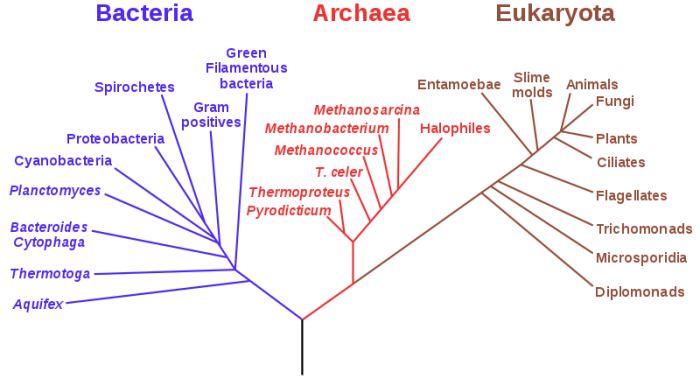
Árvore da Vida

O Sistema de Três Domínios , desenvolvido por Carl Woese em 1990, é um sistema para classificar organismos biológicos.

Antes da descoberta de Woese de archaea como distinta das bactérias em 1977, os cientistas acreditavam que havia apenas dois tipos de vida: eukarya e bactérias.

A classificação mais alta usada anteriormente era "reino", com base no sistema dos Cinco Reinos adotado no final dos anos 1960. Este modelo de sistema de classificação é baseado em princípios desenvolvidos pelo cientista sueco Carolus Linnaeus , cujo sistema hierárquico agrupa organismos com base em características físicas comuns.


O Sistema Atual

À medida que os cientistas aprendem mais sobre os organismos, os sistemas de classificação mudam. O sequenciamento genético deu aos pesquisadores uma maneira totalmente nova de analisar as relações entre os organismos.

O atual sistema de três domínios agrupa organismos principalmente com base nas diferenças na estrutura do RNA ribossômico (rRNA). O RNA ribossômico é um bloco de construção molecular para os ribossomos .

Sob este sistema, os organismos são classificados em três domínios e seis reinos . Os domínios são

  • Archaea
  • Bactérias
  • Eukarya

Os reinos são

  • Archaebacteria (bactérias antigas)
  • Eubactérias (bactérias verdadeiras)
  • Protista
  • fungos
  • Plantae
  • Animalia

Domínio Archaea

Este domínio Archaea contém organismos unicelulares. Archaea tem genes que são semelhantes a bactérias e eucariontes. Por serem muito semelhantes às bactérias na aparência, foram originalmente confundidos com bactérias.

Como as bactérias, as archaea são organismos procarióticos e não possuem um núcleo ligado à membrana . Eles também não possuem organelas celulares internas e muitos são aproximadamente do mesmo tamanho e de forma semelhante às bactérias. Archaea se reproduzem por fissão binária, têm um cromossomo circular e usam flagelos para se movimentar em seu ambiente, assim como as bactérias.

As archaea diferem das bactérias na composição da parede celular e diferem tanto das bactérias quanto dos eucariotos na composição da membrana e no tipo de rRNA. Essas diferenças são substanciais o suficiente para garantir que archaea tenha um domínio separado.

Archaea são organismos extremos que vivem sob algumas das condições ambientais mais extremas. Isso inclui fontes hidrotermais, fontes ácidas e sob o gelo do Ártico. Archaea são divididos em três filos principais: Crenarchaeota , Euryarchaeota e Korarchaeota .

  • Crenarchaeota inclui muitos organismos que são hipertermófilos e termoacidófilos. Essas archaea prosperam em ambientes com grandes extremos de temperatura (hipertermófilos) e em ambientes extremamente quentes e ácidos (termoacidófilos).
  • Archaea conhecidas como metanogênicas são do filo Euryarchaeota . Eles produzem metano como um subproduto do metabolismo e requerem um ambiente livre de oxigênio.
  • Pouco se sabe sobre Korarchaeota archaea, pois poucas espécies foram encontradas vivendo em locais como fontes termais, fontes hidrotermais e piscinas de obsidiana.

Domínio Bacteria

As bactérias são classificadas no Domínio Bacteria. Esses organismos geralmente são temidos porque alguns são patogênicos e capazes de causar doenças.

No entanto, as bactérias são essenciais para a vida, pois algumas fazem parte da microbiota humana . Essas bactérias desempenham funções vitais, como nos permitir digerir e absorver adequadamente os nutrientes dos alimentos que ingerimos. As bactérias que vivem na pele impedem que micróbios patogênicos colonizem a área e também auxiliam na ativação do sistema imunológico .

As bactérias também são importantes para a reciclagem de nutrientes no ecossistema global, pois são decompositores primários.

As bactérias têm uma composição única da parede celular e um tipo de rRNA. Eles são agrupados em cinco categorias principais:

  • Proteobactérias: Este filo contém o maior grupo de bactérias e inclui E.coli, Salmonella , Heliobacter pylori e Vibrio. bactérias.
  • Cianobactérias: Estas bactérias são capazes de fotossíntese . Eles também são conhecidos como algas verde-azuladas por causa de sua cor.
  • Firmicutes: Essas bactérias gram-positivas incluem Clostridium , Bacillus e micoplasmas (bactérias sem paredes celulares).
  • Chlamydiae: Essas bactérias parasitas se reproduzem dentro das células do hospedeiro. Os organismos incluem Chlamydia trachomatis (causa DST por clamídia) e Chlamydophila pneumoniae (causa pneumonia ).
  • Espiroquetas: Estas bactérias em forma de saca-rolhas exibem um movimento de torção único. Exemplos incluem Borrelia burgdorferi (causa a doença de Lyme) e Treponema pallidum (causa sífilis).

Domínio Eukarya

O domínio Eukarya inclui eucariotos ou organismos que possuem um núcleo ligado à membrana.

Este domínio é ainda subdividido nos reinos

Os eucariotos têm rRNA que é distinto de bactérias e archaeas. Organismos vegetais e fungos contêm paredes celulares que são diferentes em composição das bactérias. As células eucarióticas são tipicamente resistentes a antibióticos antibacterianos .

Organismos neste domínio incluem protistas, fungos, plantas e animais. Exemplos incluem algas , amebas , fungos, bolores, leveduras, samambaias, musgos, plantas com flores , esponjas, insetos e mamíferos .

Comparação de Sistemas de Classificação

Os sistemas de classificação de organismos mudam com novas descobertas feitas ao longo do tempo. Os sistemas mais antigos reconheciam apenas dois reinos (planta e animal). O atual Sistema de Três Domínios é o melhor sistema organizacional que temos agora, mas à medida que novas informações são obtidas, um sistema diferente para classificar organismos pode ser desenvolvido posteriormente.

Aqui está como o Sistema dos Cinco Reinos se compara ao Sistema dos Três Domínios, que tem seis reinos:

Sistema dos Cinco Reinos:

  • Monera
  • Protista
  • fungos
  • Plantae
  • Animalia

Domínio ArchaeaDomínio BactériasDomínio Eukarya
Reino ArchaebacteriaReino EubacteriaReino Protista
reino dos fungos
Reino Plantae
Reino Animalia

quarta-feira, 2 de janeiro de 2019

Archaebacteria: Definition And Examples

Archaebacteria are similar in form to bacteria, but they are different from the normal bacteria that biologists often study. In fact, the differences between regular bacteria and archaebacteria are so great that they are classified apart from other forms of life and have challenged the way scientists classify life into different kingdoms.

Though archaebacteria and a regular bacteria were once considered part of the same kingdom, molecular biology and genetics have shown that these prokaryotic organisms have many unique features that merit their own branch on the phylogenetic tree of life.
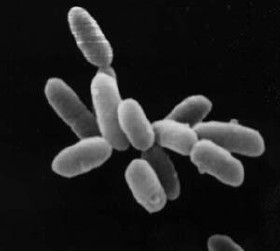
Halobacteria, an example of archaea. Photo: By NASA – en:Image:Halobacteria.jpg(Taken from [1]), Public Domain, https://commons.wikimedia.org/w/index.php?curid=2979987
Some texts will refer to these organisms as archaea rather than archaebacteria, to make the distinction between them and bacteria more clear, and there is some disagreement about the exact terms used to classify archaea – whether or not they should be called archaea or archaebacteria. This article will use the terms interchangeably.

The Classification Of Archaea

Photo: Sting via Wikimedia Commons, Public Domain
One of the ways that scientists categorize life forms is by dividing them into different kingdoms, which are based on the cell structure of the organism. The different kingdoms include Fungi, Planitia, Animalia, Protista, and Monera. The kingdom Protista contained single-celled eukaryotic organisms while the kingdom Monera was believed to encompass all different varieties of prokaryotic organisms.

However, biochemical and genetic studies of bacteria have shown that certain types of prokaryotes, those referred to as a “archaebacteria”, have unique biochemistry that places them on their own section of the tree of life. The name of archaebacteria comes from the root “archaea”: meaning “ancient”, which reflects the hypothesis that modern archaebacteria have descended from ancient populations of bacteria which evolved to thrive in the sulfur-rich, high-temperature environments surrounding deep-sea vents.

Due to advances in biochemistry and genetics, the phylogenetic tree of life contains a new order of classification, the concept of domains. Domains encompass an even larger section of life than kingdoms do. Under the system of domains, all eukaryotic organisms including protists, fungi, plants, and animals are considered part of the Eukaryota domain. Meanwhile, most bacteria fall under the domain “eubacteria“. Finally, the domain of “archaea” belongs entirely to archaea/archaebacteria.

Archaebacteria Theories

The study of the unique biochemistry possessed by archaebacteria could give researchers more insight into how life worked during ancient, primordial times. Some scientists hypothesize that archaebacteria such as the bacteria Thermoplasma could be the predecessors of the nuclei found within the cells of eukaryotes, having evolved into nuclei through a process known as endosymbiosis.
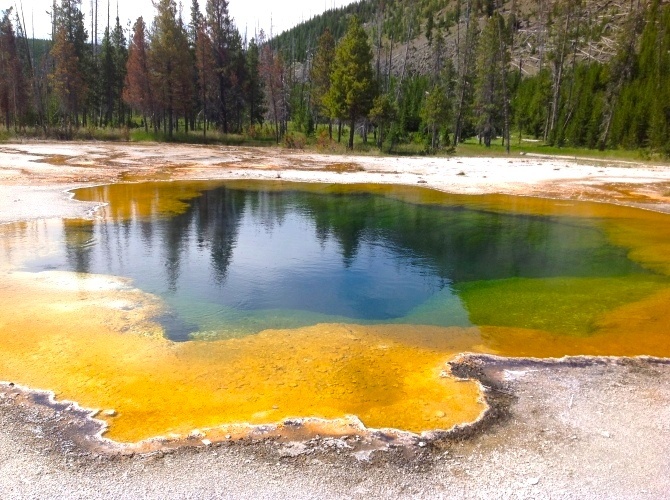
Archaea are often found in hot springs as well as around hydrothermal vents. Photo: ZYjacklin via Wikimedia Commons, Public Domain
Archaea have the ability to not only survive, but thrive, in environments most other organisms would not be able to live in. These include high-temperature environments, highly acidic environments, and high salt environments. The bacteria can potentially survive temperatures as high as 190°F, and substances with acidity as high as 0.9 pH.

Beyond this, archaebacteria engage in horizontal gene transfer quite frequently. Horizontal gene transfer is when one individual transfers a gene to another individual within the lifetimes of those individuals. This makes it difficult to precisely determine how closely archaebacteria cells are related to one another. In fact, it’s difficult to ascertain if the bacteria even have the kinds of stable traits that a biologist might typically use to classify a species. For this reason, archaebacteria have challenged the traditional methods of species classification.

Traits Of Archaebacteria

The ancient cells that comprise archaea/archaebacteria display a number of traits or attributes not present in more modern types of cells. Eukaryotes and regular bacteria have cell membranes composed of ester-linked phospholipids, but in the case of archaebacteria, their cell membranes are made out of ether-linked phospholipids. Archaea create their cell membranes with a sugar that is different from the peptidoglycan sugar which composes the cells of traditional bacteria, though the sugar used by archae is similar in composition.

While archaebacteria have a single round chromosome like regular bacteria, their method of genes transcription is different from that of most other bacteria. Rather, gene transcription in archaebacteria is more like the transcription that happens in eukaryotic cells. In other words, gene transcription methods are similar in between archaea and eukarya, and the creation of the cell membrane is most similar in bacteria and archaea. This strange reflection of gene transcription and cell membrane creation methods has led some biologists to theorize that the evolution of eukaryotic cells was driven by the fusion of bacteria and archaebacteria.

Archaea may have merged with a different form of bacteria at one point and began living inside that bacterial cell in an example of a symbiotic relationship, eventually transforming into the nuclei that are present in the cells of other organisms, the cells eukaryotes have today. An organism known as Lokiarcheota may be evidence of this evolutionary path, representing a transitional form between archaea and early eukaryotes.
Some archaebacteria are capable of surviving in conditions of extremely high salinity, which usually has a desiccating effect on cells, killing them. Halobacterium is an example of such salt-tolerant archaebacteria. Halobacterium has the pigment bacteriorhodopsin in it, which provides it with chemical energy and gives halobacterium a purple coloration. Bacteriorhodopsin also pushes protons to the outside of the cell membrane, and when the protons flow back into the cell they start the synthesis of ATP. The bacteriorhodopsin pigment is quite similar to rhodopsin, another pigment found in the retinas of vertebrates.
There are both aerobic and anaerobic species of archaea, and the bacteria can be found in extreme environments as well as in common environments like regular soil. Archaebacteria are capable of practicing anaerobic respiration, specifically a form of anaerobic respiration dubbed methanogenesis as it produces methane as a byproduct of respiration. Archaebacteria also utilize other forms of cellular respiration, but methanogenesis via cellular respiration is exclusive to archaebacteria. Bacteria and eukaryotic cells cannot carry out methanogenesis.
Finally, the ribosomal RNA of archaebacteria suggests that eukarya and bacteria split off from archaea in the far distant past.

Different Kinds Of Archaea

Archaebacteria are divided into three different types and are classified based upon how close they are to one another on the phylogenetic tree or their level of genetic relationship to one another. Each type of archaebacteria has its own unique features.

Crenarchaeota
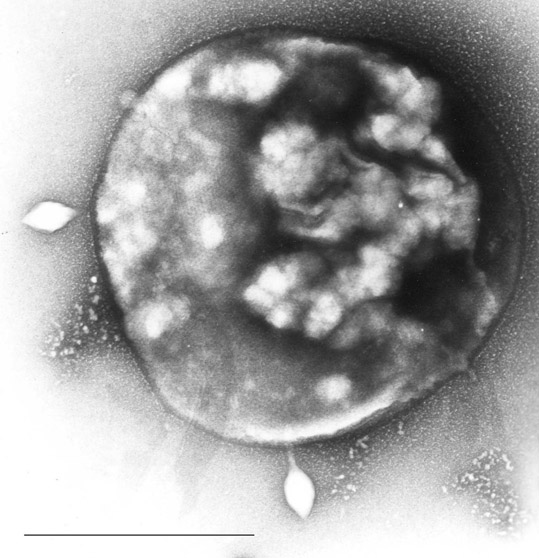
A Sulfolobus, a type of crenarchaeota, infected with an STSV-1 virus. Photo: By Xiangyux – English Wikipedia, Public Domain, https://commons.wikimedia.org/w/index.php?curid=1675914
The primary distinguishing characteristic of this type of archaebacteria is that it can survive at extremely high temperatures, temperatures as high as 230°F. Many species of this archaea have been found living near hydrothermal vents deep in the ocean, areas where magma emerging from beneath the crust of the Earth heats the water to extremely high temperatures. They have also been discovered in hot springs. Some theories regarding the origin of life hypothesized that deep-sea vents could have been the site where life first evolved, with the formation of the first cells occurring due to the unusual chemical interactions that occur at such high-temperature areas. This type of archaea is also capable of surviving in highly acidic environments.

Euryarchaeota

This type of archaea Is one of the previously mentioned types that can produce methane through cellular respiration, and they are the only lifeforms are known to use carbon as the electron acceptor when performing cellular respiration. This unique trait allows them to break down extremely complex carbon-based molecules, and it means that they fulfill an important ecological niche degrading carbon into methane and facilitating the carbon cycle of the earth. (Archaea may also play a role in the nitrogen cycle, as researchers have found some examples of marine archaea capable of carrying out nitrification.)

Methanogen archaea have been located in deep-sea sediment deposits, where they are responsible for producing isolated pockets of methane that lay beneath the floor of the ocean. They are also found in wetlands and marshes, and their chemical breakdown of carbon and production of methane is what accounts for the distinct smell associated with marshes, and for swamp gas. They are even found in the stomachs of other animals like cows, where they help the cow digest certain types of sugars that eukaryotic cells cannot digest.
Methanobacterium ruminatium is one example of the archaebacteria found in the digestive system of ruminating (mammals capable of getting nutrients from plant-food) animals. Humans even have some of these bacteria living within our digestive tract and they perform a similar function that cow archaebacteria do.

Korarchaeota

Korarchaeota are possibly the oldest type of archaea and therefore they could be the oldest organisms on the entire planet. Like the Crenarchaeota, they can be found near hydrothermal vents. They also share many genes with Crenarchaeota. In fact, Korarchaeota not only shares genes with Crenarchaeota, but they also share genes with Euryarcheaota. This implies that they could be a common ancestor close to Korarchaeota on the phylogenetic tree from which Crenarchaeota and Euryarcheaota descended. While Korarchaeota are amongst the oldest lifeforms on the planet, they are rather rarely found in nature apart from the selective niches of hot springs and deep-sea vents.