Mostrando postagens com marcador domesticação do cavalo. Mostrar todas as postagens

domingo, 7 de julho de 2019

O cavalo e a humanidade: Como os equinos ajudaram na construção da história

Ele já serviu de correio e meio de transporte. Ajudou a erguer e a afundar exércitos. Hoje virou esporte de luxo. Saiba como, carregando o homem em seu lombo, o cavalo ajudou a construir civilizações
Marcus Cabra - 07/07/2019
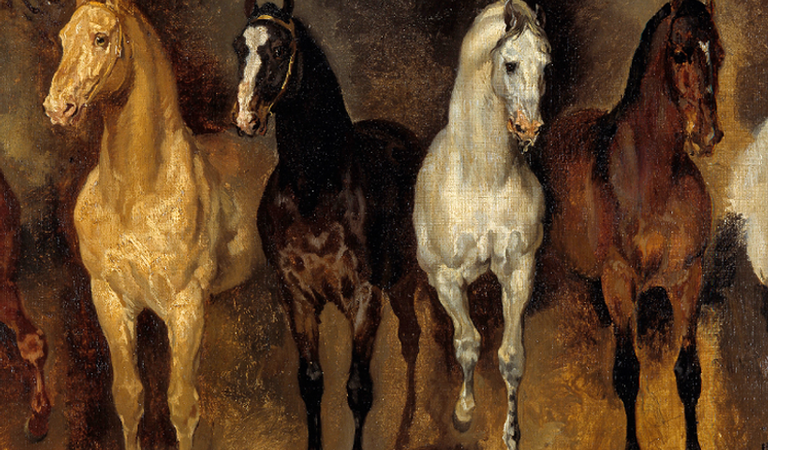
Pintura: Peito de sete cavalos por Theodore Gericault
Getty Images
A mitologia grega tem na imagem do centauro - metade homem, metade cavalo - um ser forte, inteligente e perigoso. Não era para menos. Deve ter sido aterrorizante para os gregos antigos, que nunca tinham visto uma pessoa montada naquele animal, enfrentar um bando de cavaleiros com arco e flecha invadindo seu território, saqueando riquezas e fugindo velozes. A figura do centauro provavelmente foi inspirada nos povos nômades da Ásia central, que começaram a atacar os assentamentos agrícolas no século 2 a.C. A destreza, a coordenação e a rapidez dos cavaleiros surpreenderam aquelas comunidades. Como era possível dominar um cavalo assim? Na verdade, o processo de domesticação foi demorado e não se sabe exatamente quando o homem começou a montar. Mas é certo que, a partir do momento em que isso aconteceu, surgiu uma nova forma de organização. Os cavalos passaram a ajudar na agricultura, a servir como meio de transporte e como armas de guerra, mudando a balança de poder entre as civilizações até a primeira metade do século 20 - quando as máquinas começaram a ser usadas nas batalhas. "Por meio do manejo do cavalo, o homem das estepes atingiu uma organização socioeconômica de grande sucesso. [...] Pastoreando os cavalos, os nômades administraram melhor os recursos disponíveis e evitaram as correrias desenfreadas que, frequentemente, terminavam com suas barrigas vazias", diz o pesquisador Bjarke Rink em Desvendando o Enigma do Centauro.
O cavalo existe há 55 milhões de anos. O gênero mais antigo de que se tem notícia é o Eohippus, que tinha a altura de um pônei e dedos nas patas. Há cerca de 3 milhões de anos surgiu a espécie Equus, ancestral do cavalo atual. Dotada de cascos, ela se espalhou por vários continentes. Uma das mais importantes características do cavalo - e que permitiu o sucesso de seu relacionamento com o homem - é que ele precisa de um líder. Sua capacidade, e mesmo vontade, de transferir lealdade determinou o reconhecimento do humano no lugar de outro equino como guia. E lá se foram juntos, homem e cavalo, rumo ao desenvolvimento das sociedades.
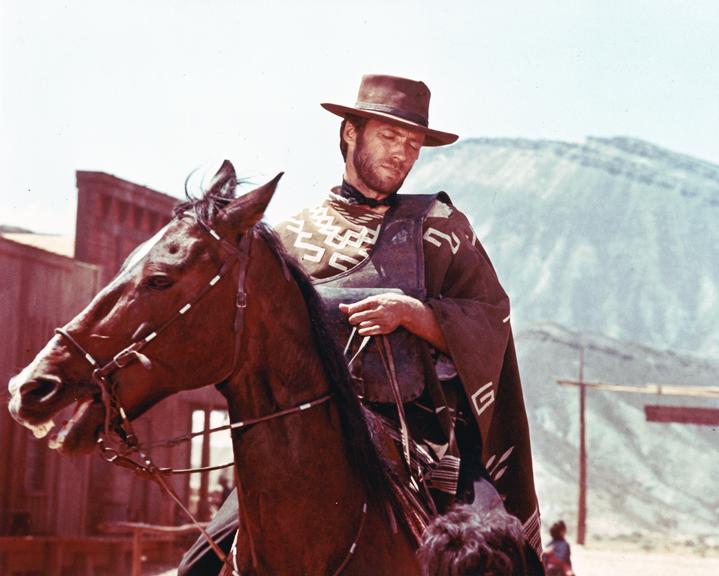
Clint Eastwood montado em um cavalo na série Spaghetti Westerns Getty Images
Entre as comunidades nômades que domesticaram o animal, os hunos se destacam. Eles podiam passar dias seguidos montados num cavalo. Até dormiam nas costas do animal, que servia de alimento, tração e transporte. O rei Átila devastou cidades inteiras, no século 5, com sua cavalaria.

Aos poucos, os demais povos aprenderam as habilidades equestres dos nômades. Ao conviver com o homem sedentário, o cavalo passou a ter outro papel, mais atrelado à vida econômica. As primeiras academias de equitação foram criadas na Idade Média, baseadas em técnicas violentas de conduta.

Invenções

"Todos os inventos europeus para economizar tempo foram inspirados no cavalo e na equitação, que acabaria lhe dando o domínio do mundo", escreveu Bjarke Rink. A nobreza do noroeste europeu foi responsável pela difusão do uso do cavalo numa rede de comunicação que depois se tranformaria nos correios. Até as calças foram inventadas para a equitação e depois adaptadas para o uso cotidiano. Nas cidades, os cavalos distribuíam todos os produtos agrícolas e manufaturados e ainda ofereciam locomoção para as viagens.

Quando a era das grandes navegações chegou, lá estavam eles. Para os nativos da América, os cavalos devem ter parecido monstros cruéis - o animal estava extinto na região. Os espanhóis tiraram vantagem disso e ajudaram a espalhar boatos de que os equinos eram bestas mágicas. Hernán Cortéz, que comandou a conquista do que é hoje o México, disse: "Próximo a Deus, devemos nossa vitória aos cavalos".

No Renascimento, Federico Grisone descobriu o que seria uma glória para a equitação clássica - e um alívio para os cavalos. Suas buscas em textos sobre os equinos renderam a descoberta do mais antigo texto sobre cavalaria, o Manual da Equitação, escrito pelo general grego Xenofonte, em 400 a.C. A obra, que tinha ficado desaparecida por 1 800 anos, oferece uma abordagem mais branda para o adestramento, sugerindo paciência e racionalidade no tratamento dos animais.

Os séculos 18 e 19 foram marcados por batalhas ferozes. O poder equestre de uma nação era decisivo. Montado, o guerreiro ficava maior, mais rápido e forte. "O papel mais importante de um cavalo numa batalha era fazer parte da cavalaria de frente. Essa operação, com centenas de milhares de cavalos emparelhados atacando o inimigo, era uma das mais apavorantes e temidas ações da história militar. Mil cavalos se movendo a 50 km/h é muito intimidador - além de fazer a terra tremer de verdade", afirma Louis DiMarco, autor de War Horse - The History of the Military Horse and Rider ("Cavalo de guerra, a história do cavalo militar e do cavaleiro",). A derrota de Napoleão em Waterloo (1815) foi um verdadeiro enfrentamento equestre. O general foi para o exílio e seu cavalo, Marengo, acabou incorporado às tropas britânicas.
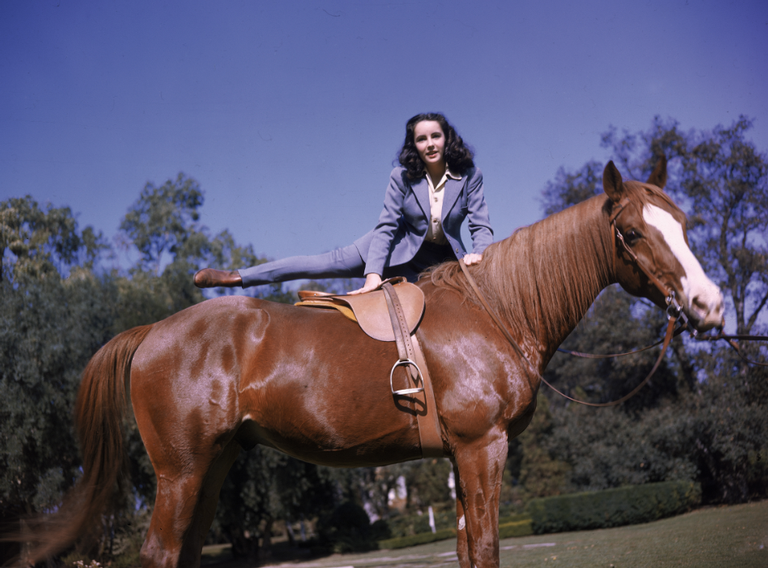
Elizabeth Taylor balança a perna por cima de um cavalo enquanto monta em 1947 Getty Images
Nos séculos 19 e início do 20, o mundo estava bem diferente. Mas, cada vez mais, o homem dependia do cavalo. As cidades modernas estavam cheias deles. Nos anos 1800, já havia congestionamentos nas ruas de Londres. A Revolução Industrial não poupou os animais. "No século 19, o ‘horse power’ fazia sozinho o que a energia elétrica, o petróleo e o biodiesel somados fariam no século 20", diz Rink. Em 1870, cerca de 300 patentes foram registradas nos Estados Unidos para maquinários que utilizavam cavalos. "Alguns usos eram bem exóticos. Por exemplo, em Nova York, existiam ferry-boats movidos a cavalos que giravam as rodas", afirma Clay McShane, autor de The Horse in the City: Living Machines in the Nineteenth Century ("O cavalo na cidade: máquinas vivas no século 19"). Em 1900, 130 mil cavalos trabalhavam em Manhattan (mais de dez vezes o número de táxis nas ruas da metrópole, hoje).

O excesso de estrume, urina e carcaças causava sérios problemas. "No pico do uso, Nova York tinha um cavalo para cada 26 pessoas. Se fosse a São Paulo atual, seriam necessários 428 mil cavalos para a cidade funcionar", diz Clay McShane.
Logo que os carros chegaram, era difícil acreditar que o animal seria substituído. Mesmo nos anos 1940. "Ninguém imaginava que tantos avanços tecnológicos em energia e transporte pudessem torná-lo dispensável", afirma Rink. Mas foi o que aconteceu. Hoje os cavalos estão praticamente restritos às zonas rurais e centros esportivos. No entanto, cresce seu uso em tratamentos terapêuticos e como ferramenta educacional para treinar liderança, por exemplo. O fato é que o cavalo já provou seu valor na Terra. E ainda faz isso, todos os dias.

Jogos equestres

Os esportes com cavalos são quase tão antigos quanto sua domesticação. A corrida foi a primeira competição equestre de que se tem notícia, em 644 a.C., na 31ª Olimpíada de Atenas. O poeta grego Homero descreveu na Ilíada as regras para esse jogo, dizendo que o primeiro prêmio seria uma mulher "versada nas prendas domésticas". Depois vieram o polo (de origem oriental), as justas, que imitavam guerras com equipes de laçadores, e o enduro, que simulava as grandes cavalgadas realizadas pelos mensageiros. Até hoje, no Afeganistão, se pratica um jogo criado pelos súditos de Átila, rei dos hunos. No Buz Kashi, 300 cavaleiros tentam agarrar um bezerro. O salto derivou da caça às raposas e foi oficializado como uma competição de obstáculos de altura em 1865, na Irlanda. Muitos reis praticaram esportes com cavalos e por muitos anos essas competições foram "assuntos da nobreza". Ainda hoje pode-se dizer que os esportes equestres exigem uma boa condição financeira. É custoso adquirir e manter um cavalo. Alguns garanhões reprodutores ou campeões mundiais podem valer dezenas de milhões de dólares.

quinta-feira, 10 de maio de 2018

A documentary reconstruction shows Botai riders, who may have galloped across Kazakhstan about 3500 B.C.E.
Niobe Thompson

These Asian hunter-gatherers may have been the first people to domesticate horses

Esses caçadores-coletores asiáticos podem ter sido os primeiros a domesticar cavalos

The horse revolutionized prehistoric living, allowing people to travel farther and faster than ever before, and to wage war in yet-unheard-of ways. But who first domesticated horses is a hotly debated question. One leading hypothesis suggests Bronze Age pastoralists called the Yamnaya were the first to saddle up, using their fleet transport to sweep out from the Eurasian steppe and spread their culture—and their genes—far and wide. But a new study of ancient DNA suggests that wasn’t the case in Asia, and that another culture, the Botai, domesticated the horse first.

“This is a really exciting paper,” says Priya Moorjani, a geneticist at the University of California, Berkeley, who notes that the field of ancient DNA is moving so quickly that every study reveals something new. Yet other researchers caution that the debate isn’t anywhere near settled.
The first signs of horse domestication—pottery containing traces of mares’ milk and horse teeth with telltale wear from a riding bit—come from the Botai hunter-gatherers who lived in what is now Kazakhstan from about 3700 B.C.E. to 3100 B.C.E. Yet some researchers thought the isolated Botai were unlikely to have invented horse husbandry because they kept to their hunting and gathering ways long after their neighbors had adopted farming and herding.

These researchers assumed the Botai must have learned to handle horses from the Yamnaya, their neighbors to the west who were already herding sheep and goats. As part of the “steppe hypothesis,” the Yamnaya also migrated east and west during the Bronze Age, mixing with locals and spreading genes found in ancient and modern European, Central Asian, and South Asian populations. Some researchers hypothesize that they also spread early branches of the hypothesized Proto-Indo-European (PIE) language, which later diversified into today’s Indo-European languages, including English, Italian, Hindi, Russian, and Persian.

To explore the Yamnaya’s legacy in Asia, a team led by geneticist Eske Willerslev of the University of Copenhagen and the University of Cambridge in the United Kingdom sequenced the whole genomes of 74 ancient Eurasians, most of whom lived between 3500 B.C.E. and 1500 B.C.E. Bodies included people from both the Botai and Yamnaya cultures, among others. The researchers devised a rough family tree, which they extended using samples from modern and ancient people.
Artifacts and DNA from skeletons in Central Asia suggest that horse domestication happened first in that region.
Nurbol Baimukhanov
Surprisingly, the team found no Yamnaya DNA in the three Botai individuals, suggesting the two groups hadn’t mixed, the team reports today in Science. That implies the Botai may have tamed horses on their own, following something called the “prey path” to domestication: hunting, then managing herds for food, and finally—riding. “It’s an extremely important achievement from a group of people we all think of as being pretty simple,” Willerslev says.

The new work fits well with a recent study of ancient horse DNA, says zooarchaeologist Sandra Olsen at the University of Kansas in Lawrence, a co-author on that study. Her work showed that Botai horses were not related to modern horses, hinting at separate domestications by the Botai and Yamnaya. Yet certain practices of the Botai—specifically the way in which they ritually buried slaughtered horses—are shared by other cultures in Asia, hinting that perhaps the hunter-gatherers weren’t as isolated as most have thought, she says.

Whatever happened in the early days of horse husbandry, it’s clear the Yamnaya took advantage of the beasts in ways the Botai never dreamt of. Beginning in the early Bronze Age, the pastoralists used their horses to migrate far and wide.

Traces of west Eurasian genes in Asian populations has been taken as evidence the Yamnaya left a large genetic legacy east of the steppe. Yet Willerslev’s team found little Yamnaya DNA in Central and South Asia—and none in Anatolia. Instead, their data suggest the Namazga, a group of herders living south of the steppe around 3300 B.C.E., before the great Yamnaya migration, were the ones who first contributed west Eurasian genes to Asian populations.

That lack of a genetic legacy may put leading theories for the spread of PIE at risk. The ancient people of Anatolia in modern Turkey, for example, likely spoke Hittite, a very early branch of PIE. But the lack of Yamnaya DNA among the Hittites suggests some other group brought Indo-European to the region—and to Central and South Asia.

The findings are impressive in some ways and frustrating in others, notes Paul Heggarty, a historical linguist at the Max Planck Institute for the Science of Human History in Jena, Germany. On the one hand, he credits the authors for reconsidering the origins of Hittite in light of the new data. “This is the first time I’ve seen people who have supported the steppe hypothesis … saying, ‘Look, it doesn’t work for Anatolia,’” Heggarty says. Other researchers should take the next step, he adds, and continue searching for the origins of PIE beyond the steppe.
Posted in:
doi:10.1126/science.aau1284

sexta-feira, 23 de fevereiro de 2018

Reconstructing the origin and spread of horse domestication in the Eurasian steppe

 Reconstruindo a origem e a propagação da domesticação de cavalos na estepe da Eurásia

Vera Warmuth, Anders Eriksson, Mim Ann Bower, Graeme Barker, Elizabeth Barrett, Bryan Kent Hanks, Shuicheng Li, David Lomitashvili, Maria Ochir-Goryaeva, Grigory V. Sizonov, Vasiliy Soyonov and Andrea Manica
  1. Edited by Francisco Mauro Salzano, Universidade Federal do Rio Grande do Sul, Porto Alegre, Brazil, and approved March 30, 2012 (received for review July 12, 2011)

Abstract

Despite decades of research across multiple disciplines, the early history of horse domestication remains poorly understood. On the basis of current evidence from archaeology, mitochondrial DNA, and Y-chromosomal sequencing, a number of different domestication scenarios have been proposed, ranging from the spread of domestic horses out of a restricted primary area of domestication to the domestication of numerous distinct wild horse populations. In this paper, we reconstruct both the population genetic structure of the extinct wild progenitor of domestic horses, Equus ferus, and the origin and spread of horse domestication in the Eurasian steppes by fitting a spatially explicit stepping-stone model to genotype data from >300 horses sampled across northern Eurasia. We find strong evidence for an expansion of E. ferus out of eastern Eurasia about 160 kya, likely reflecting the colonization of Eurasia by this species. Our best-fitting scenario further suggests that horse domestication originated in the western part of the Eurasian steppe and that domestic herds were repeatedly restocked with local wild horses as they spread out of this area. By showing that horse domestication was initiated in the western Eurasian steppe and that the spread of domestic herds across Eurasia involved extensive introgression from the wild, the scenario of horse domestication proposed here unites evidence from archaeology, mitochondrial DNA, and Y-chromosomal DNA.
The origin of horse domestication has been studied intensively for decades, yet the key question of whether horse domestication originated in a small number of geographically defined areas or whether numerous wild populations were domesticated independently remains unanswered. An increasing body of archaeological evidence points to an origin of horse domestication in the steppes of modern-day Ukraine and Kazakhstan (1) (see ref. 2 for review). However, there is as yet no corroborating molecular evidence for a geographically restricted origin of horse domestication anywhere in the Eurasian steppes, the main distribution area of wild horses at the time of domestication.
A related question concerns the spread of horse domestication across the Eurasian steppes: Did the spread of horse domestication involve actual movement of herds (“demic spread”), as appears to have been the case in most other domestic animal species (3)? Or was it primarily the knowledge of horse domestication techniques that spread, thus enabling pastoralist societies throughout the steppes to domesticate locally available wild stock? Whereas a demic spread of small herds of domestic horses out of a single, geographically restricted area has been put forward as one possible explanation for the observed low Y chromosome diversity in modern horses (4), the multiple-origins scenario is commonly invoked to account for the large number of female lineages in the domestic horse gene pool (2, 5, 6).
In this paper, we use a spatially and demographically explicit model, parameterized with autosomal genotype data from >300 horses, sampled in 12 localities distributed throughout northern Eurasia (Fig. 1A), to investigate the origin and spread of horse domestication. The model presented here allows us to distinguish between horse domestication in a single geographic area vs. multiple geographic areas, to pinpoint the geographic origin of domesticated horses in the former case, and to determine the relative roles of demic spread and recruitment of local wild stock in the spread of horse domestication.
Fig. 1.
Geographic distribution of sampling locations (country and administrative unit) and the model. (A) LTA, Lithuania, Vilnius; UKZ, Ukraine, Zakarpattia; UKL, Ukraine, Lviv; KAL, Russia, Kalmykia; GGA, Georgia, Samegrelo; KSW, Kazakhstan, Mangystau; KAR, Kazakhstan, Kyzylorda; KKA, Kazakhstan, Karagandy; KYR, Kyrgyzstan, Naryn; ALT, Russia, Altai Republic; CHA, China, Xinjiang; MGL, Mongolia, Övörkhangai. (B) Schematic representation of the linear stepping-stone model used in this study (see Materials and Methods for a detailed description of the parameters). Note that for illustrative purposes only five demes are shown. (C) Location of the three putative origins of E. ferus. (D) Locations of the four putative domestication origins.

Results

The wild progenitor of domestic horses, Equus ferus, is extinct; we therefore used a stepping-stone dynamic that allowed us to simultaneously reconstruct both the population genetic structure of E. ferus and that of its domestic descendants (see Fig. 1B for a diagrammatic representation of the model). We considered three population origins of E. ferus—western, central, and eastern Eurasia (Fig. 1C)—and combined each of the three wild horse origins with four putative origins of horse domestication (Fig. 1D), yielding a total of 12 combined scenarios. Depending on the choice of parameters, the model can cover a wide range of possibilities, spanning from populations having undergone range expansions to populations at migration–drift equilibrium. In the latter case, all three putative origins of E. ferus in Eurasia would be equally well supported. In this paper, we define domestication as a process whereby founder populations of domestic stock are established de novo and distinguish it from introgression as a process of restocking already domesticated herds with wild individuals.
For each of the 12 combined scenarios, we investigated a variety of population dynamics in both wild and domestic horse populations, as well as the full spectrum of possible modes of spread of domestication, ranging from a purely demic spread without wild horse introgression to numerous local domestications without population movements. In the latter case, all four putative domestication origins should fit the data equally well. We used an approximate Bayesian computation framework to determine the likelihood of each of the 12 scenarios by comparing the model predictions to the observed data (Fig. 1A and Table S1).
The scenarios positing an origin of E. ferus in eastern Eurasia received the strongest support, regardless of the assumed domestication origin (Fig. 2, red bars). This finding is in agreement with paleontological evidence suggesting that Pleistocene horse species, including E. ferus, originated in North America and migrated to Eurasia via the Bering land bridge (7). Of the four domestication scenarios assuming an origin of E. ferus in eastern Eurasia, the scenario proposing a domestication origin in western central Eurasia received the strongest support (Fig. 2). Western central Eurasia, as defined here, comprises the steppes of modern-day Ukraine and northwest Kazakhstan, where some of the earliest archaeological evidence for managed horse populations has been found (1, 2, 8); here we provide additional evidence for the importance of this region as a primary area of horse domestication.
Fig. 2.
Bayes factors for 12 scenarios describing the origin of the wild progenitor of domestic horses, Equus ferus, and the origin of horse domestication in Eurasia. Bayes factors are relative to the best-supported scenario, which posits an origin of E. ferus in eastern Eurasia and a domestication origin in western central Eurasia. The scenarios are grouped by domestication origin and colored by the origin of E. ferus.
It should be noted that our dataset does not include populations west of Ukraine. Horses in central and western Europe tend to either belong to a specific recognized breed or be considerably breed admixed. Unfortunately, the modeling framework used here is not well suited to deal with the complex demographic histories experienced by horse populations in central and western Europe; the role of these areas in horse domestication can therefore not be confidently established here. Whereas central Europe is unlikely to have played an important role in horse domestication due to a lack of suitable wild horse habitat (9), there is increasing evidence that horse domestication may have also occurred in the Iberian Peninsula (9, 10).
Next, we explored the demographic details of the most strongly supported scenario, which posits an expansion of E. ferus out of eastern Eurasia and a domestication origin in western central Eurasia. The parameter combinations that best fitted the data strongly suggest that the expansion of E. ferus occurred ∼160 kya (Fig. 3A). Although the credibility interval (CI) for this date is relatively wide (95% CI: 51–180 kya; Table S2), our estimate is very similar to the estimated age of 130–160 kya for the common maternal ancestor of modern domestic horses (10).

The scenario of an expansion of E. ferus out of eastern Eurasia ∼160 kya is furthermore consistent with paleontological data indicating that E. ferus first appeared in East Asia ∼200 kya (7). Thus, the expansion captured by our model likely reflects the colonization of Eurasia by this species. Our results further suggest that this expansion was characterized by relatively strong founder effects (small cK, Fig. 3B), large effective population sizes (K, Fig. 3C), and a rate of spread in the order of ∼100 km in 240 y (growth rate r = 0.05, Fig. 3D). Due to the early date of this expansion, a wide range of migration rates in wild horses are consistent with the data (mK, Fig. 3E).
Fig. 3.
Posterior distributions of demographic parameters for wild and domestic populations estimated through ABC analysis. (A) Timing (t) of the expansion of E. ferus out of eastern Eurasia. (B) Effective founder population sizes of the wild horse (cK, red line), the first domestic population (cd0Kd, blue dashed line), and subsequent domestic populations (cdKd, blue solid line). (C) Carrying capacity (effective population sizes) of the ancestral (K0, dashed red line), wild (K, solid red line), and domestic populations (Kd, blue line). (D) Growth rate, r, of wild horse populations. (E) Migration rates in wild (mK, red line), and domestic populations (mdKd, blue line). (F) The proportion of domestic (q) and wild (1 − q) horses in domestic horse founder populations as a function of their effective size, cdKd.
Both the scenario postulating a purely demic spread (q = 1) and the one postulating a spread based solely on local recruitment (q = 0) are outside the 95% credibility interval for q (the proportion of already domesticated horses in the founding population of subsequent domestic populations; Table S2), suggesting that the spread of horse domestication out of western central Eurasia involved both actual population movement and introgression from the wild.

The best-supported values of q ranged between 0.2 and 0.7 (Fig. 3F), suggesting that both mechanisms were approximately equally important. The demography of horses changed markedly following domestication. Compared with the expansion of E. ferus, the spread of domestic horses was characterized by weaker founder effects (larger cdKd in Fig. 3B) and smaller effective sizes of established populations (Kd, Fig. 3C). We obtained strong support for high migration rates between domestic populations (mdKd, Fig. 3E), consistent with the increased mobility of human societies following horse domestication.

Discussion

Previous research into the origin of horse domestication has led to different, sometimes contradictory, conclusions regarding the number of domestication origins and the mode of spread of horse domestication. Here we provide additional support for an origin of horse domestication in a geographically defined area in the western Eurasian steppe as suggested by archaeology (1, 2). We furthermore show that the spread of horse domestication out of the western Eurasian steppe was characterized by high levels of introgression from local wild populations. In light of the exceptionally high levels of matrilineal diversity in horses (e.g., ref. 11), we suggest that introgression from the wild was mainly female mediated. The repeated capture of wild females for the purpose of maintaining or growing domestic herd sizes may seem counterintuitive, given that in other domestic animal species, introgression from the wild typically involved domestic females being impregnated by wild males (12).


However, given the initial difficulties in breeding the most closely related wild relative of domestic horses, Przewalski’s horse, in captivity (13), it can be speculated that, for an indeterminate amount of time, herd sizes could not be maintained solely through breeding existing stock (14). Because stallions are inherently more difficult to handle than mares, the easiest way to maintain or grow herd sizes would have been to restock existing herds with wild females. Whereas the high levels of diversity and limited geographic structure in the horse mitochondrial genome (11) may thus reflect the continued augmentation of domestic herds with wild mares from a wide geographic area, the observed low levels of Y chromosome variability (15) might reflect the strong domestication bottleneck in western central Eurasia (low cd0Kd, Fig. 3B) (4). Additional losses of patrilineal diversity may have occurred as a consequence of successive bottlenecks as domestic herds spread out of the western steppes (4) and of breeding practices reducing the effective size of the male gene pool (16).
The geographic pattern of within- and between-population heterozygosity observed in contemporary horses from the Eurasian steppes reflects the combined effects of an east-to-west expansion of E. ferus and repeated introgression of local wild animals into spreading domestic herds. The expansion of E. ferus out of eastern Eurasia set up an isolation-by-distance pattern (off-diagonal elements in Fig. S1A) and a weak east-to-west decline in within-population genetic diversity (on-diagonal elements in Fig. S1A). The pattern of isolation-by-distance has been preserved in modern Eurasian steppe horses (off-diagonal elements in Fig. S1B) due to extensive backcrossing of domestic herds to wild populations from across the steppes. The demic spread of domestic horses out of western central Eurasia, combined with the continued genetic input from local wild populations, has resulted in an accentuation of the original east-to-west decline in within-population genetic diversity (on-diagonal elements in Fig. S1B) because hybridization involved increasingly genetically differentiated populations. Whereas migration rates in domestic horses were found to be high (Fig. 3E), the relatively recent occurrence of horse domestication (from ∼5.5 kya) (1, 17) means that there has not been enough time for increased population movements to obscure the genetic signature of the initial colonization process on large geographic scales, an observation that also holds true for other species (1820), including humans (21, 22).
In the past decade, spatially explicit models have successfully been used to unravel complex demographic scenarios in the context of the spread of agricultural practices. Using a modified wave-of-advance model, Ackland et al. (23) identified the factors influencing the hitchhiking of cultural traits alongside beneficial subsistence technologies in heterogeneous landscapes. Itan et al. (24) used a demic computer model to trace the spread of lactase persistence and therefore dairying in Europe. More recently, Van Etten and Hijmans (25) used a landscape model, parameterized with archaeobotanical and genetic data, to trace the origin and routes of spread of maize in the Americas. In this paper, the combined use of autosomal markers and spatially explicit modeling has allowed us to reconstruct the population genetic structure of the extinct wild ancestor of domestic horses and to unravel the complex processes involved in horse domestication. The scenario of horse domestication proposed here unites evidence from archaeology, mtDNA, and Y-chromosomal sequence data that has previously given rise to conflicting scenarios.

Materials and Methods

Sample Collection and DNA Analysis.

Our dataset consists of 322 nonbreed horses sampled in 12 geographically localized (within a radius of 100 km) sampling areas spanning eight countries (Fig. 1A and Table S1). Populations of nonbreed horses (local village horses that are mainly used for work and do not belong to any particular breed) have not been subjected to the same degree of intense artificial selection and closed breeding as many modern breeds and are thus expected to be more informative regarding horse population history.
Genomic DNA was extracted from 15–20 hair roots per individual according to a protocol adapted from ref. 26. DNA extracts were purified (QIAquick purification kit; Qiagen) and standardized to a concentration of 10 ng of DNA/μL. A total of 26 microsatellite markers were amplified in two multiplex reactions (Table S3), using the Type-it Microsatellite PCR kit from Qiagen. PCR amplifications were carried out according to the manufacturer’s instructions using 10 ng of template DNA and a total volume of 12.5 μL. Samples were run on an ABI 3730 Genetic Analyzer (Applied Biosystems). Alleles were assigned with GeneMapper Software v.3.7 (Applied Biosystems).

Modeling Framework.

We used a general stepping-stone framework that can represent a wide variety of demographic scenarios, including populations at migration–drift equilibrium and populations having undergone range expansions, depending on the choice of parameters. Eurasian populations of E. ferus were represented by a linear chain of 80 demes (numbered 0–79, from east to west), each 100 km apart, stretching from east to west and starting from latitude 50° N and longitude 125° E (deme 0). Sampling locations were assigned to demes on the basis of their shortest distance on land from deme 0, such that, for example, a location 1,200 km from deme 0 would be assigned to deme 12. The shortest distances on land between populations were calculated as in ref. 22. To avoid boundary artifacts, we appended 20 demes on both sides of the chain (see Fig. 1D for a schematic representation of the model). To test the sensitivity of our results to deme spacing, we repeated the full analysis using 160 demes with a spacing of 50 km as well as 40 demes with a spacing of 200 km, respectively; sampling locations within the chain of demes were recalculated on the basis of the new deme spacings.
We considered three putative population origins of E. ferus, one in eastern Eurasia (deme 0), one in central Eurasia (deme 40), and one in western Eurasia (deme 80) (Fig. 1C). In each scenario, the deme corresponding to the population origin of E. ferus in Eurasia was populated by randomly sampling cK0 diploid individuals from a hypothetical ancestral population of size K0. The initial founder population grows linearly at rate rK horses per generation until it reaches carrying capacity K. Demes at carrying capacity send out a fraction c of colonizers to neighboring empty demes. In addition, occupied neighboring demes exchange mNmin migrants per generation, where Nmin represents the smaller of the two population sizes.
The domestication process was initiated 450 generations before present (t − 450), the number of generations that have elapsed since domestication started, assuming an average generation time of 12 y for wild horses (27) and a start date for horse domestication around 6,000 y ago (1, 16). Populations of domestic horses were represented by a linear chain of demes parallel to the one representing the wild horse populations and with the same spatial structuring. The sampled horse populations (Fig. 1A) were placed on this chain according to their geographic distance from the easternmost deme as described above. We considered four putative origins of horse domestication, one in eastern Eurasia (deme 0), one in eastern central Eurasia (deme 25), one in western central Eurasia (deme 50), and one in western Eurasia (deme 75) (Fig. 1D). In each run, domestication was initiated by randomly sampling cd0Kd individuals from the deme representing the wild population closest to the putative domestication origin. The initial founder population grows within one generation to size Kd, the carrying capacity of the domestic demes. Subsequently, empty demes (i.e., domestic herds) are established from cdKd effective individuals representing a mixture of already domesticated horses from the previous deme and local wild horses in proportions q and 1 − q, respectively. The parameter q thus describes the proportion of already domesticated horses in the founding population of subsequent domestic populations, with q = 1 corresponding to a pure demic spread of domestication and q = 0 corresponding to multiple independent domestications without a demic component. Once established, neighboring domestic populations exchange migrants at rate md.
Given the large number of parameters and scenarios, running a suitable number of stochastic simulations is challenging. We optimized computing time by finding the analytical solution predicting the expected values of within- and between-population heterozygosity for any given combination of parameter values for each scenario (SI Materials and Methods). Given the expected values, we generated approximate stochastic samples from the model by adding noise generated with the same correlation structure between the elements of the matrix of heterozygosity values as in the observed data (estimated using the bootstrap method and 10,000 replicates). A validation of this approach is given in SI Materials and Methods.

Model Fitting.

We fitted our model by using an approximate Bayesian computation framework, using the ABC-GLM algorithm implemented in the ABCtoolbox software (28). We used six summary statistics to describe our dataset: After assigning the sampled populations to three groups (west, central, and east, Fig. S2), we computed average within-population heterozygosities within each of the groups (three estimates) and average between-group heterozygosities (west vs. central, west vs. east, and central vs. east, three estimates).
We started by randomly sampling 55 million combinations of parameter values within the following ranges: t ∈ [500, 15,000] generations (corresponding to 6–180 kya), m ∈ [10−6, 10−3], cK ∈ [1, 104], r ∈ [0.005, 1], K ∈ [4,000, 105], K0 ∈ [1, 105], md ∈ [10−4, 0.5], Kd ∈ [500, 104], cdKd ∈ [1, 103], q ∈ [0, 1], and cdKd0 ∈ [1, 103]. Whereas t and q were sampled according to the uniform distribution of their untransformed values, all other parameters were sampled from the uniform distribution of their log-transformed values. For each parameter value combination, we then generated our six summary statistics for each of the 12 scenarios, combining all possible origins for wild horses and domestication events in our model. In these calculations we took the mutation rate (μ) to be 1.5 × 10⁻⁴ per generation (the average of mutation rate estimates for two microsatellite markers, AHT4 and HTG10) (29). Because horse domestication occurred relatively recently, the only parameters that are considerably affected by the mutation rate are the time of the initial expansion of E. ferus in Eurasia (t) and the ancestral population size of E. ferus (K0). For each scenario, we ran ABC-GLM on the accepted parameter combinations (on the basis of the 0.1 percentile of Euclidean distances between simulated and observed summary statistics) to estimate posterior distributions of the model parameters and the likelihood of the summary statistics as estimated from the genetics data (Table S2). We then used Bayes factors, given by the ratio of estimated likelihoods for each pair of scenarios, for model comparison. Because both Bayes factors and posterior distributions for a deme spacing of 100 km (Figs. 2 and 3) were in close agreement with those obtained for deme spacings of 50 km and 200 km, respectively (Figs. S3S5), we refer to the former only in the main text.

Acknowledgments

Two anonymous referees provided several useful comments on the manuscript. We thank Marsha Levine, Ian Colvin, and Gulnara Aitpaeva for sharing contacts of local collaborators and Rebecca Cassidy, Vicky Collard, Jaqueline Ripart, Bryan Miller, Natalia Vibla, and Giedre Keen for help with sampling. V.W. thanks the National Institute of Agricultural Botany, Cambridge, for use of their laboratory facilities. This work was partially supported by a research studentship from the Biotechnology and Biological Sciences Research Council and a doctoral studentship from the German Academic Exchange Service (to V.W.), a Biotechnology and Biological Sciences Research Council grant and a Philip Leverhulme Award (to A.M.), and a Leverhulme Trust project grant (to G.B. and M.A.B.).

Footnotes

  • Author contributions: V.W., A.E., and A.M. designed research; V.W. performed research; V.W., M.A.B., G.B., E.B., B.K.H., S.L., D.L., M.O.-G., G.V.S., and V.S. contributed new reagents/analytic tools; V.W. and A.E. analyzed data; and V.W., A.E., and A.M. wrote the paper.
  • The authors declare no conflict of interest.
  • This article is a PNAS Direct Submission.
  • Data deposition: The microsatellite genotyping data reported in this paper have been deposited in the Dryad repository, http://dx.doi.org/10.5061/dryad.c598v (doi:10.5061/dryad.c598v).
  • This article contains supporting information online at www.pnas.org/lookup/suppl/doi:10.1073/pnas.1111122109/-/DCSupplemental.

References