Mostrando postagens com marcador Panamacebus transitus. Mostrar todas as postagens

segunda-feira, 23 de agosto de 2021


Dentes de macaco contam a história da antiga migração


Os fósseis encontrados no Canal do Panamá são as evidências mais antigas de macacos na América do Norte.
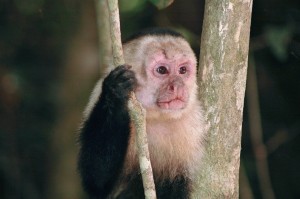
Os macacos do Novo Mundo, como este prego-prego, chegaram à América do Sul há mais de 30 milhões de anos. Crédito: Bethany Augliere

Dentes fossilizados descobertos no Panamá sugerem que os macacos chegaram à América do Norte milhões de anos antes do que os cientistas pensavam. A descoberta, publicada em 20 de abril na Nature 1 , revela novas informações sobre a disseminação de primatas pelas Américas.

Uma equipe liderada por Jonathan Bloch, paleontólogo do Museu de História Natural da Flórida em Gainesville, encontrou sete dentes de macaco na Bacia do Canal do Panamá. Os cientistas identificaram os fósseis como pertencentes a uma espécie até então desconhecida, Panamacebus transitus , que viveu há quase 21 milhões de anos, durante o início do Mioceno.

“Nunca teríamos previsto que eles estariam aqui”, diz Bloch. Os dentes são a evidência mais antiga da dispersão de um mamífero da América do Sul para a América do Norte, diz ele. Nenhum outro mamífero é conhecido por ter cruzado o corpo de água que separou os dois continentes no início do Mioceno.

A teoria atual sugere que os primatas cruzaram o oceano Atlântico da África para a América do Sul há cerca de 37–34 milhões de anos fazendo rafting na vegetação. Esses macacos do 'Novo Mundo' - um grupo que inclui saguis e macacos-aranha e bugios - se espalharam e se diversificaram em regiões tropicais da América do Sul.

Os cientistas pensaram que os macacos só chegaram à América Central depois da formação do istmo do Panamá, há 3,5 milhões de anos. A faixa de terra liga as Américas do Sul e do Norte. Mas a descoberta de Bloch sugere que os primatas cruzaram a barreira da água e chegaram à América do Norte quase 18 milhões de anos antes.

“A descoberta é absolutamente espantosa, e afirmações extraordinárias exigem evidências extraordinárias”, diz Richard Kay, um antropólogo biológico da Duke University em Durham, Carolina do Norte.

A rota pela qual os macacos do Novo Mundo se espalharam e se diversificaram é muito debatida. Bloch e seus colegas sugerem que macacos modernos emergiram dos trópicos. Outros contestam isso, argumentando que fósseis semelhantes em idade a P. transitus existem na Patagônia. Mas Bloch observa que P. transitus é pelo menos igual em idade ao fóssil mais antigo em disputa, senão um milhão de anos mais velho.
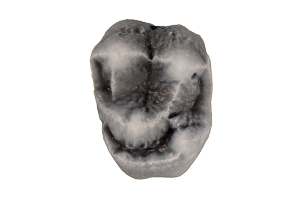
Este molar superior fossilizado veio da espécie de macaco recentemente identificada P. transitus . Crédito: Aldo Rincon

Dentes nos trópicos

Os trópicos geralmente têm sido um lugar difícil para descobrir fósseis devido à cobertura florestal, diz Bloch, que normalmente trabalha em desertos secos cheios de rocha exposta. Mas a construção para expandir o canal do Panamá , que começou em 2007, expôs rochas contendo fósseis do Mioceno. “Foi uma oportunidade incrível, uma oportunidade única em um século de observar as rochas nos trópicos”, diz ele.

Ele e seus colegas encontraram molares superiores, um canino inferior, dois incisivos e dois pré-molares enquanto cavavam através de terra e rocha em uma pedreira perto das margens do canal. A equipe passou dois anos analisando imagens de alta resolução dos dentes para colocar a espécie na árvore evolutiva. Os molares se assemelham aos dos macacos da família Cebidae, que inclui macacos-prego ( Cebus capucinus ) e macacos-esquilo ( Saimiri sciureus ).

Não existe evidência de que os primeiros macacos a chegar à América Central sobreviveram o suficiente para estabelecer uma população duradoura. Os ancestrais dos macacos encontrados na região hoje chegaram lá muito mais tarde, diz Kay.

Bloch sugere que os macacos do Novo Mundo eram limitados em sua distribuição pela extensão ao norte de seu habitat preferido na floresta tropical. “É por isso que você não encontra macacos no sul da Califórnia, mesmo até hoje”, diz Daniel Gebo, um primatologista biológico da Northern Illinois University em DeKalb.

Bloch irá ao Panamá novamente no próximo mês e procurará na mesma pedreira onde sua equipe encontrou P. transitus . “Eu realmente gostaria de encontrar um crânio ou partes do resto do esqueleto”, diz ele.

Referências

Informações adicionais

Tweet Facebook LinkedIn Weibo Wechat

Links Relacionados

Links Relacionados

Links relacionados na Nature Research

O esqueleto de primata mais antigo revelado em 05 de junho de 2013

Fósseis indicam ancestral comum para dois grupos de primatas 2013-maio-15

Crânio fóssil apontado como ancestral macaco-macaco 14 de julho de 2010

sexta-feira, 2 de fevereiro de 2018

Panamacebus transitus: First North American Monkey Fossils Unearthed in Panama

Apr 21, 2016 by Enrico de Lazaro

Seven fossil teeth recovered from the Miocene layers of the Las Cascadas Formation in the Panama Canal Basin are the first evidence of a monkey on the North American continent before the Isthmus of Panama connected it to South America 3.5 million years ago, according to a team of paleontologists led by Dr. Jonathan Bloch from the Florida Museum of Natural History.
Palaeogeographic reconstruction showing hypothetical dispersal route of Panamacebus transitus in the early Miocene. Yellow and ochre colors indicate subaerial environments, blue colors indicate marine environments (dark, coastal and platform; light, abyssal). Criteria used to arrive at this reconstruction include regional tectonic reconstructions, local and regional palaeomagnetic data, and regional strain markers and piercing points. Fm. – formation, Fms – formations. Image credit: Jonathan I. Bloch et al.

“The Miocene epoch (23.8–5.3 million years ago) is marked by substantial climatic and ecological changes that had profound effects on terrestrial mammal communities in the New World tropics,” Dr. Bloch and his colleagues said.
“Fossils from the tropical lowlands of Central America are rare owing to a lack of relevant rock exposures; however, an important exception can be found in Panama where, since 2009, expansion of the Panama Canal has exposed fossil-bearing rocks of early Miocene age.”
The scientists found the 20.9 million-year-old teeth of a previously unknown monkey species in the Las Cascadas Formation during a five-year intensive fossil salvage project.
“Most of the mammal groups represented in the Las Cascadas Formation have North American origins, supporting the idea that Central America and western Panama represented a long peninsula extending south from North America,” they said.

They named the newfound species Panamacebus transitus in honor of Panama and the monkey’s movement across the ancient seaway that divided North and South America.
“We suggest that Panamacebus transitus was related to the capuchin and squirrel monkeys that are found in Central and South America today,” Dr. Bloch said.

“Prior to this discovery, New World monkeys were thought to have evolved in isolation on South America, cut-off from North America by a wide seaway.”
A white-headed capuchin (Cebus capucinus) in Costa Rica. Image credit: Geoff Gallice / CC BY 2.0.

Before the teeth of Panamacebus transitus were discovered, the oldest evidence of movement of a mammal from South to North America are 8.5 – 9 million-year-old fossil remains of giant sloths.
Dr. Bloch and co-authors suggest two explanations:

(i) that mammals from South America were more adapted to life in the South American derived forests still found in Panama and Costa Rica than to other forest types characteristic of Northern Central America;

(ii) or that the lack of exposed fossil deposits throughout Central America means that evidence of these dispersals has yet to be revealed.
Research describing the new species is published online in the journal Nature.
_____
Jonathan I. Bloch et al. First North American fossil monkey and early Miocene tropical biotic interchange. Nature, published online April 20, 2016; doi: 10.1038/nature17415

Fonte: http://www.sci-news.com/paleontology/panamacebus-transitus-first-north-american-monkey-fossils-panama-03802.html

First North American Monkey Fossils Found in Panama Canal Excavation

By Beth King
"Cebus capucinus," the species of Cebus common in Panama today. (Photo by Andres Hernandez, Smithsonian Tropical Research Institute)
“Cebus capucinus,” the species of Cebus common in Panama today. (Photo by Andres Hernandez, Smithsonian Tropical Research Institute)

Seven fossil teeth exposed by the Panama Canal expansion project are the first evidence of a monkey on the North American continent before the Isthmus of Panama connected it to South America 3.5 million years ago. A team including Carlos Jaramillo, staff scientist at the Smithsonian Tropical Research Institute (STRI), published this discovery online in the journal Nature. They named the new monkey species Panamacebus transitus in honor of Panama and the monkey’s movement across the ancient seaway that divided North and South America.

The 21 million-year-old teeth were found in the Las Cascadas Formation during a five-year intensive fossil salvage project by field crews from STRI, the University of Florida and the New Mexico Museum of Natural History and Science. Most of the mammal groups represented in the Las Cascadas formation have North American origins, despite the fact that South America is much closer, supporting the idea that Central America and western Panama represented a long peninsula extending south from North America.
monkey
“Cebus capucinus,” the species of Cebus common in Panama today. (Photo by Sean Mattson, Smithsonian Tropical Research Institute)

During the salvage project, researchers rushed in behind engineers as they dynamited the steep canal banks. The researchers collected exposed fossils and described each location before heavy rains and fast-growing vegetation obscured evidence of the dramatic tectonic events that lifted the land bridge out of the sea to connect North and South America.

“I asked my boss for a million dollars to dig a hole in the ground,” Jaramillo said. “Then the Panamanian people voted for the Panama Canal Authority to spend $5.6 billion dollars to expand the Canal and unlocked a treasure trove for us, containing this new monkey species and many other fossils.”

“We suggest that Panamacebus was related to the capuchin (also known as “organ-grinder” monkeys) and squirrel monkeys that are found in Central and South America today,” said Jonathan Bloch, curator of vertebrate paleontology at the Florida Museum of Natural History on the University of Florida campus and lead author on the study. “Prior to this discovery, New World monkeys were thought to have evolved in isolation on South America, cut off from North America by a wide seaway.”

Before the monkey teeth were discovered, the oldest evidence of movement of a mammal from South to North America are 8.5–9 million-year-old fossil remains of giant sloths. The authors of this report suggest two explanations: 1) that mammals from South America were more adapted to life in the South American-derived forests still found in Panama and Costa Rica than to other forest types characteristic of Northern Central America or 2) that the lack of exposed fossil deposits throughout Central America means that evidence of these dispersals has yet to be revealed.

The U.S. National Science Foundation contributed $3.8 million as part of the Panama Partnership for International Research and Education led by researchers from the Florida Museum of Natural History. As the expansion nears its completion, the tally of fossils identified so far includes bats, horses, squirrels, small camelids, crocodiles, turtles and ferocious bear dogs. The new, wider third lane of the Panama Canal will open for business June 26.