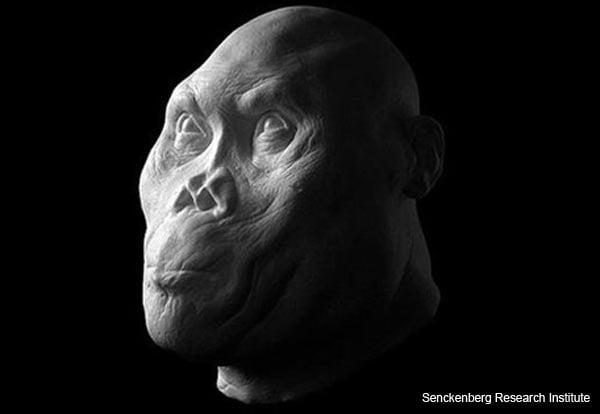
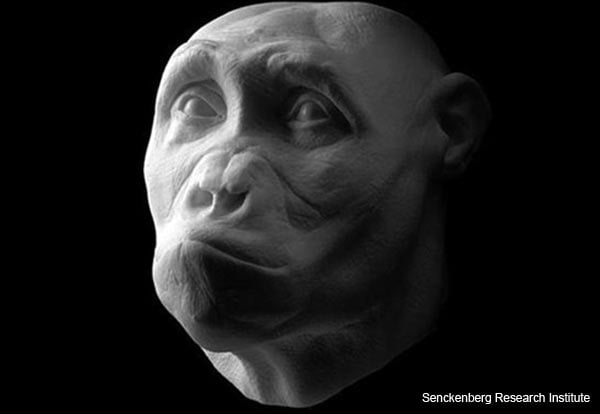
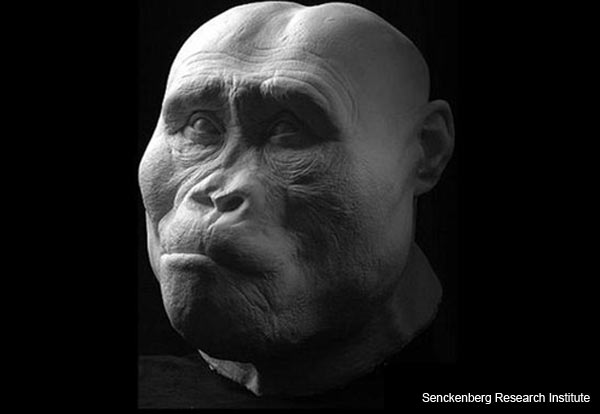
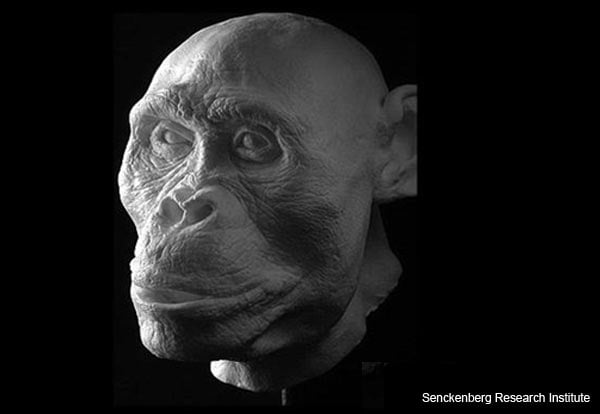
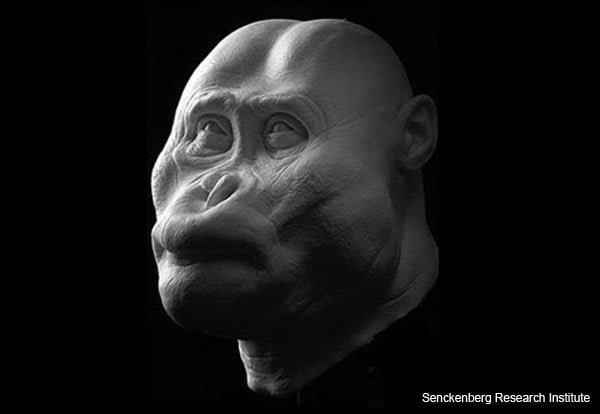
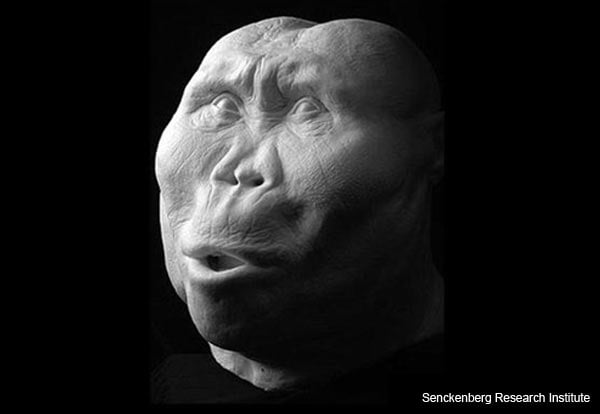
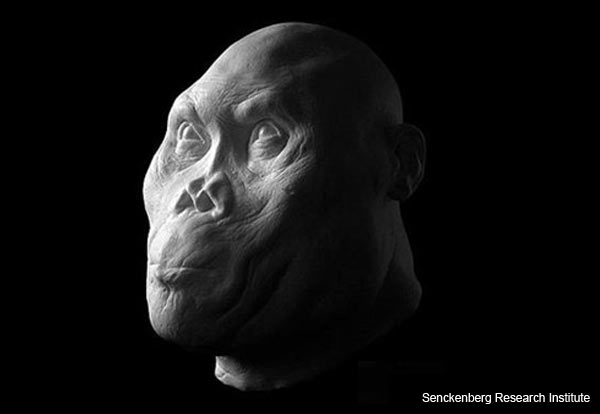
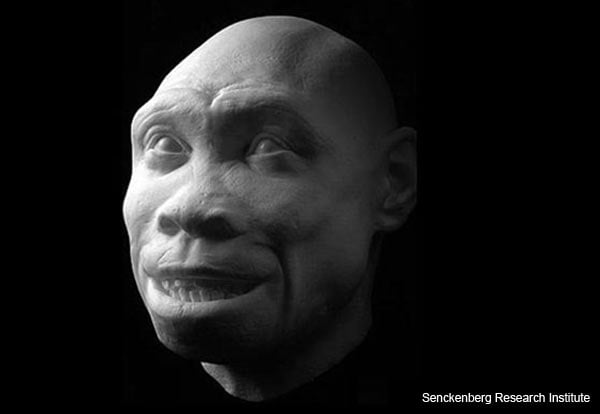
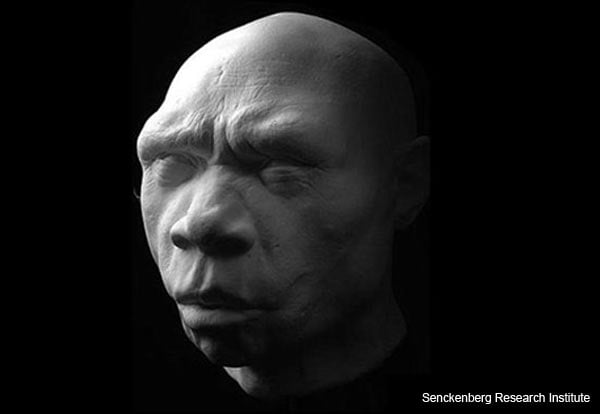
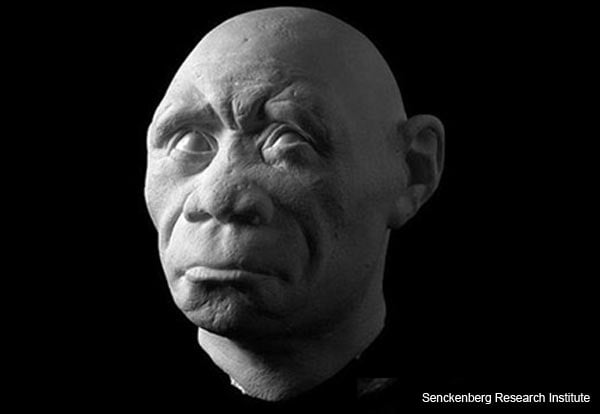
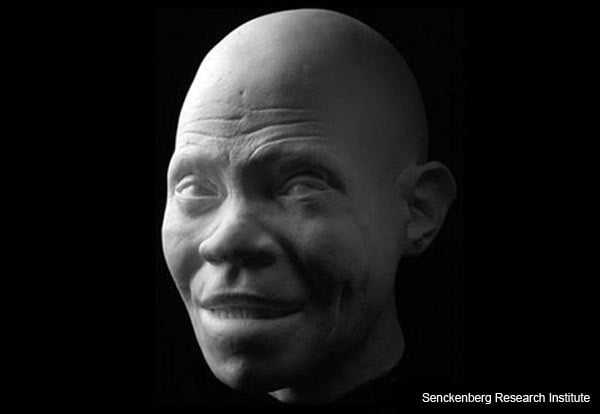
Há vários anos, uma equipe de cientistas do Instituto de Pesquisa Senckenberg, em Frankfurt, Alemanha, decidiu colocar um rosto humano nas antigas espécies de hominídeos que já andaram na Terra.
Usando métodos forenses sofisticados, eles criaram 27 cabeças de modelo
baseadas em fragmentos de ossos, dentes e crânios encontrados em todo o
mundo no último século. As cabeças meticulosamente esculpidas são os produtos antropológicos de anos de escavação na África, Ásia e Europa.
Nos últimos 8 milhões de anos, pelo menos uma dúzia de espécies humanas viveram na Terra.
Como parte da exposição Safari zum Urmenschen ("Safari dos primeiros
seres humanos"), as reconstruções faciais nos levam a uma viagem no
tempo, remontando sete milhões de anos à espécie sahelanthropus
tchadensis e culminando com o Homo sapiens moderno.
Cada rosto conta sua própria história sobre a vida dos hominídeos em
suas respectivas épocas, incluindo onde moravam, o que comiam e sua
provável causa de morte.
A exposição atraiu muita controvérsia quando foi lançada,
principalmente devido aos debates acadêmicos que se arrastavam há
décadas sobre a classificação dessas espécies antigas. Os fósseis são extremamente desafiadores para categorizar como uma espécie ou outra.
Apenas alguns milhares de fósseis de espécies pré-humanas já foram
descobertos e subespécies inteiras às vezes são conhecidas apenas a
partir de uma única mandíbula ou crânio fragmentário.
Além disso, como os humanos modernos, não há dois hominídeos iguais e é
difícil determinar se as variações nas características do crânio
representam espécies distintas ou variações dentro da mesma espécie.
Por exemplo, a recente descoberta de um crânio em Dmansi, na Turquia,
sugeriu que várias espécies contemporâneas do "Homo" inicial - Homo
habilis, Homo rudolfensis, Homo ergaster e Homo erectus - são na verdade
apenas variações de uma espécie.
Ossos só podem dizer muito, e os especialistas são forçados a fazer
suposições educadas para preencher as lacunas de uma antiga árvore
genealógica hominídeo que se estende por 8 milhões de anos.
A cada nova descoberta, os paleoantropólogos precisam reescrever as
origens dos ancestrais da humanidade, acrescentando novos galhos e
rastreando quando as espécies se separam e, em vez de fornecer respostas
sobre nosso passado antigo, muitas descobertas simplesmente levam a
mais perguntas.
«Toumai» - Sahelanthropus tchadensis
Toumai (“esperança de vida”) é o nome dado aos restos de um hominídeo
encontrado há mais de uma década no deserto de Djurab, no Chade, na
África Ocidental, pertencente à espécie conhecida como Sahelanthropus
tchadensis. Datado de 6,8 milhões de anos, é um dos mais antigos espécimes de hominídeos já encontrados.Sahelanthropus tchadensis tinha um crânio relativamente pequeno.
O braincase, com apenas 320 cm³ a 380 cm³ de volume, é semelhante ao
dos chimpanzés existentes e é notavelmente menor que o volume humano
médio de 1350 cm³.
Australopithecus afarensis
Acredita-se que o Australopithecus afarensis tenha vivido entre 3,9 e
2,9 milhões de anos atrás e tinha uma capacidade cerebral entre 380 e
430 cc.
Um número de restos desta espécie foi encontrado na Etiópia, incluindo o
indivíduo modelado acima, cujo crânio e mandíbula foram encontrados
entre os restos de dezessete outros (nove adultos, três adolescentes e
cinco crianças) na região Afar da Etiópia em 1975. O exemplo mais
conhecido de um Australopithecus afarensis é "Lucy", um esqueleto quase
completo de 3,2 milhões de anos encontrado em Hader.
Ples - Australopithecus africanus
"Ples" é o apelido popular para o crânio mais completo de um
Australopithecus africanus, descoberto em Sterkfontein, África do Sul em
1947. Embora o sexo do fóssil não seja totalmente certo, ela era uma
pessoa de meia-idade que viveu 2,5 anos. milhões de anos atrás e tinha
uma capacidade cerebral de 485 cc.
A senhora Ples morreu quando caiu em um poço de giz e seus restos foram
preservados quando o poço mais tarde se encheu de sedimentos.
A espécie Australopithecus africanus, que viveu no sul da África entre 3
e 2 milhões de anos atrás, há muito intriga os cientistas por causa de
suas mandíbulas e dentes enormes, mas agora eles acreditam que o design
do crânio era ideal para quebrar nozes e sementes.
"Caveira Negra" - Paranthropus aethiopicus
Paranthropus aethiopicus é uma espécie de hominídeo que se acredita ter vivido entre 2,7 e 2,5 milhões de anos atrás. Muito pouco se sabe sobre eles, porque poucos restos foram encontrados.
O indivíduo retratado foi reconstruído a partir do crânio de um adulto
masculino encontrado na costa oeste do Lago Turkana, no Quênia, em 1985.
Ele ficou conhecido como "Caveira Negra" devido à coloração escura do
osso causada por altos níveis de manganês.
Black Skull tinha uma capacidade craniana de 410 cc, e o formato da
boca indica que ele tinha uma mordida forte e podia mastigar plantas.
"Zinj" - Paranthropus boisei
"Zinj" é o nome dado a um crânio de 1,8 milhão de anos da espécie
Paranthropus boisei encontrado em 1959 no desfiladeiro Olduvai da
Tanzânia.
Nomeado após a classificação original da espécie, Zinjanthropus boisei,
Zinj foi o primeiro a ser encontrado pertencente a esse grupo de
hominídeos. O Paranthropus boisei viveu na África Oriental entre 2,3 e 1,2 milhão de anos atrás.
Eles tinham um volume cerebral de cerca de 500 a 550cc e teriam comido
sementes, plantas e raízes que foram desenterradas usando pedaços de
ossos. Devido à mandíbula forte que também teria sido usada para quebrar nozes, Zinj também é conhecido como o 'Homem Quebra-Nozes'.
Homo rudolfensis
Este modelo é de um macho adulto da espécie Homo rudolfensis,
reconstruído a partir de fragmentos de ossos de 1,8 milhão de anos
encontrados em Koobi Fora, no Quênia, em 1972. Ele usou ferramentas de
pedra e comeu carne e plantas.
O Homo rudolfensis viveu de 1,9 a 1,7 milhão de anos atrás e tinha uma
capacidade craniana maior do que seus contemporâneos, variando de 530 a
750cc.
Eles tinham características distintas, incluindo uma face mais plana e
mais larga e dentes pós-caninos mais amplos, com coroas e raízes mais
complexas.
“Menino Turkana” - Homo ergaster
Encontrar o 'Menino Turkana' foi uma das descobertas mais espetaculares da paleoantropologia.
Sua reconstrução veio do esqueleto quase perfeitamente preservado
encontrado em 1984 em Nariokotome, perto do lago Turkana, no Quênia. É o esqueleto humano inicial mais completo já encontrado. Acredita-se que o Turkana Boy tenha algo entre 7 e 15 anos e viveu 1,6 milhão de anos atrás. Segundo a pesquisa, o menino morreu ao lado de um delta do rio raso, onde estava coberto por sedimentos aluviais. O Homo ergaster viveu entre 1,8 e 1,3 milhão de anos atrás e tinha uma capacidade craniana de 700 a 900 cc. Restos foram encontrados na Tanzânia, Etiópia, Quênia e África do Sul.
"Miquelon" - Homo heidelbergensis
Miguelon é o nome dado aos restos mortais de um homem adulto
pertencente ao grupo Homo heidelbergensis, descoberto em Sima de los
Huesos (“a cova dos ossos”), na Espanha, em 1993. Mais de 5.500 fósseis
humanos desta espécie, considerados ancestrais diretos dos neandertais,
foram encontrados no local de Sima de los Huesos. Miguelon, que é o apelido de "Atapuerca 5", é o crânio mais completo de um Homo heidelbergensis já encontrado. Miguelon é um homem de trinta anos que morreu cerca de 400.000 anos atrás.
Seu crânio mostrou evidências de 13 impactos separados e ele morreu de
septicemia resultante de dentes quebrados - um dente foi quebrado ao
meio por um forte golpe, de modo que a carne foi exposta e levou a um
processo infeccioso que continuou até quase o osso orbital . O modelo, mostrado aqui, não inclui a deformidade. O Homo heidelbergensis viveu entre 1,3 milhão e 200.000 anos atrás. Seu volume craniano de 1100 a 1400 cc se sobrepõe à média de 1350 cc dos humanos modernos. Fósseis desta espécie foram encontrados na Espanha, Itália, França e Grécia.
“O velho homem de La Chapelle” - Homo neanderthalensis
O "Velho de La Chapelle" foi recriado do crânio e da mandíbula de um
homem do Homo neanderthalensis encontrado enterrado na rocha calcária de
uma pequena caverna perto de La Chapelle-aux-Saints, na França, em
1908. Ele viveu 56.000 anos atrás e foi o primeiro esqueleto
relativamente completo de um neandertal já encontrado.
Os cientistas estimam que ele estava relativamente velho quando morreu,
pois os ossos haviam crescido novamente ao longo das gengivas onde ele
havia perdido vários dentes, talvez décadas antes. Na verdade, ele não tinha tantos dentes que é possível que ele precisasse de sua comida antes de poder comê-la. O esqueleto do velho indica que ele também sofreu várias aflições, incluindo artrite, e teve vários ossos quebrados.
Os neandertais são geralmente classificados pelos paleontólogos como a
espécie Homo neanderthalensis, mas alguns os consideram uma subespécie
do Homo sapiens (Homo sapiens neanderthalensis).
Acredita-se que os primeiros seres humanos com características
proto-neandertais existissem na Europa entre 600.000 e 350.000 anos
atrás e morreram há cerca de 30.000 anos. A capacidade craniana dos neandertais era notavelmente maior que a média de 1350 cc para os humanos modernos. No entanto, eles também tinham um tamanho corporal maior.
Pesquisas recentes agora apontam para o fato de que eles tinham níveis
iguais ou semelhantes de inteligência que os humanos modernos.
“O Hobbit” - Homo floresiensis
"O hobbit" é o nome dado aos restos femininos de espécies hominídeos
conhecidas como Homo floresiensis, encontradas em Liang Bua, Flores,
Indonésia, em 2003. Nome de sua pequena estatura, ela tinha cerca de 1
metro de altura (cerca de 3'3 " ) e viveu cerca de 18.000 anos
atrás.Esqueletos parciais de nove outros indivíduos já foram recuperados
e esses foram objeto de intensa pesquisa para determinar se representam
uma espécie distinta dos humanos modernos - acredita-se agora que sim.
notável por seu pequeno corpo e cérebro (420 cc) e por sua sobrevivência
até tempos relativamente recentes (possivelmente até 12.000 anos atrás)
Homo sapiens
Homo sapiens (em latim: "homem sábio") é o nome científico da espécie humana. Os seres humanos anatomicamente modernos aparecem pela primeira vez no registro fóssil na África, cerca de 195.000 anos atrás.
O modelo descrito acima foi reconstruído a partir de fragmentos de
crânio e mandíbula encontrados em uma caverna em Israel em 1969. Essa
jovem Homo sapiens viveu entre 100.000 e 90.000 anos atrás. Seus ossos indicam que ela tinha cerca de 20 anos. Seu crânio quebrado foi encontrado entre os restos de outros 20 em uma cova rasa.
As reconstruções faciais foram transformadas em um vídeo animado de Dan Petrovic , que descreve a mudança gradual nas características faciais ao longo do tempo. É altamente recomendável assistir a este vídeo fascinante.
The newly described partial skeleton of Paranthropus boisei
KNM-ER 47000 as well as the FwJj14E Ileret footprints provide new
evidence on the paleobiology and diversity of hominins from the Okote
Member of the Koobi Fora Formation at East Turkana about 1.5 Ma. To
better understand the ecological context of the Okote hominins, it is
necessary to broaden the geographical focus of the analysis to include
the entire Omo-Turkana ecosystem, and the temporal focus to encompass
the early Pleistocene. Previous work has shown that important changes in
the regional vegetation occurred after 2 Ma, and that there was a peak
in mammalian turnover and diversity close to 1.8 Ma. This peak in
diversity included the Hominini, with the species P. boisei, Homo habilis, Homo rudolfensis, and Homo erectus co-occurring at around 1.8 Ma. There is considerable debate about whether H. habilis and H. rudolfensis indeed constitute separate species, but even if we consider them both as H. habilis sensu lato,
the co-occurrence of three hominin species at any one time and place is
rather unusually high diversity for hominin standards (even if not so
for other mammalian groups such as suids, bovids, or cercopithecids).
Here we use mammalian faunal abundance data to place confidence
intervals on first and last appearances of hominin species in the early
Pleistocene of the Omo-Turkana Basin, and use these estimates to discuss
hominin diversity in the Okote Member. We suggest that in the early
Pleistocene a wide range of depositional environments and vegetation types,
along with a high frequency of volcanism, likely maintained high levels
of environmental variability both in time and space across the
Omo-Turkana region, and provided ecological opportunities for the
coexistence of at least three hominin species alongside a diverse
mammalian fauna.
New fossils from the Okote Member of the Koobi Fora Formation at East Turkana (Fig. 1),
Kenya, bring into focus the question of hominin diversity in the early
Pleistocene of eastern Africa. The Okote Member, dating from 1.56 to
1.38 Ma (Fig. 2A), has produced key fossils that contribute to our understanding of hominin evolution and diversity around 1.5 Ma (Leakey and Leakey, 1978, Wood, 1991). Some of the most noteworthy specimens from the Okote include KNM-ER 992 (the holotype of Homo ergaster), KNM-ER 3883 (Homo erectus calvaria), and KNM-ER 42703 (a fragment of maxilla that constitutes the last appearance record of Homo habilis) (Leakey et al., 2012). To these, we can add the hominin fossil footprints from Ileret (Bennett et al., 2009, Hatala et al., 2016, Roach et al., 2016) and the Paranthropus boisei upper limb KNM-ER 47000 described in this volume (Green et al., 2018, Lague et al., 2018, Richmond et al., 2018), both from the site FwJj14E (Fig. 1B). The hominin footprints are attributed to H. erectus
based mostly on their morphology, but also in part on the lack of other
possible hominins in the Turkana Basin during the Okote Member times (Hatala et al., 2016). Similarly, the upper limb KNM-ER 47000 is attributed to P. boisei largely based on the anatomy of the fossil, but also in part based on the lack of other plausible taxonomic candidates (Richmond et al., submitted). To understand hominin diversity and ecology
in the Okote Member, it is necessary to broaden our focus both
temporally and geographically, and here we ask two main questions. How
many hominin species occurred at East Turkana 1.5 Ma? What was their
ecological context?
Figure 1.
A: Map of the Omo-Turkana Basin including the lower Omo Valley of
Ethiopia and the Lake Turkana Basin of Kenya. The Pliocene and
Pleistocene Omo Group deposits include the Mursi, Usno, and Shungura
formations in Ethiopia, and the Nachukui and Koobi Fora formations in
Kenya. B: Satellite image (Google Earth) of the Ileret region in East
Turkana showing the extent of paleontological collecting area 1A, the
FwJj14E site, Il Eriet (seasonal river), the village of Ileret, and the
location of the Turkana Basin Institute (TBI).
Figure 2. A:
The Koobi Fora Formation in the context of the Omo Group deposits
between 2.0 Ma and 1.2 Ma. This time interval includes the Upper Burgi,
KBS, and Okote members of the Koobi Fora Formation, the Kalochoro
(upper), Kaitio, Natoo, and Nariokotome members of the Nachukui
Formation, and members G (upper), H, J, K, and L of the Shungura
Formation. The main dated tephras and their correlations within the
Omo-Turkana Basin are highlighted. The ages of all tuffs
are in Ma. The Geomagnetic Polarity Time Scale (GPTS) is shown next to
the time axis. B: The Omo Group deposits were laid down by a major
fluvio-lacustrine system relatively continuously from nearly 4.4 Ma to
1 Ma in the Omo-Turkana Basin. Major tephras provide a chronological
framework and serve for correlations among different regions of the
basin. The names of most members are indicated within the shaded
rectangles; the names of key tephras are indicated to the right of the
shaded rectangles, and the age of tephras in Ma are indicated to the
left. The time span of major lacustrine intervals in the basin (from Feibel, 2011) is shown on the right of the figure.
The
Okote is one of eight geological members in the Koobi Fora Formation,
and the Koobi Fora Formation is one of the five fossiliferous formations
that make up the Omo Group deposits exposed in the lower Omo Valley and
the Lake Turkana Basin, here referred to as the Omo-Turkana Basin (Figs. 1A, 2B). The sedimentary environments and chronological framework of the basin have been well studied for the past fifty years (de Heinzelin, 1983, Brown and Feibel, 1991, Brown, 1994, Brown and McDougall, 2011, Feibel, 2011).
The Pliocene and Pleistocene Omo Group includes the Mursi, Usno, and
Shungura formations in Ethiopia, and the Koobi Fora and Nachukui
formations in Kenya, with relatively continuous deposition from nearly
4.4 Ma to 1 Ma. After about 0.7 Ma, deposition in the basin became more
intermittent. Most of the Omo Group deposits were laid down by a major
fluvial system, the paleo-Omo river, but there were also a few intervals
of significant lacustrine deposition when a major lake occupied large
areas of the basin (Fig. 2B).
Previous
research has shown that the time between about 2 Ma and 1.4 Ma was one
of high turnover and high diversity among different groups of mammals,
including hominins, in the Omo-Turkana Basin (Bobe et al., 2007, Bibi and Kiessling, 2015, Fortelius et al., 2016). The question of early hominin diversity has featured prominently in the research history of the region (Walker and Leakey, 1978, Leakey et al., 2001, Leakey et al., 2012, White, 2003, White, 2013, Spoor et al., 2007, Spoor et al., 2010).
The concept of diversity encompasses both species richness (the number
of species) and the relative abundance of these species (evenness).
Given the wealth of new data from the Okote Member featured in this
Special Issue, here we focus on the diversity and the environments of
hominins in the early Pleistocene of the Omo-Turkana Basin.
2. The environmental context
2.1. Depositional environments
The Okote Member is defined as the sedimentary sequence between the base of the Okote Tuff, which is part of the Okote Tuff Complex, and the base of the Chari Tuff (Brown and Feibel, 1986). The Okote Tuff is estimated to have an age of 1.56 Ma, while the Chari Tuff is dated to 1.38 Ma (Brown and McDougall, 2011); thus this member spans 180,000 years (Fig. 2A). The type section in Area 131 measures 21.6 m, and overall the Okote sediments are interpreted as complex fluvial deposits with an interval of lacustrine deposition best expressed in the Ileret sub-region (Feibel, 1988, Behrensmeyer and Isaac, 1997).
This lacustrine phase is an expression of the Lorenyang Lake, which
occupied the center of the basin from about 2 Ma to about 1.6 Ma (Fig. 2B); in the upper part of the Okote Member there is a transition to fluvial environments (Feibel, 2011). The Okote Member is widely exposed, outcropping in 26 of the collecting areas formally defined at East Turkana (Brown and Feibel, 1991). In the Karari Escarpment, there are tuffaceous mudstones in the lower part of the sequence, and small fluvial channels with basalt
conglomerates in the upper part. In the Ileret area, there is evidence
of lacustrine deposition in the lower sequence and of fluvial channels
in the upper Okote Member that are rich in mammalian fossils (Brown and Feibel, 1986). In areas 101 to 103, channel sands and mudstones overlie the Koobi Fora Tuff Complex, a thick tuffaceous sequence (Brown and Feibel, 1986).
Thus, the main sedimentary environments of the Okote Member differ
across areas of East Turkana. It is likely that an expanding and
contracting Lorenyang Lake and the rivers that flowed into it played an
important role in the shifting depositional settings and in maintaining
high environmental variability during this time (Feibel, 2011). This variation in sedimentary environments likely produced variation in the ecology of the basin during the early Pleistocene.
2.2. Volcanism
The
Omo-Turkana Basin has a rich record of volcanic eruptions, with tuffs
that serve for regional correlations and radiometric dating (Fig. 2).
Some of these tuffs were massive (e.g., Chari Tuff) and deposited over
large areas of eastern Africa, and some intervals of time show
smaller-scale but frequent tuff deposition, with multiple fluvially
reworked tuffs (Feibel, 1999, 2011). McDougall and colleagues report 360 distinct tuffs from the Omo Group deposits during the last 4 Ma or so (McDougall and Brown, 2006, McDougall and Brown, 2008, McDougall et al., 2012). From these data, Figure 3 shows a high frequency of tuffs in the interval from about 1.6 to 1.4 Ma, which largely encompasses the Okote Member. Figure 4
depicts an 8.5 m section of FwJj14E with three of these tephras in an
interval spanning less than 20,000 years, which includes the Ileret
hominin fossil footprints and the P. boisei upper limb
KNM-ER 47000. The effects of these volcanic episodes on the environments
and the ecology of the Omo-Turkana region remain to be fully explored,
but it is likely that they played a role in modifying the basin's
vegetation and landscapes at different scales and different time frames,
and contributed to environmental variability both in time and space. In
turn, high environmental variability in the basin may have provided
ecological opportunities for a diverse mammalian fauna, including hominins.
Figure 3. Number
of tephras in the Omo-Turkana Basin between 4.2 and 1.0 Ma. Data
compiled and re-drawn from McDougall et al. (2012). Some of these
tephras are airfall deposits from massive volcanic eruptions that likely
produced major disruptions of regional ecosystems. One example of these
thick volcanic deposits is the Chari Tuff,
dating to 1.38 Ma and capping the Okote Member. Others tephras like the
Okote Tuff Complex were fluvially deposited and reworked volcanic ashes
that may have produce more localized and short-lived, but frequent,
disruptions to the ecological systems of the Omo-Turkana Basin around
1.5 Ma.
Figure 4. Photo of the FwJj14E site in Area 1A with three tephras in an interval of less than 20,000 years. The Paranthropus boisei
specimen KNM-ER 47000 and the series of hominin footprints derive from
this part of the sequence measuring 8.5 m between the Lower Ileret Tuff and the Northern Ileret Tuff.
2.3. Paleosols and vegetation
Stable
isotopes of fossil soils provide important information about the
vegetation of the Omo-Turkana Basin from more than 4 Ma to about 1 Ma (Wynn, 2004, Quinn et al., 2007, Levin et al., 2011). The data depicted in Figure 5 show that a mix of woodlands and wooded grasslands dominated the basin prior to 2 Ma, but with C3 vegetation being more prevalent in the Omo (Shungura Formation) than elsewhere in the basin. These woodlands and wooded grasslands continued to exist in the basin after 2 Ma, but C4 grasslands became more prevalent than before, and the C3 woodlands in the Omo gave way to wooded grasslands with a mix of C3 and C4 vegetation (Cerling et al., 2011, Levin et al., 2011). These results parallel an increase in the abundance of grazing mammals in the Omo-Turkana Basin after 2 Ma (Bobe, 2011, Patterson et al., 2017). The high environmental variability in the basin both in time and space is highlighted by the fact that the range of δ13C
values is highest in the interval from 2 Ma to 1.4 Ma than during
earlier times. It should be emphasized that the increasingly prominent C4 grasslands occurred in a context of persistent woody vegetation (Bamford, 2011, 2017) and well-watered conditions in the basin (Joordens et al., 2011). The range of environments from C3 woodlands to C4
grasslands undoubtedly contributed to the habitat heterogeneity and to
the diversity of the mammalian fauna in the basin during the early
Pleistocene.
Figure 5. Paleosol stable carbon isotope values reflecting C3 and C4
vegetation in the Omo-Turkana Basin from 4.3 Ma to 1.0 Ma. These values
derive from paleosols in the Omo Shungura Formation, the Nachukui
Formation at West Turkana, and the Koobi Fora Formation at East Turkana.
The vegetation categories of “Woodland”, “Wooded grassland”, and
“Grassland” are derived from Cerling et al. (2011).
The carbon isotope values show that the basin underwent an important
shift after 2 Ma, with values from the Omo becoming more similar to
those elsewhere in the basin but the overall range of values in the
basin becoming wider than they had been. Data from Quinn et al. (2007) and Levin et al. (2011).
To
assess hominin diversity during this time, it is critical to have an
understanding of the abundance and time range of different species. For
example, if there are four hominin species in the KBS Member, but in the
Okote Member there are only three species, does this constitute a real
drop in species richness? Could the absence of one of these species be
an artifact of sampling? It is important to place confidence intervals
on the first and last appearances of fossil species in assessing
diversity patterns. This is particularly relevant for rare species, as these typically require large numbers of fossils to be sampled.
3. Materials and methods
Data
for Koobi Fora were taken from the PaleoTurkana Database (PTD). The
database was originally compiled from the fossil collections at the
National Museums of Kenya (NMK) by the first author in collaboration
with A.K. Behrensmeyer of the Smithsonian Institution and Meave Leakey
from NMK (Bobe, 2011, Bobe et al., 2011).
It was augmented with data on the fossil mammals from Area 1A at Ileret
as well as other exposures of the Koobi Fora Formation collected by the
authors, in collaboration with the Koobi Fora Field School, through
fieldwork at East Turkana during the 2007–2014 field seasons. The PTD is
a specimen-based database wherein each fossil specimen constitutes a
single record with relevant taxonomic, geographic, stratigraphic, and
taphonomic information, deriving from the Koobi Fora, Nachukui, Kanapoi,
and Nawata formations at East Turkana, West Turkana, Kanapoi, and
Lothagam respectively. Currently the PTD has 17,680 records, and over
1100 fossil vertebrates from the Okote Member. Many of these specimens have been published in some detail (Harris, 1983, Harris, 1991, Black and Krishtalka, 1986, Harris et al., 1988, Wood, 1991, Walker and Leakey, 1993, Harris and Leakey, 2003, Leakey and Harris, 2003, Jablonski and Leakey, 2008, Geraads et al., 2013, Werdelin and Lewis, 2013),
but many specimens remain unpublished. A public version of the database
has been available to the scientific community and the public since
2004 through the Smithsonian Institution (National Museum of Natural
History, Evolution of Terrestrial Ecosystems Program) and the National Museums of Kenya (Department of Earth Sciences) (see Bobe et al., 2011).
Both the Evolution of Terrestrial Ecosystems Program and the National
Museums of Kenya hold current version of the database. The Turkana Basin
Institute also maintains an updated version of the database (Fortelius et al., 2016).
Some
individual fossil animals may be recorded in the PaleoTurkana and Omo
databases more than once, and these occurrences are noted in the
database following contextual and taphonomic field and laboratory
observations. Thus, for example, the P. boisei
individual KNM-ER 47000 is represented by nine records in the
PaleoTurkana Database, one record for each fossil skeletal element or
fragment thereof (such as the scapular fragment KNM-ER 47000A, the
distal humerus KNM-ER 47000B, and the shaft of the ulna
KNM-ER 47000C). The database allows for a simple search so that only
one record per individual is considered. Thus, in deriving mammal
species abundances in Table 1, Table 2, Table 3, Table 4, Table 5, only one record per individual is counted. Thus in Table 1, KNM-ER 47000 counts as one specimen of P. boisei.
In sum, we use a modified form of NISP (number of identified specimens)
in which each individual represented in the database by two or more
skeletal elements or fragments is counted as one.
Table 1. Fossil mammal taxa and abundance (number of specimens) from the Okote Member of the Koobi Fora Formation in Area 1A.a
Taxon
Number of specimens
PRIMATES
Hominini indet.
1
Homo indet.
1
Homo erectus
1
Paranthropus boisei
1
Theropithecus oswaldi
8
Lophocebus sp.
1
Lophocebus cf. albigena
1
CARNIVORA
Homotherium sp.
1
Panthera leo
1
Crocuta sp.
3
PERISSODACTYLA
Equidae indet.
3
Equus sp.
3
Hipparion sp.
3
Diceros sp.
1
CERTARTIODACTYLA
Bovidae indet
20
Tragelaphus sp.
5
Tragelaphus strepsiceros
2
Pelorovis oldowayensis
5
Pelorovis turkanensis
2
Aepyceros melampus
4
Antilopini indet.
2
Reduncini indet.
18
Kobus sp.
10
Kobus kob
16
Kobus sigmoidalis
6
Menelikia lyrocera
1
Alcelaphini indet.
6
Beatragus antiquus
3
Connochaetes gentryi
1
Damaliscus eppsi
5
Gazella sp.
1
Giraffa indet.
4
Giraffa jumae
1
Giraffa pygmaea
1
Sivatherium maurusium
1
Hippopotamidae indet.
6
aff. Hippopotamus aethiopicus
5
Hippopotamus gorgops
1
Suidae indet.
2
Kolpochoerus limnetes
13
Metridiochoerus compactus
13
Metridiochoerus andrewsi
2
Metridiochoerus hopwoodi
1
PROBOSCIDEA
Elephas recki
3
a
Each specimen represents a single individual. Data from fieldwork and museum collections.
Table 2. Fossil hominin species across members of the Koobi Fora Formation at East Turkana, Kenya.a
Koobi Fora Formation
Upper Tulu Bor
Upper Burgi
KBS
Okote
Chari
Total
Hominini indet.
0
4
6
7
0
17
Paranthropus boisei
0
5
43
21
0
69
Homo indet.
1
26
29
11
0
67
Homo habilis
0
2
1
1
0
4
Homo rudolfensis
0
4
1
0
0
5
Homo erectus
0
4
9
11
0
24
Total hominins
1
45
89
51
0
186
Total larger mammals
132
1351
2089
978
8
4558
Abundance (%) of Paranthropus
0.37
2.06
2.15
0.00
1.51
Abundance (%) of Homo habilis
0.15
0.05
0.10
0.00
0.09
Abundance (%) of Homo rudolfensis
0.30
0.05
0.00
0.00
0.15
Abundance (%) of Homo erectus
0.30
0.43
1.12
0.00
0.53
a
The
table also provides the total number of larger mammals per member
(excluding micromammals, i.e., Rodentia, Lagomorpha) as well as the
relative abundance of hominin taxa as a percentage of the fauna.
Table 3. Fossil hominin species across members of the Nachukui Formation at West Turkana, Kenya.a
Nachukui Formation
L. Lomekwi
U. Lomekwi
Lokalalei
Kalochoro
Kaitio
Natoo
Nariokotome
Total
Hominidae indet.
8
0
0
0
0
0
0
8
Australopithecus indet.
1
0
0
0
0
0
0
1
cf. Kenyanthropus platyops
29
0
0
0
0
0
0
29
Kenyanthropus platyops
2
0
0
0
0
0
0
2
Paranthropus aethiopicus
0
3
2
0
0
0
0
5
Paranthropus boisei
0
0
0
1
7
0
0
8
Homo indet.
0
0
0
1
0
0
0
1
Homo erectus
0
0
0
0
1
4
1
6
Total hominins
40
3
2
2
8
4
1
60
Total larger mammals
567
277
72
188
198
190
87
1579
Abundance (%) of Paranthropus
1.08
2.78
0.53
3.54
0.00
0.00
0.79
Abundance (%) of Homo erectus
0.51
2.11
1.15
0.59
a
The
table also provides the total number of larger mammals per member
(excluding micromammals, i.e. Rodentia, Lagomorpha) as well as the
relative abundance of hominin taxa as a percentage of the fauna.
Table 4. Fossil hominin species across members of the Shungura and Usno formations in the lower Omo Valley of Ethiopia.a
The
table also provides the total number of larger mammals per member
(excluding micromammals, i.e., Rodentia, Lagomorpha) as well as the
relative abundance of hominin taxa as a percentage of the fauna.
b
aff. Homo, Homo indet. H. cf. habilis, H. habilis, H. erectus.
Table 5.
Estimating the 95% confidence interval for the four species of hominins
that occurred in the Omo-Turkana Basin between 2 and 1.4 Ma.a
P. aethiopicus
P. boisei
H. habilis
H. rudolfensis
H. erectus
Regional FAD in Ma
2.7
2.3
1.9
2.03
1.9
Global FAD in Ma
2.7
2.3
1.9
2.4
1.9
Regional LAD in Ma
2.3
1.4
1.4
1.85
0.9
Global LAD in Ma
2.3
1.34
1.4
1.8
0.4
Species abundance (n)
51
92
5
5
31
Mammalian abundance (m)
18,355
24,018
8958
7119
9615
Relative abundance = n/m
0.0028
0.0038
0.0006
0.0007
0.0032
r1 = sample size first interval preceding FAD
446
15,454
15,454
15,454
Pi = 1 − 1 − n/m)r
0.7109
0.9998
1.0000
1.0000
r2 = cumulative sample size adding second interval preceding FAD
3200
Pi = 1 − (1 − n/m)r
0.9999
r1 = sample size first interval following LAD
845
845
1839
Pi = 1 − (1 − n/m)r
0.9610
0.3761
0.7253
r2 = cumulative sample size adding second interval following LAD
2684
Pi = 1 − (1 − n/m)r
0.8483
a
Considering that Paranthropus aethiopicus – Paranthropus boisei is likely to be an evolving lineage, we estimate the confidence interval for the first appearance datum of P. aethiopicus and the last appearance datum of P. boisei. Species abundance (n) refers to the total number of specimens of the species under consideration in the Omo-Turkana Basin. Mammalian abundance (m) is the number of fossil mammals in the Omo-Turkana Basin during the time range of the species in question. r1 is the sample size (number of fossils) of the first time interval preceding a FAD or following a LAD. r2 is the cumulative sample size of the first and second time intervals preceding a FAD or following a LAD.
In
this contribution, we use mammalian abundances to place confidence
limits on the first appearance datum (FAD) and last appearance datum
(LAD) of each of the hominin species that occurs in the Omo-Turkana
Basin between 2 Ma and 1.4 Ma. The first appearance datum of a species
(or higher taxon) is defined as the earliest fossil record of that
species, and the last appearance datum is the latest fossil record of
the species (Fig. 6). These records do not necessarily correspond to origination or extinction events; in fact they almost never do. In Figure 6, this problem is illustrated as the difference between t1 (origination) and t2 (FAD), and between t3 (LAD) and t4
(extinction). In this context, origination may refer to a speciation
event or to a migration event of the species into the area of interest.
Likewise, extinction may be local or global, depending on the geographic
focus and the questions of the study. In principle, if there are large
samples preceding the earliest record of a species, and this species is
relatively abundant once it appears in the fossil record, we can have
fairly high confidence that the FAD (t2) may be close in time to an actual origination event (t1).
Conversely, if the earliest appearance of a species is preceded by
small samples, and the species is rare once it appears, we will have low
confidence that this FAD (t2) is close in time to an actual origination event (t1).
The same principles apply to the last appearance of a species. If the
fossil record of a species is relatively abundant up to the time of its
last appearance (t3), and this LAD is followed by
large fossil samples of other species, then we can be confident that the
LAD is close in time to an actual extinction event (t4).
But if the species is rare up to its LAD, and this record is followed
by small samples, then we will have low confidence that the LAD
corresponds to an actual extinction event. The absence of a species from
a fossil sample may be because the species of interest was not present
in the original landscape, or because of taphonomic and sampling issues,
including small sample size. Paleobiologists have developed multiple
approaches to deal quantitatively with FADs and LADs (Koch, 1987, Strauss and Sadler, 1989, Marshall, 1990, Marshall, 2010, Holland, 2003),
and here we use one such method based on the abundance of the species
under study and the abundance of the fossil record before and after
their first and last occurrences, respectively (Barry et al., 2002, Bobe and Leakey, 2009). If the abundance (number of identified specimens [NISP] or minimum number of individuals [MNI]) of a species is n, and the total faunal abundance during its range is m, the relative abundance of the species is n/m. The size of the faunal samples preceding the FAD or following the LAD is given by r. Thus we estimate the probability of finding the taxon of interest in a sample as Pi = 1 − (1 − n/m)r. Here we use a critical value of 0.8 for Pi
in estimating the 95% confidence interval for each origination and
extinction event. If the sample size adjacent to the FAD or LAD of the
species in question is not large enough for a Pi
value greater than 0.8, then we must add samples from the next time
interval successively until the critical value of 0.8 is reached. Table 5 provides the details of the calculations.
Figure 6.
The problem of first and last appearances in the fossil record. This
figure illustrates the time range of a hypothetical species A (or taxon)
from t1 to t4. The terms First Appearance Datum (FAD = t2) and Last Appearance Datum (LAD = t3)
refer to the earliest and the latest fossil records of the species,
respectively. FADs almost always underestimate the true origin of a
lineage. Likewise, LADs are almost always older than the true time of
extinction of a lineage. “Nonfinds” are samples in which the species of
interest was not found (fossil samples without species A in this
figure). To place confidence intervals on FADs and LADs, we need to know
the relative abundance of the species in the samples where it is found,
and the abundance of the samples preceding and following the FAD and
LAD. Thus, fossil “finds” can be as important as “nonfinds” in our
understanding of the evolutionary history of a lineage.
In
this study, the faunal abundance data exclude micromammals (such as
rodents and lagomorphs) because they typically have different taphonomic
modes of preservation than those of the larger mammals that include
hominins. It is important to note that, because of taphonomic processes,
faunal abundance as measured by the proportion of fossils of a given
species in relation to the total faunal sample under consideration does
not translate directly into faunal abundances in the original
paleocommunities. But in this analysis it is the relative abundance of
the fossils attributed to a species that is most important. By placing
confidence limits, we can assess whether the absence of a species from a
given interval is likely to be a real absence or an artifact of
sampling. This problem is particularly relevant for rare taxa, and
Plio-Pleistocene hominin fossils are usually rare (Bobe and Leakey, 2009). In general, large samples are needed to assess the presence or absence of rare species because rare taxa are not likely to be detected in small samples (Buzas, 1990, Hayek and Buzas, 1997, Marshall, 2010). These assessments are important for our understanding of species diversity in fossil assemblages.
4. Results and preliminary discussion
4.1. Faunal context
The fossil hominins described from the site FwJj14E are from Area 1A (Richmond et al., submitted), the smallest of all the formally defined collecting areas in the Koobi Fora Formation (Fig. 1B). Area 1A extends for less than 1 km2 (0.93 km2), but has the largest sample of fossil mammals from the Okote Member, with 189 catalogued fossil mammals (modified NISP) (Table 1).
In Area 1A the Okote Member extends from its base at 1.53 Ma to about
1.45 Ma; thus it is relatively well constrained temporally and
geographically. The most abundant species from the Okote Member in Area
1A are Kobus kob, Kolpochoerus limnetes, Metridiochoerus compactus, Theropithecus oswaldi, Kobus sigmoidalis, and Pelorovis oldowayensis, in that order. The fact that these species all have a diet composed primarily of C4 resources (Patterson et al., 2017) indicates that grasslands were a major component of the environments associated with the FwJj14 hominin footprints and the KNM-ER 47000 Paranthropus upper limb. The abundance of Kobus in this sample is indicative of edaphic grasslands. Nevertheless, Giraffa and Tragelaphus, taxa that relied on woodlands and C3 resources, are not uncommon, and there is also evidence of arboreal monkeys (Lophocebus) in Area 1A (Fig. 7). Thus, the Okote ecosystem likely had a mix of C4 grasslands and C3 woodlands near a major lake fed by rivers from the Ethiopian highlands (the paleo-Omo river) as well as rivers from the east of the basin (Brown and Feibel, 1991, Behrensmeyer and Isaac, 1997).
These heterogeneous environments may have provided ample ecological
opportunities for the co-existence of closely related species. Among
suids, for example, in Area 1A alone in the time from 1.53 to 1.45 Ma
there were three species of Metridiochoerus (Metridiochoerus andrewsi, M. compactus, Metridiochoerus hopwoodi) and one of Kolpochoerus, all of them with a predominantly C4 diet (Patterson et al., 2017).
Figure 7.
Frequency (modified NISP) of fossil mammal genera from the Okote Member
in Area 1A at East Turkana. The three most abundant genera (Kobus, Metridiochoerus, and Kolpochoerus) had a C4 dominated diet, but C3 browsers like Giraffa and mixed feeders like Hippopotamus and Tragelaphus were also common. Specimens of aff. Hippopotamus are here included in Hippopotamus.
Suids
overall constitute about 15% of the Okote fossil mammals. By the time
of the Okote Member, the earlier radiation of tetraconodontine suids had
come to an end. The last surviving species of the Nyanzachoerus-Notochoerus radiation were Notochoerus clarki and Notochoerus scotti. The last appearance datum of N. clarki is in Member H of the Shungura Formation, about 1.8 Ma, about the same time as the last appearance of N. scotti
in the KBS Member of the Koobi Fora Formation. The extinction of the
last remaining species of Tetraconodontinae in eastern Africa at about
1.8 Ma is broadly coincident with the diversification of the Metridiochoerus group, well illustrated in the Turkana Basin fossil record (White and Suwa, 2004).
Thus, there were at least six species of suids in the Omo-Turkana Basin
between 2 Ma and 1.4 Ma, and four of these species coexisted in the
Okote Member. All these species had a diet of predominantly C4
vegetation. Thus, environmental variability produced by different
sedimentary environments and shifting paleogeographic conditions,
frequent volcanic eruptions, and shifting patterns of heterogeneous
vegetation had an impact at different scales, from local habitats
measured in meters to larger scales of tens of kilometers throughout the
basin. Hominins, as relatively large mammals and as hominoids with high
levels of behavioral flexibility, likely responded to this range of
variability from shifting local resources (such as water, fruiting trees, open spaces, and other fauna) to larger scale ecological patterns in the entire basin.
4.2. The fossil hominins
In the Okote Member there are 51 hominin fossils distributed among three species: P. boisei, H. erectus, and H. habilis (Table 2). If we expand our time window back in time to 2 Ma to include the Upper Burgi and KBS members (Fig. 2), then the species Homo rudolfensis is added to the list of hominin taxa at East Turkana (Table 2).
In the hominin fossil record, three or four species at any one time and
place is considered a high level of taxonomic diversity (Wood and Boyle, 2016). There is considerable debate about whether H. habilis and H. rudolfensis indeed constitute separate species (Lieberman et al., 1996, Wood and Baker, 2011, Leakey et al., 2012, Lordkipanidze et al., 2013, White, 2013, Antón et al., 2014), but even if we consider them both as H. habilis sensu lato,
the co-occurrence of three hominin species at any one time and place is
rather unusually high diversity for hominin standards, even if not so
for other mammalian groups like suids, bovids, or cercopithecids. Here
we consider the chronological ranges of these hominin species in the
context of the Omo-Turkana Basin to better understand the pattern of
hominin diversity at East Turkana.
The lineage Paranthropus aethiopicus – P. boisei is found in all three of the major regions of the Omo-Turkana Basin: East Turkana (Table 2), West Turkana (Table 3), and the Omo (Table 4). The earliest appearance of Paranthropus is in Shungura Member C, about 2.7 Ma (Fig. 8), with specimens L62-17 and L55-33 deriving from Shungura units C-5 and C-6, respectively. This FAD of Paranthropus
represents both the earliest record of the genus in the Omo-Turkana
Basin (regional FAD) and the earliest record in Africa (global FAD) (Table 5). Specimens of Paranthropus between 2.7 and 2.3 Ma are typically attributed to the species P. aethiopicusArambourg and Coppens, 1968,
the best-known representative of which is KNM-WT 17000 from the
Lokalalei Member of the Nachukui Formation, dated to 2.5 Ma. The only
place outside the Omo-Turkana Basin where P. aethiopicus has been reported is in the Upper Ndolanya Beds at Laetoli, where two specimens attributed this species date to 2.66 Ma (Harrison, 2011), about the same age as the earliest P. aethiopicus from the Omo. P. aethiopicus
was relatively rare in the Omo in the time range from 2.7 to 2.3 Ma,
never exceeding 0.5% of the fossil mammals in Shungura members C through
F (Table 4). The species was more abundant in the upper Lomekwi and Lokalalei members of the Nachukui Formation (Table 3), but the samples from West Turkana are significantly smaller than those from the Omo. Overall, there are 51 specimens (n) of P. aethiopicus in the Shungura and Nachukui formations, in a total sample of 18,355 fossil mammals (m) (Table 5). Thus, the relative abundance (n/m) of P. aethiopicus in the region is 0.003, or about 0.3% of the mammalian fauna. In the time interval preceding the FAD of P. aethiopicus there are 446 fossil mammals between 2.7 Ma and 3.0 Ma (Table 5). Given the low relative abundance of Paranthropus,
the probability of finding this taxon in a sample of 446 fossils is not
high. Further back in time, Shungura upper Member B has a sample of
2754 mammals dating to just over 3.07 Ma (the age of Tuff C), a sample large enough to indicate that Paranthropus
was probably not present in the region prior to 3.07 Ma. However, it
should be noted that the sample from Member B consists primarily of
isolated teeth, and it may be difficult to distinguish isolated teeth of
the earliest Paranthropus from those of Australopithecus.
Figure 8. Time range of Paranthropus and Homo
species in eastern Africa between 3 Ma and 1 Ma, with emphasis on the
Omo-Turkana Basin. To the right of each time range bar there are
selected hominin specimens with emphasis on those that constitute the
first and last appearances of the species. For the 95% confidence
intervals on species's FADs and LADs, see the Methods section. The green
dashed box around 1.5 Ma corresponds to the time of the Okote Member.
The evolving chronospecies P. aethiopicus – P. boisei is typically divided into the earlier P. aethiopicus and the later P. boisei at about 2.3 Ma (Suwa et al., 1996). In the Omo, P. boisei
was rare (0.08% of the fossil mammals). This lineage is most abundant
at East Turkana in the KBS and Okote members, and at West Turkana in the
Kaitio Member, which is equivalent in age to the KBS Member, where P. boisei constitutes about 2% of the fossil mammals. The last appearance datum of P. boisei in the Omo-Turkana Basin is at 1.4 Ma in upper Member K, about the same age as the Paranthropus skull from Konso (Suwa et al., 1997), but there is a younger specimen from Olduvai Gorge in Tanzania at 1.34 Ma (Domínguez-Rodrigo et al., 2013).
The fossil record at East Turkana essentially dwindles above the Okote;
there are few fossil specimens from the Chari Member (1.38–0.75 Ma),
and at West Turkana there are only 87 specimens from the Nariokotome
Member (1.38–0.75 Ma). In the Omo, there are more than 700 fossil
specimens from Member L (1.38–1.1 Ma), and the absence of Paranthropus from this sample potentially indicates a regional extinction event (Table 5, Fig. 8).
Defining the genus Homo continues to be an important problem in paleoanthropology (Wood and Collard, 1999, Wood, 2009, Villmoare, 2018). Nevertheless, current evidence indicates that the earliest specimen of Homo is the LD 350-1 mandible from Ledi-Geraru in the Afar of Ethiopia dated to nearly 2.8 Ma (DiMaggio et al., 2015),
but a specimen from the lower Tulu Bor Member of the Koobi Fora
Formation (KNM-ER 5431) could be at least as old as the Ledi-Geraru
mandible (Wood, 1991, Villmoare et al., 2015) (Fig. 8). After this first appearance, there is a gap of 400,000 years before specimens attributed to Homo appear in the Afar region (Kimbel et al., 1996), the Omo-Turkana Basin (Suwa et al., 1996, Prat et al., 2005), the Lake Baringo Basin (Hill et al., 1992), and the Malawi Rift (Schrenk et al., 1993).
In the Maka'amitalu Basin of Hadar, specimen A.L. 666-1 from the
Busidima Formation dates to nearly 2.4 Ma and is attributed to Homo aff. H. habilis (Kimbel et al., 1997). At about the same time, in the Omo Shungura Formation members E and F there are 17 specimens attributed to aff. Homo sp. (Table 4) (Suwa et al., 1996, Wood and Leakey, 2011),
while in the Baringo Basin there is a temporal bone fragment, specimen
KNM-BC 1 from the Chemeron Formation dated to 2.4 Ma, considered to
belong to the genus Homo (Hill et al., 1992). Thus, the genus Homo may have first appeared at about the same time as Paranthropus, but the earliest record of Homo is extremely sparse (Fig. 8).
The earliest secure records of H. habilis
in the Omo-Turkana Basin are from Upper Member G of the Shungura
Formation and the Upper Burgi Member of the Koobi Fora Formation (Table 2, Table 4). Both the Shungura L894-1 and KNM-ER 1813 (Fig. 9) specimens date to nearly 1.9 Ma. KNM-ER 1813 is perhaps the iconic H. habilis specimen, which has been used to establish the “1813” morph (Antón et al., 2014). There are only a few other specimens at Koobi Fora referred to H. habilis:
KNM-ER 3735 (assigned to the taxon tentatively) also from the Upper
Burgi Member, KNM-ER 1805 from the KBS Member, and KNM-ER 42703 from the
Okote Member. This specimen from the Okote is the LAD of H. habilis, not only in the Omo-Turkana Basin but globally. There are of course several specimens of H. habilis
from Olduvai Gorge that are contemporaneous with those from East
Turkana and the Omo: OH 7, OH 13, OH 24, OH 62, and OH 65 among others (Susman, 2008, Clarke, 2012). With five specimens from the entire Omo-Turkana Basin, H. habilis is a rare species,
making up 0.06% of the mammals from Upper Member G in the Omo, and
0.09% of all mammals in the time range from the Upper Burgi to the Okote
members. Although we consider the FAD of H. habilis to be 1.9 Ma, there are several older specimens identified as to H. aff. H. habilis or H. cf. H. habilis (e.g., A.L. 666-1) that precede this FAD. Thus, an assessment of the origins of H. habilis awaits a detailed study of these fossils. The LAD of H. habilis
at about 1.4 Ma is followed by sparse fossil samples in the Omo-Turkana
Basin and elsewhere in Africa. Thus, for a species as rare as H. habilis, the LAD is very poorly constrained (Fig. 8).
Figure 9. Illustration of the four species of hominins that likely co-existed in the Omo-Turkana Basin after 2 Ma: Paranthropus boisei (KNM-ER 406), Homo habilis (KNM-ER 1813), Homo rudolfensis (KNM-ER 1470), and Homo erectus (KNM-ER 3733). Artwork by Vanessa Cannon.
Only five specimens from the Omo-Turkana Basin are attributed to H. rudolfensis, and they are all from the Koobi Fora Formation. KNM-ER 1470 (Fig. 9),
KNM-ER 1482, KNM-ER 62000, and KNM-ER 62003 are from the Upper Burgi
Member and date to nearly 2 Ma, while KNM-ER 60000 is from the KBS
Member and dates to 1.85 Ma (Fig. 8).
Thus this species is rare in the Omo-Turkana Basin, constituting about
0.15% of all mammals during its time range in the Upper Burgi and KBS
members, and 0.07% in the basin as a whole (Table 2, Table 5). The Kenyanthropus platyops cranium KNM-WT 40000 has been linked to the ancestry of H. rudolfensis (Leakey et al., 2001), but it is also possible that specimens in the Omo attributed to aff. Homo or Homo sp. could represent populations ancestral to H. rudolfensis, although there is no direct morphological link between them. Elsewhere in Africa, the OH 65 maxilla from Olduvai Bed I (Blumenschine et al., 2003) and the Malawi mandible UR 501 (Schrenk et al., 1995) have been attributed to this species. In this case, the Malawi mandible UR 501 would constitute the FAD of H. rudolfensis. Is the LAD of H. rudolfensis in the KBS Member likely to represent an extinction event? Given the rarity of H. rudolfensis,
the faunal samples from the Okote Member, the Natoo Member, and Member K
are not large enough to confidently exclude the possibility that this
species was present in the Omo-Turkana Basin during the Okote Member
times (Table 5). This of course does not mean that H. rudolfensis
must have been present during the Okote Member times, but simply that
its absence could be due to sample size rather than a real extinction
event.
The earliest specimens of H. erectus in Africa (here we consider H. ergaster a junior synonym of H. erectus) are KNM-ER 2598 and KNM-ER 3228 from the Upper Burgi Member at East Turkana dating to 1.9 Ma (Fig. 8). KNM-ER 1812 and 1481 could also belong to this species. Thus, the FAD of H. erectus consists of four Upper Burgi specimens, with a relative abundance of 0.3% of fossil mammals (Table 2).
Prior to this FAD, the Koobi Fora Formation has a significant gap in
the fossil and sedimentological record of about half a million years, so
that if this species was present at East Turkana we would not be able
to sample it. At West Turkana there is no such hiatus, but fossil
samples are not large: 188 fossil mammals from the Kalochoro Member
(2.33–1.87 Ma) and 72 from the Lokalalei Member (2.53–2.33 Ma). However,
in the Omo there is a very large sample from Lower Member G
(2.27–2.15 Ma) with more than 15,000 fossil mammals. This large sample
constrains the first appearance of this species in the basin. The last
record of H. erectus in the Omo-Turkana Basin is KNM-WT 19700 tentatively assigned to this species and dated to about 1 Ma (Brown et al., 2001). Around this time there are other H. erectus specimens from elsewhere in Africa (OH 9, OH 12, KNM-OL 4550, BOU-VP-2/66, UA 31) (Abbate et al., 1998, Asfaw et al., 2002, Potts et al., 2004), and it is likely that this species gave rise to later hominins such as Homo heidelbergensis or Homo rhodesiensis. Thus, we do not place a confidence interval on this LAD.
5. Discussion
5.1. Hominin diversity and environmental variability
Early
Pleistocene hominin diversity needs to be understood in ecological
context, i.e., in terms of spatial heterogeneity and temporal dynamics.
Here we have sought to view Okote hominin diversity in the context of
spatially heterogeneous, complex, and rapidly changing habitats at East
Turkana, and more broadly in the Omo-Turkana Basin (Figure 3, Figure 4, Figure 5).
But assessments of diversity are also influenced by sample size and
species abundances. Small samples are likely to capture only the most
abundant species in an ecosystem, or the most abundant fossil taxa in a
stratigraphic sequence. Hominin fossils are rare. There are, for
example, only five specimens attributed to H. rudolfensis among nearly 7000 fossil mammals in the basin between 2 Ma and 1.6 Ma (Table 2, Table 3, Table 4). Thus, the relative abundance of H. rudolfensis
is ∼0.07% of the fossil mammals during this time. The absence of this
hominin species from the Okote Member could well be an artifact of
sampling. By assessing the abundance of fossils in the Omo-Turkana
Basin, we have placed confidence intervals on the first and last
appearance data of hominin species, and thus gained a better
understanding of the uncertainties associated with the chronological
range of these species (Figure 6, Figure 8).
In turn, this understanding is necessary to evaluate patterns of
speciation, extinction, and species richness in the fossil record.
The
Okote Member of the Koobi Fora Formation provides evidence of at least
two hominin species co-occurring in Area 1A during the time interval
from 1.56 Ma to 1.45 Ma. In addition to the hominins, there are at least
29 other mammalian species among 25 genera represented in the fossil
record of just one relatively small area (Area 1A) (Table 1, Fig. 7). Some of the most abundant mammals, e.g., Kobus, Metridiochoerus, Kolpochoerus, and Theropithecus, were predominantly C4 grazers (Patterson et al., 2017), but other common mammals were either mixed feeders, e.g. Tragelaphus, or C3 browsers, e.g. Giraffa. Homo was among the mixed feeders, while Paranthropus relied primarily on C4 dietary resources (Patterson et al., 2017). The abundance of Kobus is indicative of edaphic grasslands. Sedimentary environments, stable isotopes from paleosols (Fig. 5), and fossil wood point to a heterogeneous environment with extensive C4 grasslands, but also with significant woody vegetation under relatively mesic conditions near a river flowing into a lake (Bamford, 2017, Feibel, 2011, Levin et al., 2011). Volcanic ashes
deposited over the landscape frequently disrupted this heterogeneous
environment, increasing the levels of environmental variability (Fig. 3). At the site FwJj14E alone there are three tephras in an interval of less than 20,000 years (Figure 2, Figure 4).
The environmental variability that characterized Area 1A of Okote
Member was a feature of the Omo-Turkana Basin at least from 2 Ma to
1.4 Ma, when the environments in the basin seem to have been reorganized
in relation to earlier time intervals (Fig. 5).
In this broader geographic and chronologic scale (Omo-Turkana Basin
from 2 to 1.4 Ma) there is evidence of significant turnover of mammal
species and of high mammalian diversity (Bobe et al., 2007, Bibi and Kiessling, 2015, Fortelius et al., 2016). Hominins seem to have been part of this high mammalian diversity, with possibly four species between 2.0 and 1.8 Ma (Fig. 9). One of these species (H. rudolfensis) has not been found in the Okote Member, but its absence could well be due to the rarity of the species rather than to a real extinction event (Table 5, Fig. 8).
The mechanisms whereby three or four hominin species may have
co-existed remain to be fully explored, but there is some indication
that character displacement played a role, as it does in modern African
apes (Berthaume and Schroer, 2017).
We suggest that the high degree of environmental variability in the
Omo-Turkana Basin at different geographic and temporal scales between
2 Ma and 1.4 Ma played a fundamental role in creating ecological
opportunities for high species diversity, as seen in hominins and other
mammals.
Of the four hominin species considered here, only P. boisei and H. erectus
occur in all three regions of the Omo-Turkana Basin (lower Omo Valley,
East Turkana, West Turkana). Are their fossils more abundant because
these species had larger population sizes in the early Pleistocene? Were
P. boisei and H. erectus better established in the basin ecosystems than H. habilis and H. rudolfensis?
What is the role of taphonomic factors in the preservation of some
hominin species versus others? Although questions of this nature have
been explored elsewhere (Behrensmeyer, 1975, Behrensmeyer, 1978, Behrensmeyer, 1985, Bobe and Eck, 2001, Alemseged, 2003; Bobe and Behrensmeyer, 2004; Bobe and Leakey, 2009), a full analysis of hominin taphonomy in the context of the Omo-Turkana Basin remains a fertile topic for future research.
6. Conclusions
The newly described P. boisei upper limb KNM-ER 47000 and the Ileret footprints attributed to H. erectus
from the Okote Member raise new questions about hominin diversity and
adaptations at around 1.5 Ma. Here we show that the Okote hominins
occurred in heterogeneous environments with extensive grasslands (including edaphic grasslands) and woodlands, and that these environments were highly dynamic, at least in part because of the effects of regional tectonics and volcanism. Assessment of paleosol stable isotopes and frequency of tephra
deposition indicates that environmental variability was not limited to
the Okote Member, but was a characteristic of the entire Omo-Turkana
basin from at least 2 Ma to 1.4 Ma. Shortly after 2 Ma there is strong
evidence of three or perhaps four hominin species in the Omo-Turkana
Basin: P. boisei, H. habilis, H. rudolfensis, and H. erectus
occur in the Upper Burgi and KBS members at East Turkana. Three of
these species have also been documented from the Okote Member, but the
LAD of H. rudolfensis in the KBS Member does not provide a high confidence level that this LAD corresponds to an extinction event,
and the species may also have existed during the Okote Member times. We
suggest that during the Okote Member times in particular, but more
broadly in the time from 2 Ma to 1.4 Ma, environmental conditions in the
Omo-Turkana Basin were highly variable both in time and space, and that
this environmental variability would have facilitated a high diversity
of mammalian taxa including hominins.
Acknowledgments
Fieldwork
for this research was carried out in collaboration with the Koobi Fora
Field School and we are deeply thankful to Jack Harris, David Braun, and
Kay Behrensmeyer for their friendship and support in the field. Sarah
Elton, David Braun, Meave Leakey, and two anonymous reviewers provided
careful and thoughtful comments that helped us to improve this paper.
Frank Brown provided thoughtful discussions and insights regarding the
role of tephras on the ecology
of the Omo-Turkana Basin. We thank Meave Leakey for her support in the
implementation of the PaleoTurkana Database and for her continuous
support and advice in our study of the Turkana Basin fauna and ecology. SC is grateful to the Leverhulme Trust
for the Prize awarded during the period of the writing of this
manuscript. The PaleoTurkana Database was compiled with funding from the
National Science Foundation (BCS-0137235)
in collaboration with A.K. Behrensmeyer of the Smithsonian Institution
and M. Leakey of the National Museums of Kenya (now at Stony Brook
University and the Turkana Basin Institute). The staff and colleagues at
the National Museums of Kenya have provided generous help and support
during the many months of work on the database in Nairobi: we thank them
for their help and friendship.
E. Abbate, A. Albianelli, A. Azzaroli, M. Benvenuti, B. Tesfamariam, P. Bruni, N. Cipriani, R.J. Clarke, G. Ficcarelli, R. Macchiarelli, G. Napoleone, M. Papini, L. Rook, M. Sagri, T.M. Tecle, D. Torre, I. VillaA one-million-year-old Homo cranium from the Danakil (Afar) depression of Eritrea
Z. Alemseged, R. Bobe, D. GeraadsComparability
of fossil data and its significance for the interpretation of hominin
environments: a case study in the lower Omo valley, Ethiopia
R. Bobe, Z. Alemseged, A.K. Behrensmeyer (Eds.), Hominin Environments in the East African Pliocene: An Assessment of the Faunal Evidence, Springer, Dordrecht (2007), pp. 159-181
B. Asfaw, W.H. Gilbert, Y. Beyene, W.K. Hart, P.R. Renne, G. WoldeGabriel, E.S. Vrba, T.D. WhiteRemains of Homo erectus from Bouri, Middle Awash, Ethiopia
J.C. Barry, M.E. Morgan, L.J. Flynn, D.R. Pilbeam, A.K. Behrensmeyer, S.M. Raza, I.A. Khan, C. Badgley, J. Hicks, J. KelleyFaunal and environmental change in the Late Miocene Siwaliks of northern Pakistan
M.R. Bennett, J.W.K. Harris, B.G. Richmond, D.R. Braun, E. Mbua, P. Kiura, D. Olago, M. Kibunjia, C. Omuombo, A.K. Behrensmeyer, D. Huddart, S. GonzalezEarly hominin foot morphology based on 1.5-million-year-old footprints from Ileret, Kenya
R.J. Blumenschine, C.R. Peters, F.T. Masao, R.J. Clarke, A. Deino, R.L. Hay, C.C. Swisher, I.G. Stanistreet, G.M. Ashley, L.J. McHenry, N.E. Sikes, N.J. van der Merwe, J.C. Tactikos, A.E. Cushing, D.M. Deocampo, J.K. Njau, J.I. EbertLate Pliocene Homo and hominid land use from Western Olduvai Gorge, Tanzania
R. Bobe, A.K. Behrensmeyer, G.G. Eck, J.M. HarrisPatterns of abundance and diversity in late Cenozoic bovids from the Turkana and Hadar Basins, Kenya and Ethiopia
R. Bobe, Z. Alemseged, A.K. Behrensmeyer (Eds.), Hominin Environments in the East African Pliocene: An Assessment of the Faunal Evidence, Springer, Dordrecht (2007), pp. 129-157
F.H. Brown, C.S. FeibelStratigraphy, depositional environments and palaeogeography of the Koobi Fora Formation
J.M. Harris (Ed.), Koobi Fora Research Project, The Fossil Ungulates: Geology, Fossil Artiodactyls, and Paleoenvironments, vol. 3, Clarendon Press, Oxford (1991), pp. 1-30
T.E. Cerling, J.G. Wynn, S.A. Andanje, M.I. Bird, D.K. Korir, N.E. Levin, W. Mace, A.N. Macharia, J. Quade, C.H. RemienWoody cover and hominin environments in the past 6 million years
H.B.S. CookeStratigraphic variation in Suidae from the Shungura Formation and some coeval deposits
R. Bobe, Z. Alemseged, A.K. Behrensmeyer (Eds.), Hominin Environments in the East African Pliocene: An Assessment of the Faunal Evidence, Springer, Dordrecht (2007), pp. 107-127
E.N. DiMaggio, C.J. Campisano, J. Rowan, G. Dupont-Nivet, A.L. Deino, F. Bibi, M.E. Lewis, A. Souron, D. Garello, L. Werdelin, K.E. Reed, J.R. ArrowsmithLate Pliocene fossiliferous sedimentary record and the environmental context of early Homo from Afar, Ethiopia
M. Domínguez-Rodrigo, T.R. Pickering, E. Baquedano, A. Mabulla, D.F. Mark, C. Musiba, H.T. Bunn, D. Uribelarrea, V. Smith, F. Diez-Martin, A. Pérez-González, P. Sánchez, M. Santonja, D. Barboni, A. Gidna, G. Ashley, J. Yravedra, J.L. Heaton, M.C. ArriazaFirst partial skeleton of a 1.34-million-year-old Paranthropus boisei from Bed II, Olduvai Gorge, Tanzania
G.G. EckThe
effects of collection strategy and effort on faunal recovery: a case
study of the American and French collections from the Shungura
Formation, Ethiopia
R. Bobe, Z. Alemseged, A.K. Behrensmeyer (Eds.), Hominin Environments in the East African Pliocene: An Assessment of the Faunal Evidence, Springer, Dordrecht (2007), pp. 183-215
M. Fortelius, I. Žliobaitė, F. Kaya, F. Bibi, R. Bobe, L. Leakey, M. Leakey, D. Patterson, J. Rannikko, L. WerdelinAn ecometric analysis of the fossil mammal record of the Turkana Basin
Philosophical Transactions of the Royal Society of London B: Biological Sciences, 371 (2016), p. 20150232
A.W. GentryThe Bovidae of the Omo Group deposits, Ethiopia
Y. Coppens, F.C. Howell (Eds.), Les Faunes Plio-Pléistocène de la Basse Vallée de l'Omo (Éthiopie), Périssodactyles-Artiodactyles (Bovidae), Tome 1, Éditions du Centre National de la Recherche Scientifique, Paris (1985), pp. 119-191
D. GeraadsCamelus grattardi,
sp. nov., a new camel from the Shungura Formation, Omo Valley,
Ethiopia, and the relationships of African fossil Camelidae (Mammalia)
Journal of Vertebrate Paleontology, 34 (2014), pp. 1481-1485
D. Geraads, R. Bobe, F.K. ManthiNew ruminants (Mammalia) from the Pliocene of Kanapoi, Kenya, and a revision of previous collections, with a note on the Suidae
Journal of African Earth Sciences, 85 (2013), pp. 53-61
F.C. Howell, P. Haesaerts, J. de HeinzelinDepositional
environments, archeological occurrences and hominids from Members E and
F of the Shungura Formation (Omo basin, Ethiopia)
Journal of Human Evolution, 16 (1987), pp. 665-700
J.C.A. Joordens, H.B. Vonhof, C.S. Feibel, L.J. Lourens, G. Dupont-Nivet, J.H.J.L. van der Lubbe, M.J. Sier, G.R. Davies, D. KroonAn astronomically-tuned climate framework for hominins in the Turkana Basin
Earth and Planetary Science Letters, 307 (2011), pp. 1-8
W.H. Kimbel, R.C. Walter, D.C. Johanson, K.E. Reed, J.E. Aronson, Z. Assefa, C.W. Marean, G.G. Eck, R. Bobe, E. Hovers, Y. Rak, C.F. Vondra, T. Yemane, D. York, Y. Chen, N. Evenssen, P. SmithLate Pliocene Homo and Oldowan tools from the Hadar Formation (Kada Hadar Member), Ethiopia
Journal of Human Evolution, 31 (1996), pp. 549-561
M.G. Leakey, F. Spoor, F.H. Brown, P.N. Gathogo, C. Kiarie, L.N. Leakey, I. McDougallNew hominin genus from eastern Africa shows diverse middle Pliocene lineages
M.G. Leakey, F. Spoor, M.C. Dean, C.S. Feibel, S.C. Anton, C. Kiarie, L.N. LeakeyNew fossils from Koobi Fora in northern Kenya confirm taxonomic diversity in early Homo
N.E. Levin, F.H. Brown, A.K. Behrensmeyer, R. Bobe, T.E. CerlingPaleosol carbonates from the Omo Group: isotopic records of local and regional environmental change in East Africa
Palaeogeography, Palaeoclimatology, Palaeoecology, 307 (2011), pp. 75-89
D.E. Lieberman, B.A. Wood, D.R. PilbeamHomoplasy and early Homo: an analysis of the evolutionary relationships of H. habilis sensu stricto and H. rudolfensis
D. Lordkipanidze, M.S.P. de León, A. Margvelashvili, Y. Rak, G.P. Rightmire, A. Vekua, C.P. ZollikoferA complete skull from Dmanisi, Georgia, and the evolutionary biology of early Homo
I. McDougall, F.H. Brown, P.M. Vasconcelos, B.E. Cohen, D.S. Thiede, M.J. BuchananNew single crystal 40Ar/39Ar ages improve time scale for deposition of the Omo Group, Omo–Turkana Basin, East Africa
Journal of the Geological Society, 169 (2012), pp. 213-226
E.W. Negash, Z. Alemseged, J.G. Wynn, Z.K. BedasoPaleodietary
reconstruction using stable isotopes and abundance analysis of bovids
from the Shungura Formation of South Omo, Ethiopia
Journal of Human Evolution, 88 (2015), pp. 127-136
D.B. Patterson, D.R. Braun, A.K. Behrensmeyer, S.B. Lehmann, S.R. Merritt, J.S. Reeves, B.A. Wood, R. BobeLandscape scale heterogeneity in the East Turkana ecosystem during the Okote Member (1.56–1.38 Ma)
Journal of Human Evolution, 112 (2017), pp. 148-161
S. Prat, J.-P. Brugal, J.-J. Tiercelin, J.-A. Barrat, M. Bohn, A. Delagnes, S. Harmand, K. Kimeu, M. Kibunjia, P.-J. Texier, H. RocheFirst occurrence of early Homo in the Nachukui Formation (West Turkana, Kenya) at 2.3–2.4 Myr
Journal of Human Evolution, 49 (2005), pp. 230-240
Richmond,
B.G., Green, D.J., Lague, M.R., Chirchir, H., Behrensmeyer, A.K., Bobe,
R., Bamford, M., Griffin, N.L., Gunz, P., Mbua, E., Merritt, S.R.,
Pobiner, B., Kiura, P., Kibunjia, M., Harris, J.W.K., Braun, D.R.,
submitted. The upper limb of Paranthropus boisei from Ileret, Kenya.
Journal of Human Evolution.
N.T. Roach, K.G. Hatala, K.R. Ostrofsky, B. Villmoare, J.S. Reeves, A. Du, D.R. Braun, J.W.K. Harris, A.K. Behrensmeyer, B.G. RichmondPleistocene footprints show intensive use of lake margin habitats by Homo erectus groups
F. Schrenk, T.G. Bromage, A. Gorthner, O. SandrockPaleoecology of the Malawi Rift: vertebrate and invertebrate faunal contexts of the Chiwondo Beds, northern Malawi
A. Souron, M. Balasse, J.-R. BoisserieIntra-tooth isotopic profiles of canines from extant Hippopotamus amphibius and late Pliocene hippopotamids (Shungura Formation, Ethiopia): insights into the seasonality of diet and climate
Palaeogeography, Palaeoclimatology, Palaeoecology, 342 (2012), pp. 97-110
F. Spoor, M.G. Leakey, P.N. Gathogo, F.H. Brown, S.C. Anton, I. McDougall, C. Kiarie, F.K. Manthi, L.N. LeakeyImplications of new early Homo fossils from Ileret, east of Lake Turkana, Kenya
G. Suwa, B. Asfaw, Y. Beyene, T.D. White, S. Katoh, S. Nagaoka, H. Nakaya, K. Uzawa, P. Renne, G. WoldeGabrielThe first skull of Australopithecus boisei
G. Suwa, T.D. White, F.C. HowellMandibular
postcanine dentition from the Shungura Formation, Ethiopia: crown
morphology, taxonomic allocations, and Plio-Pleistocene hominid
evolution
American Journal of Physical Anthropology, 101 (1996), pp. 247-282
B. Villmoare, W.H. Kimbel, C. Seyoum, C.J. Campisano, E.N. DiMaggio, J. Rowan, D.R. Braun, J.R. Arrowsmith, K.E. ReedEarly Homo at 2.8 Ma from Ledi-Geraru, Afar, Ethiopia