Mostrando postagens com marcador felinos raros. Mostrar todas as postagens

sexta-feira, 6 de maio de 2022

Este são os 9 felinos mais raros do mundo

Descubra quais são as espécies de gatos selvagens menos avistadas por humanos

  • Por Marcus Cabral
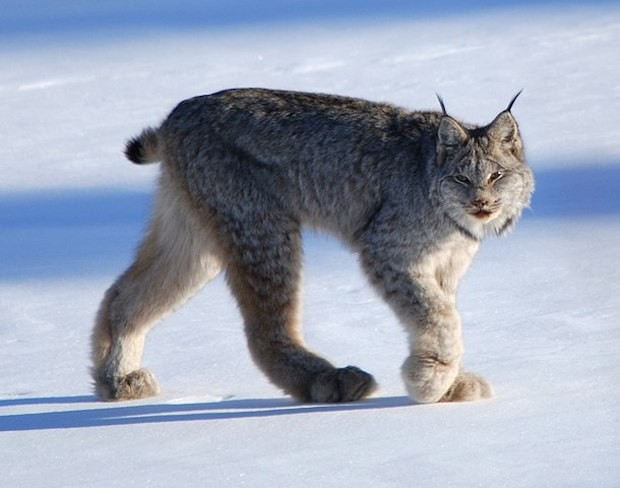
O lince-do-canadá está entre os felinos mais raros do mundo (Foto: Keith Williams / Wikimedia Commons / CreativeCommons)

O lince-do-canadá está entre os felinos mais raros do mundo (Foto: Keith Williams/ Wikimedia Commons/ CreativeCommons)

Todos nós conhecemos os grandes felinos selvagens, como leões, tigres, pumas, leopardos e até onças, mas há um universo inteiro de outros gatos e uma porção de subespécies que provavelmente você nunca ouviu falar.

Conheça alguns dos gatos selvagens mais raros do planeta!

1. Leopardo-de-amur

Considerada como o gato selvagem mais raro do mundo, estima-se que existam apenas 80 animais dessa subespécie vivendo livremente na Rússia e na China. A ameaça de extinção desses felinos vem principalmente da caça ilegal e da perda de habitat pela construção de estradas e incêndios florestais.
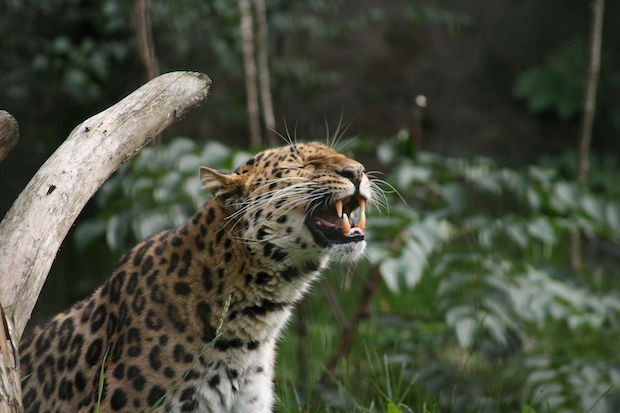
Panthera pardus orientalis vive nos montes Sikhote-Alin (Foto: Madhusudhan Nanjappa / Wikimedia Commons / CreativeCommons)

Panthera pardus orientalis vive nos montes Sikhote-Alin, sudeste da Rússia (Foto: Madhusudhan Nanjappa/ Wikimedia Commons/ CreativeCommons)

2. Lince-ibérico

Os linces-ibéricos estão criticamente ameaçados de extinção. Eles vivem em áreas isoladas no sul da Espanha e se alimentam principalmente de coelhos.
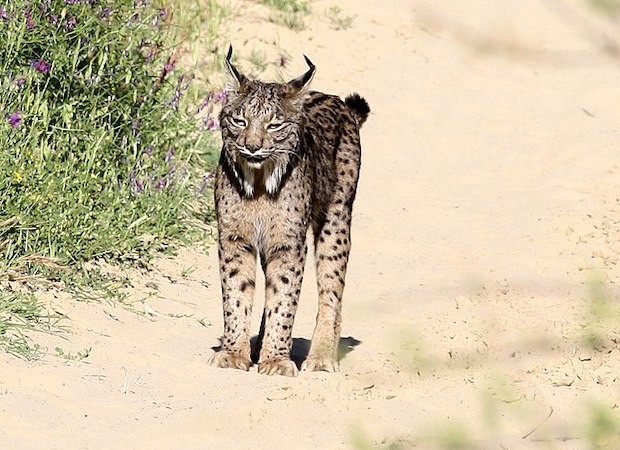
 O Lynx pardinus não se adaptou a outras presas e, pela escassez de coelho, corre risco de extinção (Foto: Fernando Diz-lois / Wikimedia Commons / CreativeCommons)

O Lynx pardinus não se adaptou a outras presas e, pela escassez de coelhos, corre risco de extinção (Foto: Fernando Diz-lois/ Wikimedia Commons/ CreativeCommons)

 3. Tigre-malaio

Esta subespécie é encontrada apenas em algumas áreas da península de Málaca, na Malásia, e é o símbolo do país. Estima-se que existam menos de 200 desses animais livres na natureza.
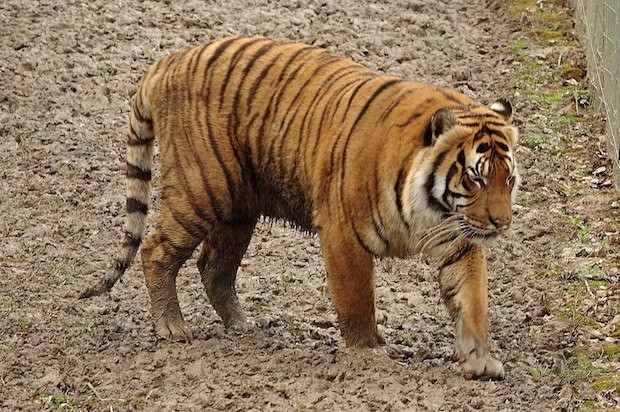
O Panthera tigris tigris aparece nas moedas da Malásia (Foto: Abujoy / Wikimedia Commons / CreativeCommons)

O Panthera tigris jacksoni aparece nas moedas da Malásia (Foto: Abujoy / Wikimedia Commons / CreativeCommons)

4. Guepardo-asiático

O guepardo-asiático é uma subespécie que já habitou a península arábica, a região do mar do Cáspio, Paquistão e Índia, mas foi extinto nessas áreas no início do século 20. Apenas cerca de 200 animais do tipo ainda vivem na natureza, exclusivamente no Irã.
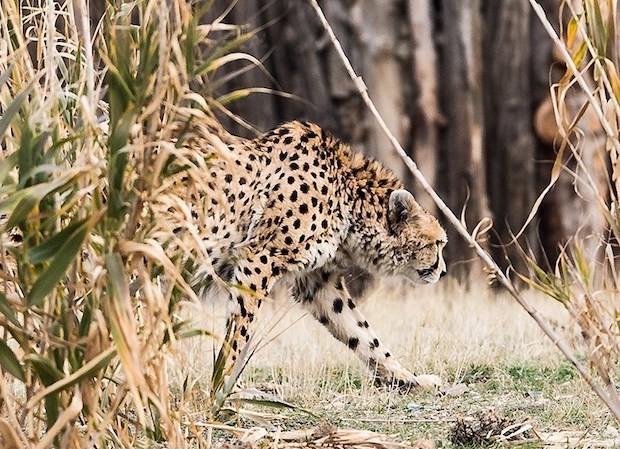
O Acinonyx jubatus venaticus também é conhecido como guepardo-iraniano (Foto: Erfan Kouchari / Wikimedia Commons / CreativeCommons)

O Acinonyx jubatus venaticus também é conhecido como guepardo-iraniano (Foto: Erfan Kouchari/ Wikimedia Commons/ CreativeCommons)

5. Leopardo-das-neves

Estes animais vivem nas montanhas da Ásia Central, em altitudes de até 6.700 metros. Assim como os linces canadenses, suas patas são largas, o que os ajuda a caminhar pela neve.
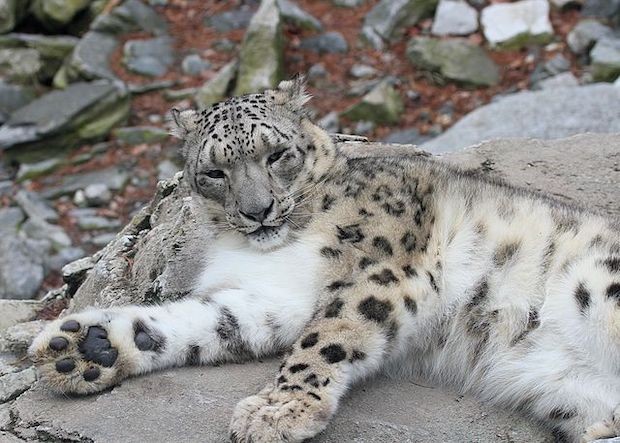
A Panthera uncia é uma espécie muito esquiva quase nunca avistada por humanos (Foto: Greg Hume / Wikimedia Commons / CreativeCommons)

A Panthera uncia é uma espécie muito esquiva quase nunca avistada por humanos (Foto: Greg Hume/ Wikimedia Commons/ CreativeCommons)

6. Gato-andino

Os gatos andinos são o equivalente americano ao leopardo-das-neves: eles vivem em altitudes de 3.500 a 4.800 metros, próximos a fontes de água na Cordilheira dos Andes. Antes de 1998, eles só haviam sido fotografados duas vezes!
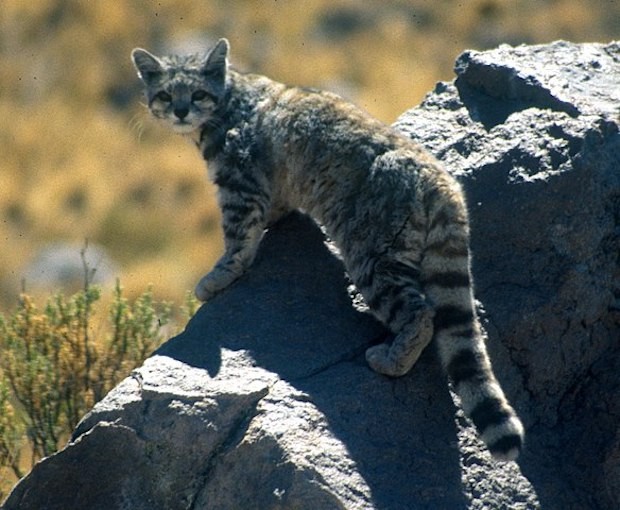
O Leopardus jacobita se alimenta de pequenos roedores (Foto: Jim Sanderson / Wikimedia Commons / CreativeCommons)

O Leopardus jacobita se alimenta de pequenos roedores (Foto: Jim Sanderson/ Wikimedia Commons/ CreativeCommons)

7. Gato-vermelho-de-bornéu

Estes felinos são misteriosos e vivem apenas na ilha de Bornéu. Provavelmente, há menos de 2.200 animais adultos da espécie na natureza.
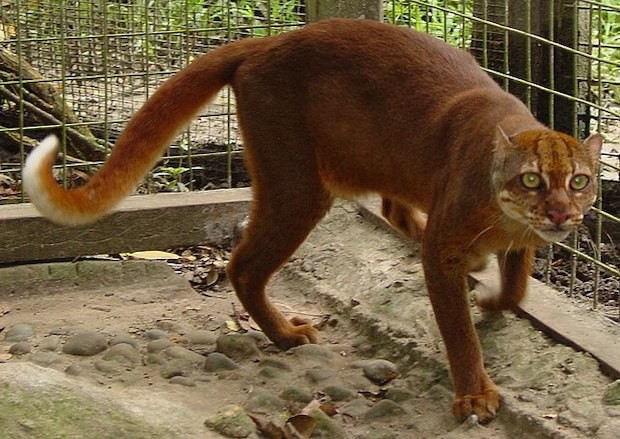
Apenas 12 animais da espécie Catopuma badia já foram capturados para estudo (Foto: Jim Sanderson / Wikimedia Commons / CreativeCommons)

Apenas 12 animais da espécie Catopuma badia já foram capturados para estudo (Foto: Jim Sanderson/ Wikimedia Commons/ CreativeCommons)

8. Gato-pescador

Os gatos-pescadores vivem em zonas úmidas em partes do sul e sudeste da Ásia, especialmente perto de córregos, rios e manguezais. Eles têm patas espalmadas e são adeptos da captura de peixes e outras pequenas presas.
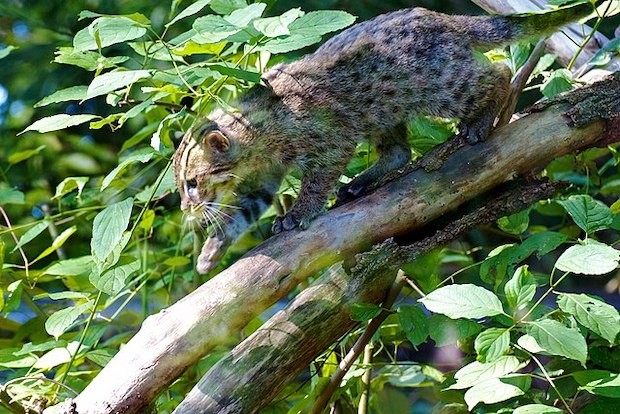
A espécie Prionailurus viverrinus alimenta-se de peixes (Foto: Michael Bentley / Wikimedia Commons / CreativeCommons)

A espécie Prionailurus viverrinus alimenta-se de peixes (Foto: Michael Bentley/ Wikimedia Commons/ CreativeCommons)

9. Lince-do-canadá

A principal característica que diferencia o lince-do-canadá das outras espécies são suas enormes patas traseiras que parecem raquetes de andar na neve.
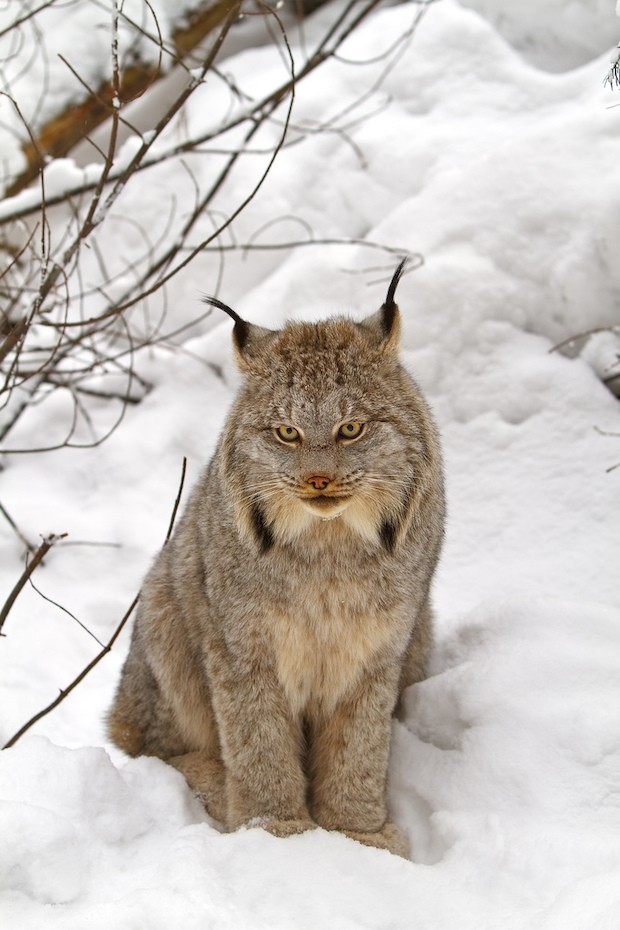
O Lynx canadensis também pode ser encontrado nos EUA (Foto: Michael Zahra / Wikimedia Commons / CreativeCommons)

O Lynx canadensis também pode ser encontrado nos EUA (Foto: Michael Zahra / Wikimedia Commons / CreativeCommons)
 

quinta-feira, 17 de janeiro de 2019

Saving snow leopards in a war zone

Conflict and conservation became unlikely bedfellows in Afghanistan, finds Thomas McCarthy.

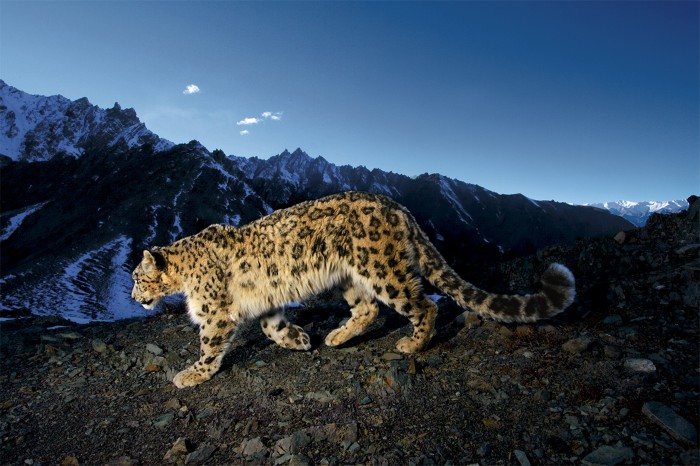
A snow leopard traverses a rocky slope at night in the nearby high altitude Hemis National Park in India.
Snow leopards in the high Asian mountains have been aided by the creation of national parks. Credit: Steve Winter/National Geographic Creative
 
The Snow Leopard Project: And Other Adventures in Warzone Conservation Alex Dehgan PublicAffairs (2019)

Imagine a scientific field where success is at least partly measured by staying alive. This is conservation biology in the world’s many war zones, where researchers face despair over the accelerating extinction crisis, and the risk of stray bullets. It is, as pioneer Michael Soulé put it more than 30 years ago, a “mission-oriented crisis discipline”.

Alex Dehgan weathered all this, and more, working in far-flung corners of Afghanistan, including the peaks of the Pamir Mountains — one of Earth’s most remote, inhospitable natural environments — on animals including the rare and elusive snow leopard (Panthera uncia). Over two years in the mid-2000s, Dehgan established the Wildlife Conservation Society (WCS) Afghanistan Program. It became one of the most successful conservation efforts to be set up in an active conflict zone. His new book, The Snow Leopard Project chronicles this story.

In 2006, wildlife conservation in Afghanistan seemed almost a counter-intuitive undertaking, Dehgan notes. Three decades of war, along with insurgency by the Taliban and a nascent democratic government that was weak and decentralized, did not provide the most suitable underpinnings for a national conservation awakening. Even assessing the status of wildlife in the country, a prerequisite to any on-the-ground conservation, would have to happen amid more than half a million landmines, which litter even the most remote parts of the country. Yet Dehgan viewed this as a clean slate for reinventing conservation practices at a country-wide level.
Afghanistan has for centuries been a “crossroads of human cultures and empires” and an important stop on the Silk Road. But, as Dehgan notes, it is an equally important crossroads for the fauna and flora of Asia, Europe and Africa. In what many in the West felt to be dusty, war-weary and desolate, he saw beauty, biological diversity and an opportunity to reverse environmental disruption from the country’s long litany of conflicts.

Born in Iran, Dehgan emigrated to the United States with his family at the age of two, in the early 1970s. A career that veered from law to diplomacy to conservation, with stints in Russia, Madagascar and Iraq, gave him a remarkable skill set. Yet his impressive experience barely prepared him for the challenges of setting up shop in Kabul. Here, the most mundane tasks had to be done while keeping one eye out for improvised explosive devices on the roadside and suicide bombers in markets or oncoming vehicles. Finding staff, from biologists to cooks, and a safe office for them, was one of the first hurdles. The programme’s main funder, the US Agency for International Development (USAID), was little help at the time: its interests seemed weighted towards nation-building, not nature. Dehgan laments that the agency’s focus was expenditure — an easy metric. (He notes with pride that he was involved in changing that culture when he later became USAID’s chief scientist.)

As a conservationist leading field programmes in Asia, I gravitate towards books by others doing similar work. I’m often disappointed by dry accounts that omit the human stories. By contrast, Dehgan introduces nearly every actor in his saga with witty observations on demeanour and personality, not just professional credentials. Drawn deep into his story, we feel his burden when sending ‘his people’ into areas where safety concerns — from drowning in freezing rivers to falling from precipitous cliffs frequented by snow leopards — are compounded by the risk of being shot at, blown up or worse.

Thus, this is less a book about research than about the trials, triumphs and occasional absurdity of building a conservation programme in extreme circumstances. More than once, Dehgan and his team find themselves staring down the barrel of an AK-47 rifle, trying in multiple languages to defuse a tense situation. The hazards of their fieldwork go far beyond the norm. Veering accidentally into a minefield means a painstaking reversal along their tyre tracks to safety. As they are returning from Tajikistan after a mission to push for an international peace park, loose tow cables send the team’s already questionable ferry careering downriver. Surveys for rare species along the border with Pakistan mean trekking along steep mountain paths too narrow for pack animals, while keeping one eye out for insurgents who could end the researchers’ lives on the spot. Political pitfalls are as abundant, such as when an Iranian diplomat mistakenly believes Dehgan is the conduit to renewed diplomatic relations with the United States.

Ultimately, The Snow Leopard Project is a story of conservation success from a nation where good news is scant. Afghanistan’s first national park, Band-e-Amir, was created in 2009. At about the same time, the Wakhan Corridor — a sliver of land between Pakistan and Tajikistan known as the Roof of the World — saw a return of tourists drawn by the possibility of seeing the majestic Marco Polo sheep (Ovis ammon polii) that thrive there. In 2014, the wider Wakhan area became Afghanistan’s second national park. Larger than Yellowstone National Park in Wyoming, it encompasses nearly three-quarters of the country’s snow-leopard range. Elsewhere, species long thought locally extinct, such as the Kashmir musk deer (Moschus cupreus), were rediscovered in the Eastern Forests Complex, one of the last temperate coniferous forests in the greater Himalayas.
Dehgan gives credit to his many Afghan colleagues, and the Afghan people, for their openness to the idea of conserving their unique natural heritage, and embracing it with the same determination that has kept them resilient in the face of conflict for centuries.

There is a shadow side to these successes, Dehgan reveals. There was, for instance, the issue of how military forces, and even some humanitarian aid agencies, unwittingly participated in the illegal wildlife trade — for instance, by buying furs made from pelts of restricted animals, including snow leopards. The WCS’s public diplomacy campaign made a difference. The military and even Afghan shop owners embraced efforts to stop the loss of the country’s natural treasures, despite an impact on their livelihoods.

The Snow Leopard Project is also a personal record. We learn of Dehgan’s journey to get closer to his Iranian roots, and his anguish over war’s senseless ravaging of nature and culture. But he is optimistic, too, about the country, its people and its wildlife. After his departure, the WCS Afghanistan Program continued its field-oriented mission, helping to establish a third national park in 2017. In the same year, nearly 200,000 people, mostly Afghan citizens, visited Band-e-Amir National Park.

Nature 565, 292-293 (2019)
doi: 10.1038/d41586-019-00125-w

sexta-feira, 2 de novembro de 2018

black-footed cat
endangered cats
  • HB Length:36-52 cm (14-20″)
  • Tail Length: 12-20 cm (4.7-8″)
  • Height: Appr. 20 cm (8″)
  • Weight: 1-2.5 kg (2.2-5.5 lbs)
  • Pop. Trend: Decreasing
The Black-footed Cat Felis nigripes is Africa’s smallest felid, and among the smallest wild cat species in the world.

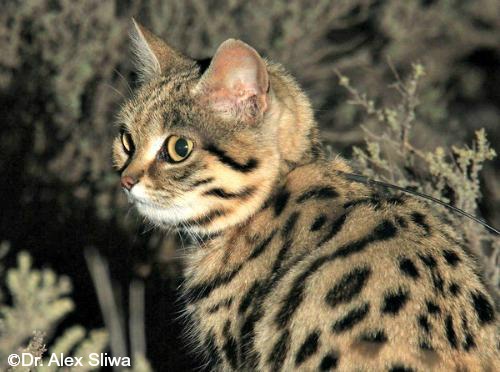
The soft, dense coat ranges from dark to pale tawny gold, with a bold pattern of rounded dark brown to black spots which sometimes merge into bands or rings. Their large eyes are amber or greyish brown. The chin, chest, belly and insides of the legs are whitish, and the backs of the ears are pale brown. There are two dark streaks across each cheek, and dark bars on the forelegs and haunches. The short tail, about half the body length, has two or three black rings, tapering to a black tipped point. As special adaptations to their desert habitat, these cats have a broad skull with large, rounded ears, which provide enhanced hearing in an area with scarce prey. Low-set ears are often completely flattened in an ‘aggressive’ posture, an adaptation to hunting in areas with little cover. They are protected from the hot sand by hair on the black soles of the feet.
Distribution
black footed cat range map
Click for larger image
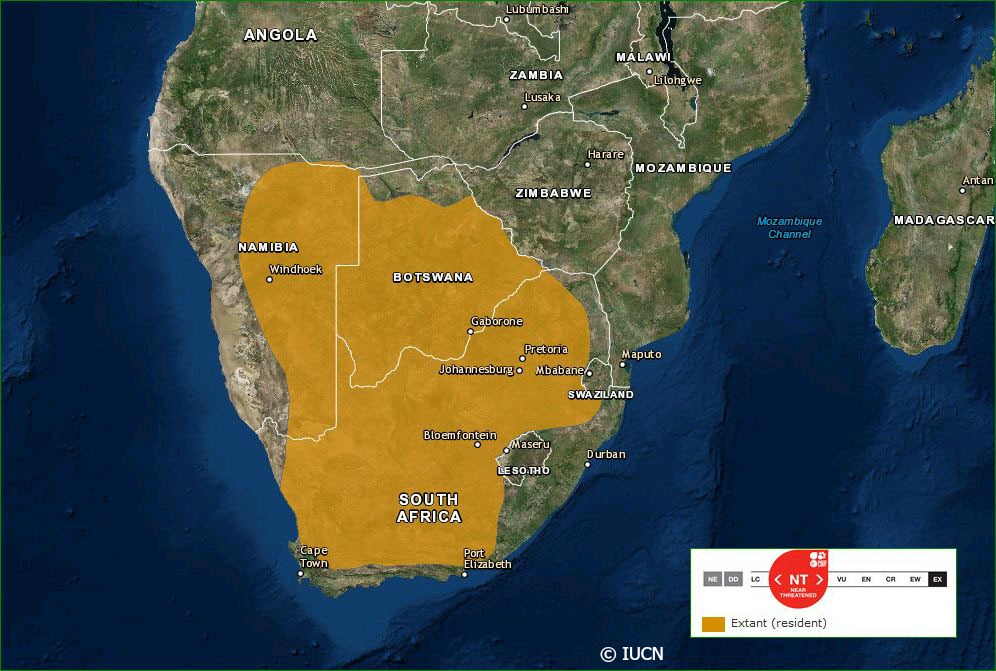
Black-footed Cats are found only in three countries of southern Africa: Botswana, Namibia and South Africa. They are found primarily in short to medium length grass plains, scrub desert, and sand plains, including the Kalahari and Karoo Deserts. Areas of grass with high rodent and bird densities are optimal habitat. They seem to avoid brushy country and rocky terrain, perhaps because of the occurrence of other carnivores. Average annual rainfall in the area is 100-500 mm.

The Black-footed Cat is rare compared to the other small cats of southern Africa. Knowledge of the behaviour and ecology of this cat comes from a decades-long study on the Benfontein Nature Reserve and two large farms in central South Africa. Researchers from the Black-footed Cat Working Group continue to study the cats in these three areas.

In the 60 sq km study area, they found the density of adult cats to be 0.17/sq km,, but in low-quality habitat densities were much lower. Males have larger home ranges at 20.7 sq km than females, 10 sq km. Male ranges overlap those of one to four females.

Ecology

An incredibly tenacious little cat, the natives have a legend claiming these tiny cats can bring down giraffe. While this is untrue, it pays homage to the fierce determination of these feisty little felines.
During the study, 1725 prey items were consumed, with the males taking larger prey species. Mammals were most often taken (72%), followed by small birds, while invertebrates, amphibians and reptiles were rarely eaten. Small rodents like the large-eared mouse were particularly important during the reproductive season for females with kittens. Males showed less seasonal variation in their choice of prey, which may help to reduce competition between the sexes.

Black-footed Cats share their range with other carnivores – African wildcat, Cape foxes, bat-eared foxes and black-backed jackals. They captured smaller prey on average than African Wildcats Felis silvestris lybica, although both captured approximately the same number (12-13) of prey species per night. The cats co-exist with jackals (predators on the cats) by using burrows during the day. They share space with the Cape foxes but don’t use the same habitats, activity times or hunt the same prey species.

One small Black-footed Cat can consume 3,000 rodents each year. They have also been known to eat dead springbok lambs, although they don’t actually kill them. Larger males can take adult Cape hare which weigh approximately the same as the cat. They have also been observed eating eggs, crushing them gently between the jaws, and then licking the contents clean. Although they can get their moisture requirements from prey, they will drink water if it is available.
Black-footed Cats shelter during the heat of the day in abandoned termite mounds or burrows. Of 184 resting places in South Africa, 98% of them were abandoned springhare burrows. Their habit of resting in termite mounds has earned them the local name of ‘anthill tiger’. Their nocturnal activity varies with the length of the night, leaving and returning to the den within 30 minutes of sunset and sunrise. Hunting techniques include waiting up to 40 minutes at rodent burrows, or flushing nesting birds by walking very fast through the grass. Hunting cats are occasionally shadowed by marsh owls which swoop down on the flushed prey.
They readily climb trees and fence posts to look for bird nests, but generally there is little food in the acacia trees compared to that available on the ground. While attacking flying birds, they make frequent jumps of up to 2 metres in distance and 1.5 metres high.
Researchers observed a male Black-footed Cat steal a gerbil from a striped polecat, an equally tenacious member of the weasel family. On five occasions, researchers observed black-backed jackals circling cornered Black-footed Cats. The tiny cat attacked each time, succeeding in driving the much larger jackal away.

Reproduction

Black-footed Cats are solitary, except for females with dependent kittens, and during mating. After a 63 – 68 day gestation, one to four kittens are born at the bottom of a burrow weighing 60 – 84 grams. Females have two litters per year. The mother frequently changes dens, probably to avoid attracting predators. Their eyes open at around seven days. Kittens are independent after 3-4 months, but remain within the range of their mother for extended periods. They begin hunting at an early age, another indication of life in a harsh environment. When the mother calls an alarm, the young scatter and freeze until the danger has passed.

Conservation

The Black-footed Cat faces several man-made threats. Overgrazing by livestock is prevalent throughout its range, leading to a reduced prey base. Indiscriminate poisoning of carcasses to kill Caracals Caracal caracal and jackals affect it as the small cats readily scavenge. Poisoning of locusts which are eaten by the cats also poses a serious danger. Cats fall victim to dogs, used to chase or dig out jackals during problem animal operations.
These desert dwellers are difficult to keep in captivity outside their native range. They have very specific habitat requirements and must be kept under dry conditions. Wuppertal Zoo in Germany has had excellent breeding success however, and the core of the captive population is there.
Recommended conservation measures include more fine scale distributional studies particularly in Namibia and Botswana.

See also
Black-footed Cat Project
Black-footed Cat Hunting & Diet
Black-footed Cat Research Findings
Range map IUCN Red List 2008
Updated 2018

https://wildcatconservation.org/wild-cats/africa/black-footed-cat/ 

Máquina de matar adorável, sem remorsos é o gato mais mortal do mundo


Adorable, Remorseless Killing Machine Is World's Deadliest Cat

The black-footed cat (Felis nigripes) as caçadas entre o deserto curto esfregam no Karoo da África do Sul.
Credit: Copyright BBC/Paul William
O gato mais mortífero da Terra não é um leão de juba peluda, um leopardo elegante ou um tigre furtivo. É um gato pequenino que você provavelmente nunca ouviu falar: o menor felino da África, o gato de patas negras. Nativo das pradarias do sul da África, o gato de patas negras tem um rosto redondo e um corpo castanho-claro e preto que é pequeno, mesmo comparado aos gatos domésticos. O felino selvagem mede apenas 14 a 20 polegadas (36 a 52 centímetros) de comprimento, tem cerca de 8 polegadas (20 cm) de altura e pesa cerca de 2 a 6 libras. (1 a 3 quilogramas), de acordo com a Sociedade Internacional para Gatos em Perigo (os gatos de patas negras são listados como "vulneráveis" pela União Internacional para a Conservação da Natureza).

Admittedly, those measurements don't sound very impressive when compared to the sizable big cats that are among the world's most fearsome predators. But despite its small size, the black-footed cat hunts and brings down more prey in a single night than a leopard does in six months, according to the PBS Nature miniseries "Super Cats." [Meet the Rare and Fabulous Felines of 'Super Cats' (Photos)]

O segundo episódio da minissérie foi ao ar na PBS na noite de ontem (31 de outubro). Apresentava um vislumbre sem precedentes do gato de patas negras, além de visões de outros felinos selvagens fascinantes e indescritíveis, como uma onça grávida na Costa Rica, um raro tigre de pântano na Índia e uma família de gatos de pesca - os únicos gatos semiaquáticos - nas zonas húmidas da Ásia.

Para o último episódio, intitulado "Cats in Every Corner", os cineastas capturaram visões nunca antes vistas de gatos de patas negras colaborando com o pesquisador Alexander Sliwa, curador do Zoológico de Colônia, na Alemanha, que estuda o gato de patas negras desde os anos 90. Por meio do Sliwa, os criadores da série ganharam acesso a vários pequenos gatos que já haviam sido equipados com coleiras de rádio em um estúdio de estudo na África do Sul, disse o produtor de "Super Cats" Gavin Boyland à Live Science.

Filmar os pequenos gatos mostrou-se excepcionalmente desafiador, disse Boyland. Porque os gatos de patas negras são tão pequenos, eles são mais difíceis de rastrear através de grama alta do que os grandes felinos. Como os pequenos gatos caçam principalmente à noite, a equipe de produção precisava usar uma câmera especial sensível à luz para detectar os felinos, gravando imagens de comportamento de caça que nunca haviam sido capturados antes, explicou Boyland. E quando se trata de caçar, como os cineastas viram, o gato de patas negras é extraordinariamente eficiente - "uma verdadeira potência", disse Luke Hunter, diretor de conservação da Panthera, uma organização global de conservação de animais selvagens.

Hunter, que serviu como consultor científico para "Super Cats", explicou que pequenos predadores como o gato de patas negras aceleraram o metabolismo, que precisam manter o combustível o tempo todo ", então eles estão constantemente caçando", disse ele.
Black-footed cats are found only in three countries: Botswana, Namibia and South Africa.
Credit: Copyright Alexander Sliwa

Gatos de patas negras usam três técnicas muito diferentes para prender suas presas. Um método é conhecido como "caça rápida", em que os gatos se ligam rapidamente e "quase aleatoriamente" pela grama alta, expulsando pequenas presas, como pássaros ou roedores, disse Hunter. Outro de seus métodos leva-os em um curso mais lento através de seu habitat, com os gatos tecendo calma e cuidadosamente para se aproximarem de presas em potencial. Finalmente, eles usam uma abordagem de sentar e esperar perto de tocas de roedores, uma técnica chamada ainda caça, disse Hunter.

"They wait for up to 2 hours, [staying] absolutely immobile, just silently waiting at the burrow for a rodent to appear. And then they nab it," Hunter told Live Science.

Em uma noite, um gato de patas negras mata entre 10 e 14 roedores ou pequenos pássaros, em média matando a cada 50 minutos, de acordo com Hunter. Com uma taxa de sucesso de 60 por cento, os gatos de patas negras são cerca de três vezes mais bem sucedidos do que os leões, que em média matam com sucesso cerca de 20 a 25 por cento do tempo, disse Hunter. "Se você é uma gazela ou um gnu, um gato de patas negras não é de todo mortal. Mas essas taxas de sucesso fazem deles o gatinho mais mortífero da Terra", disse ele.

Livestock grazing reduces the habitats of black-footed cats, which hunt birds, rodents and even insects that inhabit grassland ecosystems.

Livestock grazing reduces the habitats of black-footed cats, which hunt birds, rodents and even insects that inhabit grassland ecosystems.
Credit: Copyright Alexander Sliwa
Os gatos de patas negras representam apenas uma espécie em uma família felina altamente diversificada, muitos dos quais são difíceis de serem observados na natureza e não são bem compreendidos. E embora a maioria dos felinos que aparecem em "Super Cats" enfrentem sérias ameaças de perda de habitat e destruição da atividade humana, os esforços de conservação ainda podem preservar as populações vulneráveis, disse Hunter.

"Acredito que não seja a piora e a tristeza. Mas se não preservarmos ativamente essas espécies, se não trabalharmos para reduzir essas ameaças, poderemos perder alguns desses animais", acrescentou. O episódio 2 de "Super Cats" está disponível para transmissão a partir de hoje (1 de novembro). Você também pode assistir ao Episódio 1 - "Extreme Lives" - e aprender mais sobre a minissérie no site da PBS Nature e nos aplicativos da PBS. Episódio 3, "Science and Secrets", estréia quarta-feira, 7 de novembro, às 20h. no PBS (verifique as listagens locais).


Originally published on Live Science.