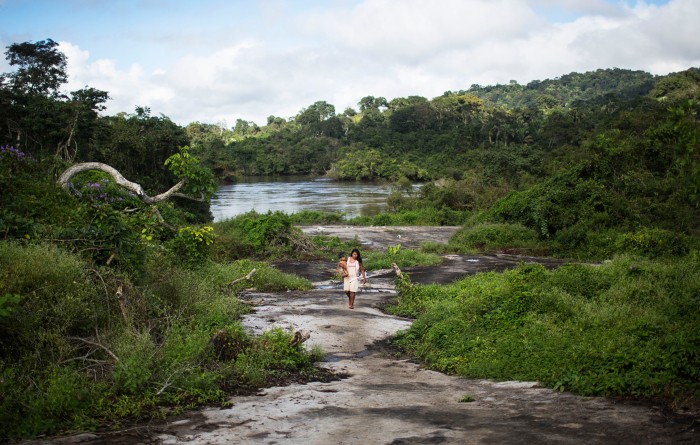
A Xikrin woman walks back to her village from the Cateté River in Brazil. Credit: Taylor Weidman/zReportage.com/ZUMA
A century ago, only 15% of Earth’s surface was used to grow crops and raise livestock1.
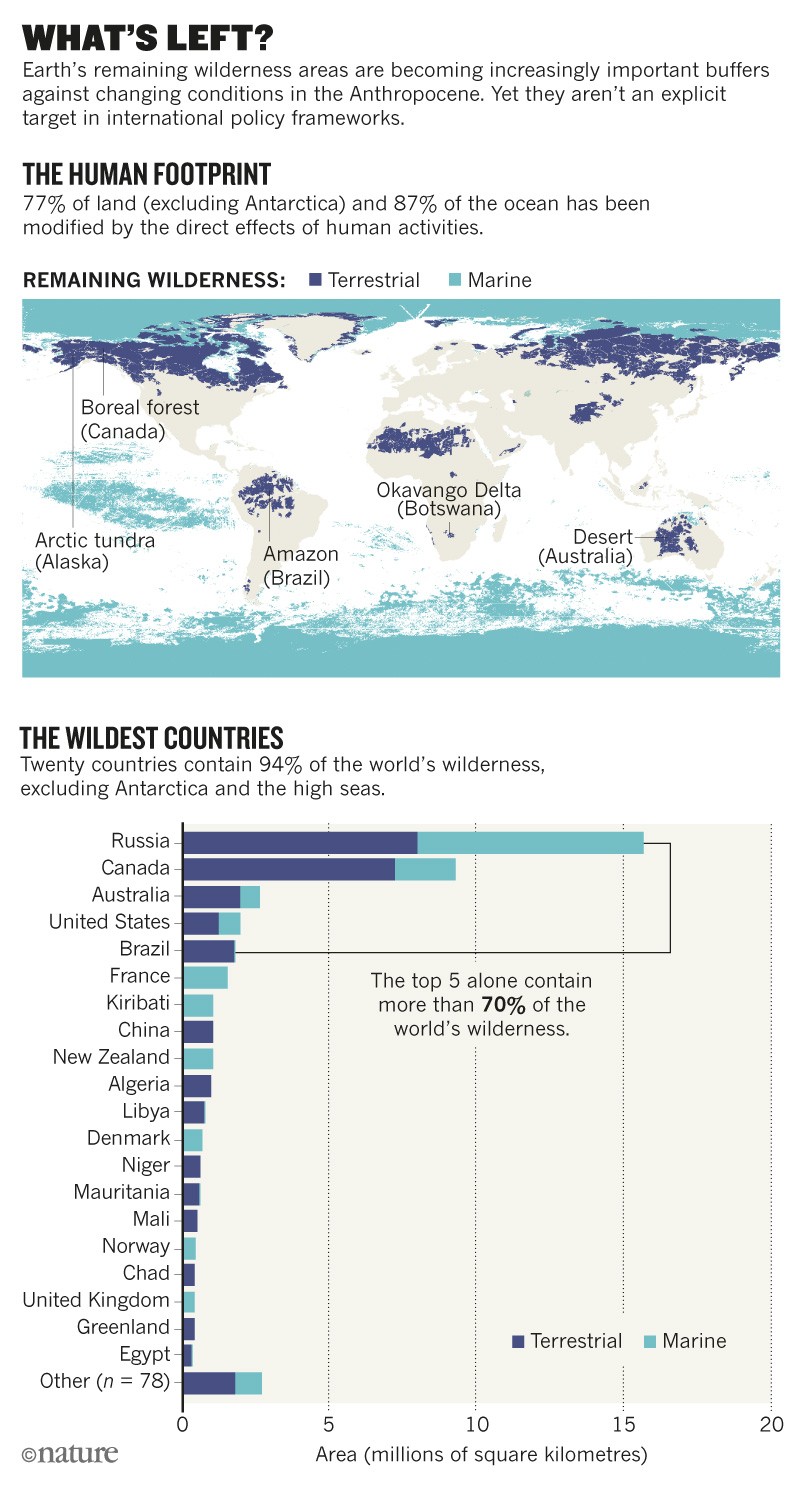
Today, more than 77% of land (excluding Antarctica) and 87% of the
ocean has been modified by the direct effects of human activities2,3. This is illustrated in our global map of intact ecosystems (see ‘What’s left?’).
Between
1993 and 2009, an area of terrestrial wilderness larger than India — a
staggering 3.3 million square kilometres — was lost to human settlement,
farming, mining and other pressures4.
In the ocean, areas that are free of industrial fishing, pollution and
shipping are almost completely confined to the polar regions5.
Numerous
studies are revealing that Earth’s remaining wilderness areas are
increasingly important buffers against the effects of climate change and
other human impacts. But, so far, the contribution of intact ecosystems
has not been an explicit target in any international policy framework,
such as the United Nations’ Strategic Plan for Biodiversity or the Paris
climate agreement.
This must change if we are to prevent Earth’s intact ecosystems from disappearing completely.
Source: Refs 2 & 3
Last chance
In 2016, we led an international team of scientists to map the world’s remaining terrestrial wilderness3,4. This year, we produced a similar map for intact ocean ecosystems2
(see ‘Wild Earth’). The results of these efforts show that time is
running out to safeguard the health of the planet — and human
well-being.
Some conservationists contend that particular areas
in fragmented and otherwise-degraded ecosystems are more important than
undisturbed ecosystems6,7.
Fragmented areas might provide key services, such as tourism revenue
and benefits to human health, or be rich in threatened biodiversity. Yet
numerous studies are starting to reveal that Earth’s most intact
ecosystems have all sorts of functions that are becoming increasingly
crucial2,8,9.
Wild Earth
To map Earth’s remaining terrestrial wilderness, we used the best
available data on eight indicators of human pressures at a resolution of
1 square kilometre. These were: built environments, crop lands, pasture
lands, population density, night-time lights, railways, major roadways
and navigable waterways3,4. (Data were collected in 2009.)
For our map of intact ocean ecosystems, we used 2013 data on fishing,
industrial shipping and fertilizer run-off, among 16 other indicators2.
We identified wilderness land or ocean areas as those that were
free of human pressures, with a contiguous area of more than 10,000 km2 on land.
Wilderness areas are now the only places that contain mixes of
species at near-natural levels of abundance. They are also the only
areas supporting the ecological processes that sustain biodiversity over
evolutionary timescales10.
As such, they are important reservoirs of genetic information, and act
as reference areas for efforts to re-wild degraded land and seascapes.
Various
analyses reveal that wilderness areas provide increasingly important
refuges for species that are declining in landscapes dominated by people11.
In the seas, they are the last regions that still contain viable
populations of top predators, such as tuna, marlins and sharks9.
Safeguarding
intact ecosystems is also key to mitigating the effects of climate
change, which are making the refuge function of wilderness areas
especially important. A 2009 study, for instance, showed that Caribbean
coral reefs that have low levels of pollution or fishing pressure
recovered from coral bleaching up to four times faster than did reefs
with high levels of both12.
And a 2012 global meta-analysis revealed that the impacts of climate
change on ecological communities are more severe in fragmented
landscapes13.
Many
wilderness areas are critical sinks for atmospheric carbon dioxide. For
example, the boreal forest is the most intact ecosystem on the planet
and holds one-third of the world’s terrestrial carbon. And intact
forested ecosystems are able to store and sequester much more carbon
than are degraded ones8. In the tropics, logging and burning now accounts for up to 40% of total above-ground carbon emissions14.
In the ocean, seagrass meadows that are degraded (such as by sediment
pollution) switch from being carbon sinks to major carbon sources15.
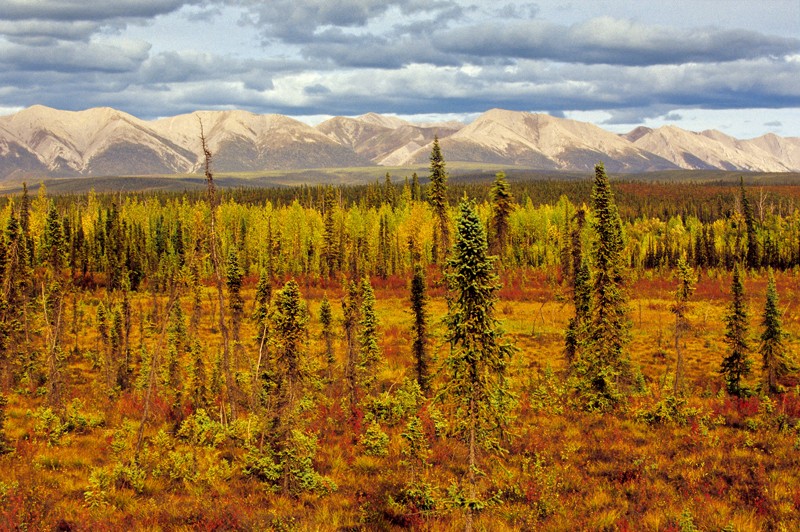
Sub-Arctic vegetation in Canada.Credit: Mike Grandmaison/Getty
Moreover, models based on geography, rainfall, degree of
deforestation and so on are starting to reveal the degree to which
wilderness areas regulate the climate and water cycles — locally,
regionally and globally. Such areas also provide a buffer against
extreme weather and geological events. Simulations of tsunamis, for
instance, indicate that healthy coral reefs provide coastlines with at
least twice as much protection as highly degraded ones16.
Wilderness
regions are home to some of the most politically and economically
marginalized indigenous communities on Earth. These people (who number
in the hundreds of millions) are reliant on intact marine and
terrestrial ecosystems for resources such as food, water and fibre17.
Many have established biological and cultural connections with their
environment over millennia. Securing the wilderness is central to
reducing their poverty and marginalization — and to achieving numerous
UN Sustainable Development Goals, from reducing inequality to improving
human well-being.
Global targets
We believe that Earth’s
remaining wilderness can be protected only if its importance is
recognized within international policy frameworks.
Currently,
some wilderness areas are protected under national legislation such as
the 1964 US Wilderness Act, which protects 37,000 km2 of
federal land. But in most nations, these areas are not formally defined,
mapped or protected, and there is nothing to hold nations, private
industry, civil society or local communities to account for their
long-term conservation. What is needed is the establishment of global
targets within existing international frameworks — specifically, those
aimed at conserving biodiversity, avoiding dangerous climate change and
achieving sustainable development.
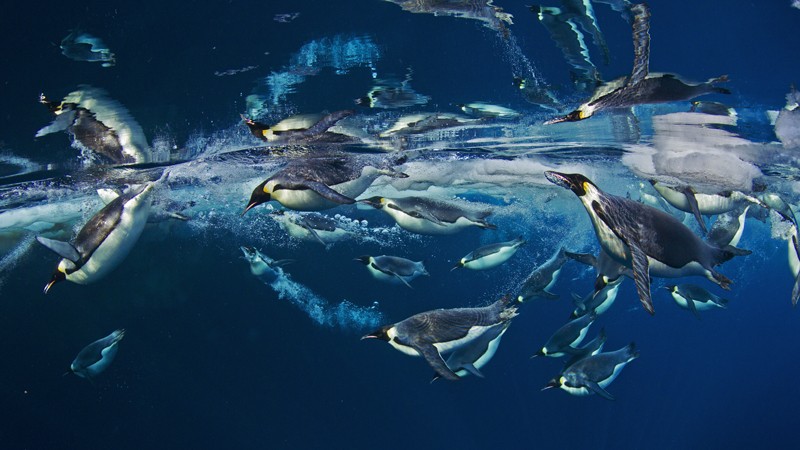
Emperor penguins in the Ross Sea.Credit: Paul Nicklen/NGC
There are several ways to do this immediately. The carbon
sequestration and storage capacities of wilderness areas could be
formally documented, and the importance of conserving them written into
the policy recommendations of the UN Framework Convention on Climate
Change (UNFCCC). Such a move would enable nations to make the protection
of wilderness areas an integral part of their strategy for reducing
emissions.
As an example, under the UNFCCC process for reducing
emissions from deforestation and forest degradation (REDD+), landowners
can be compensated if they refrain from clearing an area of tropical
forest that they’d planned to develop. However, there are no incentives
for nations, private industry or communities to protect crucial carbon
sinks, even when no imminent development is identified. This means that
there is nothing to stop the slow erosion of these places from
small-scale and often unplanned industrial activity. Similar policies
are needed to protect other carbon-rich ecosystems, such as seagrass
meadows, and temperate and boreal forests, especially in developed
countries that do not currently receive financial support under the
UNFCCC.
Later this month, Egypt will host the 14th gathering of
the Conference of the Parties to the Convention on Biological Diversity
(CBD). Signatory nations, intra-governmental organizations such as the
International Union for Conservation of Nature (IUCN), non-governmental
organizations and the scientific community will meet to work towards a
strategic plan for the protection of biodiversity after 2020. We urge
participants at the meeting to include a mandated target for wilderness
conservation. In our view, a bold yet achievable target is to define and
conserve 100% of all remaining intact ecosystems.
A mandated
global target will make it easier for governments, non-governmental
organizations and entities such as the Global Environment Facility (a
multinational funding programme that tackles environmental and
sustainability problems) to leverage funding and mobilize action on the
ground.
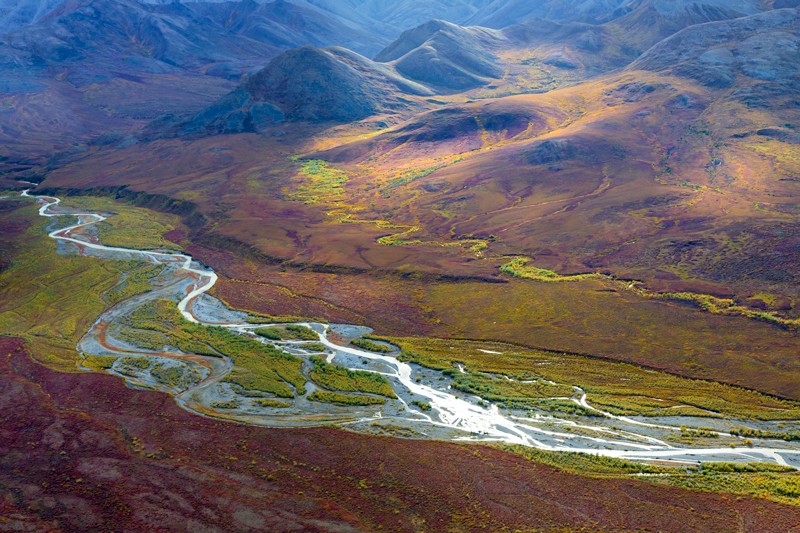
The Ivishak River in the Arctic National Wildlife Refuge, Alaska.Credit: Danita Delimont/Getty
It will also help to enable action under the various
conventions that are attempting to protect biodiversity. For example,
officially recognizing the contribution that the wilderness makes to the
‘outstanding universal value’ of certain areas could lead to the
designation of new Natural World Heritage Sites.
Under the UN
World Heritage Convention, Natural World Heritage Sites are currently
selected for their outstanding natural beauty, or because they contain
unique biodiversity or ecological and geological features. The
wilderness is associated with all of these criteria, but its importance
has yet to be specifically acknowledged.
Almost two-thirds of
marine wilderness lies in international waters, beyond the immediate
control of nations. The United Nations Convention on the Law of the Sea
is currently negotiating a legally binding agreement to govern high-seas
conservation. Keeping Earth’s remaining marine wilderness off-limits to
exploitation should be a key component of the new treaty. Strict limits
on government subsidies of harmful fishing will also be crucial here;
without these, more than half of high-seas industrial fishing would be
unprofitable18.
Our
maps exclude Antarctica because it is off-limits to direct resource
exploitation such as mining, and the indirect effects of human
activities there are harder to measure. But it is a crucial wilderness
area that is urgently in need of protection. Antarctica’s isolation and
extreme conditions have prevented the levels of degradation experienced
elsewhere. But invasive species, pollution, increased human activity
and, above all, climate change are threatening its unique biodiversity
and its ability to regulate the global climate.
The Antarctic
Treaty System’s Committee for Environmental Protection has prioritized
research and action targeted at minimizing human impacts in its latest
five-year plan. Signatory nations must now commit to implementing
measures targeted at reducing human impacts, such as strict biosecurity
procedures that minimize the risk of visitors to Antarctica introducing
invasive species.
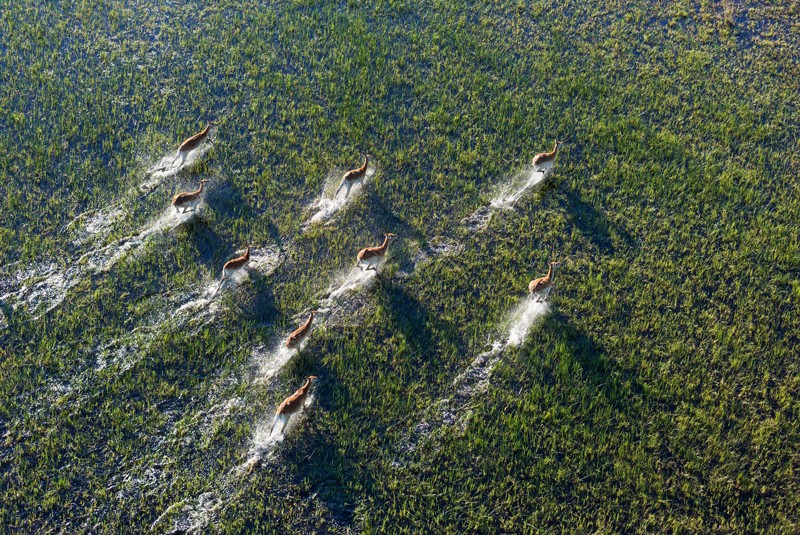
Red lechwe antelope (Kobus leche leche) in the Okavango Delta in Botswana. Credit: Thomas Dressler/Getty
Local action
How can changes in policy at the global level translate into effective national action?
By
our measure, 20 countries contain 94% of the world’s remaining
wilderness (excluding the high seas and Antarctica). More than 70% is in
just five countries — Russia, Canada, Australia, the United States and
Brazil (see ‘What’s left?’). Thus, the steps these nations take (or fail
to take) to limit the expansion of roads and shipping lanes, and to
rein in large-scale developments in mining, forestry, agriculture,
aquaculture and industrial fishing, will be critical.
One obvious
intervention that these nations can prioritize is establishing
protected areas in ways that would slow the impacts of industrial
activity on the larger landscape or seascape19. Given the scale of wilderness areas, however, the expansion of strictly enforced protected areas won’t suffice.
Several
studies show that stopping industrial development to protect the
livelihoods of indigenous people can conserve biodiversity and ecosystem
services just as well as strictly protected areas can. As such, the
recognition of local community rights to land ownership and management
could be a key way to limit the impacts of industrial activity8.
Mechanisms
that enable the private sector to protect, rather than harm, wilderness
areas will be crucial. Specifically, the preservation of intact
ecosystems needs to feature among lenders’ investment and performance
standards, particularly for organizations such as the World Bank, the
International Finance Corporation and the regional development banks.
Initiatives that enable companies to declare their supply chains
‘deforestation-free’ (such as for products containing palm oil) should
be expanded to help to secure more intact ecosystems.
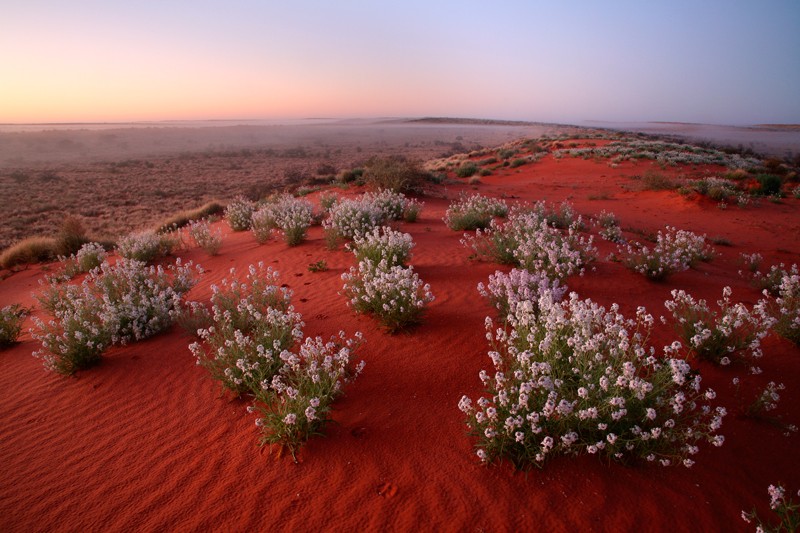
Flowers in the Australian desert, a wilderness that is the last stronghold of many marsupial species, such as the bilby. Credit: Feargus Cooney/Getty
In the oceans, regional fisheries management organizations
(RFMOs), formed by countries to manage shared fishing interests, have
effectively closed large areas of the high seas. For example, the North
East Atlantic Fisheries Commission (an RFMO founded in 1980) has shut
more than 350,000 square kilometres of the Atlantic to bottom trawling.
The power of RFMOs could be increased to enable the creation of broader,
scaled-up conservation agreements for the high seas.
Wild places
are facing the same extinction crisis as species. Similarly to species
extinction, the erosion of the wilderness is essentially irreversible.
Research has shown that the first impacts of industry on wilderness
areas are the most damaging11. And once it has been eroded, an intact ecosystem and its many values can never be fully restored.
As
US President Lyndon B. Johnson observed when he signed the US
Wilderness Act in 1964, “If future generations are to remember us with
gratitude rather than contempt … we must leave them a glimpse of the
world as it was in the beginning.”
Already we have lost so much. We must grasp this opportunity to secure the wilderness before it disappears forever.
The Snow Leopard Project: And Other Adventures in Warzone ConservationAlex Dehgan PublicAffairs (2019)
Imagine
a scientific field where success is at least partly measured by staying
alive. This is conservation biology in the world’s many war zones,
where researchers face despair over the accelerating extinction crisis,
and the risk of stray bullets. It is, as pioneer Michael Soulé put it
more than 30 years ago, a “mission-oriented crisis discipline”.
Alex
Dehgan weathered all this, and more, working in far-flung corners of
Afghanistan, including the peaks of the Pamir Mountains — one of Earth’s
most remote, inhospitable natural environments — on animals including
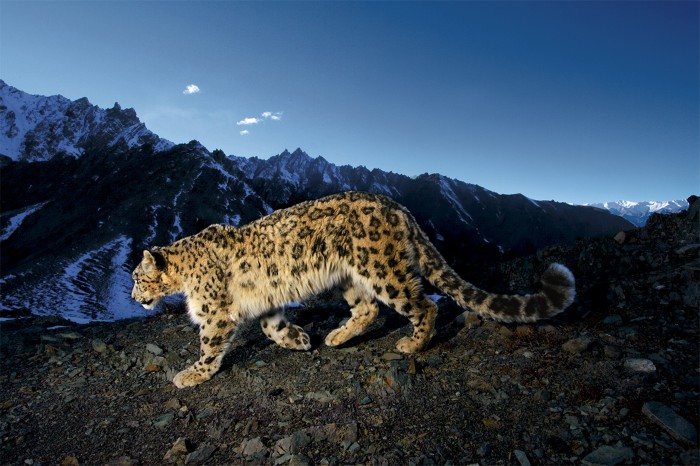
the rare and elusive snow leopard (Panthera uncia). Over two
years in the mid-2000s, Dehgan established the Wildlife Conservation
Society (WCS) Afghanistan Program. It became one of the most successful
conservation efforts to be set up in an active conflict zone. His new
book, The Snow Leopard Project chronicles this story.
In
2006, wildlife conservation in Afghanistan seemed almost a
counter-intuitive undertaking, Dehgan notes. Three decades of war, along
with insurgency by the Taliban and a nascent democratic government that
was weak and decentralized, did not provide the most suitable
underpinnings for a national conservation awakening. Even assessing the
status of wildlife in the country, a prerequisite to any on-the-ground
conservation, would have to happen amid more than half a million
landmines, which litter even the most remote parts of the country. Yet
Dehgan viewed this as a clean slate for reinventing conservation
practices at a country-wide level.
Afghanistan has for centuries
been a “crossroads of human cultures and empires” and an important stop
on the Silk Road. But, as Dehgan notes, it is an equally important
crossroads for the fauna and flora of Asia, Europe and Africa. In what
many in the West felt to be dusty, war-weary and desolate, he saw
beauty, biological diversity and an opportunity to reverse environmental
disruption from the country’s long litany of conflicts.
Born in
Iran, Dehgan emigrated to the United States with his family at the age
of two, in the early 1970s. A career that veered from law to diplomacy
to conservation, with stints in Russia, Madagascar and Iraq, gave him a
remarkable skill set. Yet his impressive experience barely prepared him
for the challenges of setting up shop in Kabul. Here, the most mundane
tasks had to be done while keeping one eye out for improvised explosive
devices on the roadside and suicide bombers in markets or oncoming
vehicles. Finding staff, from biologists to cooks, and a safe office for
them, was one of the first hurdles. The programme’s main funder, the US
Agency for International Development (USAID), was little help at the
time: its interests seemed weighted towards nation-building, not nature.
Dehgan laments that the agency’s focus was expenditure — an easy
metric. (He notes with pride that he was involved in changing that
culture when he later became USAID’s chief scientist.)
As a
conservationist leading field programmes in Asia, I gravitate towards
books by others doing similar work. I’m often disappointed by dry
accounts that omit the human stories. By contrast, Dehgan introduces
nearly every actor in his saga with witty observations on demeanour and
personality, not just professional credentials. Drawn deep into his
story, we feel his burden when sending ‘his people’ into areas where
safety concerns — from drowning in freezing rivers to falling from
precipitous cliffs frequented by snow leopards — are compounded by the
risk of being shot at, blown up or worse.
Thus, this is less a
book about research than about the trials, triumphs and occasional
absurdity of building a conservation programme in extreme circumstances.
More than once, Dehgan and his team find themselves staring down the
barrel of an AK-47 rifle, trying in multiple languages to defuse a tense
situation. The hazards of their fieldwork go far beyond the norm.
Veering accidentally into a minefield means a painstaking reversal along
their tyre tracks to safety. As they are returning from Tajikistan
after a mission to push for an international peace park, loose tow
cables send the team’s already questionable ferry careering downriver.
Surveys for rare species along the border with Pakistan mean trekking
along steep mountain paths too narrow for pack animals, while keeping
one eye out for insurgents who could end the researchers’ lives on the
spot. Political pitfalls are as abundant, such as when an Iranian
diplomat mistakenly believes Dehgan is the conduit to renewed diplomatic
relations with the United States.
Ultimately, The Snow Leopard Project
is a story of conservation success from a nation where good news is
scant. Afghanistan’s first national park, Band-e-Amir, was created in
2009. At about the same time, the Wakhan Corridor — a sliver of land
between Pakistan and Tajikistan known as the Roof of the World — saw a
return of tourists drawn by the possibility of seeing the majestic Marco
Polo sheep (Ovis ammon polii) that thrive there. In 2014, the
wider Wakhan area became Afghanistan’s second national park. Larger than
Yellowstone National Park in Wyoming, it encompasses nearly
three-quarters of the country’s snow-leopard range. Elsewhere, species
long thought locally extinct, such as the Kashmir musk deer (Moschus cupreus), were rediscovered in the Eastern Forests Complex, one of the last temperate coniferous forests in the greater Himalayas.
Dehgan
gives credit to his many Afghan colleagues, and the Afghan people, for
their openness to the idea of conserving their unique natural heritage,
and embracing it with the same determination that has kept them
resilient in the face of conflict for centuries.
There is a shadow
side to these successes, Dehgan reveals. There was, for instance, the
issue of how military forces, and even some humanitarian aid agencies,
unwittingly participated in the illegal wildlife trade — for instance,
by buying furs made from pelts of restricted animals, including snow
leopards. The WCS’s public diplomacy campaign made a difference. The
military and even Afghan shop owners embraced efforts to stop the loss
of the country’s natural treasures, despite an impact on their
livelihoods.
The Snow Leopard Project is also a personal
record. We learn of Dehgan’s journey to get closer to his Iranian roots,
and his anguish over war’s senseless ravaging of nature and culture.
But he is optimistic, too, about the country, its people and its
wildlife. After his departure, the WCS Afghanistan Program continued its
field-oriented mission, helping to establish a third national park in
2017. In the same year, nearly 200,000 people, mostly Afghan citizens,
visited Band-e-Amir National Park.