A Ecologia de Populações
acompanha a população de uma única espécie e descreve como o número de
indivíduos é controlado pelos fatores importantes da Ecologia de Comunidades
Os
princípios da Ecologia de Populações descrevem como as espécies
prosperam em resposta a características dos seus hábitats(Imagem:
wikipédia)
Essa dinâmica populacional
determina as espécies que se extinguem, as que conseguem persistir e as mais
abundantes num meio ambiente dado.
O resultado depende do ajuste
dos seguintes aspectos da estratégia de uma espécie e do seu meio ambiente.
A história de vida
descreve quando os membros da espécie se reproduzem, quantos filhotes têm e
quanto tempo vivem. Por exemplo, as espécies da sucessão pioneira tendem a ter
a primeira reprodução em tenra idade, fecundidade elevada e vida curta. Ao
contrário, as espécies de sucessão tardia têm, tipicamente, reprodução retardada,
poucos filhotes e vida mais longa.
A dispersão
descreve como e em que estágio da vida os membros de uma espécie se deslocam
entre locais diferentes: como semente, como indivíduo jovem ou como adulto. A
dispersão determina como as populações ocupam hábitats adequados e permanecem
numa paisagem fragmentada.
A dormênciadescreve a capacidade de sobreviver a condições hostis em estado relativamente
inativo em certos estágios da vida, como o de semente. Por exemplo, as plantas
anuais do deserto subsistem principalmente como banco de sementes subterrâneo,
capaz de aguardar muitas décadas até que chuvas suficientes induzam a
germinação.
Os princípios da Ecologia de
Populações, como os da Ecologia de Comunidades, descrevem como as espécies
prosperam em resposta a características dos seus hábitats, como arranjo
espacial e frequência das perturbações, disponibilidade e distribuição de
recursos no tempo e no espaço e interação da espécie com competidores,
predadores e doenças.
Os seres humanos afetam a
sobrevivência e a reprodução de organismos urbanos diretamente pela caça ou
programas de remoção e indiretamente por modificações do hábitat, fragmentação
e introdução de competidores, predadores e doenças.
A Ecologia de Populações Urbanas se concentra
no modo como as populações reagem a essas mudanças. Os ecossistemas
urbanos podem acelerar a reação das populações por meio de espécies que
usam estratégias ineficazes e são levadas à extinção local e as que têm
estratégias efetivas e atingem elevada densidade.
quinta-feira, 9 de maio de 2019
Humans are driving one million species to extinction
Landmark United Nations-backed report finds that
agriculture is one of the biggest threats to Earth’s ecosystems.
Report on
the state of the world’s ecosystems finds that human activities and
climate change have significantly altered habitats such as coral reefs.Credit: The Ocean Agency/XL Catlin Seaview Survey
Up to one million plant and animal species face extinction,
many within decades, because of human activities, says the most
comprehensive report yet on the state of global ecosystems.
Without
drastic action to conserve habitats, the rate of species extinction —
already tens to hundreds of times higher than the average across the
past ten million years — will only increase, says the analysis. The
findings come from a United Nations-backed panel called the Intergovernmental Science-Policy Platform on Biodiversity and Ecosystem Services (IPBES).
According
to the report, agricultural activities have had the largest impact on
ecosystems that people depend on for food, clean water and a stable
climate. The loss of species and habitats poses as much a danger to life on Earth as climate change does, says a summary of the work, released on 6 May.
The
analysis distils findings from nearly 15,000 studies and government
reports, integrating information from the natural and social sciences,
Indigenous peoples and traditional agricultural communities. It is the
first major international appraisal of biodiversity since 2005.
Representatives of 132 governments met last week in Paris to finalize
and approve the analysis.
Biodiversity should be at the top of the
global agenda alongside climate, said Anne Larigauderie, IPBES
executive secretary, at a 6 May press conference in Paris, France. “We
can no longer say that we did not know,” she said.
“We have never
had a single unified statement from the world’s governments that
unambiguously makes clear the crisis we are facing for life on Earth,”
says Thomas Brooks, chief scientist at the International Union for
Conservation of Nature in Gland, Switzerland, who helped to edit the
biodiversity analysis. “That is really the absolutely key novelty that
we see here.”
Without “transformative changes” to the world’s
economic, social and political systems to address this crisis, the IPBES
panel projects that major biodiversity losses will continue to 2050 and
beyond. “We are eroding the very foundations of our economies,
livelihoods, food security, health and quality of life worldwide,” says
IPBES chair Robert Watson, an atmospheric chemist at the University of
East Anglia in Norwich, UK.
Reshaping life on Earth
About
75% of land and 66% of ocean areas have been “significantly altered” by
people, driven in large part by the production of food, according to the
IPBES report, which will be released in full later this year. Crop and
livestock operations currently co-opt more than 33% of Earth’s land
surface and 75% of its freshwater resources.
Agricultural activities are also some of the largest contributors to human emissions of greenhouse gases.
They account for roughly 25% of total emissions due to the use of
fertilizers and the conversion of areas such as tropical forests to grow
crops or raise livestock such as cattle. Agricultural threats to
ecosystems will only increase as the world’s population continues to
grow, according to the IPBES analysis.
The next biggest threats to
nature are the exploitation of plants and animals through harvesting,
logging, hunting and fishing; climate change; pollution and the spread of invasive species.
The IPBES report finds that the average abundance of native plants,
animals and insects has fallen in most major ecosystems by at least 20%
since 1900 because of invasive species.
The report draws
inextricable links between biodiversity loss and climate change. An
estimated 5% of all species would be threatened with extinction by 2 °C
of warming above pre-industrial levels — a threshold that the world
could breach in the next few decades, unless greenhouse-gas emissions are drastically reduced.
Earth could lose 16% of its species if the average global temperature
rise exceeds 4.3 °C. Such damage to ecosystems would undermine global
efforts to reduce poverty and hunger and promote more-sustainable
development, the IPBES report says.
Pulling back from the brink
Scientists
might quibble about some extinction estimates and other details, but
the report pulls no punches when describing how humans have altered
Earth’s ecosystems, says Stuart Pimm, an ecologist at Duke University in
Durham, North Carolina.
The world can reverse this biodiversity
crisis, the report says, but doing so will require proactive
environmental policies, the sustainable production of food and other
resources and a concerted effort to reduce greenhouse-gas emissions.
The
IPBES report is solid on the science, but the panel should do more when
it comes to outlining practical solutions for governments, businesses
and communities, says Peter Bridgewater, an ecologist at the University
of Canberra who led a separate analysis
— released on 29 April — of the effectiveness of the biodiversity
panel. That report, commissioned by the IPBES, recommended that the body
develop partnerships with governments and communities, and assess
policies that can be implemented at local and national levels.
Despite
those shortcomings, the IPBES report will help to set the agenda when
governments negotiate new conservation goals for the next decade at the
UN Convention on Biodiversity next year, says Brooks. “Then we will need
to see implementation across all sectors of society,” he says. “That’s
when we will see a difference.”
Nature569, 171 (2019)
doi: 10.1038/d41586-019-01448-4
Updates & Corrections
Update 06 May 2019: This story has been updated with comment from Anne Larigauderie, IPBES executive secretary.
quinta-feira, 4 de abril de 2019
How climate and human activity shape a mountain ecosystem
A detailed biological assessment of Africa’s highest
mountain explores how climate modulates the effects of human land use
on plants, animals, microorganisms and a diverse array of ecosystem
functions.
Mountains support roughly one-third of all land-dwelling species and supply water for nearly half of all people1. The ecology of mountain environments is strongly influenced by climate2–4.
For example, because temperatures drop as altitude increases, organisms
that have greater cold tolerance are favoured at higher elevations.
Accordingly, there is a rapid change in the species present as one moves
up a mountain from the warm lowlands to the cold highlands. And because
few organisms can withstand the most-extreme conditions, the total
number of species tends to be low on mountaintops.
Climate change is now rearranging the pieces of this puzzle5,6, and ecologists are struggling to predict the picture that will emerge7,8.
One major source of uncertainty is the extent to which the effects of
human land use (activities such as farming and logging) might interact
with climatic factors to shape the distribution of species and the
operation of biogeochemical processes. Writing in Nature, Peters et al.9
report their analysis of an astonishingly comprehensive ecological data
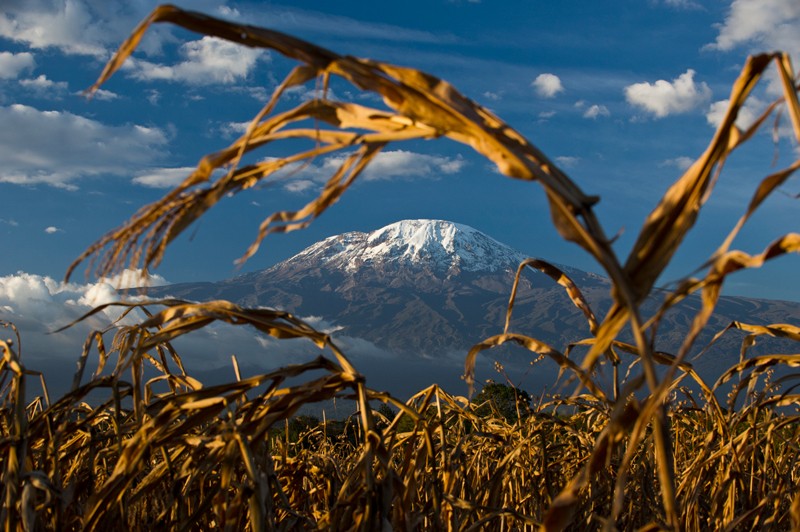
set from Mount Kilimanjaro (Fig. 1), which shows that temperature and
rainfall modulate the effects of human land use on biodiversity and
ecosystems.
Figure 1 | A field of maize (corn) in the shadow of Mount Kilimanjaro, Tanzania. Peters et al.9
report a study of sites at different elevations on Mount Kilimanjaro in
which they investigated how climate regulates the effects of human land
use (such as maize farming) on ecosystems. Credit: Cheryl-Samantha Owen/NPL
A previous study10
from the same research group revealed that the number of plant and
animal species declines at an almost linear rate as elevation increases
on Mount Kilimanjaro, suggesting that temperature is the main
determinant of species richness. Peters et al. have expanded the
scope and scale of that earlier assessment. Their new study reports data
gathered over 6 years by 50 researchers at 60 sites ranging from 866 to
4,550 metres above sea level. These sites represented both natural
habitats, such as lowland savannahs and alpine heaths, and habitats that
had been heavily affected by human activity, including cropland and
logged forests. The authors noted the number of species of plants,
animals and soil-dwelling bacteria at each study site. They also
recorded data for 30 different ecosystem functions, which are processes
related to the transfer of energy and matter through the system (for
example, the rates at which plants grow, organic matter decomposes and
greenhouse gases are emitted).
To convert human impacts into a common currency for use in statistical analyses, Peters et al.
devised a quantitative metric of land-use intensity, which integrated
information about several types of human disturbance. To assess climate,
they monitored the average annual temperature and rainfall at each
site. Researchers studying large-scale ecological phenomena are often
forced to gather previously published data from disparate sources and
stitch this information together for analysis, which can introduce
biases and artefacts. By instead measuring a wide range of attributes in
many places using standardized methods, Peters and colleagues were able
to paint one of the most detailed ecological portraits achieved thus
far for any mountain.
Peters et al. report that the
combined effects of climate and human land use manifested in a
consistent way for both plants and animals. Species richness hardly
differed between natural and human-altered habitats at high elevations,
but species richness was reduced in the low-elevation habitats that had
been transformed by human activity. These trends were best described by
statistical models that included interactions between climate and
land-use intensity — in other words, the effects of land use were
dependent on climate, and the interplay of both these factors was
necessary to explain the patterns observed in the data.
The
trends in ecosystem functions in relation to climate and human activity
are harder to decipher. All but five of the functions studied were
affected by land-use intensity, and in most cases the effects of land
use depended on climate. But these interactions exhibited all manner of
forms, defying attempts to identify a general pattern. A clearer picture
emerged when Peters and colleagues amalgamated all 30 of the ecosystem
functions into a composite statistical index: overall, ecosystem
functioning was more heavily affected at sites with greater land-use
intensities, and these effects were stronger at low and high elevations
than at intermediate elevations.
Ecologists yearn for simple
rules to describe how ecosystems respond to environmental gradients and
to perturbations arising from human activity. Yet analysing such complex
systems, with their multitude of interwoven parts, requires a level of
statistical abstraction that makes it difficult to discover the
fundamental mechanisms underlying the patterns in the data. Peters and
colleagues have unveiled a rich tapestry of ecological patterns on Mount
Kilimanjaro, but explaining why those patterns are shaped by climate
and land use in the ways that they are stands as a non-trivial challenge
for future investigation.
As with any large-scale comparative
analysis, one must also consider potential alternative explanations for
the results. For example, on Mount Kilimanjaro, areas higher than 1,800
metres above sea level are part of a national park, and this designation
places constraints on human land use. Indeed, Peters and colleagues
found that land-use intensity was greatest at low elevations (and
therefore positively correlated with temperature) across the mountain,
which is typical for mountains worldwide11.
These correlations make it difficult to fully disentangle the roles of
climate and land use. Is it possible that human impacts were greatest at
low elevations simply because human activity was much higher outside
the national park?
To address this question, the authors carried
out more analyses on different subsets of their data, which reinforced
their original conclusions. Nevertheless, further work will be needed to
establish the degree to which variation in human impacts at different
elevations is governed by biophysical mechanisms, as opposed to
reflecting trends in human behaviour that stem from both climatic and
legal restrictions on land use.
As mountain environments heat up
in a warming world, what can be done to safeguard their great biological
wealth? Neither climate change nor human pressure on mountains will
stop any time soon, but areas can be protected from intensive land use,
and that can make a difference. Peters and colleagues’ results indicate
that such protection would need to span a range of elevations, from the
low-lying sites that are currently most vulnerable to human impacts to
the highland areas that will provide future homes for refugee species
moving upslope. Nearly 40% of all mountain ranges lack any strictly
protected nature reserves, and vanishingly few have conservation areas
that span the entirety of their elevation12. There is an urgent need to expand the world’s protected areas to achieve better coverage of elevation gradients13.
Mudança climática em curso pode alterar interação ecológica entre espécies
21 de fevereiro de 2019
Peter Moon | Agência FAPESP – Herbívoros,
onívoros, carnívoros, insetívoros, frugívoros, carniceiros e
decompositores. Os ecossistemas da Terra funcionam em uma formidável
teia de interações entre plantas, animais, insetos, fungos e
microrganismos. Uma parte fundamental dessas interações reside no
equilíbrio da cadeia alimentar entre predadores e herbívoros, que regula
a produção vegetal do planeta.
Estudo feito na Unicamp e publicado na revista Nature Climate Change
prevê que equilíbrio entre predadores e presas será afetado pela
temperatura, com consequências desastrosas para os ecossistemas (foto: Mythili Badam/Wikimedia Commons)
Esse equilíbrio entre predadores e presas que se alimentam de plantas
pode ser alterado em decorrência das futuras mudanças climáticas. A
conclusão é de uma pesquisa apoiada pela FAPESP e publicada na revista Nature Climate Change.
"No estudo, traçamos as causas dessas mudanças e demonstramos que
elas são explicadas por componentes do clima, especialmente da
temperatura, que serão alterados no futuro", disse Gustavo Quevedo Romero, professor do Instituto de Biologia da Universidade Estadual de Campinas (Unicamp) e autor principal do artigo.
Segundo pesquisador, as mudanças climáticas podem redistribuir a
força das interações ecológicas entre as espécies de presas e
predadores. Os resultados mostram que temperaturas mais altas e um clima
mais estável e menos sazonal levam a uma maior pressão de predação.
Porém, a maior instabilidade no clima que acompanha as mudanças
climáticas em curso, especialmente nas regiões tropicais, levará a uma
diminuição geral na pressão de predação nos trópicos. Em contraste,
algumas regiões de zonas temperadas sofrerão aumento da pressão de
predação.
“Essa reorganização das forças de interação entre espécies poderá ter
consequências desastrosas para o funcionamento dos ecossistemas
terrestres e afetar os serviços ecossistêmicos que eles oferecem, como o
controle biológico e o ciclo de nutrientes”, disse Romero.
Os agricultores orgânicos nos trópicos, por exemplo, dependem do
controle biológico exercido pelos inimigos naturais das pragas de
lavoura. No entanto, as mudanças climáticas previstas poderão diminuir a
efetividade desses predadores no controle de pragas.
O novo estudo se baseou em dados previamente coletados em uma pesquisa publicada na revista Science
em 2017, sob a coordenação de Tomas Roslin, da Universidade Sueca de
Ciências da Agricultura, de Uppsala, na Suécia, e também da Universidade
de Helsinque, na Finlândia.
Nesse trabalho anterior, os pesquisadores avaliaram a impressão de
mordidas em lagartas artificiais para mostrar que, quanto mais aumenta o
gradiente latitudinal dos ecossistemas (em direção às regiões
temperadas e polares), a probabilidade de um herbívoro ser comido por um
predador é apenas uma fração do que ocorre nas regiões equatoriais.
O estudo foi feito a partir da mensuração do risco de predação de
2.879 lagartas artificiais moldadas com massa de modelar verde. Elas
foram monitoradas em 31 locais do planeta ao longo de um gradiente
latitudinal que se estendeu desde o paralelo 30,4° sul, na altura do Rio
Grande do Sul, da África do Sul e do centro da Austrália, até o
paralelo 74,3° norte, na altura do Ártico canadense, da Groenlândia e do
extremo norte da Sibéria. Os 31 locais estavam distribuídos em um
gradiente de elevação que ia desde o nível do mar até 2.100 metros de
altitude, ou seja, pouco abaixo da altitude da Cidade do México (2.240
metros).
As lagartas artificiais foram coladas na parte superior de folhas
inteiras em plântulas ou arbustos com no máximo 1 metro de altura. Com
base na análise das marcas de dentadas e bicadas preservadas na massa de
modelar, os pesquisadores avaliaram que seis grupos de predadores foram
afetados: aves, lagartos, mamíferos, artrópodes e gastrópodes (caracóis
ou lesmas).
Ajuste climático
No artigo da Science, os autores confirmaram a hipótese de que
a pressão de interação biótica aumenta em direção ao Equador e diminui
em direção aos polos. No trabalho agora publicado na Nature Climate Change,
o que se fez foi confrontar os dados de predação das lagartas e suas
localizações com dados bioclimáticos do presente e do futuro, com base
em diversos modelos climáticos que preveem as alterações no clima a
partir das emissões de dióxido de carbono.
“Utilizamos modelagem de nicho para estudar interações bióticas,
método originalmente desenvolvido para prever a distribuição espacial de
espécies”, disse.
Para o novo estudo, os autores usaram a WorldClim 2, uma base de
dados de 19 variáveis bioclimáticas aplicadas globalmente em uma grade
com resolução espacial de 1 quilômetro quadrado.
Em seguida, foi aplicado o método de modelagem de equações
estruturais para determinar a importância relativa dos efeitos diretos e
indiretos da latitude absoluta, elevação e do clima local subjacente
(incluindo componentes climáticos da precipitação e temperatura) na
pressão de predação. Segundo Romero, esses modelos revelaram que os
dados de predação foram mais explicados pelas variações nos componentes
da temperatura.
Projeções futuras
Os pesquisadores foram capazes de prever a redistribuição da pressão
de predação em todo o globo, projetada para o cenário climático de 2070.
"De maneira geral, o que pudemos constatar foi que, para 2070, a
pressão de predação poderá ser sensivelmente afetada pela variação de
temperatura, mas possivelmente não será afetada pelas mudanças na
precipitação”, disse Romero.
Segundo ele, a pressão de predação será afetada tanto pelo aumento
quanto pela instabilidade da temperatura (elevações e reduções bruscas)
em determinados ecossistemas.
"A instabilidade de temperatura, mais do que o seu aumento, diminuirá
a pressão de predação. E esse impacto será exacerbado em regiões
tropicais, onde se prevê que o clima se tornará mais instável”, disse
Romero.
Os dados sugerem que, com a elevação das temperaturas, o nível de
pressão de predação se elevará moderadamente nas regiões temperadas, que
se espalham por América do Norte e Ásia. Nos países escandinavos, no
Reino Unido e no Alasca, o aumento da pressão de predação entre
artrópodes será maior.
A pressão de predação será reduzida justamente nas regiões
equatoriais, que concentram os ecossistemas mais biodiversos do planeta,
ou seja, a África equatorial, o Sudeste Asiático, a Indonésia e as
regiões tropicais da América do Sul, América Central e Caribe.
Os dados sugerem que, juntamente com a Colômbia, o Brasil será
particularmente afetado. Talvez o Brasil seja o país mais afetado,
devido à sua posição nos trópicos e à grande extensão da Floresta
Amazônica.
"A mudança climática não se reflete apenas nas mudanças de
distribuição das espécies, mas também nas mudanças de interação entre
elas", disse Romero. “Nos trópicos poderá surtir efeitos sobre o
rendimento da agricultura tropical, com o consequente aumento das
ameaças à segurança alimentar, devido a uma diminuição na eficiência do
controle biológico em áreas mais vulneráveis às mudanças climáticas",
disse.
Além de Romero e de Roslin, também participaram do trabalho o biólogo
Thadeu Sobral-Souza, do Instituto de Biociências da Universidade
Estadual Paulista (Unesp) em Rio Claro; Thiago Gonçalves-Souza, da
Universidade Federal Rural de Pernambuco; Nicholas Marino, da
Universidade Federal do Rio de Janeiro; Pavel Kratina, da Queen Mary
University of London, no Reino Unido, e William Petry, do Institute of
Integrative Biology, na Suíça.
O estudo também contou com apoio do Conselho Nacional de
Desenvolvimento Científico e Tecnológico (CNPq) e da Financiadora de
Inovação e Pesquisa (Finep).
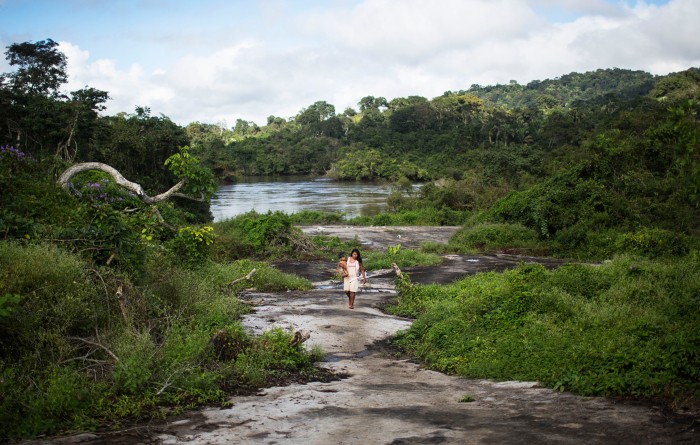
A Xikrin woman walks back to her village from the Cateté River in Brazil. Credit: Taylor Weidman/zReportage.com/ZUMA
A century ago, only 15% of Earth’s surface was used to grow crops and raise livestock1.
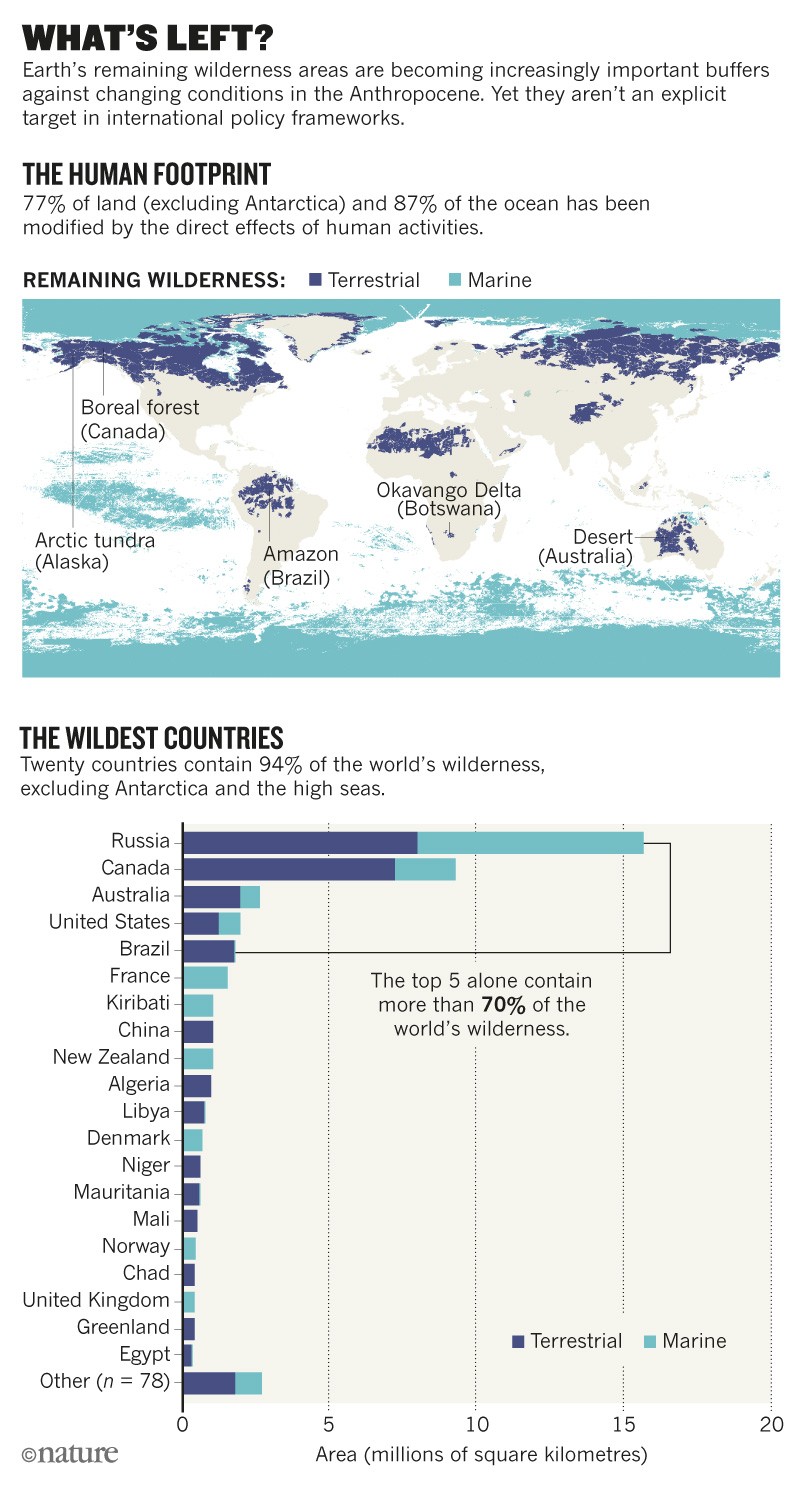
Today, more than 77% of land (excluding Antarctica) and 87% of the
ocean has been modified by the direct effects of human activities2,3. This is illustrated in our global map of intact ecosystems (see ‘What’s left?’).
Between
1993 and 2009, an area of terrestrial wilderness larger than India — a
staggering 3.3 million square kilometres — was lost to human settlement,
farming, mining and other pressures4.
In the ocean, areas that are free of industrial fishing, pollution and
shipping are almost completely confined to the polar regions5.
Numerous
studies are revealing that Earth’s remaining wilderness areas are
increasingly important buffers against the effects of climate change and
other human impacts. But, so far, the contribution of intact ecosystems
has not been an explicit target in any international policy framework,
such as the United Nations’ Strategic Plan for Biodiversity or the Paris
climate agreement.
This must change if we are to prevent Earth’s intact ecosystems from disappearing completely.
Source: Refs 2 & 3
Last chance
In 2016, we led an international team of scientists to map the world’s remaining terrestrial wilderness3,4. This year, we produced a similar map for intact ocean ecosystems2
(see ‘Wild Earth’). The results of these efforts show that time is
running out to safeguard the health of the planet — and human
well-being.
Some conservationists contend that particular areas
in fragmented and otherwise-degraded ecosystems are more important than
undisturbed ecosystems6,7.
Fragmented areas might provide key services, such as tourism revenue
and benefits to human health, or be rich in threatened biodiversity. Yet
numerous studies are starting to reveal that Earth’s most intact
ecosystems have all sorts of functions that are becoming increasingly
crucial2,8,9.
Wild Earth
To map Earth’s remaining terrestrial wilderness, we used the best
available data on eight indicators of human pressures at a resolution of
1 square kilometre. These were: built environments, crop lands, pasture
lands, population density, night-time lights, railways, major roadways
and navigable waterways3,4. (Data were collected in 2009.)
For our map of intact ocean ecosystems, we used 2013 data on fishing,
industrial shipping and fertilizer run-off, among 16 other indicators2.
We identified wilderness land or ocean areas as those that were
free of human pressures, with a contiguous area of more than 10,000 km2 on land.
Wilderness areas are now the only places that contain mixes of
species at near-natural levels of abundance. They are also the only
areas supporting the ecological processes that sustain biodiversity over
evolutionary timescales10.
As such, they are important reservoirs of genetic information, and act
as reference areas for efforts to re-wild degraded land and seascapes.
Various
analyses reveal that wilderness areas provide increasingly important
refuges for species that are declining in landscapes dominated by people11.
In the seas, they are the last regions that still contain viable
populations of top predators, such as tuna, marlins and sharks9.
Safeguarding
intact ecosystems is also key to mitigating the effects of climate
change, which are making the refuge function of wilderness areas
especially important. A 2009 study, for instance, showed that Caribbean
coral reefs that have low levels of pollution or fishing pressure
recovered from coral bleaching up to four times faster than did reefs
with high levels of both12.
And a 2012 global meta-analysis revealed that the impacts of climate
change on ecological communities are more severe in fragmented
landscapes13.
Many
wilderness areas are critical sinks for atmospheric carbon dioxide. For
example, the boreal forest is the most intact ecosystem on the planet
and holds one-third of the world’s terrestrial carbon. And intact
forested ecosystems are able to store and sequester much more carbon
than are degraded ones8. In the tropics, logging and burning now accounts for up to 40% of total above-ground carbon emissions14.
In the ocean, seagrass meadows that are degraded (such as by sediment
pollution) switch from being carbon sinks to major carbon sources15.
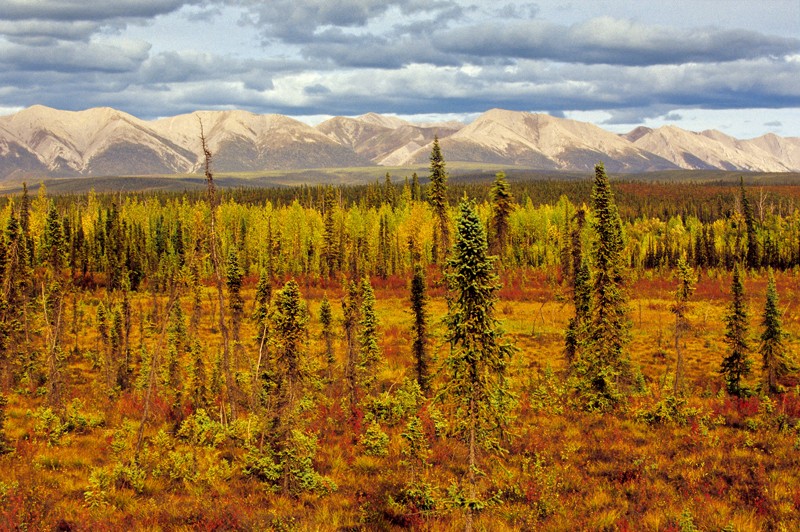
Sub-Arctic vegetation in Canada.Credit: Mike Grandmaison/Getty
Moreover, models based on geography, rainfall, degree of
deforestation and so on are starting to reveal the degree to which
wilderness areas regulate the climate and water cycles — locally,
regionally and globally. Such areas also provide a buffer against
extreme weather and geological events. Simulations of tsunamis, for
instance, indicate that healthy coral reefs provide coastlines with at
least twice as much protection as highly degraded ones16.
Wilderness
regions are home to some of the most politically and economically
marginalized indigenous communities on Earth. These people (who number
in the hundreds of millions) are reliant on intact marine and
terrestrial ecosystems for resources such as food, water and fibre17.
Many have established biological and cultural connections with their
environment over millennia. Securing the wilderness is central to
reducing their poverty and marginalization — and to achieving numerous
UN Sustainable Development Goals, from reducing inequality to improving
human well-being.
Global targets
We believe that Earth’s
remaining wilderness can be protected only if its importance is
recognized within international policy frameworks.
Currently,
some wilderness areas are protected under national legislation such as
the 1964 US Wilderness Act, which protects 37,000 km2 of
federal land. But in most nations, these areas are not formally defined,
mapped or protected, and there is nothing to hold nations, private
industry, civil society or local communities to account for their
long-term conservation. What is needed is the establishment of global
targets within existing international frameworks — specifically, those
aimed at conserving biodiversity, avoiding dangerous climate change and
achieving sustainable development.
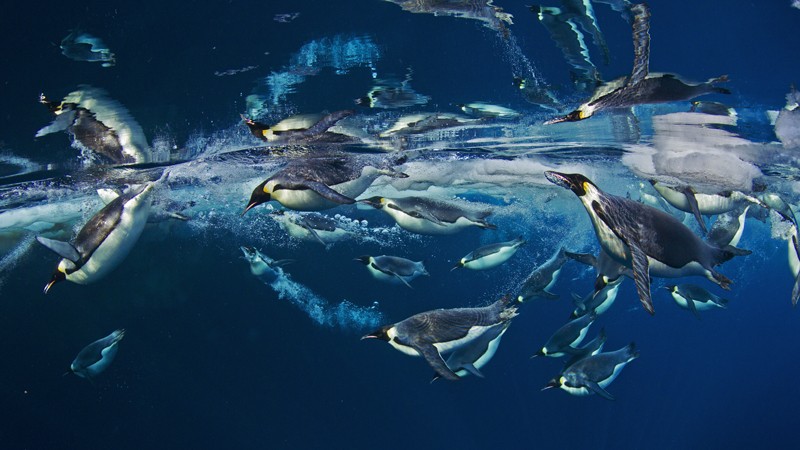
Emperor penguins in the Ross Sea.Credit: Paul Nicklen/NGC
There are several ways to do this immediately. The carbon
sequestration and storage capacities of wilderness areas could be
formally documented, and the importance of conserving them written into
the policy recommendations of the UN Framework Convention on Climate
Change (UNFCCC). Such a move would enable nations to make the protection
of wilderness areas an integral part of their strategy for reducing
emissions.
As an example, under the UNFCCC process for reducing
emissions from deforestation and forest degradation (REDD+), landowners
can be compensated if they refrain from clearing an area of tropical
forest that they’d planned to develop. However, there are no incentives
for nations, private industry or communities to protect crucial carbon
sinks, even when no imminent development is identified. This means that
there is nothing to stop the slow erosion of these places from
small-scale and often unplanned industrial activity. Similar policies
are needed to protect other carbon-rich ecosystems, such as seagrass
meadows, and temperate and boreal forests, especially in developed
countries that do not currently receive financial support under the
UNFCCC.
Later this month, Egypt will host the 14th gathering of
the Conference of the Parties to the Convention on Biological Diversity
(CBD). Signatory nations, intra-governmental organizations such as the
International Union for Conservation of Nature (IUCN), non-governmental
organizations and the scientific community will meet to work towards a
strategic plan for the protection of biodiversity after 2020. We urge
participants at the meeting to include a mandated target for wilderness
conservation. In our view, a bold yet achievable target is to define and
conserve 100% of all remaining intact ecosystems.
A mandated
global target will make it easier for governments, non-governmental
organizations and entities such as the Global Environment Facility (a
multinational funding programme that tackles environmental and
sustainability problems) to leverage funding and mobilize action on the
ground.
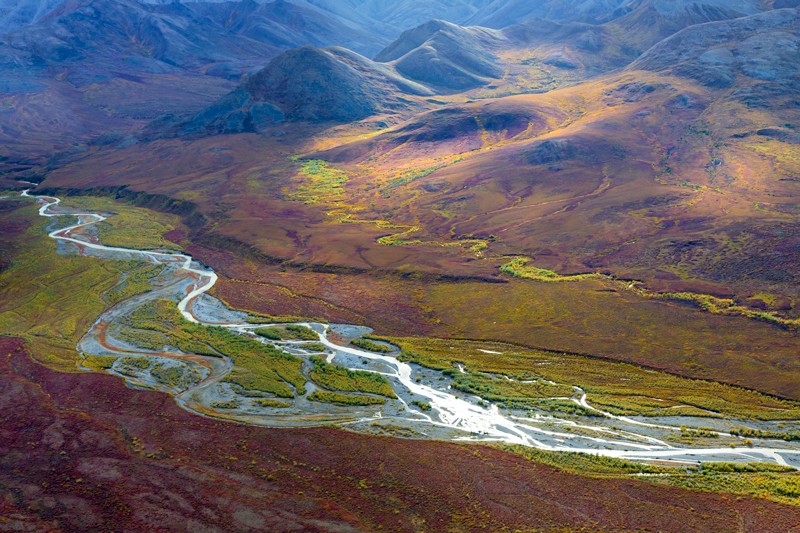
The Ivishak River in the Arctic National Wildlife Refuge, Alaska.Credit: Danita Delimont/Getty
It will also help to enable action under the various
conventions that are attempting to protect biodiversity. For example,
officially recognizing the contribution that the wilderness makes to the
‘outstanding universal value’ of certain areas could lead to the
designation of new Natural World Heritage Sites.
Under the UN
World Heritage Convention, Natural World Heritage Sites are currently
selected for their outstanding natural beauty, or because they contain
unique biodiversity or ecological and geological features. The
wilderness is associated with all of these criteria, but its importance
has yet to be specifically acknowledged.
Almost two-thirds of
marine wilderness lies in international waters, beyond the immediate
control of nations. The United Nations Convention on the Law of the Sea
is currently negotiating a legally binding agreement to govern high-seas
conservation. Keeping Earth’s remaining marine wilderness off-limits to
exploitation should be a key component of the new treaty. Strict limits
on government subsidies of harmful fishing will also be crucial here;
without these, more than half of high-seas industrial fishing would be
unprofitable18.
Our
maps exclude Antarctica because it is off-limits to direct resource
exploitation such as mining, and the indirect effects of human
activities there are harder to measure. But it is a crucial wilderness
area that is urgently in need of protection. Antarctica’s isolation and
extreme conditions have prevented the levels of degradation experienced
elsewhere. But invasive species, pollution, increased human activity
and, above all, climate change are threatening its unique biodiversity
and its ability to regulate the global climate.
The Antarctic
Treaty System’s Committee for Environmental Protection has prioritized
research and action targeted at minimizing human impacts in its latest
five-year plan. Signatory nations must now commit to implementing
measures targeted at reducing human impacts, such as strict biosecurity
procedures that minimize the risk of visitors to Antarctica introducing
invasive species.
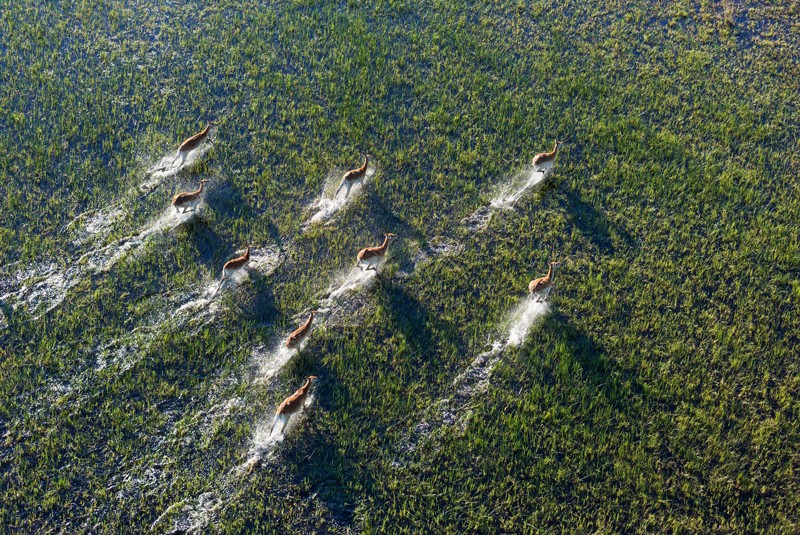
Red lechwe antelope (Kobus leche leche) in the Okavango Delta in Botswana. Credit: Thomas Dressler/Getty
Local action
How can changes in policy at the global level translate into effective national action?
By
our measure, 20 countries contain 94% of the world’s remaining
wilderness (excluding the high seas and Antarctica). More than 70% is in
just five countries — Russia, Canada, Australia, the United States and
Brazil (see ‘What’s left?’). Thus, the steps these nations take (or fail
to take) to limit the expansion of roads and shipping lanes, and to
rein in large-scale developments in mining, forestry, agriculture,
aquaculture and industrial fishing, will be critical.
One obvious
intervention that these nations can prioritize is establishing
protected areas in ways that would slow the impacts of industrial
activity on the larger landscape or seascape19. Given the scale of wilderness areas, however, the expansion of strictly enforced protected areas won’t suffice.
Several
studies show that stopping industrial development to protect the
livelihoods of indigenous people can conserve biodiversity and ecosystem
services just as well as strictly protected areas can. As such, the
recognition of local community rights to land ownership and management
could be a key way to limit the impacts of industrial activity8.
Mechanisms
that enable the private sector to protect, rather than harm, wilderness
areas will be crucial. Specifically, the preservation of intact
ecosystems needs to feature among lenders’ investment and performance
standards, particularly for organizations such as the World Bank, the
International Finance Corporation and the regional development banks.
Initiatives that enable companies to declare their supply chains
‘deforestation-free’ (such as for products containing palm oil) should
be expanded to help to secure more intact ecosystems.
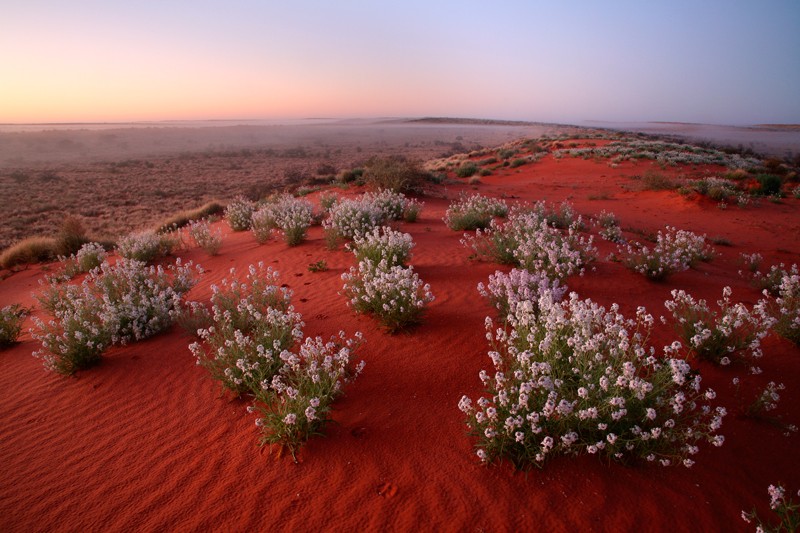
Flowers in the Australian desert, a wilderness that is the last stronghold of many marsupial species, such as the bilby. Credit: Feargus Cooney/Getty
In the oceans, regional fisheries management organizations
(RFMOs), formed by countries to manage shared fishing interests, have
effectively closed large areas of the high seas. For example, the North
East Atlantic Fisheries Commission (an RFMO founded in 1980) has shut
more than 350,000 square kilometres of the Atlantic to bottom trawling.
The power of RFMOs could be increased to enable the creation of broader,
scaled-up conservation agreements for the high seas.
Wild places
are facing the same extinction crisis as species. Similarly to species
extinction, the erosion of the wilderness is essentially irreversible.
Research has shown that the first impacts of industry on wilderness
areas are the most damaging11. And once it has been eroded, an intact ecosystem and its many values can never be fully restored.
As
US President Lyndon B. Johnson observed when he signed the US
Wilderness Act in 1964, “If future generations are to remember us with
gratitude rather than contempt … we must leave them a glimpse of the
world as it was in the beginning.”
Already we have lost so much. We must grasp this opportunity to secure the wilderness before it disappears forever.