Mostrando postagens com marcador primeiros mamíferos. Mostrar todas as postagens

quinta-feira, 7 de julho de 2022


Como os primeiros mamíferos prosperaram ao lado dos dinossauros
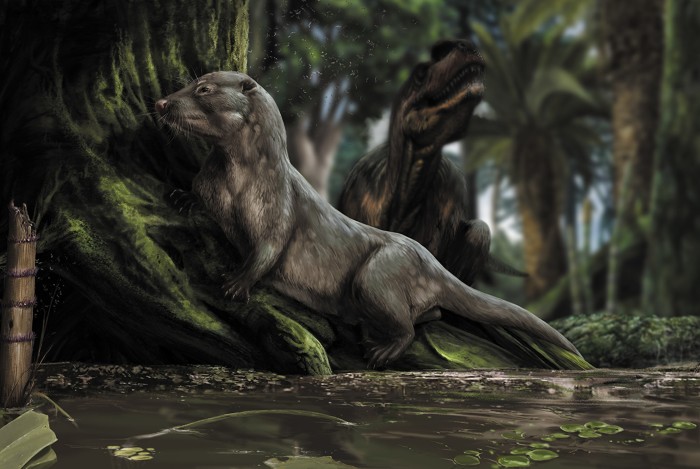

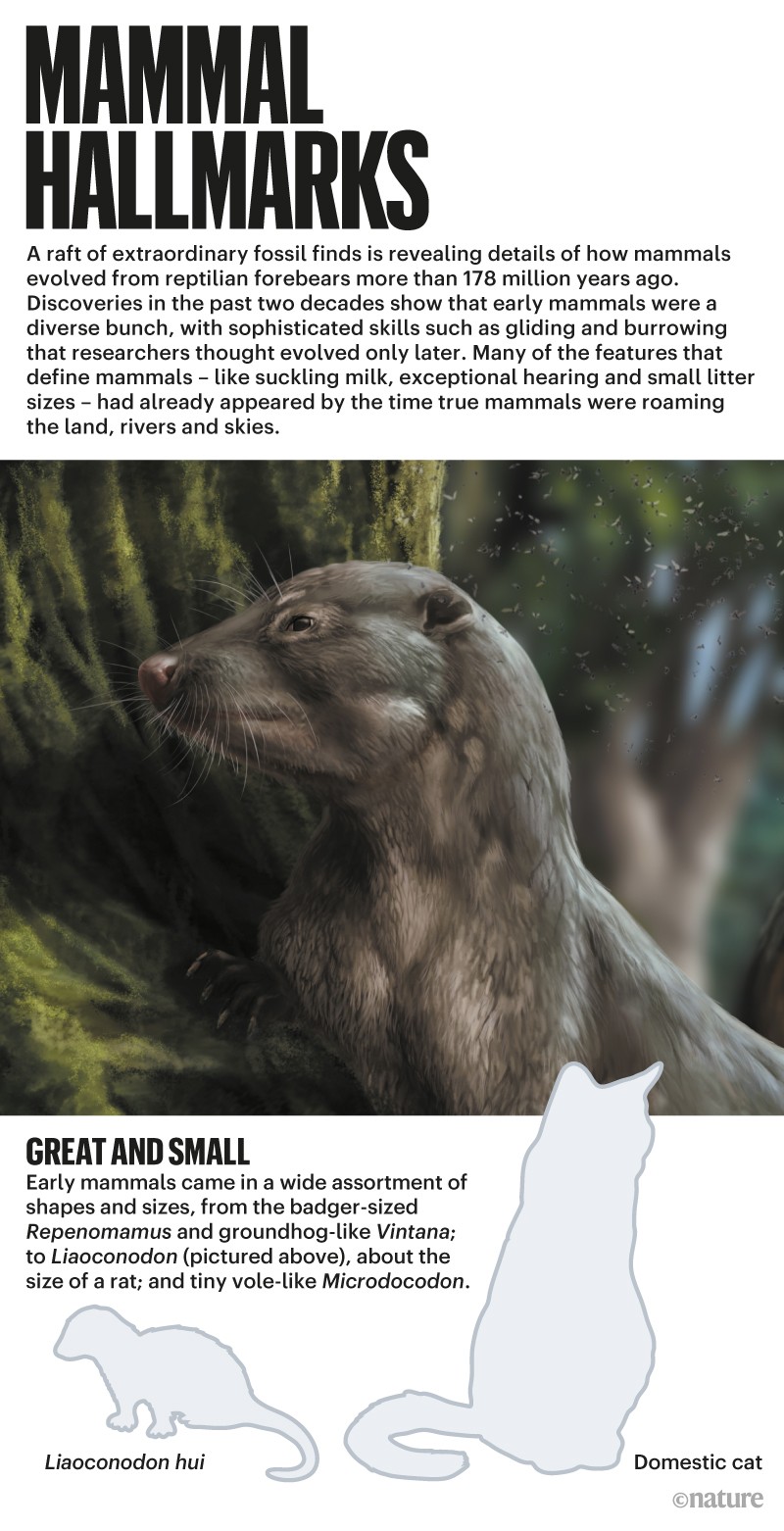
Os primeiros mamíferos, como essa espécie do tamanho de um rato, Liaoconodon hui, coexistiam com dinossauros emplumados como Sinotyrannus nos ecossistemas temperados do Cretáceo, no que hoje é Liaoning, no norte da China. Ilustração de Davide Bonadonna

A noite está caindo no início do Jurássico, 185 milhões de anos atrás, e o Kayentatherium está cuidando de sua ninhada recém-nascida. Chuvas fortes atingem a margem acima de sua toca enquanto ela olha para suas dezenas de pequenos filhotes. Ela é do tamanho de um gato grande e poderia facilmente passar por um mamífero, mas sua mandíbula grande, dentes característicos e falta de orelhas externas a denunciam: ela é um cinodonte, um membro do grupo do qual os mamíferos evoluíram. Em algum momento, sem aviso prévio, o banco encharcado desaba, sepultando os filhotes e sua mãe na lama.

Lá eles permaneceram até o verão de 2000, quando uma equipe de caçadores de fósseis liderada por Timothy Rowe na Universidade do Texas em Austin encontrou seus ossos espalhados entre as rochas da Formação Kayenta no norte do Arizona.

Aquele encontro inicial com os fósseis pouco impressionou os paleontólogos. Eles desenterraram o bloco e o enviaram de volta ao laboratório para mantê-lo em segurança. Foi só nove anos depois que um especialista que preparava o fóssil para estudo notou algo surpreendente: embutidos no bloco havia dentes minúsculos e maxilares com apenas 1 centímetro de comprimento. “Imediatamente eles pararam a preparação e pensaram em maneiras de examinar os bebês de forma não destrutiva”, diz Eva Hoffman, no Texas com Rowe na época e agora paleontóloga do Museu Americano de História Natural em Nova York. Em vez de invadir a rocha, Hoffman e Rowe extraíram digitalmente os ossos com um scanner de microtomografia computadorizada (microCT), que usa raios-X para criar imagens 3D de granulação fina.

O que eles encontraram no interior da rocha foram os primeiros filhotes conhecidos de mamíferos ou seus parentes do Jurássico — e não apenas um, mas 38 deles, colocando-o entre as descobertas mais significativas relacionadas às origens dos mamíferos feitas na última década 1 . Kayentatherium está à beira da condição de mamífero – e os pesquisadores dizem que fornece informações cruciais sobre quais características definem os mamíferos e quais estavam presentes em seus parentes anteriores.

Kayentatherium é semelhante ao de um mamífero de várias maneiras, mas o fóssil sugere que ele ainda se reproduz muito como um réptil, dando à luz grandes ninhadas de descendentes de cérebro pequeno. Por outro lado, “as mães mamíferos investem muito em um número menor de bebês, cada um com mais chances de sobrevivência”, diz Hoffman. Os bebês mamíferos passam mais tempo sob os cuidados de seus pais, desenvolvendo cérebros relativamente grandes, enquanto esses filhotes fósseis tinham ossos e dentes bem desenvolvidos, sugerindo que podiam se defender sozinhos e não eram nutridos por leite, como todos os mamíferos são hoje.

A descoberta está entre uma massa de descobertas nos últimos 10 a 20 anos que são marcos esclarecedores na evolução dos mamíferos. Embora grandes descobertas estejam surgindo em todo o mundo, o maior número está saindo da China; juntos, eles derrubaram a crença agora datada de que os mamíferos da era dos dinossauros eram insetívoros pequenos e normais, ganhando uma vida nas sombras dos répteis gigantes.

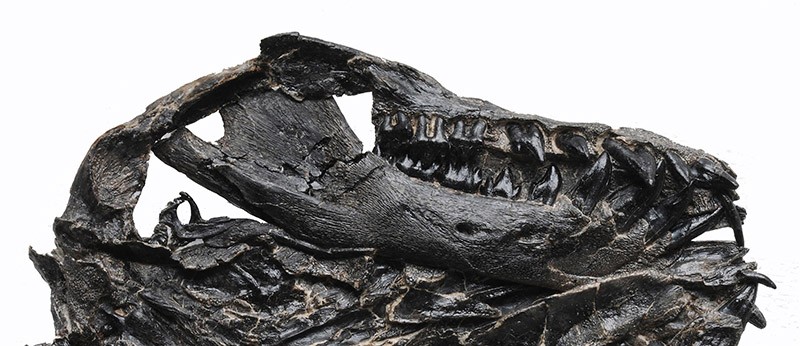
Crânio Liaoconodon hui do lado ventral

Este Liaoconodon hui é um dos muitos fósseis do norte da China que estão aprimorando a imagem de como as características dos mamíferos evoluíram. Crédito: J. Meng et al. Natureza 472 , 181-185 (2011)

Os fósseis revelaram que os primeiros mamíferos eram ecologicamente diversos e experimentavam planar, nadar, cavar e escalar. As descobertas também estão começando a revelar as origens evolutivas de muitas das principais características dos mamíferos – como lactação, cérebros grandes e sentidos soberbamente aguçados.

“A explosão de descobertas de mamíferos primitivos, particularmente da China, nas últimas duas décadas foi reveladora, entorpecedora e absolutamente deslumbrante”, diz David Krause, paleontólogo de vertebrados do Denver Museum of Nature and Science, no Colorado.

Essa avalanche de descobertas também está despertando o debate: alguns pesquisadores discordam sobre quais grupos de fósseis são verdadeiros mamíferos e a forma da árvore genealógica dos mamíferos. “Queremos entender nossa história inicial na linguagem da biologia evolutiva, e é isso que me estimula”, diz Zhe-Xi Luo, paleontólogo da Universidade de Chicago, em Illinois. “É por isso que todo esse campo é tão interessante, porque o registro fóssil está ficando cada vez melhor, e estamos começando a realmente abordar algumas dessas questões.”

Fora das sombras

Em 1824, na Sociedade Geológica de Londres, o naturalista William Buckland apresentou ossos de um dos primeiros dinossauros conhecidos, o Megalossauro. Na mesma palestra, ele revelou pequenas mandíbulas de mamíferos que foram encontradas no mesmo depósito de fósseis. Sua presença sugeria que os mamíferos tinham uma história muito profunda, mas, como aconteceria repetidamente, as descobertas dos dinossauros ofuscaram completamente as dos mamíferos.

O lento fluxo de achados de mamíferos de todo o mundo continuou por 150 anos. Então, em 1997, os pesquisadores descreveram o primeiro mamífero antigo das rochas ricas em fósseis de Liaoning, no nordeste da China 2 , e as comportas se abriram. Desde então, 50 ou mais espécimes quase completos e “belos” foram encontrados lá, de acordo com Jin Meng, paleontólogo do Museu Americano de História Natural. Como os fósseis de dinossauros, eles são desenterrados por fazendeiros locais e vendidos para museus.

Mas os dinossauros continuaram a receber a maior parte da atenção, diz o paleontólogo Steve Brusatte da Universidade de Edimburgo, Reino Unido. “É apenas muito recentemente, através do trabalho de Luo, Meng e outros, que os mamíferos estão recebendo o que merecem.”

A maioria dos fósseis de mamíferos da China foi formada quando os vulcões enterraram os animais em cinzas – e eles são primorosamente detalhados. Fósseis de mamíferos típicos da era mesozóica (252 milhões a 66 milhões de anos atrás) são pouco mais do que fragmentos de dentes e mandíbulas, mas os espécimes chineses geralmente têm esqueletos inteiros, com pêlo, pele e órgãos internos. “Temos muitos detalhes para responder a questões científicas”, diz Meng, interessado em entender a evolução da orelha dos mamíferos, por exemplo.

Ilustração: Davide Bonadonna; Desenho: Wes Fernandes

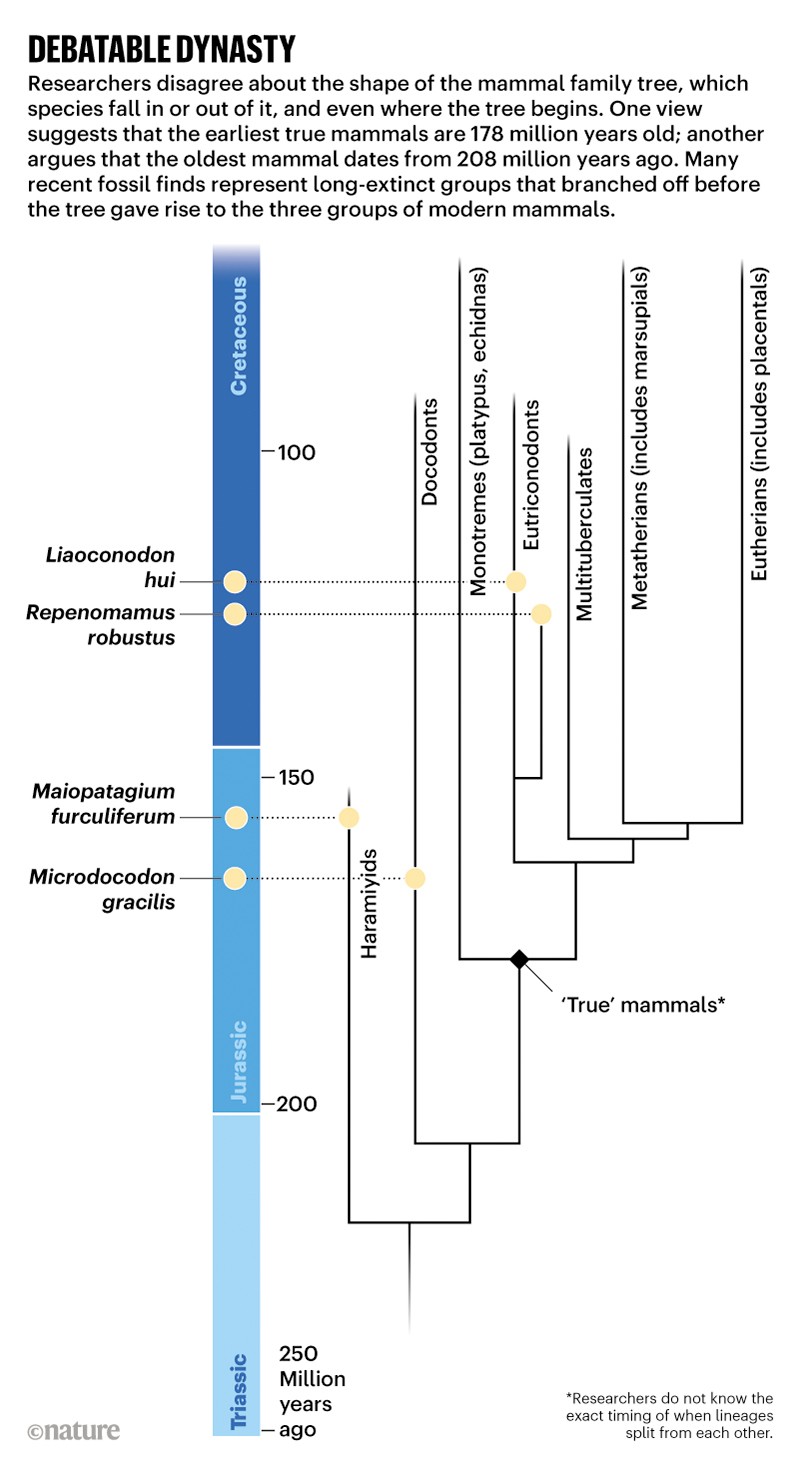
Ilustração: Davide Bonadonna; Desenho: Wes Fernandes

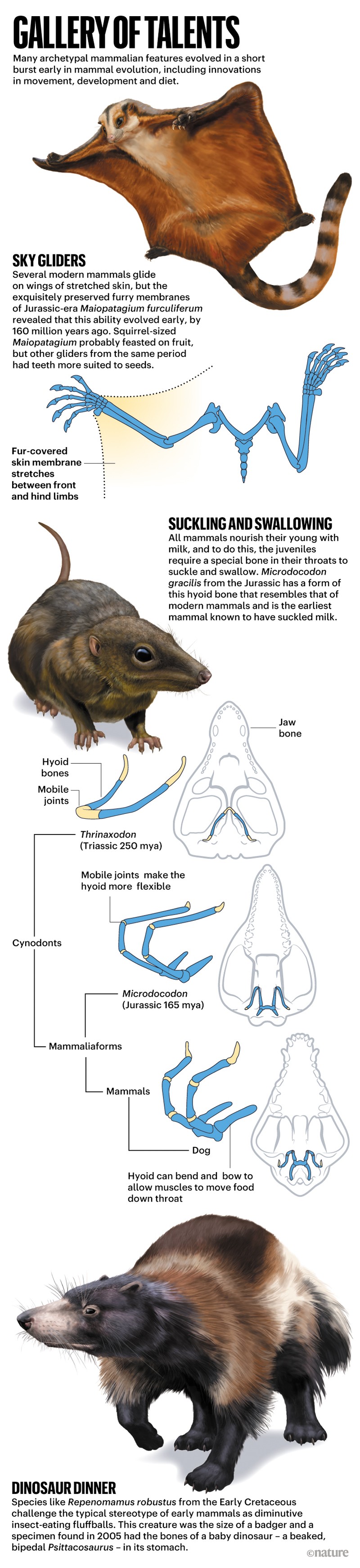
Ilustração: Davide Bonadonna; Desenho: Wes Fernandes

Ilustração: Davide Bonadonna; Desenho: Wes Fernandes

Os achados derrubaram o dogma anterior. “Costumávamos dizer que, na época dos dinossauros, os mamíferos não eram nada espetaculares. Que eles eram apenas essas coisinhas ratinhos correndo nas sombras”, diz Brusatte. Mas esses animais “estavam passando por sua própria explosão evolutiva”, diz ele.

Os mamíferos apareceram pela primeira vez há pelo menos 178 milhões de anos e correram entre os dinossauros até que a maioria desses animais, com exceção dos pássaros, foi exterminada há 66 milhões de anos. Mas os mamíferos não precisaram esperar que essa extinção se diversificasse em muitas formas e espécies. “Essas novas descobertas documentam uma enorme diversidade ecológica até então inimaginável”, diz Richard Cifelli, paleontólogo da Universidade de Oklahoma em Norman.

Entre as primeiras inovações que os pesquisadores começaram a encontrar na forma fóssil estavam as relacionadas à locomoção. Em 2006, a equipe de Meng relatou o primeiro mamífero planador 3 de 164 milhões de anos Volaticotherium , que tinha membranas nas asas feitas de pele peluda, como os esquilos voadores de hoje. Em 2017, a equipe de Luo adicionou Vilevolodon e Maiopatagaium 4 , 5 , que viviam na mesma época e pertenciam a um grupo chamado haramiyids. Esses animais mergulharam entre as árvores ao lado de alguns dos primeiros dinossauros voadores, aproveitando os recursos alimentares anteriormente inexploráveis.

Os pesquisadores descobriram outras especializações que eles supunham ter evoluído apenas mais tarde: Agilodocodon podia subir em árvores e roer cascas para se alimentar de seiva 6 ; o ribeirinho Castorocauda tinha pés palmados e cauda de castor para nadar 7 ; e Docofossor tinha patas e garras para cavar e parecia uma toupeira moderna 8 .

Esses mamíferos também se adaptaram a uma infinidade de dietas, muito mais diversas do que se supunha anteriormente. Em 2014, Krause descreveu a marmota Vintana de Madagascar 9 , um herbívoro que talvez se alimentasse de raízes e sementes. E o carnívoro Repenomamus , do tamanho de um carcaju, que a equipe de Meng relatou em 2005, tinha ossos de dinossauro bebê em seu estômago 10 . Muitos desses mamíferos fósseis recém-descobertos pertencem a subgrupos extintos há muito tempo, diz Meng. Em contraste com a panóplia que existia no Mesozóico, os mamíferos hoje vêm em apenas três variedades: placentários, que compõem a maioria das espécies e incluem os humanos; marsupiais, como cangurus e coalas, em que a gestação no útero é breve e o desenvolvimento continua em uma bolsa; e os monotremados de postura, representados apenas pelo ornitorrinco e várias equidnas. “Mas na história geológica, havia muitos outros grupos, como multituberculados, triconodontes e haramiyids”, diz Meng. “Os mamíferos eram realmente muito diversos no Jurássico.”

Alguns, como o musaranho Juramaia – descrito pela equipe de Luo em 2011 e datado de 160 milhões de anos atrás – estão entre os primeiros mamíferos placentários e, portanto, têm potencial para serem nossos ancestrais 11 .

E alguns mamíferos da era dos dinossauros também eram muito maiores do que se suspeitava. Repenomamus 12-14 kg, e o Vintana pesava 9 kg. “É empolgante que acabamos com os velhos mitos de que os primeiros mamíferos vieram de um ancestral generalizado muito humilde”, diz Luo.

As descobertas não são apenas da China. Fósseis importantes também vêm dos Estados Unidos, Espanha, Brasil, Argentina, Madagascar e Mongólia. Alguns dos fósseis mais intrigantes e antigos – assim como as maiores lacunas em nosso conhecimento – referem-se aos continentes do sul, onde apenas cinco gêneros de mamíferos mesozoicos e seus parentes são conhecidos, em comparação com mais de 70 gêneros de latitudes do norte. Nas últimas duas décadas, o Brasil produziu vários fósseis do Triássico com mais de 200 milhões de anos. Guillermo Rougier, paleontólogo da Universidade de Louisville, em Kentucky, descreve-os como “descobertas incríveis” que estão bem na cúspide entre os mamíferos e seus ancestrais cinodontes. “Essas formas realmente mostram uma progressão muito transitória de coisas que normalmente não são mamíferos, para coisas que praticamente têm todas as características dos primeiros mamíferos”.

Mamíferos indispensáveis

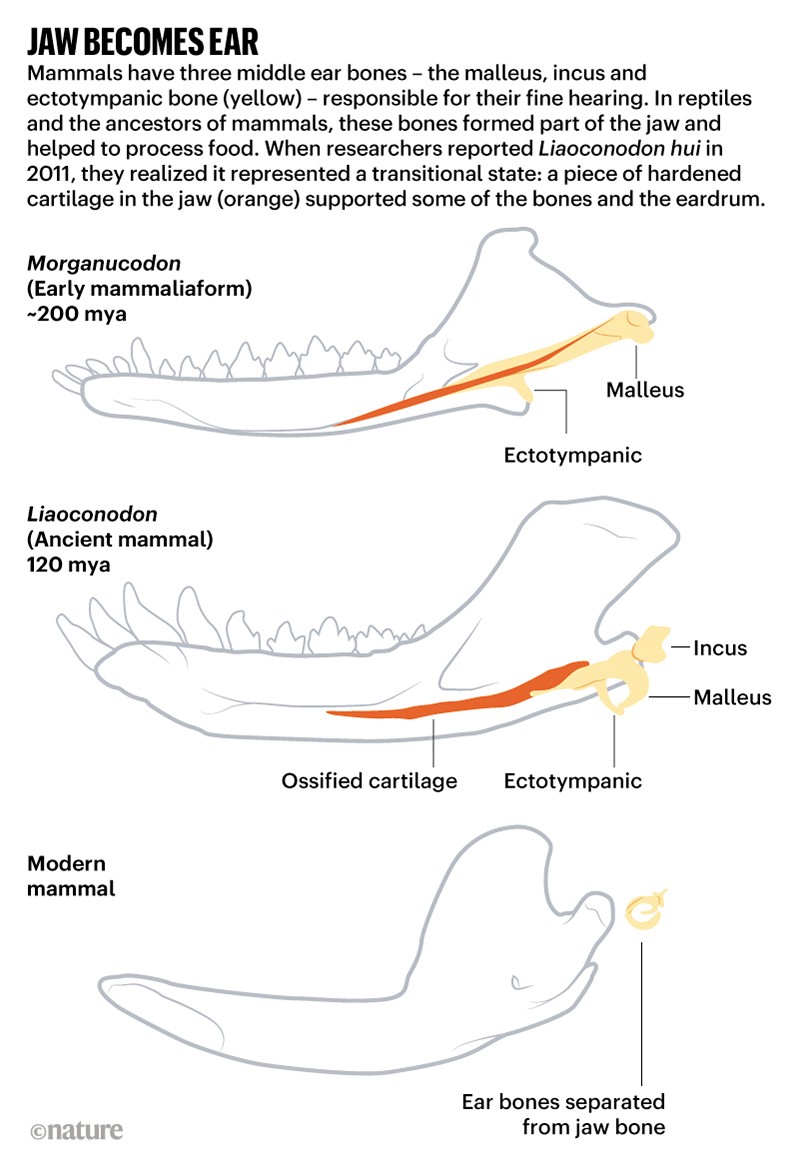
As últimas descobertas também oferecem pistas sobre a evolução das principais características dos mamíferos. Por exemplo, a audição aguçada dos mamíferos se deve em parte aos pequenos ossos do ouvido médio – o martelo, a bigorna e o ectotimpânico. Mas nos ancestrais reptilianos dos mamíferos, esses ossos faziam parte da mandíbula e eram usados ​​para mastigar em vez de ouvir. Precursores de mamíferos, como Morganucodon de 205 milhões de anos atrás, ostentavam um protótipo do arranjo de mamíferos que permitia ambas as funções 12 .

Em 2011, Meng relatou um intermediário 13 : um espécime de 120 milhões de anos da China pertencente a um grupo de mamíferos chamados eutriconodontes e chamado Liaoconodon hui (ver 'Marcas dos mamíferos'). O fóssil do tamanho de um rato revelou três ossos do ouvido médio, mas eles ainda estavam presos à mandíbula por cartilagem. “A função auditiva e a função mastigatória ainda não estavam completamente separadas”, explica. Esta foi uma prova concreta da transição evolutiva da mandíbula para a orelha.

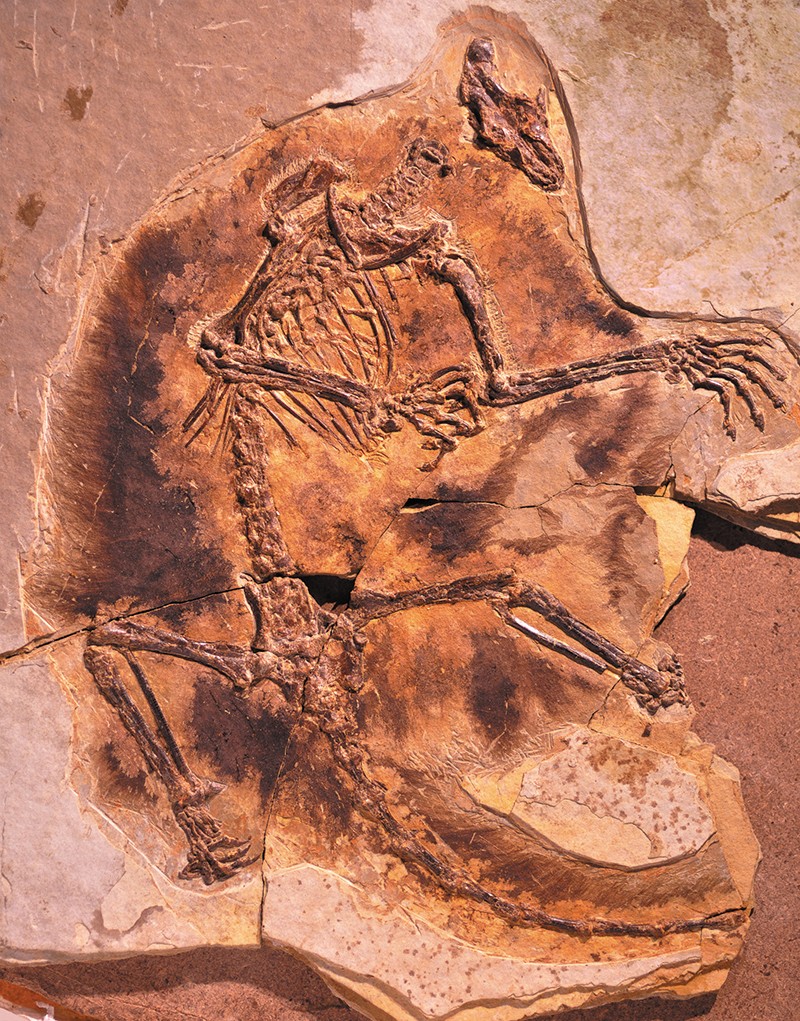
O fóssil de um mamífero planador Maiopatagium furculiferum

de 160 milhões de anos, primorosamente preservado, Maiopatagium furculiferum mostra como o planador evoluiu. Crédito: Zhe-Xi Luo/UChicago

Outra característica única dos mamíferos é a maneira sofisticada como mastigam e ingerem alimentos em pequenas porções, em vez de engolir as coisas inteiras, como fazem as cobras e os jacarés. Para tornar isso possível, os mamíferos desenvolveram uma grande variedade de dentes complexos para morder e triturar alimentos.

Mas quando bebês, os mamíferos são nutridos de outra maneira – sugando as glândulas mamárias de sua mãe. “Todo o nosso grupo recebeu o nome dessa incrível inovação biológica”, diz Luo. Beber leite é possível pela capacidade de sugar e engolir, auxiliado pelos ossos hioides na garganta e pelos músculos que os sustentam. Este aparelho também forma a caixa de voz.

Em julho, Luo publicou um artigo revelando um docodonte de 165 milhões de anos – um parente próximo dos mamíferos verdadeiros – que tinha os ossos hioides de sua garganta preservados 14 . Microdocodon gracilis é o primeiro animal conhecido por ter sido capaz de mamar como um mamífero moderno.

Esse nível de detalhe é raro e - semelhante ao estudo dos Kayentatherium - o trabalho nos ossos do ouvido e da garganta só foi possível por meio de avanços nas técnicas de varredura de microTC, diz Krause. A técnica também revelou detalhes sobre as habilidades olfativas e cérebros dos primeiros mamíferos. Essas revelações estão “dando vida a esses primeiros mamíferos de maneiras que antes eram impossíveis e quase inconcebíveis”, diz ele.

Grande parte da constelação de características que consideramos definidoras de mamíferos – dentes complexos, sentidos excelentes, lactação, ninhada pequena – pode realmente ter evoluído antes dos verdadeiros mamíferos, e muito rapidamente. “Cada vez mais parece que tudo saiu em uma explosão muito curta de experimentação evolutiva”, diz Luo. Na época em que criaturas semelhantes a mamíferos estavam vagando no Mesozóico, ele diz, “a linhagem já adquiriu sua aparência moderna e adaptações biológicas modernas”.

Drama familiar

Embora os especialistas concordem em muitos pontos, ainda há muito debate sobre como os grupos de mamíferos primitivos estão relacionados e quais grupos são mamíferos verdadeiros. Isso leva à incerteza sobre como os principais traços evoluíram, diz Hoffman.

Um ponto de discórdia entre Meng e Luo, que desenvolveram suas próprias árvores evolutivas, são os haramiyids. Meng acha que esse grupo inicial pertence aos verdadeiros mamíferos, enquanto Luo está convencido de que é um ramo secundário. Os mais antigos haramiyids conhecidos são de 208 milhões de anos atrás no Triássico. Se eles são verdadeiros mamíferos, então as origens dos mamíferos datam de pelo menos tão longe – se não, então o mamífero mais antigo conhecido tem 178 milhões de anos, bem no Jurássico.

Mais fósseis ajudarão a resolver essas questões e trarão mais surpresas. Krause e Meng dizem que estão estudando fósseis interessantes, mas ainda não publicaram suas descobertas sobre eles, e dezenas de espécimes não estudados estão empilhados nos escritórios de seus colegas chineses.

Os paleontólogos têm muitos itens em suas listas de desejos. Uma característica que Luo quer entender são as taxas de crescimento. Os répteis crescem lentamente ao longo de suas vidas, enquanto os mamíferos crescem em rajadas na juventude e depois no platô. Ele adoraria encontrar uma série de fósseis de bebês a adultos para ver isso acontecer. “Essa é uma das características mais críticas em mamíferos que ajudam a definir nossa biologia”, diz ele.

Tanto Hoffman quanto Meng concordam que embriões e mais bebês seriam achados significativos – e, como a Kayentatherium com suas dezenas de filhotes, eles nos ajudariam a identificar a data em que os pequenos tamanhos de ninhadas de mamíferos apareceram. O sonho de Meng é encontrar uma mamífera grávida. “Esta sempre na minha cabeça que eu vou encontrar um mamífero que dentro do esqueleto você possa ver algum esqueleto muito delicado, que ou é um ovo que não eclodiu, ou é um feto mais interessante”, diz ele.

Se a enxurrada de descobertas ensinou alguma coisa aos pesquisadores, é que cada achado fóssil tem o potencial de adicionar um capítulo à história evolutiva ou até mesmo inverter a narrativa predominante. “Estamos realmente nesta fase excitante, quase maníaca, de muitas novas evidências chegando, e levará tempo para sintetizar”, diz Brusatte.

Natureza 574 , 468-472 (2019)

doi: https://doi.org/10.1038/d41586-019-03170-7

Referências

  1. Hoffman, EA & Rowe, TB Nature 561 , 104-108 (2018).

    PubMed   Artigo   Google Scholar  

  2. Hu, Y., Wang, Y., Luo, Z. & Li, C. Nature 390 , 137-142 (1997).

    PubMed   Artigo   Google Scholar  

  3. Meng, J., Hu, Y., Wang, Y., Wang, X. & Li, C. Nature 444 , 889-893 (2006).

    PubMed   Artigo   Google Scholar  

  4. Luo, Z.-X. et ai. Natureza 548 , 326-329 (2017).

    PubMed   Artigo   Google Scholar  

  5. Meng, Q.-J. et ai. Natureza 548 , 291-296 (2017).

    PubMed   Artigo   Google Scholar  

  6. Meng, Q.-J. et ai. Ciência 347 , 764-768 (2015).

    PubMed   Artigo   Google Scholar  

  7. Ji, Q., Luo, Z.-X., Yuan, C.-X. & Tabrum, AR Science 311 , 1123-1127 (2006).

    PubMed   Artigo   Google Scholar  

  8. Luo, Z.-X. et ai. Ciência 347 , 760-764 (2015).

    PubMed   Artigo   Google Scholar  

  9. Krause, DW et ai. Natureza 515 , 512-517 (2014).

    PubMed   Artigo   Google Scholar  

  10. Hu, Y., Meng, J., Wang, J. & Li, C. Nature 433 , 149-152 (2005).

    PubMed   Artigo   Google Scholar  

  11. Luo, Z.-X., Yuan, C.-X., Meng, Q.-J. & Ji, Q. Nature 476 , 442-445 (2011).

    PubMed   Artigo   Google Scholar  

  12. Allin, EF & Hopson, JA em The Evolutionary Biology of Hearing (eds Webster, DB & Fay, RR) 587–614 (Springer, 1992).

    Google Scholar  

  13. Meng, J., Wang, Y. & Li, C. Nature 472 , 181-185 (2011).

    PubMed   Artigo   Google Scholar  

  14. Zhou, C.-F., Bhullar, B.-AS, Neander, AI, Martin, T. & Luo, Z.-X. Ciência 365 , 276-279.

    PubMed   Artigo   Google Scholar

quarta-feira, 30 de outubro de 2019

How the earliest mammals thrived alongside dinosaurs

An explosion of fossil finds reveals that ancient mammals evolved a wide variety of adaptations allowing them to exploit the skies, rivers and underground lairs.
Early mammals like this rat-sized species Liaoconodon hui coexisted with feathered dinosaurs like Sinotyrannus in the temperate ecosystems of the Cretaceous in what is now Liaoning in northern China. Illustration by Davide Bonadonna
 
Night is falling in the early Jurassic 185 million years ago, and the Kayentatherium is tending to her newly hatched brood. Heavy rains pummel the bank above her den as she looks over her dozens of tiny young. She is about the size of a large cat and could easily pass for a mammal, but her large jawbone, characteristic teeth and lack of external ears give her away: she is a cynodont, a member of the group from which mammals evolved. At some point without warning, the sodden bank collapses, entombing the hatchlings and their mother in mud.

There they remained until the summer of 2000, when a fossil-hunting crew led by Timothy Rowe at the University of Texas at Austin chanced upon their scattered bones among rocks of the Kayenta Formation in northern Arizona.

That initial encounter with the fossils did little to impress the palaeontologists. They dug up the block and shipped it back to the laboratory for safekeeping. It wasn’t until nine years later that a specialist preparing the fossil for study noticed something startling: embedded in the block were tiny teeth, and jawbones just 1 centimetre in length. “Immediately they stopped the preparation and thought about ways of non-destructively examining the babies,” says Eva Hoffman, at Texas with Rowe at the time and now a palaeontologist at the American Museum of Natural History in New York City. Instead of breaking into the rock, Hoffman and Rowe digitally extracted the bones with a microcomputed tomography (microCT) scanner, which uses X-rays to create fine-grained 3D images.

What they found inside the rock were the first known babies of mammals or their relatives from the Jurassic — and not just one, but 38 of them, placing this among the most significant discoveries related to mammal origins made in the past decade1. Kayentatherium is at the cusp of mammalhood — and researchers say that it provides crucial insights into which traits define mammals and which were present in their earlier relatives.

Kayentatherium’s skeleton is mammal-like in many ways, but the fossil suggested that it still reproduced very much like a reptile, giving birth to large litters of small-brained offspring. By contrast, “mammal moms invest a lot in a smaller number of babies, each of which has a better chance of surviving”, says Hoffman. Mammal babies spend longer under their parents’ care, developing relatively large brains, whereas these fossil hatchlings had well-developed bones and teeth, hinting that they could fend for themselves and were not nourished by milk, as all mammals are today.
The find is among a mass of discoveries in the past 10–20 years that are illuminating milestones in mammalian evolution. Although major finds are emerging all over the world, the largest number are coming out of China; together, they have overturned the now dated belief that dinosaur-era mammals were small, unremarkable insectivores, eking out a life in the shadows of the giant reptiles.
Liaoconodon hui skull from the ventral side
This rat-sized Liaoconodon hui is one of many fossils from northern China that are sharpening the picture of how mammal traits evolved.Credit: J. Meng et al. Nature 472, 181–185 (2011)
The fossils have revealed that early mammals were ecologically diverse and experimenting in gliding, swimming, burrowing and climbing. The discoveries are also starting to reveal the evolutionary origins of many of the key traits of mammals — such as lactation, large brains and superbly keen senses.

“The explosion of early-mammal discoveries, particularly from China, over the last two decades has been eye-opening, mind-numbing and absolutely dazzling,” says David Krause, a vertebrate palaeontologist at the Denver Museum of Nature and Science in Colorado.
This avalanche of discovery is also stirring up debate: some researchers disagree over which fossil groups are true mammals and the shape of the mammal family tree. “We want to understand our early history in the language of evolutionary biology, and that’s what fires me up,” says Zhe-Xi Luo, a palaeontologist at the University of Chicago in Illinois. “That’s why this entire field is so interesting, because the fossil record is getting better and better, and we are starting to really tackle some of these questions.”

Out of the shadows

In 1824, at the Geological Society of London, naturalist William Buckland presented bones from one of the first known dinosaurs, Megalosaurus. At the same talk, he revealed tiny mammalian jaws that had been found in the same fossil deposit. Their presence suggested that mammals had a very deep history, but as would happen repeatedly, the dinosaur discoveries completely overshadowed the mammal ones.

The slow trickle of mammal finds from around the world continued for 150 years. Then in 1997, researchers described the first ancient mammal from the fossil-rich rocks of Liaoning in northeastern China2, and the floodgates opened. Since then, 50 or more near-complete and “beautiful specimens” have been found there, according to Jin Meng, a palaeontologist at the American Museum of Natural History. Like the dinosaur fossils, they are dug up by local farmers and sold on to museums.
But the dinosaurs continued to get the vast majority of the attention, says palaeontologist Steve Brusatte at the University of Edinburgh, UK. “It’s only that very recently, through the work of Luo, Meng and others, that the mammals are getting their due.”

Most of China’s mammal fossils were formed when volcanoes buried the animals in ash — and they are exquisitely detailed. Typical mammal fossils from the Mesozoic era (252 million to 66 million years ago) are little more than teeth and jaw fragments, but Chinese specimens often have entire skeletons, with fur, skin and internal organs. “We have a lot of detail to answer scientific questions,” says Meng, He is interested in understanding the evolution of the mammalian ear, for instance.
Illustration: Davide Bonadonna; Design: Wes Fernandes
The finds overturned previous dogma. “We used to say that during the time of dinosaurs, mammals were totally unspectacular. That they were just these little mousey things scampering around in the shadows,” says Brusatte. But these animals “were undergoing their own evolutionary explosion”, he says.

Mammals first appeared at least 178 million years ago, and scampered amid the dinosaurs until the majority of those beasts, with the exception of the birds, were wiped out 66 million years ago. But mammals didn’t have to wait for that extinction to diversify into many forms and species. “These new discoveries document a huge, hitherto-undreamed-of ecological diversity,” says Richard Cifelli, a palaeontologist at the University of Oklahoma in Norman.

Among the first innovations that researchers began to find in fossil form were those to do with locomotion. In 2006, Meng’s team reported the first gliding mammal3, 164-million-year-old Volaticotherium, which had wing membranes made of furry skin, like today’s flying squirrels. In 2017, Luo’s team added Vilevolodon and Maiopatagaium4,5, which lived at around the same time and belonged to a group called the haramiyids. These animals swooped between the trees alongside some of the first flying dinosaurs, taking advantage of previously unexploitable food resources.

Researchers found other specializations that they assumed had evolved only later: Agilodocodon could climb trees and gnawed into bark to feast on sap6; the platypus-sized river-dweller Castorocauda had webbed feet and a beaver-like tail for swimming7; and Docofossor had paws and claws for digging, and looked like a modern mole8.

These mammals had also adapted to a multitude of diets, much more diverse than previously assumed. In 2014, Krause described the groundhog-like Vintana from Madagascar9, a herbivore that perhaps fed on roots and seeds. And the wolverine-sized carnivore Repenomamus, which Meng’s team reported in 2005, had baby dinosaur bones in its stomach10.

Many of these new-found fossil mammals belong to long-extinct subgroups, says Meng. In contrast to the panoply that existed in the Mesozoic, mammals today come in just three varieties: placentals, which make up the majority of species and include humans; marsupials, such as kangaroos and koalas, in which gestation in the womb is brief and development continues in a pouch; and the egg-laying monotremes, represented only by the platypus and several echidnas. “But in geological history, there were many other groups such as multituberculates, triconodonts and haramiyids,” says Meng. “Mammals were actually very diverse in the Jurassic.”
Some, such as the shrew-like Juramaia — described by Luo’s team in 2011 and dated to 160 million years ago — are among the earliest placental mammals and therefore have the potential to be our ancestors11.

And a few dinosaur-era mammals were much bigger than suspected, too. Repenomamus was 12–14 kilograms, and the racoon-sized Vintana weighed in at 9 kg. “It’s exciting that we kind of busted the old myths that early mammals came from a very humble generalized ancestor,” says Luo.
The finds are not solely from China. Important fossils are also coming from the United States, Spain, Brazil, Argentina, Madagascar and Mongolia. Some of the most intriguing and oldest fossils — as well as the biggest gaps in our knowledge — relate to the southern continents, where only five genera of Mesozoic mammals and their relatives are known, compared with more than 70 genera from northern latitudes. In the past two decades, Brazil has yielded several Triassic fossils that are more than 200 million years old. Guillermo Rougier, a palaeontologist at the University of Louisville in Kentucky, describes them as “incredible discoveries” that are right on the cusp between mammals and their cynodont ancestors. “These forms really show a very transitional progression from things that are typically non-mammalian, to things that pretty much have all the features of early mammals.”

Mammal must-haves

The latest finds are also offering clues to the evolution of key mammal features. For instance, the keen hearing of mammals is partly down to tiny bones in the middle ear — the malleus, incus and ectotympanic. But in the reptilian ancestors of mammals, these bones were part of the jaw, and were used for chewing instead of hearing. Mammal forerunners, such as shrew-like Morganucodon from 205 million years ago, sported a prototype of the mammal arrangement that allowed for both functions12.

In 2011, Meng reported an intermediary13: a 120-million-year-old specimen from China belonging to a group of mammals called eutriconodonts and named Liaoconodon hui (see ‘Mammal hallmarks’). The rat-sized fossil revealed three middle-ear bones, but they were still attached to the jaw by cartilage. “The hearing function and the chewing function were still not completely separated,” he explains. This was hard evidence of the evolutionary transition from jaw to ear.
The fossil of gliding mammaliaform Maiopatagium furculiferum
This exquisitely preserved 160-million-year-old specimen of Maiopatagium furculiferum shows how early gliding evolved.Credit: Zhe-Xi Luo/UChicago
Another unique trait of mammals is the sophisticated way they chew and ingest food in small parcels, rather than swallowing things whole as snakes and alligators do. To make that possible, mammals evolved a wide variety of complex teeth for biting and grinding food.

But as babies, mammals are nourished another way — by suckling from their mother’s mammary glands. “Our whole group is named after this incredible biological innovation,” says Luo. Drinking milk is made possible by the ability to suck and swallow, aided by the hyoid bones in the throat and muscles that support them. This apparatus also forms the voice box.

In July, Luo published a paper revealing a 165-million-year-old vole-sized docodont — a close relative of true mammals — that had the hyoid bones of its throat preserved14. Microdocodon gracilis is the earliest animal known to have been able to suckle like a modern mammal.
This level of detail is rare, and — similar to the study of the Kayentatherium hatchlings — the work on both the ear and throat bones has been made possible only through advances in microCT scanning techniques, says Krause. The technique has also revealed details about the olfactory abilities and brains of early mammals. These revelations are “breathing life into these early mammals in ways that were previously impossible and almost inconceivable”, he says.

Much of the constellation of features we think of as defining mammals — complex teeth, excellent senses, lactation, small litter size — might actually have evolved before true mammals, and quite quickly. “More and more it looks like it all came out in a very short burst of evolutionary experimentation,” Luo says. By the time mammal-like creatures were roaming around in the Mesozoic, he says, “the lineage has already acquired its modern look and modern biological adaptations”.

Family drama

Although the experts concur on many points, there is still much debate about how early mammal groups are related, and which groups are true mammals. That leads to uncertainty about how key traits evolved, says Hoffman.

One sticking point between Meng and Luo, who have each developed their own evolutionary trees, is the haramiyids. Meng thinks this early group belongs with true mammals, whereas Luo is convinced it’s a side branch. The oldest known haramiyids are from 208 million years ago in the Triassic. If they are true mammals, then mammal origins date back at least that far — if not, then the oldest known mammal is 178 million years old, well into the Jurassic.

More fossils will help to resolve such questions, and bring more surprises. Krause and Meng say they are both studying exciting fossils, but are yet to publish their findings on them, and tens of unstudied specimens lie piled in the offices of their Chinese colleagues.

Palaeontologists have many items on their wish lists. One characteristic that Luo wants to understand is growth rates. Reptiles grow slowly throughout their lives, whereas mammals grow in bursts in youth and then plateau. He’d love to find a series of fossils from babies to adults to watch this happening. “That is one of the most critical features in mammals that help to define our biology,” he says.

Both Hoffman and Meng agree that embryos and more babies would be significant finds — and, like the Kayentatherium discovery with its dozens of hatchlings, they would help us to pinpoint the date that mammal-style small litter sizes appeared. Meng’s dream is to find a pregnant mammal. “This is always in my mind that I will find a mammal that inside the skeleton you can see some very delicate skeleton, which is either an egg that hasn’t hatched, or it’s a more interesting fetus,” he says.
If the flurry of discoveries has taught researchers anything, it’s that every fossil find has the potential to add a chapter to evolutionary history or even flip the prevailing narrative on its head. “We’re really in this exciting, almost manic phase of lots of new evidence coming in, and it’s going to take time to synthesize,” says Brusatte.

sexta-feira, 25 de outubro de 2019

How the earliest mammals thrived alongside dinosaurs

An explosion of fossil finds reveals that ancient mammals evolved a wide variety of adaptations allowing them to exploit the skies, rivers and underground lairs.
Early mammals like this rat-sized species Liaoconodon hui coexisted with feathered dinosaurs like Sinotyrannus in the temperate ecosystems of the Cretaceous in what is now Liaoning in northern China. Illustration by Davide Bonadonna
 
Night is falling in the early Jurassic 185 million years ago, and the Kayentatherium is tending to her newly hatched brood. Heavy rains pummel the bank above her den as she looks over her dozens of tiny young. She is about the size of a large cat and could easily pass for a mammal, but her large jawbone, characteristic teeth and lack of external ears give her away: she is a cynodont, a member of the group from which mammals evolved. At some point without warning, the sodden bank collapses, entombing the hatchlings and their mother in mud.

There they remained until the summer of 2000, when a fossil-hunting crew led by Timothy Rowe at the University of Texas at Austin chanced upon their scattered bones among rocks of the Kayenta Formation in northern Arizona.

That initial encounter with the fossils did little to impress the palaeontologists. They dug up the block and shipped it back to the laboratory for safekeeping. It wasn’t until nine years later that a specialist preparing the fossil for study noticed something startling: embedded in the block were tiny teeth, and jawbones just 1 centimetre in length. “Immediately they stopped the preparation and thought about ways of non-destructively examining the babies,” says Eva Hoffman, at Texas with Rowe at the time and now a palaeontologist at the American Museum of Natural History in New York City. Instead of breaking into the rock, Hoffman and Rowe digitally extracted the bones with a microcomputed tomography (microCT) scanner, which uses X-rays to create fine-grained 3D images.

What they found inside the rock were the first known babies of mammals or their relatives from the Jurassic — and not just one, but 38 of them, placing this among the most significant discoveries related to mammal origins made in the past decade1. Kayentatherium is at the cusp of mammalhood — and researchers say that it provides crucial insights into which traits define mammals and which were present in their earlier relatives.

Kayentatherium’s skeleton is mammal-like in many ways, but the fossil suggested that it still reproduced very much like a reptile, giving birth to large litters of small-brained offspring. By contrast, “mammal moms invest a lot in a smaller number of babies, each of which has a better chance of surviving”, says Hoffman. Mammal babies spend longer under their parents’ care, developing relatively large brains, whereas these fossil hatchlings had well-developed bones and teeth, hinting that they could fend for themselves and were not nourished by milk, as all mammals are today.

The find is among a mass of discoveries in the past 10–20 years that are illuminating milestones in mammalian evolution. Although major finds are emerging all over the world, the largest number are coming out of China; together, they have overturned the now dated belief that dinosaur-era mammals were small, unremarkable insectivores, eking out a life in the shadows of the giant reptiles.
Liaoconodon hui skull from the ventral side
This rat-sized Liaoconodon hui is one of many fossils from northern China that are sharpening the picture of how mammal traits evolved.Credit: J. Meng et al. Nature 472, 181–185 (2011)
The fossils have revealed that early mammals were ecologically diverse and experimenting in gliding, swimming, burrowing and climbing. The discoveries are also starting to reveal the evolutionary origins of many of the key traits of mammals — such as lactation, large brains and superbly keen senses.

“The explosion of early-mammal discoveries, particularly from China, over the last two decades has been eye-opening, mind-numbing and absolutely dazzling,” says David Krause, a vertebrate palaeontologist at the Denver Museum of Nature and Science in Colorado.

This avalanche of discovery is also stirring up debate: some researchers disagree over which fossil groups are true mammals and the shape of the mammal family tree. “We want to understand our early history in the language of evolutionary biology, and that’s what fires me up,” says Zhe-Xi Luo, a palaeontologist at the University of Chicago in Illinois. “That’s why this entire field is so interesting, because the fossil record is getting better and better, and we are starting to really tackle some of these questions.”

Out of the shadows

In 1824, at the Geological Society of London, naturalist William Buckland presented bones from one of the first known dinosaurs, Megalosaurus. At the same talk, he revealed tiny mammalian jaws that had been found in the same fossil deposit. Their presence suggested that mammals had a very deep history, but as would happen repeatedly, the dinosaur discoveries completely overshadowed the mammal ones.

The slow trickle of mammal finds from around the world continued for 150 years. Then in 1997, researchers described the first ancient mammal from the fossil-rich rocks of Liaoning in northeastern China2, and the floodgates opened. Since then, 50 or more near-complete and “beautiful specimens” have been found there, according to Jin Meng, a palaeontologist at the American Museum of Natural History. Like the dinosaur fossils, they are dug up by local farmers and sold on to museums.
But the dinosaurs continued to get the vast majority of the attention, says palaeontologist Steve Brusatte at the University of Edinburgh, UK. “It’s only that very recently, through the work of Luo, Meng and others, that the mammals are getting their due.”

Most of China’s mammal fossils were formed when volcanoes buried the animals in ash — and they are exquisitely detailed. Typical mammal fossils from the Mesozoic era (252 million to 66 million years ago) are little more than teeth and jaw fragments, but Chinese specimens often have entire skeletons, with fur, skin and internal organs. “We have a lot of detail to answer scientific questions,” says Meng, He is interested in understanding the evolution of the mammalian ear, for instance.
Illustration: Davide Bonadonna; Design: Wes Fernandes
The finds overturned previous dogma. “We used to say that during the time of dinosaurs, mammals were totally unspectacular. That they were just these little mousey things scampering around in the shadows,” says Brusatte. But these animals “were undergoing their own evolutionary explosion”, he says.

Mammals first appeared at least 178 million years ago, and scampered amid the dinosaurs until the majority of those beasts, with the exception of the birds, were wiped out 66 million years ago. But mammals didn’t have to wait for that extinction to diversify into many forms and species. “These new discoveries document a huge, hitherto-undreamed-of ecological diversity,” says Richard Cifelli, a palaeontologist at the University of Oklahoma in Norman.

Among the first innovations that researchers began to find in fossil form were those to do with locomotion. In 2006, Meng’s team reported the first gliding mammal3, 164-million-year-old Volaticotherium, which had wing membranes made of furry skin, like today’s flying squirrels. In 2017, Luo’s team added Vilevolodon and Maiopatagaium4,5, which lived at around the same time and belonged to a group called the haramiyids. These animals swooped between the trees alongside some of the first flying dinosaurs, taking advantage of previously unexploitable food resources.
Researchers found other specializations that they assumed had evolved only later: Agilodocodon could climb trees and gnawed into bark to feast on sap6; the platypus-sized river-dweller Castorocauda had webbed feet and a beaver-like tail for swimming7; and Docofossor had paws and claws for digging, and looked like a modern mole8.

These mammals had also adapted to a multitude of diets, much more diverse than previously assumed. In 2014, Krause described the groundhog-like Vintana from Madagascar9, a herbivore that perhaps fed on roots and seeds. And the wolverine-sized carnivore Repenomamus, which Meng’s team reported in 2005, had baby dinosaur bones in its stomach10. Many of these new-found fossil mammals belong to long-extinct subgroups, says Meng. In contrast to the panoply that existed in the Mesozoic, mammals today come in just three varieties: placentals, which make up the majority of species and include humans; marsupials, such as kangaroos and koalas, in which gestation in the womb is brief and development continues in a pouch; and the egg-laying monotremes, represented only by the platypus and several echidnas. “But in geological history, there were many other groups such as multituberculates, triconodonts and haramiyids,” says Meng. “Mammals were actually very diverse in the Jurassic.”

Some, such as the shrew-like Juramaia — described by Luo’s team in 2011 and dated to 160 million years ago — are among the earliest placental mammals and therefore have the potential to be our ancestors11.

And a few dinosaur-era mammals were much bigger than suspected, too. Repenomamus was 12–14 kilograms, and the racoon-sized Vintana weighed in at 9 kg. “It’s exciting that we kind of busted the old myths that early mammals came from a very humble generalized ancestor,” says Luo.

The finds are not solely from China. Important fossils are also coming from the United States, Spain, Brazil, Argentina, Madagascar and Mongolia. Some of the most intriguing and oldest fossils — as well as the biggest gaps in our knowledge — relate to the southern continents, where only five genera of Mesozoic mammals and their relatives are known, compared with more than 70 genera from northern latitudes. In the past two decades, Brazil has yielded several Triassic fossils that are more than 200 million years old. Guillermo Rougier, a palaeontologist at the University of Louisville in Kentucky, describes them as “incredible discoveries” that are right on the cusp between mammals and their cynodont ancestors. “These forms really show a very transitional progression from things that are typically non-mammalian, to things that pretty much have all the features of early mammals.”

Mammal must-haves

The latest finds are also offering clues to the evolution of key mammal features. For instance, the keen hearing of mammals is partly down to tiny bones in the middle ear — the malleus, incus and ectotympanic. But in the reptilian ancestors of mammals, these bones were part of the jaw, and were used for chewing instead of hearing. Mammal forerunners, such as shrew-like Morganucodon from 205 million years ago, sported a prototype of the mammal arrangement that allowed for both functions12.

In 2011, Meng reported an intermediary13: a 120-million-year-old specimen from China belonging to a group of mammals called eutriconodonts and named Liaoconodon hui (see ‘Mammal hallmarks’). The rat-sized fossil revealed three middle-ear bones, but they were still attached to the jaw by cartilage. “The hearing function and the chewing function were still not completely separated,” he explains. This was hard evidence of the evolutionary transition from jaw to ear.
The fossil of gliding mammaliaform Maiopatagium furculiferum
This exquisitely preserved 160-million-year-old specimen of Maiopatagium furculiferum shows how early gliding evolved.Credit: Zhe-Xi Luo/UChicago
Another unique trait of mammals is the sophisticated way they chew and ingest food in small parcels, rather than swallowing things whole as snakes and alligators do. To make that possible, mammals evolved a wide variety of complex teeth for biting and grinding food.

But as babies, mammals are nourished another way — by suckling from their mother’s mammary glands. “Our whole group is named after this incredible biological innovation,” says Luo. Drinking milk is made possible by the ability to suck and swallow, aided by the hyoid bones in the throat and muscles that support them. This apparatus also forms the voice box.
In July, Luo published a paper revealing a 165-million-year-old vole-sized docodont — a close relative of true mammals — that had the hyoid bones of its throat preserved14. Microdocodon gracilis is the earliest animal known to have been able to suckle like a modern mammal.

This level of detail is rare, and — similar to the study of the Kayentatherium hatchlings — the work on both the ear and throat bones has been made possible only through advances in microCT scanning techniques, says Krause. The technique has also revealed details about the olfactory abilities and brains of early mammals. These revelations are “breathing life into these early mammals in ways that were previously impossible and almost inconceivable”, he says.

Much of the constellation of features we think of as defining mammals — complex teeth, excellent senses, lactation, small litter size — might actually have evolved before true mammals, and quite quickly. “More and more it looks like it all came out in a very short burst of evolutionary experimentation,” Luo says. By the time mammal-like creatures were roaming around in the Mesozoic, he says, “the lineage has already acquired its modern look and modern biological adaptations”.

Family drama

Although the experts concur on many points, there is still much debate about how early mammal groups are related, and which groups are true mammals. That leads to uncertainty about how key traits evolved, says Hoffman.

One sticking point between Meng and Luo, who have each developed their own evolutionary trees, is the haramiyids. Meng thinks this early group belongs with true mammals, whereas Luo is convinced it’s a side branch. The oldest known haramiyids are from 208 million years ago in the Triassic. If they are true mammals, then mammal origins date back at least that far — if not, then the oldest known mammal is 178 million years old, well into the Jurassic.

More fossils will help to resolve such questions, and bring more surprises. Krause and Meng say they are both studying exciting fossils, but are yet to publish their findings on them, and tens of unstudied specimens lie piled in the offices of their Chinese colleagues.

Palaeontologists have many items on their wish lists. One characteristic that Luo wants to understand is growth rates. Reptiles grow slowly throughout their lives, whereas mammals grow in bursts in youth and then plateau. He’d love to find a series of fossils from babies to adults to watch this happening. “That is one of the most critical features in mammals that help to define our biology,” he says.

Both Hoffman and Meng agree that embryos and more babies would be significant finds — and, like the Kayentatherium discovery with its dozens of hatchlings, they would help us to pinpoint the date that mammal-style small litter sizes appeared. Meng’s dream is to find a pregnant mammal. “This is always in my mind that I will find a mammal that inside the skeleton you can see some very delicate skeleton, which is either an egg that hasn’t hatched, or it’s a more interesting fetus,” he says.
If the flurry of discoveries has taught researchers anything, it’s that every fossil find has the potential to add a chapter to evolutionary history or even flip the prevailing narrative on its head. “We’re really in this exciting, almost manic phase of lots of new evidence coming in, and it’s going to take time to synthesize,” says Brusatte.