Mostrando postagens com marcador Donald Johanson. Mostrar todas as postagens

sexta-feira, 16 de julho de 2021


O descobridor de Lucy fala sobre o ancestral com o qual as pessoas se relacionam

Donald Johanson reflete sobre o carisma duradouro do fóssil Australopithecus afarensis que ele encontrou há 40 anos.
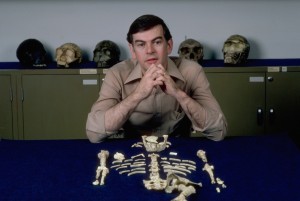
Donald Johanson com Lucy em uma foto de 1982. Crédito: Morton Beebe / Corbis

“Sentindo-me realmente sortudo”, Donald Johanson escreveu em seu diário na manhã de 24 de novembro de 1974, enquanto permanecia em um acampamento remoto na região de Afar, no norte da Etiópia. Horas depois, o paleoantropólogo, agora na Universidade do Estado do Arizona em Tempe, encontrou os restos mortais de 3,2 milhões de anos de um ser humano primitivo de corpo pequeno, possivelmente da linhagem que deu origem ao Homo sapiens . Ele e seus colaboradores chamaram-no de Australopithecus afarensis , e o esqueleto tornou-se conhecido mundialmente como Lucy. Quarenta anos depois, Johanson, agora com 71 anos, fala sobre a descoberta e a duradoura importância e apelo de Lucy.

O que os cientistas sabiam sobre a evolução humana antes de Lucy?

Antes de minhas descobertas no local de Hadar, na Etiópia, tínhamos relativamente poucas espécies fósseis, e apenas um punhado que tinha até 3 milhões de anos: havia um pedaço de braço, um único dente, um pedaço de mandíbula e talvez um pouco do crânio. Mas não tínhamos ideia de como eram os primeiros hominídeos.

O que o levou à Etiópia no início dos anos 1970?

Um jovem geólogo chamado Maurice Taieb [que agora é diretor de pesquisa do Centro Europeu de Pesquisa e Ensino de Geociências do Meio Ambiente em Aix-en-Provence, França] explorou a região de Afar, e durante o curso de Nesse trabalho preliminar no final dos anos 1960, ele encontrou grandes áreas que eram muito ricas em fósseis. Ele me pediu para acompanhá-lo em 1972 a esta região do Afar, e passamos seis semanas no campo. Ficamos deslumbrados com as altas concentrações de fósseis, as sequências sedimentares profundas e a presença de cinzas vulcânicas, que ajudariam a determinar uma estrutura geocronológica firme. Em 1973, decidimos plantar nossa bandeira em Hadar, que é onde o rio Awash vira para o leste, e temos trabalhado intermitentemente desde então.

Como foi a expedição?

Era muito remoto. Não havia estrada asfaltada para essa área, então era difícil de abastecer. Do lado positivo, havia uma fonte permanente de água - o rio Awash - nas proximidades. As temperaturas eram regularmente de 110, 115 ° F (43–46 ° C) e você viveu em uma pequena tenda por dois meses e meio. Voltei ao site há alguns anos e não é tão fácil para mim como era quando tinha 28 anos. Era um lugar onde você precisava ter vontade para trabalhar.

Conte-me sobre o dia 24 de novembro de 1974.

Era uma manhã de domingo e eu estava pondo em dia minhas anotações de campo. Acho que escrevi: “Estou com muita sorte por fazer uma grande descoberta”, porque estávamos em processo de treinar nossos olhos, treinar nossos colecionadores. Um de nossos colegas etíopes havia encontrado várias mandíbulas nos primeiros dias daquela expedição de 1974, e eu tive a sensação de que seria uma temporada de campo muito importante.

Mesmo assim, eu não queria ir a campo naquele dia, mas meu aluno de pós-graduação me incentivou a ir com ele, porque tínhamos que fazer alguns mapeamentos de fósseis. Então saímos para fazer uma pesquisa por algumas horas. Caminhando de volta para o nosso carro, olhei por cima do ombro e vi um pequeno osso de cotovelo engraçado que perdemos pela manhã, e ele imediatamente disse hominídeo para mim. Não parecia um macaco, certamente não era nenhum tipo de pequeno antílope, e quando o examinei mais de perto, pude ver que era de um ancestral humano. Era muito pequeno. E então, para minha grande surpresa e recompensa, olhei para o alto da encosta e havia fragmentos do esqueleto erodindo nesta pequena encosta.

Vimos um pouco do osso da perna e um pouco da mandíbula. Mas foi nas duas semanas seguintes que a maior parte do esqueleto foi recuperada. Ficamos desapontados porque o crânio havia se desgastado antes, e tudo o que tínhamos era um pedaço muito bom do osso occipital, o suficiente para nos dar pelo menos uma visão aproximada de que era um cérebro bem pequeno. Mas ela foi maravilhosa quando começou a ser montada no acampamento durante aquelas duas semanas. Você podia vê-la ganhando vida.

Qual era o clima no acampamento?

Todos ficaram emocionados e entusiasmados com essa descoberta. O que me surpreendeu foi a rapidez com que ela aprendeu o apelido. Eu tinha uma fita dos Beatles tocando na noite em que celebramos sua descoberta. É verdade que estava tocando “Lucy in the Sky with Diamonds”. Esta mulher apenas sugeriu chamá-la de Lucy, mas era uma linha meio descartável. Eu realmente não me concentrei nisso. Mas no café da manhã na manhã seguinte, todos estavam dizendo "Vamos voltar para o site da Lucy?", "Você acha que vamos encontrar mais do crânio de Lucy?" e assim por diante.

O que tornou Lucy tão importante?

Ela nos falou muito sobre o bipedalismo: que as mudanças no pé, no tornozelo, no joelho e no quadril aconteciam bem antes de Lucy, porque a biomecânica do bipedalismo na afarensis é virtualmente idêntica à nossa. Acho que ela também foi muito importante porque chamou a atenção para um segmento inteiramente novo no Grande Vale do Rift, que havia sido esquecido por tanto tempo por causa de sua distância. Ela foi um verdadeiro catalisador para os trabalhadores de campo.

Como sua compreensão sobre Lucy mudou nos últimos 40 anos?

Acho que percebemos que há certas características em seu esqueleto que foram deixadas de sua ancestralidade arbórea. Enquanto estávamos fechados a essa ideia na década de 1970, percebemos que provavelmente Lucy e sua espécie passavam algum tempo nas árvores. Com a descoberta do Australopithecus afarensis em outros locais - sua espécie é conhecida por mais de 400 espécimes agora - mostrou que eles viviam em uma área geograficamente extensa. Provavelmente havia uma variedade de habitats, o que reflete algum nível de adaptabilidade dessa espécie que contribuiu para sua sobrevivência a longo prazo.

Você já tentou imaginar a vida que Lucy levou?

Na minha primeira visita a Gombe [Parque Nacional do Gombe Stream na Tanzânia, onde Jane Goodall estudou chimpanzés selvagens] cerca de seis anos atrás, eu estava em uma trilha sozinha com um guia, e duas chimpanzés vieram andando com bebês em seus costas. Eles estavam a 60 centímetros de mim. Comecei a pensar, como Lucy carregou seu bebê? Ela vivia em um ambiente como este? Ela viveu em uma tropa de talvez 25 ou 30 indivíduos. Eles fizeram ninhos? Eu vi um ninho que os chimpanzés fazem para dormir. Tudo me deu uma sensação dos fósseis ganhando vida.

A maior fantasia que eu tenho é: não seria fantástico se houvesse visitantes em nosso planeta que vieram aqui 3,2 milhões de anos atrás em uma visita e filmaram como eram essas criaturas?

Por que as pessoas estão tão interessadas em Lucy?

Não sei o que há com o nome Lucy, mas é fácil de lembrar. As crianças gravitam muito em torno desse nome afetuoso que ela tem, e isso gera a visão de que se tratava de um indivíduo, de que era uma pessoa que realmente viveu. Talvez até o fato de que ela é uma mulher - temos sido tendenciosos por tantos anos falando sobre a 'evolução do homem'. E ela é uma pedra de toque e uma peça central para a pessoa média que está interessada em responder aquela pergunta que eles fazem provavelmente desde que eram crianças: de onde eu vim? Lucy é aquele tipo de ancestral com quem as pessoas gostam de se identificar.

Links Relacionados

Links Relacionados

Links relacionados na Nature Research

Fósseis semelhantes a macacos mostram indícios de ancestralidade humana 11 de abril de 2013

Ancestral humano antigo tinha pés de macaco 28 de março de 2012

Fóssil reescreve a evolução humana inicial 2009-Out-07

Plano etíope para turnê de Lucy divide museus de novembro de 2006

Paleoantropologia: O homem da história 2006-set-20

Fóssil pequeno 'Lucy' encontrado 2006-set-20

O Hobbit às 10

quinta-feira, 13 de dezembro de 2018

Lucy discoverer on the ancestor people relate to

Donald Johanson reflects on the enduring charisma of the Australopithecus afarensis fossil he found 40 years ago.

Article tools

Rights & Permissions
Morton Beebe/Corbis
Donald Johanson with Lucy in a 1982 picture.

“Feeling really lucky,” Donald Johanson wrote in his diary the morning of 24 November 1974, while staying at a remote camp in northern Ethiopia’s Afar region. Hours later, the palaeoanthropologist, now at Arizona State University in Tempe, happened upon the 3.2-million-year-old remains of a small-bodied early human, possibly on the lineage that gave rise to Homo sapiens. He and his collaborators named it Australopithecus afarensis, and the skeleton became known to the world as Lucy. Forty years on, Johanson, now 71, talks about the discovery and Lucy’s enduring importance and appeal.

What did scientists know about early human evolution before Lucy?

Before my discoveries at the site of Hadar in Ethiopia, we had relatively few fossil species, and only a handful that were as old as 3 million years: There was a piece of arm, a single tooth, a chunk of jaw and maybe a bit of skull. But we didn't have any idea of what early hominids looked like.  

What took you to Ethiopia in the early 1970s?

A young geologist by the name of Maurice Taieb [who is now director of research at the European Centre of Research and Teaching of Geosciences of the Environment in Aix-en-Provence, France] had been exploring the Afar region, and during the course of that preliminary work in the late 1960s, he encountered large areas that were very fossil-rich. He asked me to accompany him in 1972 to this region in the Afar, and we spent six weeks in the field. We were dazzled by the high concentrations of fossils, the deep sedimentary sequences, and the presence of volcanic ash, which would help determine a firm geochronological framework. In 1973 we decided to plant our flag at Hadar, which is where the Awash River turns east, and have been working on-and-off there ever since.

What was the expedition like?

It was very remote. There was no paved road to this area, so it was difficult to supply. On the plus side, there was a permanent source of water — the Awash River — nearby. Temperatures were regularly 110, 115 °F (43–46 °C) and you lived in a little tent for two and a half months. I was back to the site a couple years ago, and it's not as easy for me as it was when I was 28 years old. It was a place where you had to have the drive to work.

Tell me about the day of 24 November 1974.

It was a Sunday morning, and I was catching up on my field notes. I think I wrote: “I'm feeling really lucky that we're going to make a major discovery,” because we were in the process of training our eyes, training our collectors. One of our Ethiopian colleagues had found several jaws in the early days of that 1974 expedition, and I had a sense that it was going to be a very important field season.
Yet I didn't want to go to the field that day, but my graduate student encouraged me to go with him, because we had to do some mapping of fossils. So we went out to survey for a couple hours. Walking back to our car, I glanced over my shoulder and spotted this funny little elbow bone that we had missed in the morning, and it immediately said hominid to me. It didn't look like a monkey, it certainly wasn't any kind of small antelope, and when I examined it more closely, I could see it was from a human ancestor. It was very small. And then, to my great surprise and reward, I looked up the slope and there were fragments of the skeleton eroding on this little hillside.
We saw a bit of leg bone and a little bit of jaw. But it was over the next two weeks that most of the skeleton was recovered. We were disappointed that the cranium had eroded out earlier, and all we had was a pretty good chunk of the occipital bone, enough to give us at least a ballpark view that this was pretty small-brained. But she was marvellous as she began to be pieced together in camp over those two weeks. You could see her coming to life.

What was the mood in camp?

Everybody was just thrilled and galvanized by this discovery. What amazed me was how quickly she picked up her nickname. I had a Beatles tape playing the night we celebrated her discovery. It is true that “Lucy in the Sky with Diamonds” was playing. This woman just suggested calling her Lucy, but it was kind of a throwaway line. I didn't really concentrate on it. But by breakfast the next morning, everyone was saying “Are we going back to the Lucy site?”, “Do you think we'll find more of Lucy's skull?” and so on.

What made Lucy so important?

She told us a lot about bipedalism: that changes in the foot, the ankle, the knee and the hip happened well before Lucy, because the biomechanics of bipedalism in afarensis are virtually identical to our own. I think she was also very important because she drew attention to an entirely new segment in the Great Rift Valley, one that had been overlooked for so long because of its remoteness. She was a real catalyst for field workers.

How has your understanding of Lucy changed in the last 40 years?

I think that we realized that there are certain features in her skeleton that were left over from her arboreal ancestry. While we were closed to that idea in the 1970s, we realized that probably Lucy and her species did spend some time in the trees. With the discovery of Australopithecus afarensis at other sites — her species is known by over 400 specimens now — it showed they lived in a geographically widespread area. There were probably a variety of habitats, which reflects some level of adaptability in this species that contributed to its long-term survival.

Have you ever tried to imagine the life that Lucy led?

On my first visit to Gombe [Gombe Stream National Park in Tanzania, where Jane Goodall studied wild chimpanzees] about six years ago, I was on a trail by myself with a guide, and two female chimps came knuckle-walking by with babies on their backs. They were 2 feet [60 centimetres] from me. I began to think, how did Lucy carry her baby? Did she live in an environment like this? She lived in a troop maybe of 25 or 30 individuals. Did they make nests? I saw a nest that chimps make to sleep in. It all gave me a sense of the fossils coming to life.
The greatest fantasy that I have is: wouldn't it be fantastic if there had been visitors to our planet who came here 3.2 million years ago on a visit and shot video of what these creatures looked like?

Why are people so interested in Lucy?

I don’t know what it is about the name Lucy, but it's easy to remember. Children really gravitate towards this affectionate name she has, and that generates the view that this was an individual, that this was some person who actually lived. Perhaps even the fact that she's a female — we've been biased for so many years talking about  'evolution of man'. And she’s a touchstone and a centrepiece for the average person who is interested in answering that question that they've asked probably since they were a child: where did I come from? Lucy is that kind of ancestor that people like to identify with.
Nature
doi:10.1038/nature.2014.16379

quarta-feira, 28 de janeiro de 2015

Lucy discoverer on the ancestor people relate to

Donald Johanson reflects on the enduring charisma of the Australopithecus afarensis fossil he found 40 years ago.

Article tools

Rights & Permissions
Morton Beebe/Corbis
Donald Johanson with Lucy in a 1982 picture.
“Feeling really lucky,” Donald Johanson wrote in his diary the morning of 24 November 1974, while staying at a remote camp in northern Ethiopia’s Afar region. Hours later, the palaeoanthropologist, now at Arizona State University in Tempe, happened upon the 3.2-million-year-old remains of a small-bodied early human, possibly on the lineage that gave rise to Homo sapiens. He and his collaborators named it Australopithecus afarensis, and the skeleton became known to the world as Lucy. Forty years on, Johanson, now 71, talks about the discovery and Lucy’s enduring importance and appeal.

What did scientists know about early human evolution before Lucy?

Before my discoveries at the site of Hadar in Ethiopia, we had relatively few fossil species, and only a handful that were as old as 3 million years: There was a piece of arm, a single tooth, a chunk of jaw and maybe a bit of skull. But we didn't have any idea of what early hominids looked like.

What took you to Ethiopia in the early 1970s?

A young geologist by the name of Maurice Taieb [who is now director of research at the European Centre of Research and Teaching of Geosciences of the Environment in Aix-en-Provence, France] had been exploring the Afar region, and during the course of that preliminary work in the late 1960s, he encountered large areas that were very fossil-rich. He asked me to accompany him in 1972 to this region in the Afar, and we spent six weeks in the field. We were dazzled by the high concentrations of fossils, the deep sedimentary sequences, and the presence of volcanic ash, which would help determine a firm geochronological framework. In 1973 we decided to plant our flag at Hadar, which is where the Awash River turns east, and have been working on-and-off there ever since.

What was the expedition like?

It was very remote. There was no paved road to this area, so it was difficult to supply. On the plus side, there was a permanent source of water — the Awash River — nearby. Temperatures were regularly 110, 115 °F (43–46 °C) and you lived in a little tent for two and a half months. I was back to the site a couple years ago, and it's not as easy for me as it was when I was 28 years old. It was a place where you had to have the drive to work.

Tell me about the day of 24 November 1974.

It was a Sunday morning, and I was catching up on my field notes. I think I wrote: “I'm feeling really lucky that we're going to make a major discovery,” because we were in the process of training our eyes, training our collectors. One of our Ethiopian colleagues had found several jaws in the early days of that 1974 expedition, and I had a sense that it was going to be a very important field season.
Yet I didn't want to go to the field that day, but my graduate student encouraged me to go with him, because we had to do some mapping of fossils. So we went out to survey for a couple hours. Walking back to our car, I glanced over my shoulder and spotted this funny little elbow bone that we had missed in the morning, and it immediately said hominid to me. It didn't look like a monkey, it certainly wasn't any kind of small antelope, and when I examined it more closely, I could see it was from a human ancestor. It was very small. And then, to my great surprise and reward, I looked up the slope and there were fragments of the skeleton eroding on this little hillside.
We saw a bit of leg bone and a little bit of jaw. But it was over the next two weeks that most of the skeleton was recovered. We were disappointed that the cranium had eroded out earlier, and all we had was a pretty good chunk of the occipital bone, enough to give us at least a ballpark view that this was pretty small-brained. But she was marvellous as she began to be pieced together in camp over those two weeks. You could see her coming to life.

What was the mood in camp?

Everybody was just thrilled and galvanized by this discovery. What amazed me was how quickly she picked up her nickname. I had a Beatles tape playing the night we celebrated her discovery. It is true that “Lucy in the Sky with Diamonds” was playing. This woman just suggested calling her Lucy, but it was kind of a throwaway line. I didn't really concentrate on it. But by breakfast the next morning, everyone was saying “Are we going back to the Lucy site?”, “Do you think we'll find more of Lucy's skull?” and so on.

What made Lucy so important?

She told us a lot about bipedalism: that changes in the foot, the ankle, the knee and the hip happened well before Lucy, because the biomechanics of bipedalism in afarensis are virtually identical to our own. I think she was also very important because she drew attention to an entirely new segment in the Great Rift Valley, one that had been overlooked for so long because of its remoteness. She was a real catalyst for field workers.

How has your understanding of Lucy changed in the last 40 years?

I think that we realized that there are certain features in her skeleton that were left over from her arboreal ancestry. While we were closed to that idea in the 1970s, we realized that probably Lucy and her species did spend some time in the trees. With the discovery of Australopithecus afarensis at other sites — her species is known by over 400 specimens now — it showed they lived in a geographically widespread area. There were probably a variety of habitats, which reflects some level of adaptability in this species that contributed to its long-term survival.

Have you ever tried to imagine the life that Lucy led?

On my first visit to Gombe [Gombe Stream National Park in Tanzania, where Jane Goodall studied wild chimpanzees] about six years ago, I was on a trail by myself with a guide, and two female chimps came knuckle-walking by with babies on their backs. They were 2 feet [60 centimetres] from me. I began to think, how did Lucy carry her baby? Did she live in an environment like this? She lived in a troop maybe of 25 or 30 individuals. Did they make nests? I saw a nest that chimps make to sleep in. It all gave me a sense of the fossils coming to life.
The greatest fantasy that I have is: wouldn't it be fantastic if there had been visitors to our planet who came here 3.2 million years ago on a visit and shot video of what these creatures looked like?

Why are people so interested in Lucy?

I don’t know what it is about the name Lucy, but it's easy to remember. Children really gravitate towards this affectionate name she has, and that generates the view that this was an individual, that this was some person who actually lived. Perhaps even the fact that she's a female — we've been biased for so many years talking about  'evolution of man'. And she’s a touchstone and a centrepiece for the average person who is interested in answering that question that they've asked probably since they were a child: where did I come from? Lucy is that kind of ancestor that people like to identify with.
Nature
doi:10.1038/nature.2014.16379