Fóssil de ave três vezes maior que avestruz é descoberto na Europa

As aves gigantescas do passado têm nomes que falam por si. A ave
elefante, nativo de Madagascar e a maior ave gigante conhecida, tinha
mais de três metros de altura e pesava 1.000 quilos ou mais, até que foi
extinto cerca de 1.000 anos atrás.
O mihirung da Austrália, apelidado
de “ave do trovão”, que desapareceu há quase 50 mil anos, teria quase
dois metros de altura e pesava entre 200 e 500 quilos.
Mas até agora,
ninguém jamais havia encontrado evidências dessas aves na Europa.Pesquisadores descreveram o primeiro fóssil de uma ave gigante encontrado na Crimeia no Journal of Vertebrate Paleontology.
Datado de cerca de 1,8 milhões de anos, o espécime faz com que os
especialistas questionem suposições anteriores de que as aves gigantes
não faziam parte da fauna da região quando os primeiros ancestrais
humanos chegaram pela primeira vez à Europa.
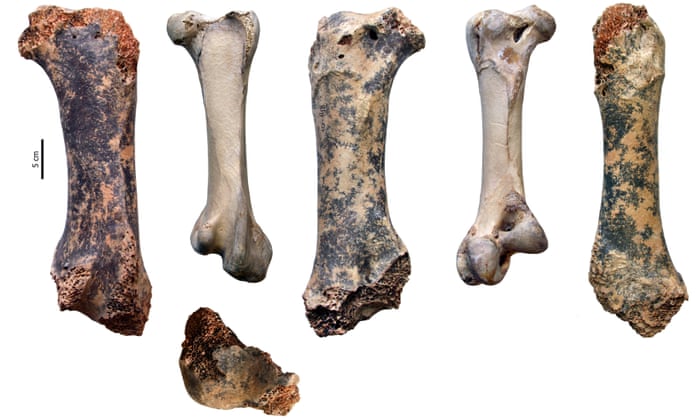
Uma equipe de paleontólogos desenterrou o fóssil – um fêmur
extraordinariamente grande – na Caverna Taurida, localizada na Península
da Criméia, no norte do Mar Negro. A caverna só foi descoberta em junho
passado quando a construção de uma nova rodovia revelou sua entrada.
Expedições iniciais no verão passado levaram a descobertas emocionantes,
incluindo ossos e dentes de parentes de mamute extintos. É claro que a
equipe não esperava encontrar aves gigantes, pois nunca houve evidências
de sua existência na Europa.
“Quando esses ossos me alcançaram, senti que estava segurando algo
pertencente a aves de elefante de Madagascar”, diz a paleontóloga Nikita
Zelenkov, do Instituto Paleontológico Borissiak, que lidera o estudo,
em um e-mail. “Essa foi a parte mais surpreendente para mim, tamanho tão
incrível. Nós não esperamos [por isso].
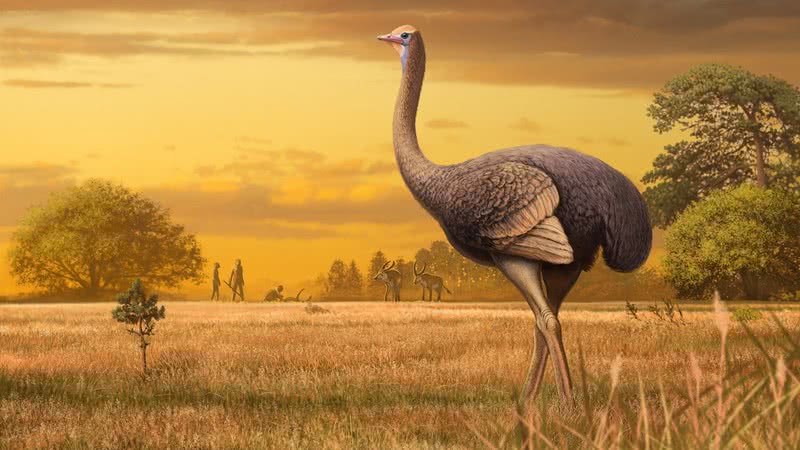
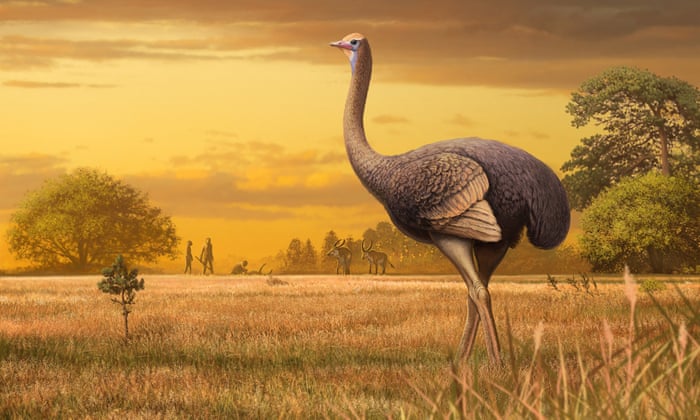
Com base nas dimensões do fêmur, a equipe calculou que a ave pesaria
cerca de 450 quilos – tanto quanto um urso polar adulto -, tornando-se a
terceira maior ave já registrada.Embora o osso fosse semelhante em tamanho ao fêmur de um elefante,
era mais esguio e alongado, como uma versão maior do avestruz moderno
(Struthio camelus). “A principal diferença do Struthio é a notável
robustez. Há também alguns detalhes menos visíveis, como a forma ou
orientação de superfícies particulares, que indicam uma morfologia
diferente dos avestruzes”, diz Zelenkov.
Com base nessas distinções, a equipe classificou provisoriamente o
fêmur como pertencente à ave gigante sem asas Pachystruthio dmanisensis.
Um fêmur de aparência semelhante do Pleistoceno Inferior foi encontrado
na Geórgia e descrito em 1990, mas na época, a equipe não calculou o
tamanho total da ave antiga. A forma do fêmur também nos dá pistas sobre como o mundo era quando
Pachystruthio estava vivo. Suas semelhanças com os ossos de um avestruz
moderno sugerem que uma ave enorme era uma boa corredora, o que poderia
implicar que ele vivesse entre grandes mamíferos carnívoros como o chita
gigante ou o gato com dentes de sabre. Esta ideia é apoiada pelas
descobertas anteriores de ossos e fósseis próximos.
Além disso, a imensa massa de Pachystruthio poderia apontar para um
ambiente mais seco e hostil. Estudos anteriores do mihirung da Austrália
sugerem que ele evoluiu para um tamanho maior à medida que a paisagem
se tornou mais árida, uma vez que uma massa corporal maior pode digerir
com mais eficiência alimentos mais duros e de baixa nutrição.
O
pachystruthio pode ter evoluído sua grande estatura por razões
semelhantes.Talvez mais notavelmente, a equipe supõe que o Pachystruthio estava
presente quando o Homo erectus chegou na Europa durante o Pleistoceno
Inferior e possivelmente chegou pela mesma rota. Saber que as duas
espécies antigas poderiam ter coexistido introduz um mundo de novas
questões para os cientistas.“O pensamento de que algumas das maiores aves que já existiram não
foi encontrado na Europa até recentemente é revelador”, diz Daniel
Field, um paleobiólogo da Universidade de Cambridge que não estava
envolvido na nova pesquisa. “[Isso] levanta questões interessantes sobre
os fatores que deram origem a essas aves gigantes e os fatores que as
levaram à extinção. Seu desaparecimento estava relacionado com a chegada
de parentes humanos na Europa?
Delphine Angst, uma paleobióloga da Universidade de Bristol que
também não esteve envolvida no estudo, diz que é muito cedo para dizer
sem evidência direta se havia vida humana perto do mesmo local. “Para
este caso específico, é difícil responder”, diz Angst. “Mas se você
tomar todos os exemplos que temos, como as moas na Nova Zelândia, temos
muitas evidências claras de que essas aves foram caçadas por humanos. É
completamente possível no futuro que talvez encontremos alguma
evidência, como ossos com traços de corte ou cascas de ovos com
decorações. Ainda não há informações para este caso específico, mas é
possível”.
Apesar da falta de uma resposta definitiva, Angst enfatiza que este é
um passo importante para entender como essas aves evoluíram e mais
tarde foram extintas. Essas aves gigantes são conhecidas em vários lugares do mundo por
diferentes períodos de tempo, então eles são um grupo biológico muito
interessante para entender como funciona um ambiente”, diz Angst. “Aqui
temos mais um espécime e mais uma ave gigante em mais um local. Qualquer
evidência nova é muito importante para nos ajudar a entender a questão
global.”
Como a descoberta do fóssil continua a desafiar ideias anteriores,
fica claro que, diferentemente de Pachystruthio, essa nova descoberta
está ganhando voo.
FONTE: Fossil of Ancient Bird Three Times Bigger Than an Ostrich Found in Europe [Smithsonian]