Mostrando postagens com marcador antropoide. Mostrar todas as postagens

segunda-feira, 27 de maio de 2024

Translator


Teoria da detecção de cobras: as cobras desempenharam um papel na evolução dos primatas?

Assim como os primatas, as cobras são um dos vertebrados mais exclusivos do planeta. Eles evoluíram para se adaptarem a diversas condições ambientais, ocupando vários nichos nos ecossistemas, em todo o mundo. A ofidiofobia, o medo psicológico de cobras, é um dos medos mais comuns que os humanos parecem desenvolver inatamente, muitas vezes sem nunca encontrar uma cobra. Acredita-se que as fobias comuns, especialmente aquelas que lidam com objetos reais, podem resultar de um instinto evolutivo profundamente arraigado.

Escrito por -Gabriel Stroup

A Teoria da Detecção de Cobras (SDT), uma hipótese abrangente dentro da teoria evolutiva, que consiste em numerosas sub-hipóteses, postula que muitas características dos primatas surgiram como resultados de interações com cobras predadoras, entre outras pressões evolutivas. A antropóloga Lynne Isbell (2006) apresentou uma linha do tempo hipotética e detalhada das mudanças evolutivas que podem ter ocorrido no clado antropoide dos mamíferos desde o seu início no Cretáceo, destacando o papel das cobras como predadoras ou outras fontes de perigo, que podem ter posteriormente influenciou a evolução dos primatas (Figura 1).

Figura 1 – Cascata hipotética de eventos evolutivos que ocorrem em primatas como resultado direto da associação com cobras.
Adaptado de Isabelle, 2006.

Na primatologia, o SDT é apoiado por muitos estudos que investigam reações de primatas não humanos a diferentes espécies de cobras; foi demonstrado que macacos da charneca, por exemplo, discriminam cobras locais e perigosas de cobras não locais e não perigosas, bem como discriminam constritores de cobras venenosas (Clara et al, 2021).

Figura 2 – Exemplo de imagem de cobra, utilizado por Kawai, 2016.

Além disso, estudos psicológicos demonstraram que os humanos têm um talento especial para identificar silhuetas de cobras muito mais rapidamente do que qualquer outro animal potencialmente perigoso (Kawai, 2016). Nesta experiência, os investigadores testaram alguns estudantes de graduação, apresentando imagens de vários animais que são inicialmente obscurecidos por ruído branco aleatório, mas depois gradualmente revelados através de 20 passos (ver Figura 2). Os resultados mostram que a maioria dos participantes conseguiu identificar corretamente a cobra entre as etapas 6 e 9, enquanto a maioria dos outros animais não foram identificados até as etapas 10 e posteriores.

Outros artigos desde a publicação de Isbell demonstraram amplamente apoio ao SDT. Na antropologia cultural, algumas das culturas humanas mais antigas que ainda existem no planeta, como os vários povos Agta das Filipinas, desenvolveram formas de detectar e prevenir mortes por cobras, particularmente por pítons reticulados, a espécie de cobra mais longa do mundo (Promontório e Greene, 2011). Essas grandes constritoras se assemelham mais às primeiras cobras com as quais os primeiros primatas teriam entrado em contato na pré-história. Numa escala mais ampla, as cobras têm sido temidas ou reverenciadas como símbolos mitológicos para várias ideias em muitas culturas humanas independentes ao longo do tempo.

Um estudo neurológico mostrou que os bebês humanos têm uma resposta cerebral inata a estímulos específicos de cobras, mesmo quando comparados a lagartas semelhantes a cobras, o que seria consistente com um instinto evolutivamente arraigado para identificar rapidamente um potencial predador de primatas (Bartels et al. , 2020). Outro estudo realizou três experimentos diferentes de rastreamento ocular, todos sugerindo cumulativamente que, em comparação com as aranhas, as cobras são facilmente identificadas em condições visuais desafiadoras (Saores et al, 2014).

A detecção de cobras também se manifesta na capacidade de identificar escamas de cobra, que são notavelmente únicas no reino animal. Um estudo mostrou que uma parte do cérebro humano, que está associada a respostas emocionais a estímulos, torna-se vastamente ativa quando confrontada com padrões que se assemelham a escamas de cobra, em comparação com padrões que se assemelham a escamas de lagarto ou plumagem de aves (Van Strien & Isbell, 2017. Veja a Figura 3).

Figura 3 – Uma coleção de imagens de exemplo semelhantes às usadas por Van Strien e Isbell (Adaptado da Figura 1, 2017).

Talvez devido à influência que as cobras potencialmente exerceram na fisiologia dos primatas, há evidências que sugerem que as cobras estão evoluindo para sobreviver contra ataques preventivos de primatas. Harris et al (2021) forneceram razões para suspeitar que o advento do veneno da cobra foi causado pelas interações mortais entre cobras e primatas afro-asiáticos; principalmente pelo fato de que esses primatas apresentam resistência ao veneno de cobra, o que não acontece com os prossímios. Isto apesar do veneno da cobra ter evoluído anteriormente através de pelo menos três linhagens distintas de cobra.

A entrega do veneno da cobra, evoluindo como uma forma de a cobra se defender à distância, é possivelmente resultado de primatas que inicialmente interagiram com a cobra à distância. Se corretos, esses pontos seriam evidências mais sólidas para sugerir que cobras e primatas passaram (e continuam a passar) por um processo coevolutivo único.

Apesar do crescente apoio ao SDT, ainda existem algumas questões válidas que ainda não foram exploradas exaustivamente. Coelho et al (2019) apresentaram algumas críticas e questionamentos justos à teoria. Algumas dessas críticas/questões foram abordadas em pesquisas posteriores, mas algumas ainda permanecem. Alguns exemplos são:

  • Numerosos grupos de animais desenvolveram diferentes formas de criar e distribuir veneno, que não são exclusivas das cobras, por isso faria sentido que os primatas desenvolvessem uma via generalizada para detectar tais espécies, porque a evolução de vias para cada grupo individual seria biologicamente dispendiosa e impraticável.
  • A hipótese da habituação seletiva postula que as presas começam com uma imagem geral de um predador, aparentemente sensível a muitos potenciais estímulos de predador, mas depois se aclimatam/habituam ao seu ambiente específico, aprendendo a distinguir pistas ambientais inofensivas de pistas úteis ou prejudiciais. Isto tornaria desnecessário que os primatas desenvolvessem formas de detectar cobras em particular e, em vez disso, fariam com que os primatas aprendessem a reconhecer todas as ameaças locais à sua área específica.

Também vale a pena mencionar que, apesar da prevalência da ofidiofobia, há também uma grande fração de primatas (humanos especificamente) que encontram alegria ao encontrar e interagir com cobras, e essa alegria ocorre em todas as culturas humanas tanto quanto ocorre o medo. Landová et al (2018) entrevistaram estudantes universitários no Azerbaijão e na República Checa sobre as suas atitudes e percepções sobre várias espécies de cobras que lhes foram apresentadas. Eles descobriram que ambos os grupos concordavam que as espécies que mais causavam medo (víboras em particular) eram também as mais bonitas. Estes resultados ocorreram mesmo quando o grupo do Azerbaijão tinha uma atitude mais negativa em relação às cobras em comparação com o grupo checo, e apesar de ambos os grupos terem formação educacional semelhante (ciências biológicas). Os investigadores concluem que deve haver tanto um medo generalizado como uma alegria generalizada das cobras através das fronteiras sociopolíticas (ver Figura 4).

Figura 4 – Gráfico que mostra uma forte concordância entre as respostas de medo em relação a certas espécies de cobras, de estudantes universitários no Azerbaijão (eixo Y) e na República Checa (eixo X). Adaptado da Figura 2 de Landová et al, 2018.

A Teoria da Detecção de Cobras é uma ideia fascinante que sugere que a relação coevolutiva entre primatas e cobras remonta aos primeiros tempos dos mamíferos. A SDT ajuda a explicar uma fobia muito comum, a capacidade inata dos primatas de distinguir cobras de outras espécies do reino animal e outras peculiaridades da experiência dos primatas. Estudos futuros serão necessários antes que o SDT seja totalmente aceito, mas, a partir de agora, há muitos motivos para ser levado a sério. Como guardião de cobras, até eu tenho breves momentos de medo quando vejo cobras venenosas online, ou mesmo quando vejo minhas próprias cobras explorando seu ambiente. Embora eu encoraje todos a serem educados sobre a biologia e o comportamento das cobras, também entendo que o medo de cobras pode ser um produto de milhões de anos de evolução dos primatas, o que pode ter contribuído para o nosso sucesso como espécie.

Bibliografia

Bertels, J., Bourguignon, M., de Heering, A. et al. As cobras provocam respostas neurais específicas no cérebro infantil humano. Sci Rep 10, 7443 (2020). https://doi.org/10.1038/s41598-020-63619-y

Harris, RJ, Nekaris, K.AI. & Fry, BG Macacos com veneno: um aumento da resistência às α-neurotoxinas apoia uma corrida armamentista evolutiva entre primatas afro-asiáticos e cobras simpátricas. BMC Biol 19, 253 (2021). https://doi.org/10.1186/s12915-021-01195-x

Headland, Thomas N. e Harry W. Greene. "Caçadores-coletores e outros primatas como presas, predadores e competidores de cobras." Anais da Academia Nacional de Ciências 108.52 (2011): E1470-E1474.

Hernández Tienda, Clara, et al. "Reação a cobras em macacos selvagens (Macaca maura)." Jornal Internacional de Primatologia 42 (2021): 528-532.

Isbell, Lynne A. "Cobras como agentes de mudança evolutiva em cérebros de primatas." Jornal da evolução humana 51.1 (2006): 1-35.

Kawai, Nobuyuki e Hongshen He. "Quebrando a camuflagem de cobra: os humanos detectam cobras com mais precisão do que outros animais em condições visuais menos discerníveis." PLoS One 11.10 (2016): e0164342.

Landová, Eva, et al. "Associação entre medo e avaliação da beleza de cobras: descobertas interculturais." Fronteiras em psicologia 9 (2018): 333.

Soares, Sandra C., et al. "A cobra escondida na grama: detecção superior de cobras em condições desafiadoras de atenção." PLoS um 9.12 (2014): e114724.

Van Strien, Jan W. e Lynne A. Isbell. "Escamas de cobra, exposição parcial e a teoria de detecção de cobra: um estudo de potenciais relacionados a eventos humanos." Relatórios Científicos 7.1 (2017): 46331.

Imagem da capa: (C) Gabriel Stroup, GigabyteSpyder Photography

quinta-feira, 17 de setembro de 2020

3. Evolução dos Primatas

image

Figure 3.1 Anthropoid Evolution by Keenan Taylor.

While we have no primate fossil material prior to the Eocene Epoch, the first primates are thought to have evolved prior to the Paleocene Epoch (66–56 mya), possibly as far back as 90 mya, during the Late Cretaceous Period. With the extinction of the dinosaurs at the end of the Cretaceous, many terrestrial niches became available and predation pressures were somewhat relaxed. In addition, temperatures were higher than in the recent past (see Figure 3.2) and the angiosperms (flowering plants) were undergoing an adaptive radiation, i.e. relatively rapid speciation, and spreading globally. The spread of flowering plants resulted in an adaptive radiation of insect pollinators and herbivores (plant-eaters), as well as insectivorous and herbivorous arboreal vertebrates.

image

Figure 3.2 Temperature change over time. “65 Myr Climate Change” by Robert A. Rohde is licensed under CC BY-SA 3.0. Notes: Pal = Paleocene, Eo = Eocene, Ol = Oligocene, Mio = Miocene, Pli = Pliocene, and Plt = Pleistocene

image

Figure 3.3 Primate phylogeny. “Primate phylogeny” from “Strepsirrhini” in Wikipedia is licensed CC-BY-SA

The earliest primates likely descended from a small, nocturnal, insectivorous mammal. The tree shrews and colugos (also known as flying lemurs) are the closest living relatives to primates. The tree shrew is used as a living model for what the earliest primates, or primate predecessors, might have been like. At some point, primates or their ancestors moved into the trees and adapted to an arboreal environment. Two theories regarding the evolution of some primate characteristics, such as grasping or prehensile hands, forward-oriented eyes, and depth perception, are the Arboreal and Visual Predation Theories. The Arboreal Theory posits that primate characteristics, such as grasping hands and feet and the presence of nails instead of claws, are the result of moving into and adapting to an arboreal environment. (Imagine the casualties!) The Visual Predation Theory asserts that characteristics that were well-suited to scurrying around in trees and visual features in particular, such as convergent orbits, are adaptations to insect predation. Short of a butterfly net, grasping hands, visual acuity, and depth perception are essential for catching insects, but I guess they would be kind of handy for using a butterfly net as well!

image

Figure 3.4 Tree shrew. “Tupaia cf javanica 050917 manc” by W. Djatmiko is licensed under CC BY-SA 3.0.

Figure 3.5 Hands and feet of apes and monkeys. “Hands and Feet of Apes and Monkeys” by Richard Lydekker is in the public domain.

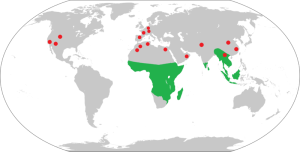
While primates are thought to have evolved in Asia, the majority of the early fossil material is found in North America and Europe, dating to the Eocene Epoch (~56–34 mya). The map in Figure 3.6 indicates both living and fossil strepsirrhine sites. They are divided into two superfamilies, Adapoidea and Omomyoidea. In general, the adapoids were diurnal, lemur-like animals that are thought to be the ancestors of the strepsirrhine primates, i.e. the lemurs of Madagascar and the lorisids of Africa and Southeast Asia (i.e. bushbabies and pottos of Africa and lorises of Southeast Asia) (see Figure 3.7). The smaller, nocturnal omomyoids are good candidates for the ancestors of modern-day tarsiers. However, due to the early dates for ancestral tarsiers, it is possible that the omomyoids and tarsiers were sister lineages.

image

Figure 3.6 Range of living strepsirrhine primates (green) and Eocene-Miocene fossil sites (red). “Extant strepsirrhine range with fossil sites,” a derivative work by Maky, is in the public domain.

During the Eocene Epoch, the early strepsirrhine-like primates experienced an adaptive radiation and expanded into numerous niches over a broad geographic area. The northern expansion of early primates into Europe and North America was possible because Eurasia and North America were joined as the large landmass known as Laurasia and, as mentioned, it was warm enough for tropical animals to move into northern latitudes. Due to subsequent global cooling, the early primates in North America and Europe eventually went extinct. Strepsirrhine primates spread into Africa after it docked with Laurasia. They are also hypothesized to have “rafted” on floating mats of vegetation to Madagascar, where they evolved into the great diversity of extinct and extant lemur species.

image

Figure 3.7 Strepsirrhini. Notes: Top left: ring-tailed lemurs (Madagascar); top right: diademed sifaka (Madagascar); top middle left: aye-aye (Madagascar); top middle right: ruffed lemur (Madagascar); bottom middle left: mouse lemur (Madagascar); bottom middle right: slow loris (Asia); bottom left: slender loris (Asia); bottom right: greater bushbaby (Africa).

By at least the late Eocene, the first anthropoid primates had evolved. There is debate over the origin of the anthropoids, i.e. the ancestor of the monkeys and apes. There are four different theories of our ancestry, each with its share of supporters: (1) adapoid, (2) omomyoid, (3) tarsier, or (4) independent origin as yet undiscovered. Remains of early anthropoids dating to the late Eocene are found in Africa and Asia. A possible stem or basal anthropoid, meaning the original ancestor of all monkeys and apes, comes from the Shanghuang deposits of China. Termed genus: Eosimias (see Figure 3.8), it was as small as the smallest living anthropoid, the pygmy marmoset monkey of South America. While ring-tailed lemurs have striped tails, I do not know of any other striped primates so am not sure why the artist gave them stripes … but it sure is an intriguing little creature! Other late Eocene fossils have been discovered in Myanmar (genus: Pondaungia), Thailand (genus: Siamopithecus), Libya (genus: Biretia), Algeria, and the Fayum Beds of Egypt.

image

Figure 3.8 Eosimias sinesis. Illustration by Keenan Taylor.

During the Oligocene Epoch (~34–23 mya), the anthropoid primates underwent a great adaptive radiation. The richest location for Oligocene anthropoid fossils is the Fayum Beds of Egypt. Oligocene anthropoids are divided into three families: Parapithecidae, Oligopithecidae, and Propliopithecidae, from most primitive to most derived over time. The New World monkeys are thought to have branched off from the parapithecids, with which they share some characteristics. Genus: Apidium is a prime contender for a possible ancestor. Once again, a rafting hypothesis is proposed for the migration of that ancestor from Africa to South America.

The ancestors of the Old World monkeys and apes diverged from the family: Propliopithecidae. The propliopithecid, Aegyptopithecus zeuxis (also known as Propliopithecus zeuxis) is thought to be a common ancestor of the ape and Old World monkey lineages (see Figure 3.9). While the earliest anthropoids were more monkey- than ape-like, the apes (or hominoids) were the first to successfully adapt to changing environmental conditions in Africa.

3.8

Figure 3.9 Aegyptopithecus or Propliopithecus zeuxis. “Aegyptopithecus NT” by Nobu Tamura is licensed under CC BY-SA 3.0.

For years, people have asked me, “Barbara, you don’t really believe that we came from monkeys, do you?” and I always answered, “No, we came from apes!” However, our common anthropoid ancestor was more monkey- than ape-like…. So, “YEAH, I suppose I do!”

During the Miocene Epoch (~23–5.3 mya), the adaptive radiation of the apes or hominoids can be observed in the fossil record. The earliest fossils are from Kenya and Uganda. There were 20 or more genera of apes during the Miocene and they exhibited a wide range of body sizes and adaptive strategies. Proconsul is a possible stem ape, dating to ~18 mya (see Figure 3.10 and 3.11). The ancestry of the lesser apes is unclear but they are thought to have branched off 18–16 mya. The great apes diversified and spread from Africa to Asia and Europe. The ancestors of the orangutans, the sivapithecines, moved into western and subsequently eastern Asia. Remains in Turkey have been dated to 14 mya. The largest primate that ever lived, i.e. the now extinct genus: Gigantopithecus (known only from isolated dental and mandibular fragments), also had a sivapithecine ancestry. Dryopithecine apes moved into Europe during the late Miocene. Generally referred to as “dental apes,” due to the scanty remains of jaws and teeth, that evolutionary side branch eventually went extinct due to global cooling, as with the earlier strepsirrhines in the northern latitudes.

3.9

Figure 3.10 Proconsul NT” by Nobu Tamura is licensed under CC BY-SA 3.0.

While there were Old World monkeys in the Miocene Epoch, such as genus: Victoriapithecus from Kenya, the adaptive radiation of the Old World monkeys lagged behind the hominoids. However, the same environmental conditions that drove most ape genera to extinction in Africa led to an explosion of monkey species. Monkeys could more quickly adapt due to their shorter life stages and greater number of offspring. A baboon can give birth every two years versus four or five years for gorillas and chimps, respectively. While the leaf-eating ancestor of the colobines stayed in the trees, the ancestor of the cercopithecine or cheek pouch monkeys, such as macaques and baboons, adapted to traveling on the ground as well as in the trees. The ability to exploit both arboreal and terrestrial resources expanded their niche and they survived and thrived in Africa and Asia. With only two extant genera, the African colobines did not diversify to the same extent, having been confined to forests. However, the Asian colobines did not experience the same forest loss as their African cousins did and are thus much more diverse. When African forests later expanded, the ancestors of some cercopithecine species, such as the colorful arboreal guenons, went back to the trees.

It has been difficult to trace the origin of the human/chimp/gorilla lineage during the mid-Miocene due to a paucity of fossils from that time and many conflicting viewpoints. Some of the contenders for the stem African great ape are Nakalipithecus (10 mya) and Samburupithecus (9.5 mya) from Kenya. Other possible ancestors or related species are Afropithecus (18–16 mya) and Nacholapithecus (15 mya) from Kenya and Otavipithecus (13 mya) from Namibia.

The chimp and human lineages are thought to have diverged by the late Miocene. Global cooling in the latter part of the Miocene led to the extinction of all ape genera in northern latitudes. Forest cover in Africa was vastly reduced over time due to climatic fluctuations and while most apes went extinct, the newly emerged hominins thrived. Hominins experienced an adaptive radiation during the Pliocene Epoch (~5.3–2.6 mya), and late in the Pleistocene Epoch (~2.6 mya–11.7 kya) our own species, Homo sapiens, evolved (≤200 kya).

image

Figure 3.11 Proconsul africanus by Keenan Taylor.


Published on September 16th, 2015 | by Liz Martin-Silverstone

História de crescimento inicial de primatas

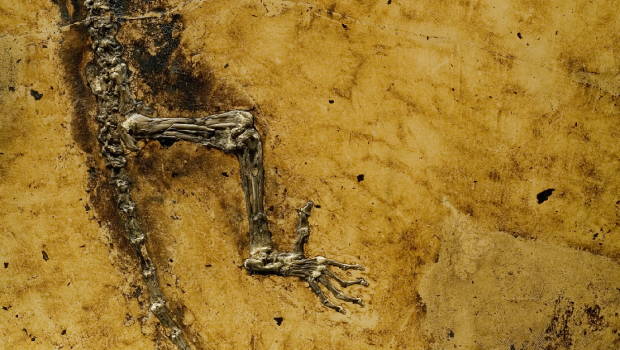
A evolução dos primatas é algo muito debatido e não muito bem compreendido na paleontologia, mas ainda é muito estudado. Em 2009, um incrível fóssil de primata foi encontrado em Messel, datando de aproximadamente 47 milhões de anos atrás, e foi denominado Darwinius masillae. Apenas um único fóssil de Darwinius é conhecido, e é pequeno, completo e muito bem preservado. A descrição inicial anunciou-o como uma espécie de "elo perdido" na evolução dos primatas, uma forma de transição no ramo para primatas antropoides, incluindo humanos. No entanto, estudos desde então discordaram da classificação original, colocando-a em outros ramos da árvore dos primatas.

Um novo estudo que analisa a história de crescimento de Darwinius revelou novos detalhes sobre o padrão de erupção dos dentes e a posição do fóssil nos primatas. O autor principal do estudo, Sergi López-Torres, é um aluno de doutorado da Universidade de Toronto e nos deu uma breve descrição do estudo:

“Os adapoides eram primatas arbóreos de médio porte, espalhados por toda a Europa, Ásia, África e América do Norte, variando no tempo entre 55,8 e 9 milhões de anos atrás. Pertencem a uma radiação de primatas bastante bem-sucedida, formando 6 famílias e mais de 100 espécies. As relações evolutivas dos adapoides com grupos modernos de primatas têm recebido considerável atenção na literatura científica há mais de um século. Jacob Wortman sugeriu pela primeira vez em 1904 que os adapoides estavam intimamente relacionados aos antropoides (o grupo que inclui macacos, macacos e humanos), agora conhecido como a hipótese antropóide-adapóide. Em 1920, William Gregory propôs ao contrário que os primatas adapóides eram mais intimamente relacionados aos estrepsirrinos (o grupo que inclui lêmures e lóris), conhecido como a hipótese de estrepsirrina adapóide.

Embora a hipótese do Adapoid-Strepsirrhine tenha sido mais amplamente aceita nas últimas duas décadas, a descrição do adapóide juvenil Darwinius masillae (apelidado de “Ida”) em 2009 reacendeu a controvérsia. Seus descritores sugeriram uma relação mais próxima com os haplorrinos (o grupo que inclui társios e antropoides) e, mais tarde, especificamente com os antropóides.

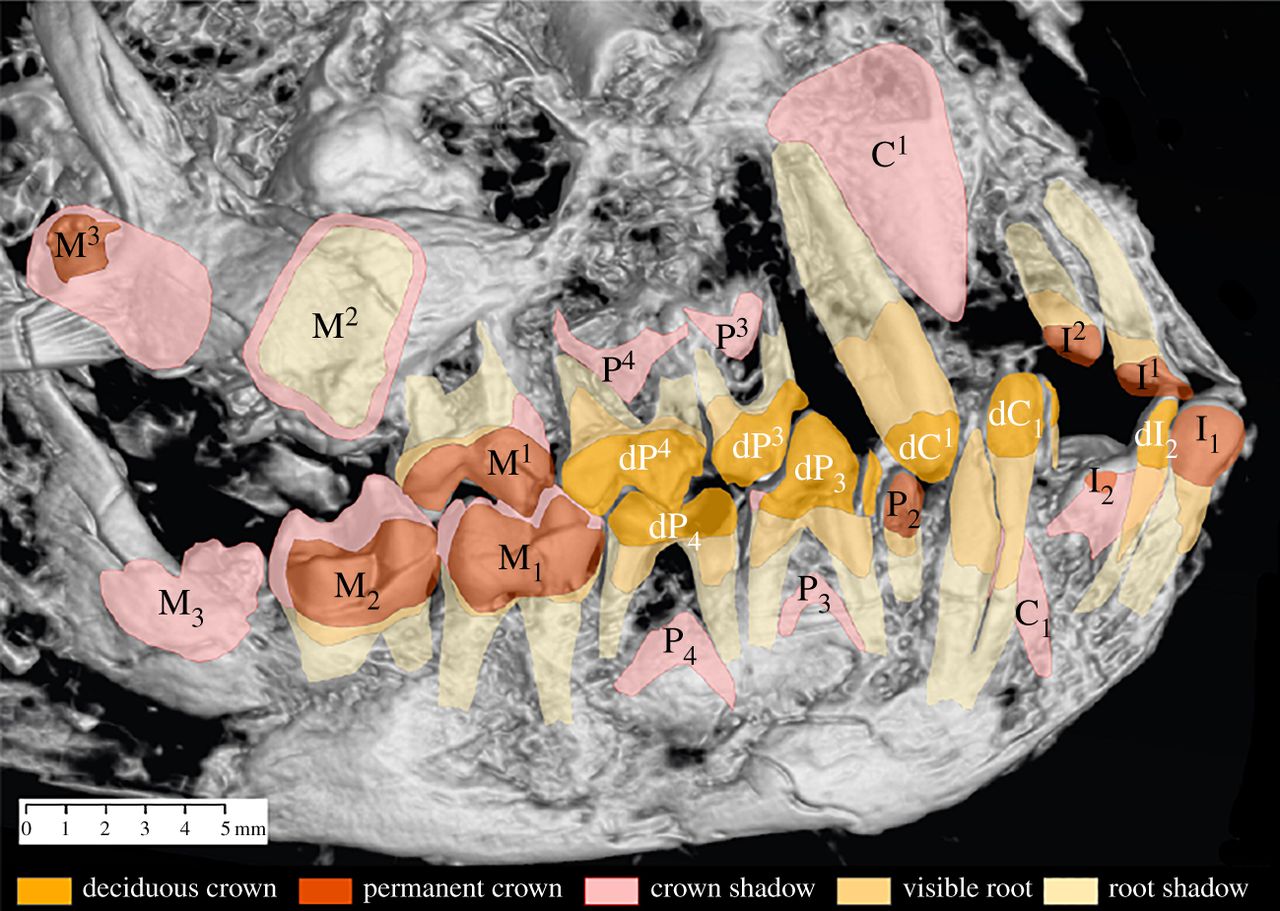
Um tópico menos amplamente discutido é o modelo de crescimento usado para prever a idade de Ida ao morrer e sua massa corporal adulta final. Até agora, o único modelo proposto de crescimento e desenvolvimento para Darwinius era baseado em um primata antropoide vivo, o macaco-esquilo (Saimiri sciureus), um modelo que está de acordo com a hipótese antropoide-adapoide. No entanto, as descobertas recentes sugerem que a sequência de erupção dentária (ou seja, a ordem em que os dentes aparecem) de Darwinius compartilha semelhanças com três principais ancestrais primatas (o ancestral estrepsirrino, o ancestral haplorrino e o ancestral de todos os primatas), mas mostra uma grande diferença do ancestral antropoide. Os antropóides irrompem o terceiro molar muito tarde na sequência, e o Darwinius não, uma característica observada em lêmures. Isso levou à proposta de um novo modelo alternativo baseado em lêmures (Eulemur e Varecia). O novo modelo sugere uma idade maior no momento da morte para “Ida” (1,05-1,14 anos) e um peso adulto reconstruído menor (622-642g).

Embora os dados da sequência de erupção não possam refutar a hipótese do adapoide-antropóide, eles são menos consistentes com essa ideia do que com a hipótese do adapoide-estrepsirrina. Com relação a futuras descobertas, este novo modelo fornece uma abordagem alternativa para estimar os parâmetros da história de vida mais em conformidade com a visão consensual das relações adapóides. ”

O artigo é de acesso gratuito, publicado na Royal Society Open Science, então dê uma olhada!

Legenda da imagem: Fóssil de Darwinius masillae (imagem de Franzen et al. 2009).

F1.large

Radiograph of the right side of skull of Darwinius masillae showing the deciduous (indicated with a ‘d’) and permanent teeth. Image from López-Torres et al. 2015


Tags: , , , ,


Related Posts


terça-feira, 15 de setembro de 2020


Three previously unknown ancient primates identified

Date:
August 28, 2018
Source:
University of Texas at Austin
Summary:
Biological anthropologists have described three new species of fossil primates that were previously unknown to science.
Share:
FULL STORY

Biological anthropologists from The University of Texas at Austin have described three new species of fossil primates that were previously unknown to science. All of the new primates were residents of San Diego County at a time when southern California was filled with lush tropical forests.

Since the 1930s, numerous primate fossils have been uncovered in the sandstones and claystones that make up the Friars Formation in San Diego County. Paleontologist Stephen Walsh and fieldworkers from the San Diego Museum of Natural History (SDNHM) built up a large collection of fossil primates from the San Diego area, but Walsh was unable to describe these specimens before his death in 2007.

A decade later, UT Austin graduate student Amy Atwater and anthropology professor Chris Kirk took up the challenge, describing and naming three previously unknown omomyoid primates that lived 42 million to 46 million years ago. The researchers named these new species Ekwiiyemakius walshi, Gunnelltarsius randalli and Brontomomys cerutti.

These findings double the number of known primate genera represented in the Friars Formation and increase the total number of known omomyine primates of that period from 15 to 18.

Atwater and Kirk's descriptions were published in the Journal of Human Evolution.

"The addition of these primates provides for a better understanding of primate richness in the middle Eocene," said Atwater, who is now the paleontology collection manager at the Museum of the Rockies in Bozeman, Montana. "Previous research in the Rocky Mountain basins suggested the primate richness declined during this time period, but we argue that primate richness increased concurrently in other locations."

Studying the teeth, researchers concluded the three new genera, which represent the bulk of the undescribed Friars Formation omomyoid sample at SDNHM, range in size from 113 to 796 grams and are most likely related to a group of extinct species comprising the primate subfamily Omomyinae.

"Teeth can tell us a lot about evolutionary history and give us a good handle on the size and diet of an extinct primate," Kirk said. "Enamel is the hardest tissue in the body. And as a result, teeth are more likely to be preserved in the fossil record."

Ekwiiyemakius walshi, the smallest of the three new species, was estimated to weigh between 113 and 125 grams -- comparable in size to some modern bushbabies. It was named for Walsh, who collected and prepared many of the specimens, and also derives from the Native American Kumeyaay tribe's place name, Ekwiiyemak -- meaning "behind the clouds" -- for the location of the headwaters of the San Diego and Sweetwater Rivers.

Gunnelltarsius randalli was named for Gregg Gunnell, the researchers' late colleague and expert on Eocene mammals, and for SDNHM fossil collections manager Kesler Randall. It was estimated to weigh between 275 and 303 grams, about the size of today's fat-tailed dwarf lemur.

Brontomomys cerutti was large compared with most other omomyoids and was estimated to weigh between 719 and 796 grams -- about the size of a living sportive lemur. Due to its large size, its name derives from the Greek word bront?, or "thunder," as well as for Richard Cerutti, the retired SDNHM paleontologist responsible for collecting many of the Brontomomys specimens.


Story Source:

Materials provided by University of Texas at Austin. Note: Content may be edited for style and length.


Journal Reference:

  1. Amy L. Atwater, E. Christopher Kirk. New middle Eocene omomyines (Primates, Haplorhini) from San Diego County, California. Journal of Human Evolution, 2018; DOI: 10.1016/j.jhevol.2018.04.010


The oldest Asian record of Anthropoidea

Sunil Bajpai, Richard F. Kay, Blythe A. Williams, Debasis P. Das, Vivesh V. Kapur, and B. N. Tiwari
  1. Edited by Alan Walker, Pennsylvania State University, University Park, PA, and approved June 19, 2008 (received for review May 2, 2008)

Abstract

Undisputed anthropoids appear in the fossil record of Africa and Asia by the middle Eocene, about 45 Ma. Here, we report the discovery of an early Eocene eosimiid anthropoid primate from India, named Anthrasimias, that extends the Asian fossil record of anthropoids by 9–10 million years. A phylogenetic analysis of 75 taxa and 343 characters of the skull, postcranium, and dentition of Anthrasimias and living and fossil primates indicates the basal placement of Anthrasimias among eosimiids, confirms the anthropoid status of Eosimiidae, and suggests that crown haplorhines (tarsiers and monkeys) are the sister clade of Omomyoidea of the Eocene, not nested within an omomyoid clade. Co-occurence of Anthropoidea, Omomyoidea, and Adapoidea makes it evident that peninsular India was an important center for the diversification of primates of modern aspect (euprimates) in the early Eocene. Adaptive reconstructions indicate that early anthropoids were mouse–lemur-sized (≈75 grams) and consumed a mixed diet of fruit and insects. Eosimiids bear little adaptive resemblance to later Eocene-early Oligocene African Anthropoidea.

The timing and geographic origins of the Anthropoidea (monkeys, apes, and humans) and the more inclusive crown clade Haplorhini (tarsiers and anthropoids) are poorly understood (1). Some hypothesize that crown haplorhines arose from a single common ancestor within a paraphyletic Eocene Omomyoidea (2) (Fig. 1A). Others suggest that tarsiers arose from a group of Eocene omomyoids, but that anthropoids stem from a separate group, the Eosimiidae, sister to omomyoids (Fig. 1B) (3). A third alternative, not previously advocated, is that crown haplorhines are sister to Omomyoidea as a whole (Fig. 1C). If the first hypothesis is correct, then the anthropoid stem could be as young as middle Eocene, when eosimiids first are recorded. However, if the second or third hypothesis is correct, haplorhine (and anthropoid) origins must be sought in the Paleocene or earlier. Here, we report the discovery of an early Eocene eosimiid anthropoid primate, named Anthrasimias, that is the first from peninsular India and extends the Asian fossil record of anthropoids by 9–10 million years. Anthrasimiasoccurs at the same stratigraphic level as basal representatives of Eocene primate groups Omomyoidea and Adapoidea (46), making it evident that India was an important center for the evolution of primates of modern aspect in the early Eocene. A new phylogenetic analysis supports the hypothesis that the Eosimiidae are stem anthropoids (79) and suggests that crown haplorhines are sister to a monophyletic Eocene Omomyoidea rather than being nested within omomyoids (10, 11).

Fig. 1.

Schematic representations of three hypotheses about anthropoid and tarsier origins. (A) Anthropoids and tarsiers share a common ancestor within a paraphyletic Omomyoidea. (B) Tarsiers arose from an omomyoid while anthropoids are sister to omomyoids. (C) The tarsier-anthropoid clade is the sister group of omomyoids. References to these views are in the text. Constraints on the branch times of the groups depicted in these schemes are approximate and based on the first appearance of (i) Omomyoidea [earliest Eocene (40)], (ii) Tarsiidae [middle Eocene (41)] or the omomyoid Shoshonius, its proposed sister taxon (22), and (iii) middle Eocene or earlier anthropoids, depending on the assumptions of various authors. Dashed lines represent the dates of the Paleocene-Eocene and early Eocene-middle Eocene boundaries (42). Temporal position of Altiatlasius and Anthrasimias are indicated. a, first appearance of Tarsiidae in Asia; b, hitherto first appearance on eosimiid anthropoids in Asia.

As the antiquity of the anthropoid lineage deepens, questions about major adaptive shifts that are relevant to anthropoid origins are beginning to converge on questions about the origins of the Order Primates as a whole. It is becoming apparent that information about the basal members of each of the major Eocene groups, Anthropoidea, Omomyoidea, and Adapoidea, should contribute significantly to our reconstructions of ancestral primates. It has been hypothesized that the earliest primates dwelt in fine-branch thickets, were ≤200 g in body mass, and had a mixed diet of fruit and insects, gleaned by visual predation (12, 13). However, recent estimates based on extant arboreal primates place the ancestral body mass of crown primates at ≥1 kg (14), which is outside the range of extant insectivorous primates (15). Body mass reconstruction of 1 kg for ancestral primates tends to rule out the visual predation hypothesis and supports, by implication, an alternative hypothesis that links novel primate adaptations with the coevolution of angiosperms (16). In addition to Anthrasimias, four other basal primates are known from the same stratigraphic level in the Vastan mine and represent Omomyoidea (Vastanomys, Suratius, compare with Omomyoidea) and Adapoidea (Marcgodinotius and Asiadapis) (46). Reconstructions of body mass and diet for these and other eosimiid taxa addressed in this article shed light on the alternative adaptive hypotheses.

Systematic Paleontology

Primates, Linnaeus, 1758; Anthropoidea, Mivart, 1864; Eosimiidae, Beard et al., 1994

Anthrasimias, Gen. Nov.

Etymology.

After anthra, Greek for coal, because the fossils were found in a coal mine; simias, Latin for monkey or ape.

Diagnosis.

As for type species.

Anthrasimias gujaratensis Sp. Nov.

Etymology.

After Gujarat state of western India, the provenance of this species.

Holotype.

IITR/ SB/VLM 1137, a left M1 (Fig. 2 A and C).

Fig. 2.

The dentition of Anthrasimias gujaratensis sp. nov. (A) Occlusal stereopair of IITR/SB/VLM 1137, a left upper first molar. (B) Occlusal stereopair of IITR/SB/VLM 1100, a left upper second molar. (C) Lingual view of IITR/SB/VLM 1137. (D) Lingual view of IITR/SB/VLM 1100. (E) Occlusal stereopair of IITR/SB/VLM 1017, a right lower third molar. (F) occlusal and occluso-lingual view of IITR/SB/VLM 1201, a right dP4. (Scale bars, 1 mm.)

Hypodigm.

IITR/SB/VLM 1100, a left M2 (Fig. 2 B–D), IITR/ SB/VLM 1017, a right M3 (Fig. 2E), IITR/SB/VLM 1201, a dP4 (Fig. 2E).

Horizon and locality.

Early Eocene Cambay Shale, Vastan Lignite Mine, Surat District, Gujarat, western India (2). The Anthrasimias stratigraphic level contains a diverse early Eocene terrestrial mammalian fauna (13, 17, 18). Age-diagnostic dinoflagellate cysts indicate a basal Eocene (Sparnacian, ca. 54-55 Ma) age for the mammal horizon (19). This estimate is a revision of the earlier age assessment of basal Cuisian, ca. 53 Ma, from shallow benthic foraminifera (4, 6, 20).

Diagnosis.

Equivalent in size to Altiatlasius (of Africa) and the smallest Asian eosimiids with described dental remains. Differs from eosimiids in having a more triangular occlusal outline (i.e., less transverse buccolingually) and in having a cuspate hypocone (vs. absent to cristiform). Differs from other eosimiid primates (except Phileosimias kamali) and from Altiatlasius in having less well developed buccal and lingual cingulae. Conules slightly larger than in Eosimias, Phenacopithecus, and Bahinia, but smaller than in Phileosimias.

Comparisons.

Anthrasimias shares with other eosimiids a suite of dental features noted by Beard and Wang (3) to be diagnostic of eosimiids but not found together in omomyoids, including strong development of pre- and postprotocristae, absence of a Nannopithex fold, and reduced conules. The distolingual expansion of the talon, present in Anthrasimias, is common among eosimiids (21). The lingual cingulum of Anthrasimias is incomplete, unlike that of Eosimias, Phenacopithecus, Bahinia, and Phileosimias brahuiorum, but is similar to P. kamali.

The steep incline of the buccal wall of the paracone and metacone in Anthrasimias is common in eosimiids, particularly Eosimias and Phenacopithecus. Like other eosimiids, and especially like Eosimias (and unlike most omomyoids), the parastyle is a large distinct cusp, and the metastyle is present as a swelling along the postmetacrista. The protocone is canted mesially, such that it is closer to the mesial edge of the tooth, as in Eosimias, Bahinia, and Phenacopithecus but not Phileosimias. There is a distinct molar waisting, especially in the area of the metaconule, as in Eosimias, Phenacopithecus, and Bahinia, but less markedly in Phileosimias.

Eosimiids generally lack metaconule cristae and a postparaconule crista. Instead, the postprotocrista leads to the base of the metacone or to a small metaconule that connects in turn with a hypometacrista. Anthrasimias has an intermediate morphology: the postprotocrista is straight, not distally bowed, and connects with the metaconule, which sends a strong but buccally directed premetaconule crista up the lingual aspect of the metacone. We interpret this arrangement of the premetaconule crista as a precursor to the hypometacrista.

Several notable features of the M3 are eosimiid-like: the trigonid is open lingually and supports a small centrally placed paraconid, the protocristid is transverse, and the hypoconulid is small and does not project posteriorly as a distinct distal lobe.

Altiatlasius (late Paleocene, Africa) exhibits some but not all of the above-mentioned symplesiomorphies with Anthrasimias and other eosimiids. Like eosimiids, the postprotocristae leads to the base of the metacone and the preprotocrista to the paracone. In both Altiatlasius and eosimiids, a Nannopithex fold is absent, and like most eosimiids (but not Anthrasimias), there is a complete lingual cingulum. The steep incline of the buccal wall of the paracone and metacone in Altiatlasius also is common in eosimiids. Furthermore, like Anthrasimias and other eosimiids, especially Eosimias (and unlike most omomyoids), the preparacrista and postmetacrista are angled buccally and supported by a large parastyle and somewhat smaller metastyle, respectively. However, unlike Anthrasimias and other eosimiids, the talon of Altiatlasius is not noticeably expanded distolingually, the protocone is not canted mesially, and the molar waisting is indistinct. Further, Altiatlasius lacks a hypometacrista.

Phylogenetic analysis.

A parsimony analysis was undertaken by using PAUP parsimony software (22) to determine the phylogenetic position of Anthrasimias and other Indian early Eocene primates (Fig. 3). A notable feature of all maximum parsimony trees is that crown Haplorhini is sister to all Omomyoidea, not nested within it as often argued (8, 11, 22).

Fig. 3.

The 50% majority consensus of 11 equally parsimonious trees. Tree length, 148,887; consistency index (CI), 0.230; retention index (RI), 0.554; rescaled CI (RCI), 0.127. Red, Adapoidea; green; Omomyoidea; blue, crown Haplorhini. Branching sequences are supported in 100% of the trees unless indicated by a percentage. Suratius and Asiadapis are not included on the tree. Circled letter A indicates branch placement of Asiadapis when it is run without Suratius included. Circled letter B indicates branch placement of Suratius when Asiadapis is not included. When Suratius and Asiadapis are run together, they are placed together at branch B. The list of characters and their states and character-taxon matrix is provided in supporting information (SI) Text, Figs. S1–S3, and SI Appendices 1 and 2.

All trees place Marcgodinotius near the base of Adapoidea. The latter is a sister taxon to crown Strepsirrhini. Marcgodinotius is similar to the European early Eocene adapoid Donrussellia in many primitive features (5). Vastanomys is placed near the base of the Omomyoidea. Vastanomys is primitive for omomyoids in retaining a large canine and a large, although single-rooted, P2 (5). It appears to be more primitive than North American Steinius, argued by some to be the most primitive omomyoid (24).

The 50% majority consensus tree places Anthrasimias at the base of the eosimiids. A plausible alternative places this taxon at the base of the tarsiid clade or in an unresolved trichotomy with tarsiids and eosimiids. The eosimiid placement is consistent with morphological characters, mentioned in the diagnosis above, considered most critical to reconstructing eosimiid evolution (3, 25). All trees also support placement of Altiatlasius with the Eosimiidae (10, 26, 27).

The phylogenetic position of late Eocene amphipithecids of Asia is a subject of considerable debate. Mandibular and dental similarities and the structure of an isolated talus suggest an anthropoid association (28, 29). In this analysis, we accept the view that some other isolated bones allocated to this taxon are not primate or belong to a large strepsirrhine (30, 31). Our analysis using dental, gnathic, and talar characters supports placement of amphipithecids within Anthropoidea.

The analysis is equivocal concerning placement of Asiadapis and Suratius. Phylogenetic analysis of all taxa in our dataset links the two and places them at the base of the noneosimiid Anthropoidea. In separate analyses, however, Asiadapis, considered alone without Suratius, falls with adapoids Aframonius and Mahgarita, whereas Suratius, run alone without Asiadapis, is linked with eosimiids.

Adaptations.

Our findings of very small body size in basal members of all radiations indicate that insects rather than plants were the primary source of protein for early primates (Table 1) (32). There is no support for the hypothesis that basal Anthropoidea were large, despite the relatively large size of most Oligocene-Recent species (15). Anthrasimias, at 75 g, was smaller than all living primates with the exception of some species of Galagoides (the dwarf galago) and Microcebus (the mouse lemur) (Table 1). No size trends are evident among eosimiids. Anthrasimias (and African Altiatlasius) were slightly smaller than middle to late Eocene Asian eosimiids known from dental material (85–150 g), but some tarsal bones suggest that some middle Eocene eosimiids may have been shrew-sized (33). Likewise, Vastan omomyoids and adapoids were very small animals: Vastanomys and Marcgodinotius ranged up to 130 g. Suratius and Asiadapis were slightly larger, up to 270 g. Thus, early Eocene members of the three radiations of crown primates, omomyoids, stem strepsirrhines, and crown haplorhines also weighed <300 g.

Table 1.

Body mass estimates for Eocene and early Oligocene South Asian primates (Thailand, Myanmar, Pakistan, India) and representative early taxa of early Eocene Omomyoidea and Adapoidea

Previous studies on the diet of fossil anthropoids have relied on comparative evidence from living taxa and the morphology of the lower teeth of anthropoid taxa from the Fayum of Egypt dating back to the late Eocene (34). Those late Eocene anthropoids show a diet that was predominantly frugivorous, but their >750 g body size suggests leaves, not insects, as an important source of dietary protein. However, the 20-million-year separation of Fayum anthropoids from basal members of the anthropoid clade makes them poor candidates from which to infer possible adaptive shifts at the base of the group.

Body mass alone may tell us something about the likely source of dietary protein, but tooth structure gives further details about the relative importance of fruit vs. animal prey. Among small-bodied extant prosimians, a strong relationship exists between the summed lengths of shearing crests of the lower molar teeth and the amount of animal prey in the diet (32). A similar phenomenon occurs with the upper molars (Fig. 4, Table 2). From dental anatomy (combined with small size), we infer that Anthrasimias had a mixed diet of fruit and some insects similar to that of the mouse lemur Microcebus. The development of shearing crests on the upper and/or lower teeth of Asiadapis, Vastanomys, and Marcgodinotius likewise suggests a mixed frugivorous/insectivorous diet. Unlike proposed reconstructions of body mass >1 kg, our body mass and dietary reconstructions of taxa basal to Eocene primate clades provide broadly based evidence that the earliest primates relied, at least in part, on insects or other animal prey. Our conclusion is consistent with the visual predation hypothesis but does not rule out coevolution with angiosperms. There is no evidence to indicate that changes in body mass or diet accompanied the cladogenic splitting of haplorhines from strepsirrhines or anthropoids from omomyoids.

Fig. 4.

Measurements of shearing crest development on the molar teeth of Vastan primates. (A) Ratio of second lower molar length to summed lengths of six principal M2 shearing crests. (B) Ratio of first upper molar length to summed lengths of four principal buccal shearing crests. Color-coded bars (blue, insects; red, fruit; yellow, gums) indicate principal dietary item (34). Asiadapis, Vastanomys, and Marcgodinotius fall within the range of extant prosimian fruit and gum eaters such as the extant mouse lemur Microcebus, which also eats a substantial amount of insects (Table 2).

Table 2.

Diet and shearing crest lengths of extant and extinct primates used in the text

Temporal and biogeographic implications.

Hitherto, the oldest undisputed eosimiids were recovered from the Chinese middle Eocene (≈45 Ma) (3, 35). Anthrasimias is the first eosimiid from the Indian subcontinent and extends the Asian fossil record of anthropoids by 9–10 million years. Anthrasimias may also be the oldest anthropoid in the world. However, our analysis supports the hypothesis that Altiatlasius from the late Paleocene of Africa is possibly an eosimiid anthropoid (10, 26, 27). Nevertheless, others consider it to be an omomyoid (36), a plesiadapoid (37), or of indeterminate subordinal affinities (1). In any event, the cooccurrence of an anthropoid taxon alongside adapoid and omomyoid primates in the early Eocene of Asia gives further evidence that the cladogenesis of crown haplorhines and strepsirrhines was ancient, in the Paleocene or even Cretaceous, as molecular evidence suggests (14, 38).

The Vastan Indian fauna shows strong links with Laurasian early Eocene faunas (5, 6, 17, 18). The presence of an anthropoid in India before 54 million years ago and possibly even earlier in Africa (if Altiatlasius is an anthropoid) fleshes out the picture of early Cenozoic interchange between Laurasia and Africa (26, 39) and between the Indian and Asian plates, the latter in the context of their tectonic collision (17). The Vastan anthropoid testifies to the early importance of India as an important center for the differentiation of all of the major groups of primates.

Materials and Methods

For the phylogenetic analysis, our dataset consists of 75 taxa and 343 characters of the skull, postcranium, and dentition. It includes a wide representation of Adapoidea, Omomyoidea, Tarsiidae, Eosimiidae, and other stem and crown Anthropoidea. We include Anthrasimias and other early Eocene Indian primates from Vastan: Marcgodinotius, Vastanomys, Suratius, and Asiadapis. We ran the character–taxon matrix in PAUP 4.0b10 (22) with all multistate characters scaled. As described by Swofford (22), weights are assigned to all characters, such that the minimum possible length of each character is 100 (the default “base weight”). Binary characters and unordered characters are assigned a weight of 100, three state ordered characters a weight of 50, and so on. Findings are detailed in Fig. 2.

Previous estimates of body mass in small-bodied fossil primates have been based on regressions derived from a wide range of prosimian taxa, including such large-bodied primates as Propithecus and Varecia. A more appropriate model for these extremely small primates should be based on a sample of small-bodied taxa. To estimate the body mass of Anthrasimias and other eosimiid and amphipithecid taxa, we used a formula derived from the molar size and body mass of 10 genera of extant prosimians weighing <600 g.

To reconstruct diet in our Eocene species, we selected 10 genera of extant tarsiers, galagos, lorises, and dwarf lemurs (14 genera for the lower teeth). We compared the ratio of the summed lengths of six principal lower second molar shearing crests to M2 length. Likewise, we took the ratio of the sum of the four principal buccal shearing crests (preparacrista + postparacrista + premetacrista + postmetacrista) of the upper first molar to M1 length. Findings for Vastan primates are detailed in Fig. 4. Data are summarized in Table 2.

Acknowledgments

We thank Prof. J. G. M. Thewissen for suggestions and comments. R.F.K. and B.A.W. thank Prof. Ken Rose, Laurent Marivaux, Erik Seiffert, and Chris Beard for helpful discussions about Indian and Asian primates. We thank Leslie Eibest for technical assistance and the officers of the Vastan Lignite Mine for facilitating our work. S.B. thanks Chris Beard for discussions and Ranjan Das and Krishna Kumar for help in collecting fossils. S.B. and B.N.T. thank the staff of the scanning electron microscopy laboratories in their institutes. S.B.'s research is funded by the Department of Science and Technology (including the Ramanna Fellowship), Government of India. Research support to R.F.K. and B.A.W. is provided by Duke University Provost's Research Fund. The National Science Foundation supports the scanning electron microscope laboratory, Duke University.

Footnotes

  • Author contributions: S.B. designed research; S.B., D.P.D., V.V.K., and B.N.T. performed research; S.B., R.F.K., D.P.D., and B.A.W. analyzed data; and R.F.K. and B.A.W. wrote the paper with contributions from S.B.

  • The authors declare no conflict of interest.

  • This article is a PNAS Direct Submission.

  • This article contains supporting information online at www.pnas.org/cgi/content/full/0804159105/DCSupplemental.

  • Received May 2, 2008.

We recommend

  1. New perspectives on anthropoid origins
    Blythe A. Williams et al., Proc Natl Acad Sci U S A, 2010
  2. Late Middle Eocene primate from Myanmar and the initial anthropoid colonization of Africa.
    Yaowalak Chaimanee et al., Proc Natl Acad Sci U S A, 2012
  3. Evidence for an Asian origin of stem anthropoids.
    Richard F Kay, Proc Natl Acad Sci U S A, 2012
  4. Anthropoid primates from the Oligocene of Pakistan (Bugti Hills): data on early anthropoid evolution and biogeography.
    Laurent Marivaux et al., Proc Natl Acad Sci U S A, 2005
  5. Anthropoid humeri from the late Eocene of Egypt.
    E R Seiffert et al., Proc Natl Acad Sci U S A, 2000