(Crédito da imagem: Copyright Museum für Naturkunde Berlin)Cientistas
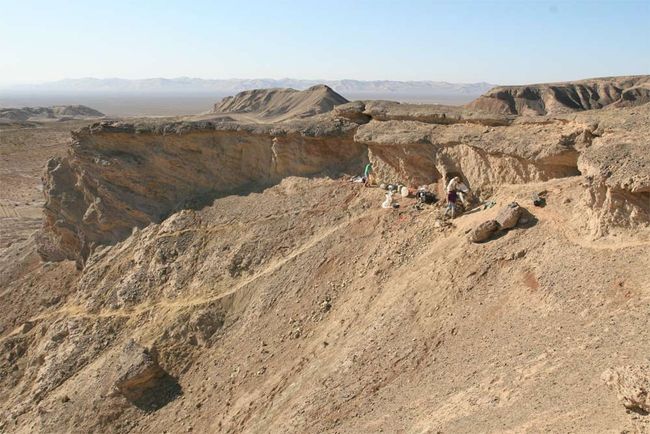
descobriram cerca de 1.800 tartarugas de quelônia de mesa fossilizadas
da era jurássica na província de Xinjiang, no noroeste da China. Mostrado aqui, uma vista lateral do local perto de Shanshan em Xinjiang.
Bone Bed
(Crédito da imagem: Copyright Museum für Naturkunde Berlin)"Este
site provavelmente mais que dobrou o número conhecido de tartarugas
individuais do Jurassic", disse o especialista em tartarugas da
Universidade de Tübingen, Walter Joyce. "Algumas conchas foram empilhadas umas sobre as outras na rocha." Joyce acrescentou que esse acúmulo é chamado de leito ósseo.
Lavado
(Crédito da imagem: Copyright Museum für Naturkunde Berlin)Cerca
de 160 milhões de anos atrás, essas tartarugas haviam se reunido em um
dos poços remanescentes durante um período muito seco, aguardando chuva
(que chegou tarde demais). Quando
a água chegou, veio com uma vingança: um rio de lama, lavando as
tartarugas e sedimentos e despejando-os em um só lugar, enquanto os
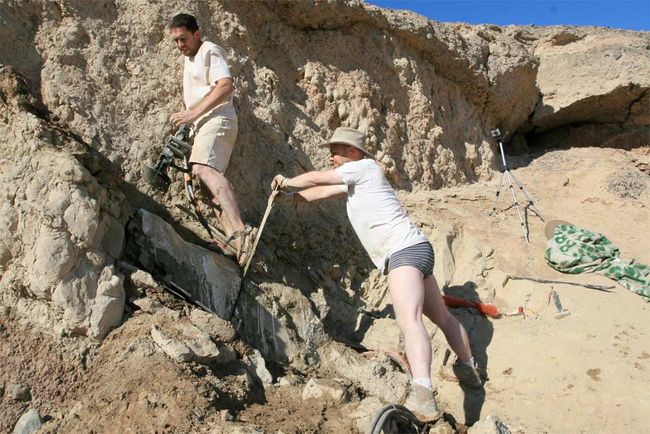
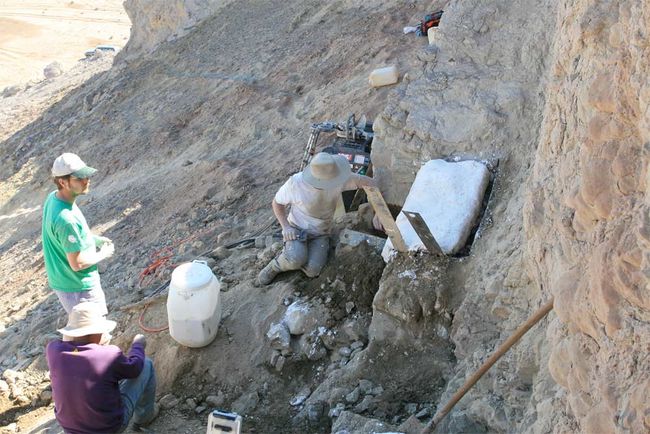
paleontologistas liam o local e suas camadas de pedra. Aqui, os pesquisadores Oliver Wings e Walter Joyce cortam a camada de tartaruga.
VÍDEOS RECOMENDADOS PARA VOCÊ ...
Trabalho resistente da tartaruga
(Crédito da imagem: Copyright Museum für Naturkunde Berlin)
O
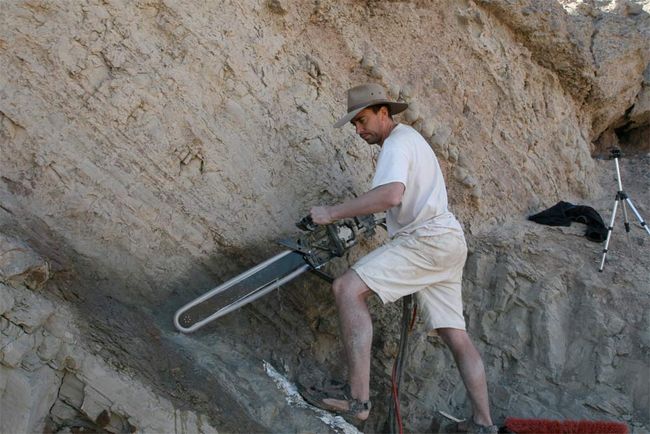
pesquisador Oliver Wings corta a camada de tartarugas, onde ele e seus
colegas encontraram 1.800 tartarugas de mesa quelônia fossilizadas da
era jurássica em Xinjiang, na China. Wings é paleontologista e pesquisador convidado no Museum für Naturkunde, em Berlim.
Em Gesso
(Crédito da imagem: Copyright Museum für Naturkunde Berlin)
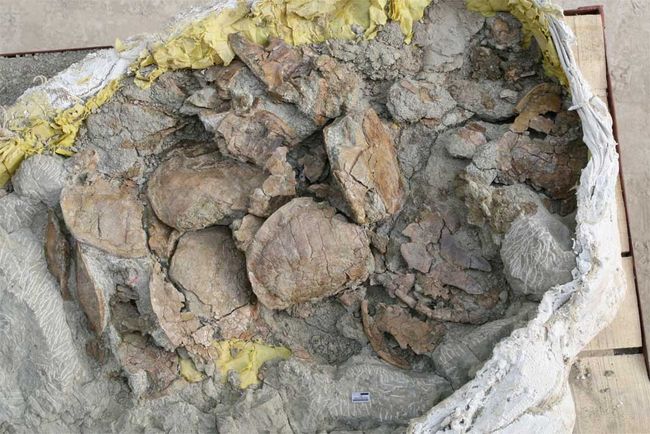
Aqui, um bloco da camada de tartaruga em gesso para estabilização.
terça-feira, 10 de fevereiro de 2015
Anatomia de Testudines: características notáveis
Por: Marcus Cabral
Visão geral da anatomia óssea de um quelônio.
Testudines ou Chelonia é o grupo das tartarugas, cágados e
jabutis. Esses animais possuem anatomia peculiar, sendo que algumas das
características anatômicas se mantiveram praticamente sem mudanças ao
longo de 200 milhões de anos.
Neste artigo tratarei de aspectos notáveis da anatomia desses vertebrados.
O casco é formado dorsalmente pela carapaça e ventralmente pelo
plastrão, partes que são unidas lateralmente pela ponte. A carapaça é
formada pela fusão dos ossos dérmicos com costelas e vértebras
prolongadas e o plastrão é constituído anteriormente por clavículas e
interclavículas e posteriormente por costelas abdominais. Em ambas as
porções, placas queratinizadas de epiderme (escudos dérmicos) recobrem
os ossos.
O crânio é, atualmente, considerado anapsida, ou seja, sem
fenestras (ou aberturas) temporais, sendo os Testudines os únicos
animais viventes a possuírem tal característica. Essas aberturas
favoreceriam a inserção muscular na região. Porém estão presentes
reentrâncias laterais, que segundo alguns cientistas poderiam ser
fenestras superiores e que também permitem a correta inserção dos
músculos. Essa hipótese, advinda de estudos morfológicos, e diversos
estudos moleculares fazem com que as relações de parentesco dos
Testudines com os demais grupos de Amniota permaneçam incertas.
Não possuem dentes, mas tanto a mandíbula quanto a maxila são
recobertas por lâmina córnea, formando um “bico” córneo. Algumas
espécies possuem palato secundário parcial, que individualiza respiração
e alimentação.
No esqueleto pós-crânio axial, temos vértebras soldadas na
carapaça e costelas fusionadas. Essas costelas são englobadas pelas
cinturas escapular e pélvica, sendo esta característica também exclusiva
deste grupo de animais.
Os quelônios são divididos em duas subordens de acordo com a
flexão do pescoço. Os Pleurodira executam flexão lateral do pescoço,
abrigando a cabeça sob a proteção da carapaça ao contrário dos
Cryptodira, que executam flexão sagital do pescoço, protegendo-o dentro
do casco.
A ecdise (muda) é mais discreta nos quelônios em comparação a
outros répteis, como os Squamata (grupo dos lagartos e serpentes) que a
realizam em grandes porções (lagartos) ou inteiramente (serpentes).
Apresentam musculatura pouco desenvolvida em relação aos demais
grupos, sendo a musculatura hipoaxial reduzida ou ausente. A musculatura
é mais desenvolvida na região do pescoço.
domingo, 14 de dezembro de 2014
Pesquisadores descobrem novo gênero de tartaruga-gigante
Titanochelon was 2 metres long and roamed the ‘streets of Madrid’ between 20m and 2m years ago, study finds
The
Titanochelon, a new genus of giant tortoise that lived in Europe and
western Asia between 20m and 2m years ago. Illustration: Mauricio Antón
These days it is dominated by shops and throngs of people. But
millions of years ago, Madrid’s Gran Via belonged to herds of
2-metre-long tortoises.
That’s the conclusion of a study published by Spanish and Greek
researchers in the Zoological Journal of the Linnean Society. Wrapping
up a 10-year study, researchers describe a genus of giant tortoises, previously unknown to science, that lived in Europe and western Asiabetween 20m and 2m years ago.
“We’re not just talking about any tortoise; this is the largest that
lived in Europe, whose size likely exceeded that of the tortoises living
today in the Galapagos Islands,” said researcher Adán Pérez-García, of
Spain’s National University of Distance Education and the University of
Lisbon.
The Titanochelon – a name inspired by their titanic size – was short,
wide and strong, and its large shell was covered with ossified scales
for protection, he said. Researcher Adán Pérez-García with a fossilised Titanochelon in the Cerro de los Batallones (Hill of the Battalions) in Madrid.Photograph: Museo Nacional de Ciencias Naturales
Spanish palaeontologists hinted at the existence of the Titanochelon
genus in the 1920s, but the civil war ended their research.
Pérez-García and his team picked up where they left off, assuming that
most of the material had disappeared.
But they found a wealth of fossils in Madrid’s National Museum of
Natural Sciences, most of which had been untouched since the war. “The
fossils were broken, samples were mixed up, it wasn’t clear where the
material had come from,” he said. “But that’s what happens in a war. At
least the material was there.”
The material turned out to be some of the best ever found of giant
tortoises in Europe, said Pérez-García, citing the discovery of
near-complete skeletons. “It allows us to imagine, with great precision,
how millions of years ago, herds of giant tortoises wandered around
what is now Gran Via.”
Titanochelon • New Generic proposal for the European Neogene Large Testudinids (Cryptodira) and the First Phylogenetic Hypothesis for the medium and large representatives of the European Cenozoic record
Titanochelon bolivari (Hernández-Pacheco, 1917)
Titanochelon, a new genus of giant tortoise that lived in Europe and western Asia between 20m and 2m years ago.
Fossil testudinids are known in Europe since the Eocene, with several
taxa of medium size (from more than 0.3 m to less than 0.7 m) recognized
in the Palaeogene record, most of them being poorly known. The size of
several European Neogene taxa was larger (between 1 and 2 m). These
large testudinids were relatively abundant and diverse, ranging from the
early Miocene to the Pleistocene. However, there is a nomenclatural gap
at the generic level for the Neogene forms, as their generally used
assignment to the more primitive Eocene Cheirogaster cannot be
sustained. This is because relatively little material has been assigned
to the described species, and also because of the absence of a detailed
study comparing all of the European taxa. Here, the European Cenozoic
taxa are incorporated for the first time in a data matrix, so that a
hypothesis on their phylogenetic relationships is justified. This study
identified the large testudinids from the Neogene of Europe as belonging
to a monophyletic clade, assigned to the new genus Titanochelon. The hitherto poorly understood ‘Testudo’ bolivari,
proposed nearly a century ago but lacking diagnosis, is analysed in
detail. It is recognized as the best-represented large testudinid from
the European record, and is identified as the type species of Titanochelon gen.
nov. Its comparison with the other Neogene species allowed a detailed
study of the new genus and an analysis of its phylogenetic relationships
with the other European taxa.
Figure 2. Historical photographs of the shell of the lectotype of Titanochelon bolivari (‘Alcalá
2’), from the MN6 zone (late Aragonian, middle Miocene) of Cerro del
Viso, in Alcalá de Henares (Madrid, Spain). Specimen collected in 1917. A, right lateral view. Modified version of ACN 6553, photograph corresponding to plate XXXIV in Royo y Gómez (1928b). B, left lateral view. Modified version of the unpublished photograph ACN 6554. C, anteroventral view. Modified version of the unpublished photograph ACN 6555. D, dorsoposterior view. Modified version of ACN 6556, photograph corresponding to plate XXXV in Royo y Gómez (1928b).
Original photographs taken by Eduardo Hernández-Pacheco.
Probably included species: cf. Titanochelon gymnesicus (Bate, 1914) comb. nov
Adán Pérez-García and Evangelos Vlachos. 2014. New Generic proposal for
the European Neogene Large Testudinids (Cryptodira) and the First
Phylogenetic Hypothesis for the medium and large representatives of the
European Cenozoic record. Zoological Journal of the Linnean Society. 172, 653–719. DOI: 10.1111/zoj.12183