Progressions- Evolution of Life

http://en.wikipedia.org/wiki/Eadweard_Muybridge#Stanford_and_horse_gaits
In 1878 the above sequence of images was taken by Eadweard
Muybridge to settle a debate among horse racers--when a horse was
galloping full speed, did they ever have all four legs off the ground?
The human eye alone was not fast enough to resolve the dispute.
Muybridge, the photographer who was called in, set up a sequence of
cameras that would be set off by trip wires and found that horses are in
fact completely air born at certain points within a full gallop. (
Watch the video of this horse here.)
Based on these images alone, though, how do we know that
the horse was actually running? Couldn't the pictures have been of
different horses? Couldn't they have been jumping and not running?
This is more than just a thought experiment. We're asking if it's
justified to tie different pieces of information together to form a
progression, just like we do in evolution. Below we will explore
several examples of biological progressions and ask what evidence there
is that they represent evolutionary change over time.
Claim: Species have changed over time--descent with modification
Prediction: If evolution is true and
species have changed over time, then we would expect there to be
examples of this preserved in rock strata, across geography, in a lab,
or in recorded history.
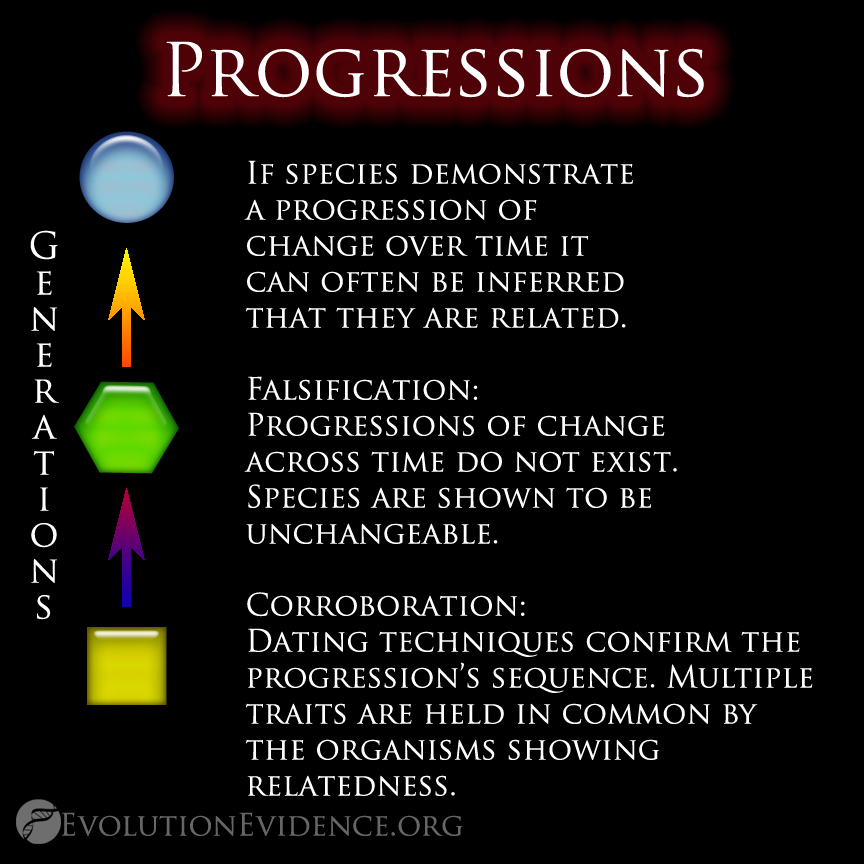
Falsification: Progressions of change across time do not exist. Species are shown to be unchangeable.
Observations: Fossil progressions, microevolution, biogeography (see examples below).
Corroboration: Dating techniques confirms the progression’s sequence. Multiple traits are held in common by the organisms showing relatedness.
Inference: Provided with this gradual
gradation in a trait we can infer that the species are related (though
not necessarily direct descendants--evolution tends to meander).
Examples:
-
Fossil progressions
-
The fossil record demonstrates not only large scale changes
across time, phyla, but also within individual species. Three
particularly important features are represented within the fossil
record. Firstly, the species represented within the fossil record are
often vastly different from the life of today. Secondly, is that the
the fossils are separately and distinctly layered. Meaning, that we
don’t find rabbit fossils in the Pre-Cambrian layers, nor dinosaurs
mixed in with mammoths. Lastly, both on the macro and micro scale of
the fossil record we see trends of change that progress through time.
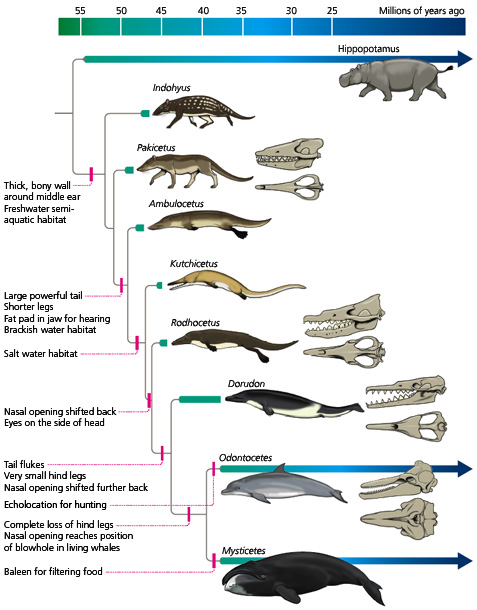
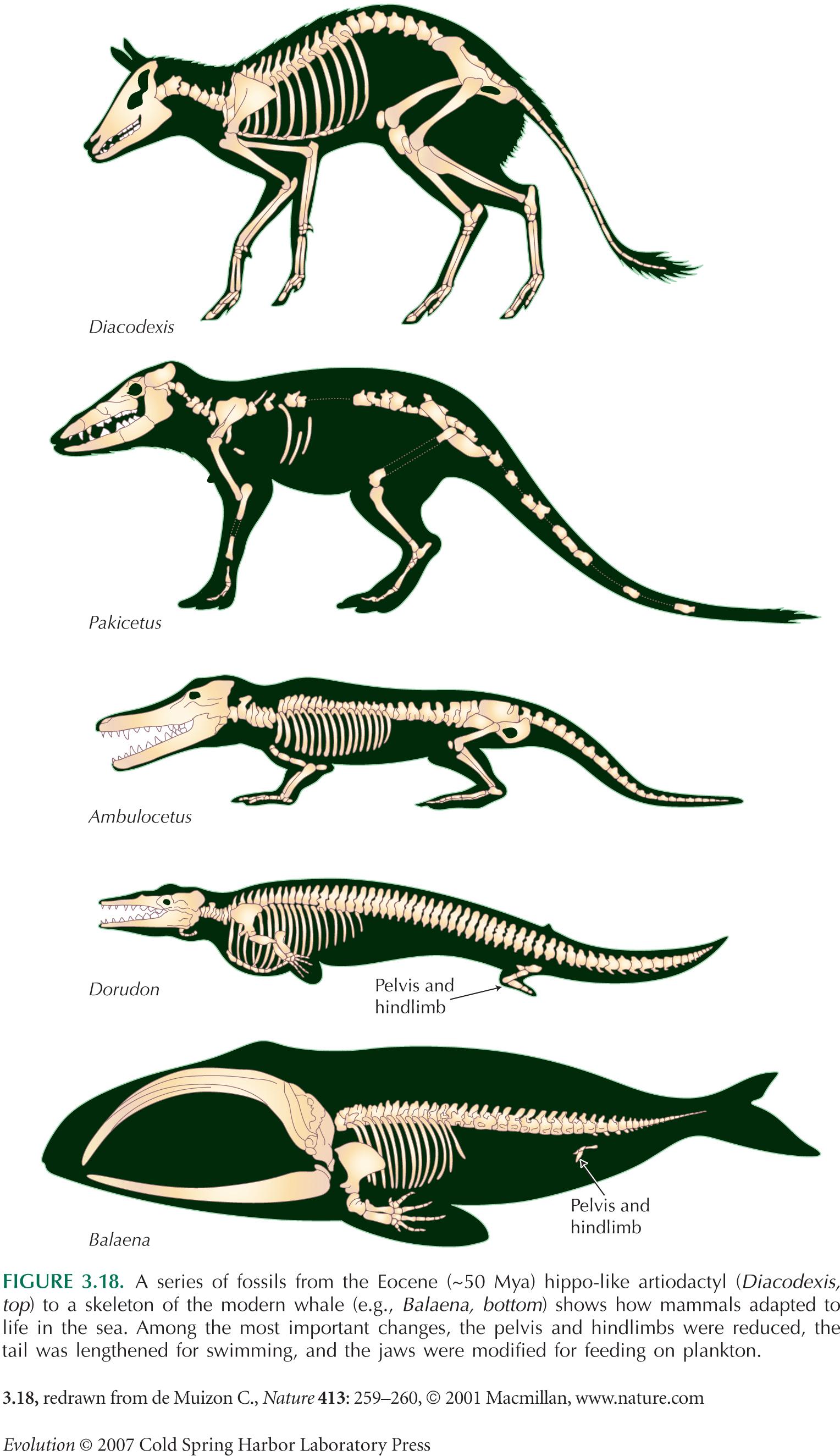
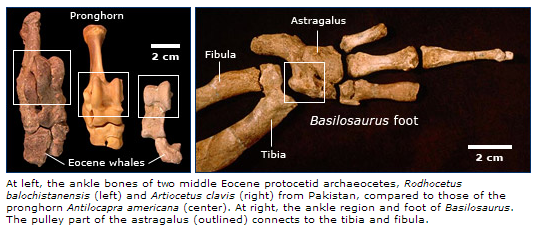
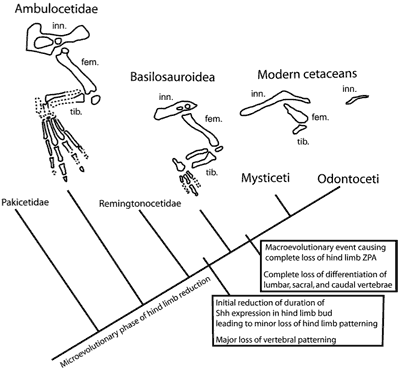
Whale evolution

http://evolution.berkeley.edu/evolibrary/article/evograms_03

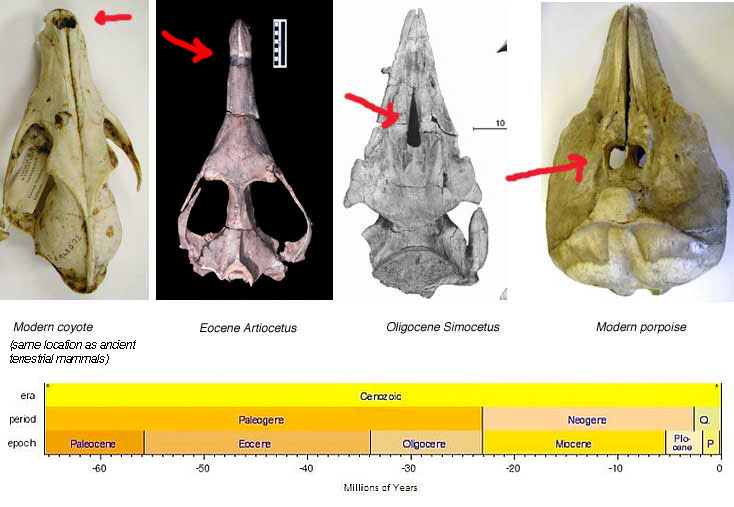
Individual
traits such as leg/pelvis position, nostril location, and ankle bones
can also be traced back to the early artiodactyls that led to modern day
whales.

http://www.bio.georgiasouthern.edu/bio-home/harvey/lect/lectures.html?flnm=evel&ttl=Evolution&ccode=el&mda=scrn

http://tinyfrog.wordpress.com/2008/02/01/pz-myers-vs-geoffrey-simmons-discovery-institute/

http://evolution.berkeley.edu/evolibrary/article/evograms_03

This
is another image showing the homology between ancient whale ancestors
(Pakicetus) and modern day even-toed ungulates (like pig and deer). Dogs
were included on the far left as a contrast typical of non-even-toed
ungulates.
http://www.bio.miami.edu/dana/160/160S13_5.html

http://scienceblogs.com/loom/2006/08/15/the-origin-of-the-ridiculous/

http://coastalpaleo.blogspot.com/2009_04_01_archive.html

http://scienceblogs.com/pharyngula/2006/05/23/no-genes-were-lost-in-the-maki/
The transition from toothed whale to baleen whale also has left
transition fossils. This can be seen in the pattern of blood vessels on
the roof of
Aetiocetus weltoni's mouth that are highly similar to those used today to nourish the areas that produce the keratin baleen.

http://whyevolutionistrue.wordpress.com/2010/07/22/baleen-whales-a-lovely-transitional-form/
Original article: http://www.sdnhm.org/archive/research/paleontology/DemereMorphoBaleenTeeth.pdf
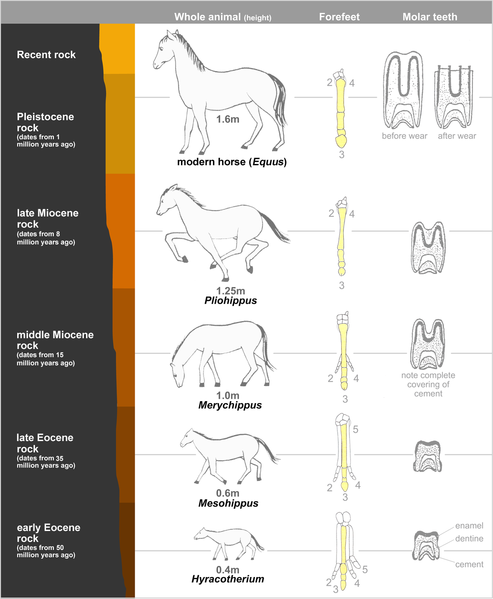
Horse

http://www.mberg.com.au/dietary-changes-and-the-evolution-of-the-horse/

http://en.wikipedia.org/wiki/Evolution_of_the_horse

http://en.wikipedia.org/wiki/Evolution_of_the_horse
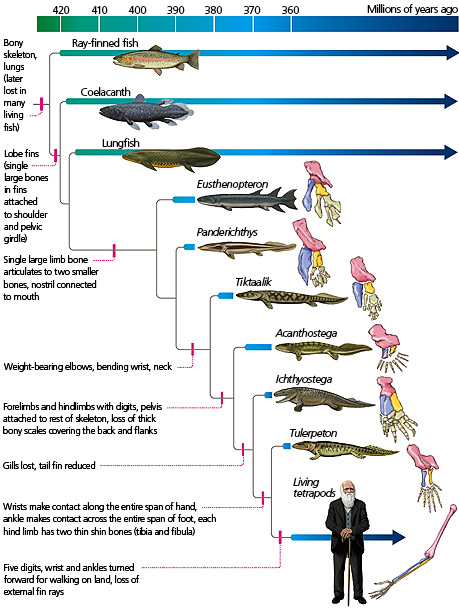
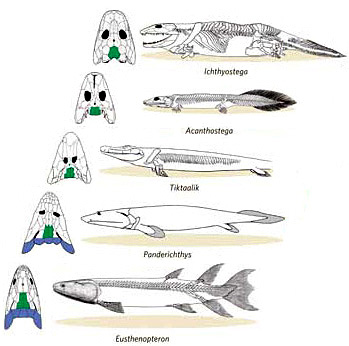
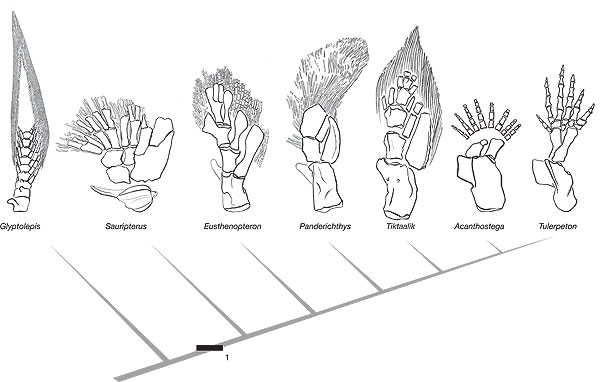
Tetrapod

http://evolution.berkeley.edu/evolibrary/article/evograms_02
We can even track individual traits, like skull bones and limb structure.


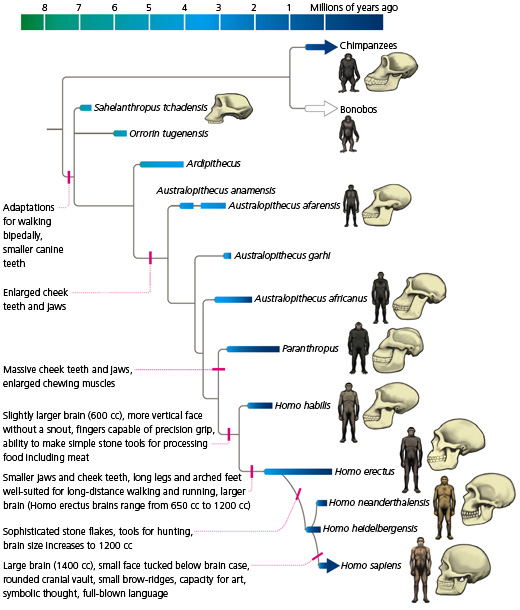
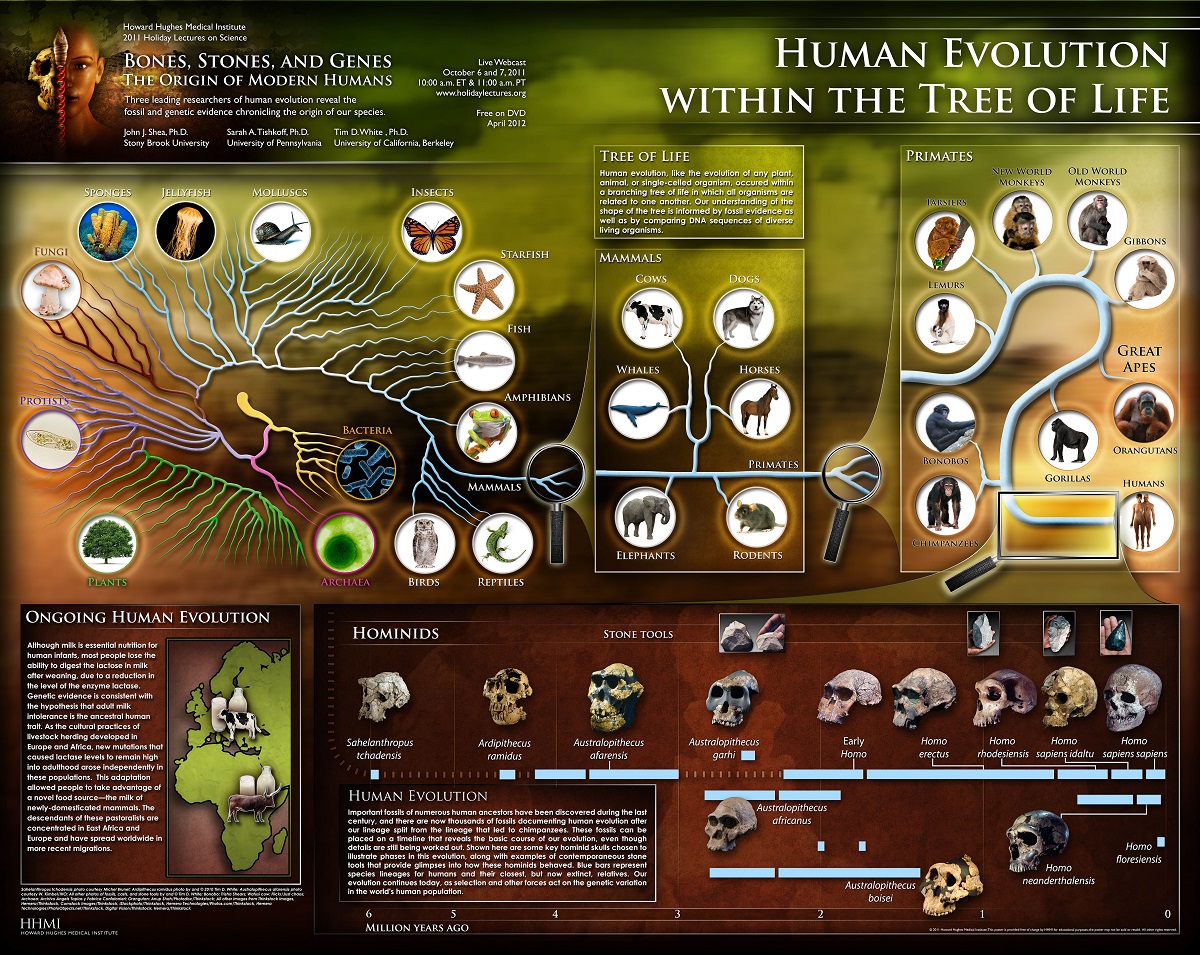
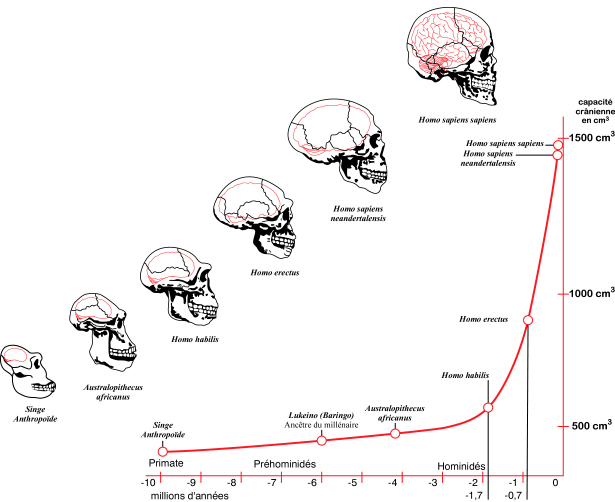
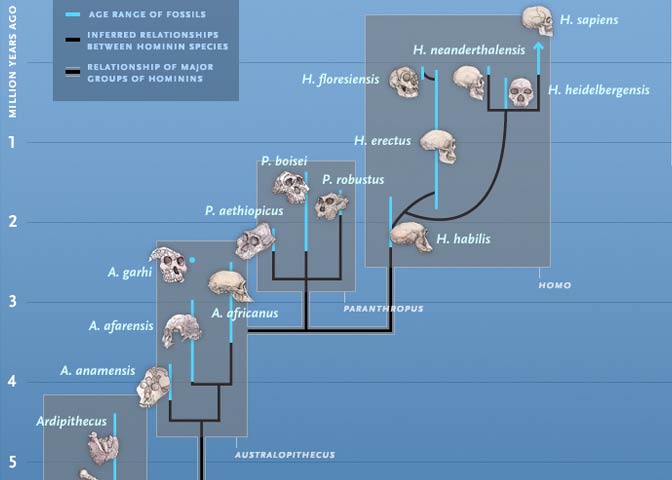
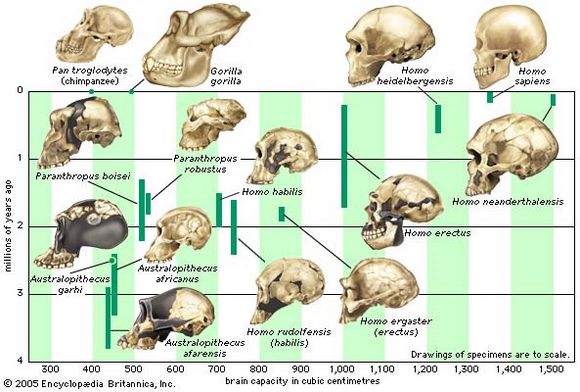
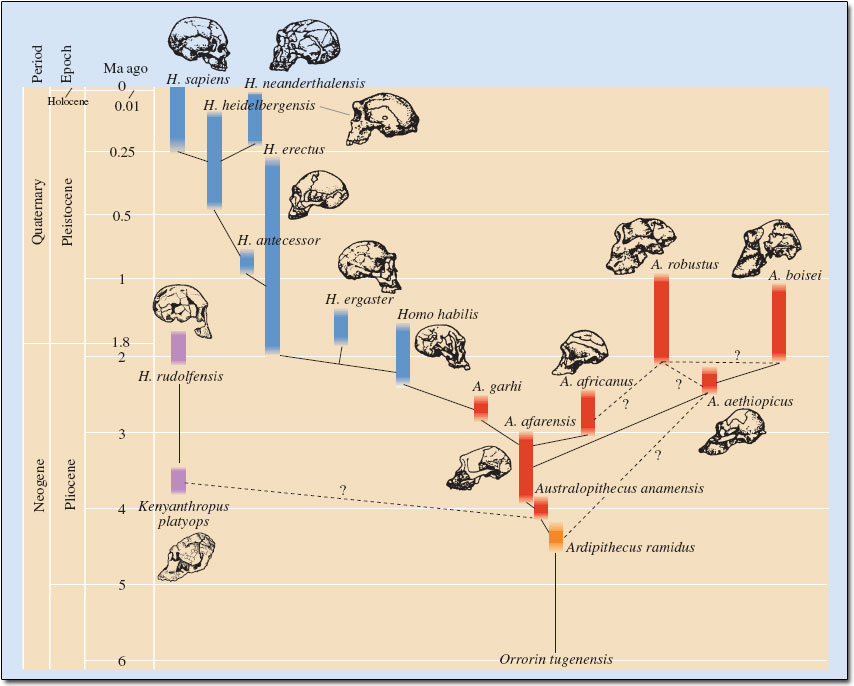
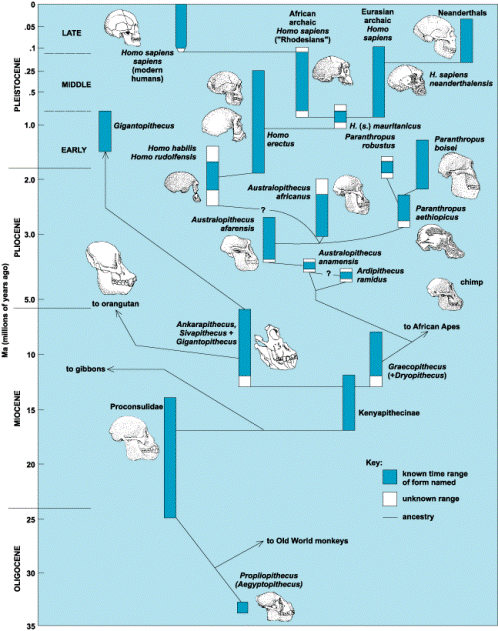
Humans

http://evolution.berkeley.edu/evolibrary/article/evograms_07

http://media.hhmi.org/biointeractive/posters/2011%20human%20evolution.jpg

http://distraffscience.blogspot.com/2012/03/overview-of-human-evolution.html

http://www.pbs.org/wgbh/nova/evolution/adaptable-human.html


http://scienceblogs.com/laelaps/2007/10/23/troodon-sapiens-thoughts-on-th/

http://visual.ly/timeline-hominid-evolution

Notice
the transition from long scapulas with oblique scapular spines good for
arboreal climbing turned more horizontal as we began to climb and hang
less.
http://openi.nlm.nih.gov/detailedresult.php?img=2860095_10764_2010_9399_Fig6_HTML&req=4http://www.sciencemag.org/content/338/6106/514.figures-onlyhttp://www.sciencemag.org/content/338/6106/478.figures-only
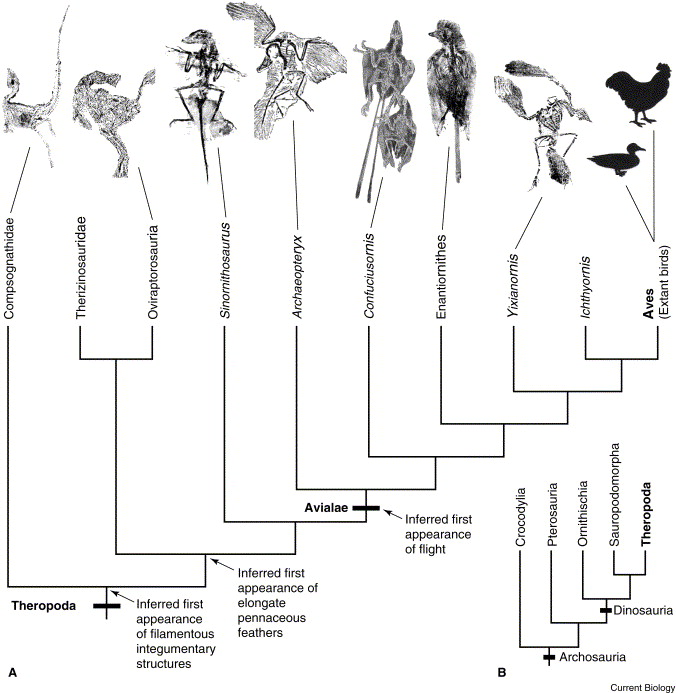
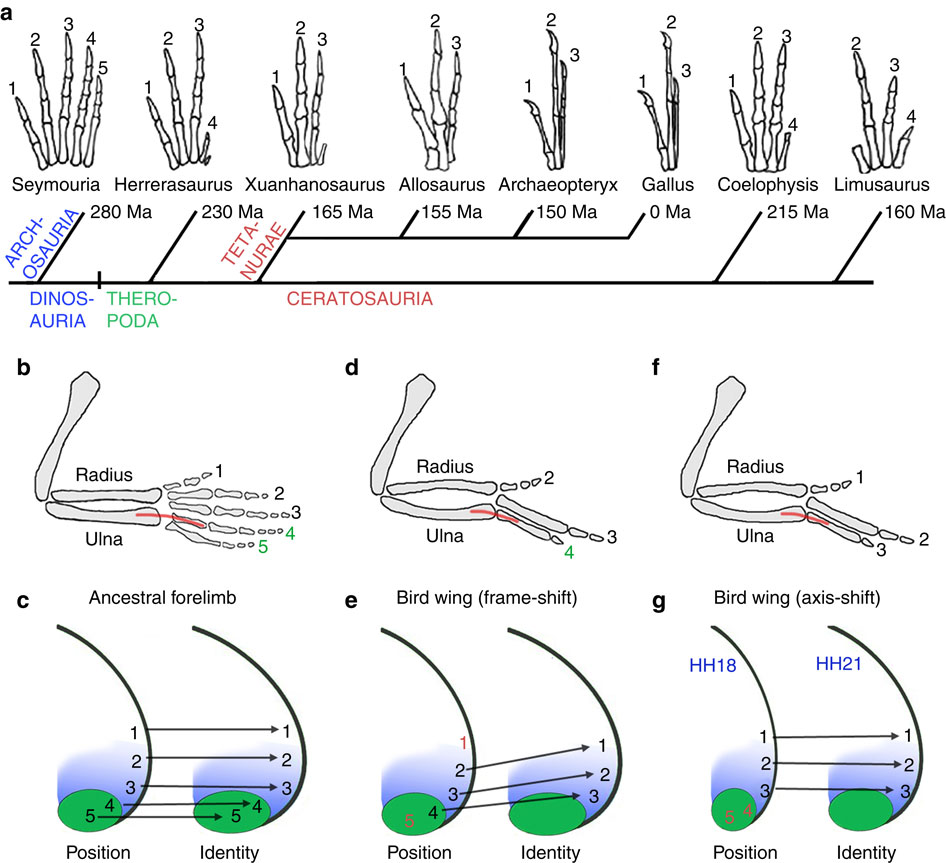
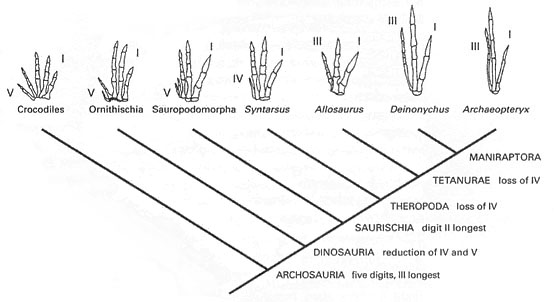
Bird

http://evolution.berkeley.edu/evolibrary/article/evograms_06


http://www.nature.com/ncomms/journal/v2/n8/full/ncomms1437.html

http://palaeoblog.blogspot.com/2008/10/gene-expression-in-alligators-suggests.html

http://ncse.com/rncse/21/5-6/more-birds-dinosaurs

http://www.sciencemag.org/content/333/6049/1619.full

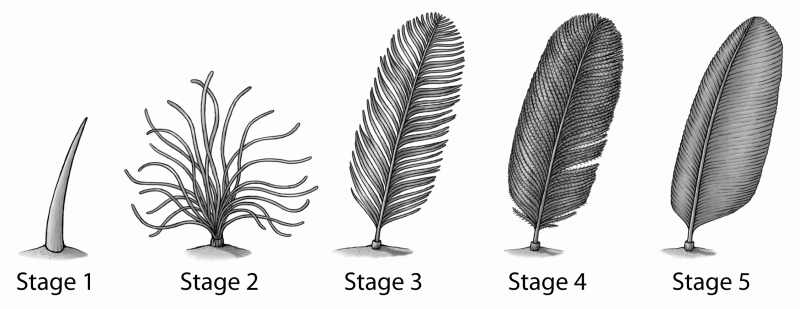
http://emilywilloughby.com/gallery/skeletals-and-diagrams/feather-evolution

A
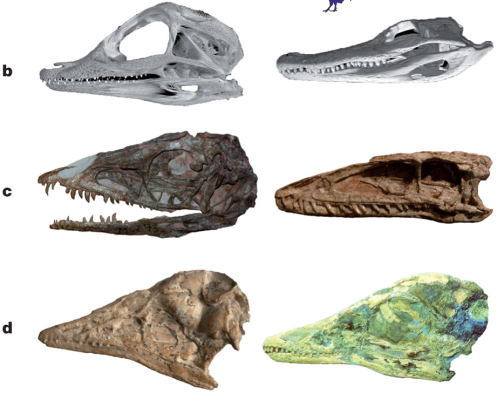
common evolutionary strategy to change the phenotype of a species is to
change the developmental progression that leads to that phenotype. This
diagram is showing how bird evolution progressed to have the adult
phenotypes look like the juvenile phenotype of the ancestral species.
http://whyevolutionistrue.wordpress.com/2012/05/28/birds-may-be-paedomorphic-dinosaurs/
Also
http://www.nytimes.com/2012/06/05/science/skull-analysis-charts-the-changes-from-dinosaurs-to-birds.html?_r=0
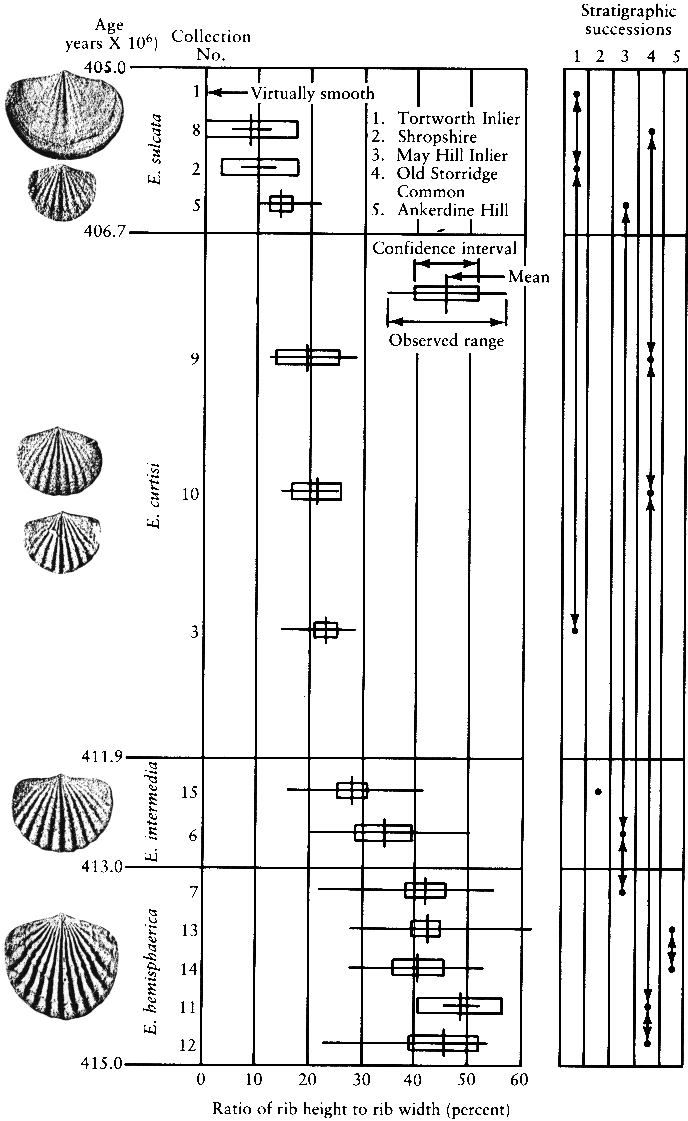
Brachiopods

http://www.pnas.org/content/105/14/5430.figures-only

http://www.don-lindsay-archive.org/creation/eocoelia.html
Diatom

http://www.jstor.org/stable/4096816?origin=JSTOR-pdf
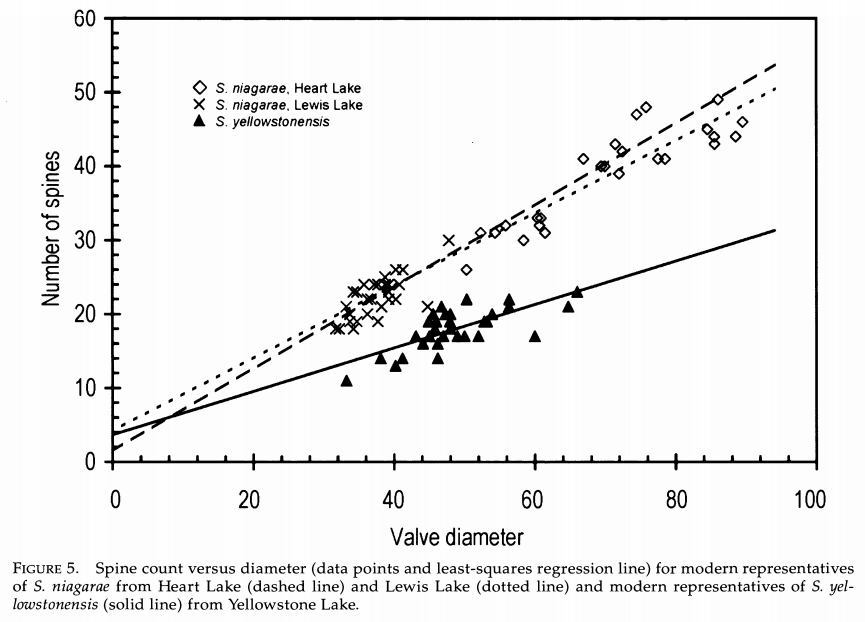
See
pictures of diatom spines and valves to better understand what this
graph represents:
http://westerndiatoms.colorado.edu/taxa/species/stephanodiscus_yellowstonensis
Foraminifera

http://evolution.berkeley.edu/evolibrary/article/evograms_05

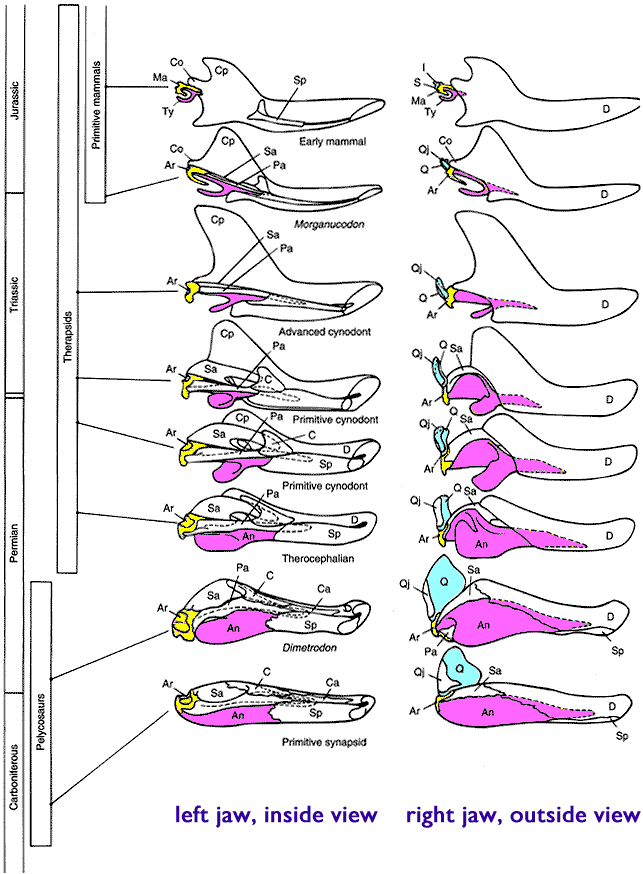
http://daphne.palomar.edu/ccarpenter/reptile%20to%20mammals.htm
Trilobites
Turtles

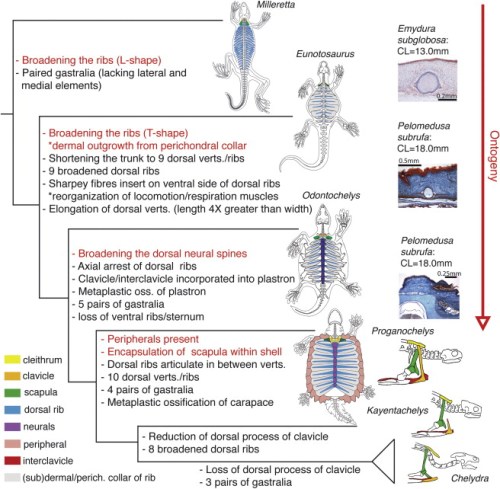
Read more: http://whyevolutionistrue.wordpress.com/2013/06/04/more-about-turtles/
Other resources:
http://whyevolutionistrue.wordpress.com/2013/06/02/turtle-origins/
And
http://www.elsevier.com/connect/how-the-turtle-got-its-shell-clues-revealed-by-fossils
Elephant

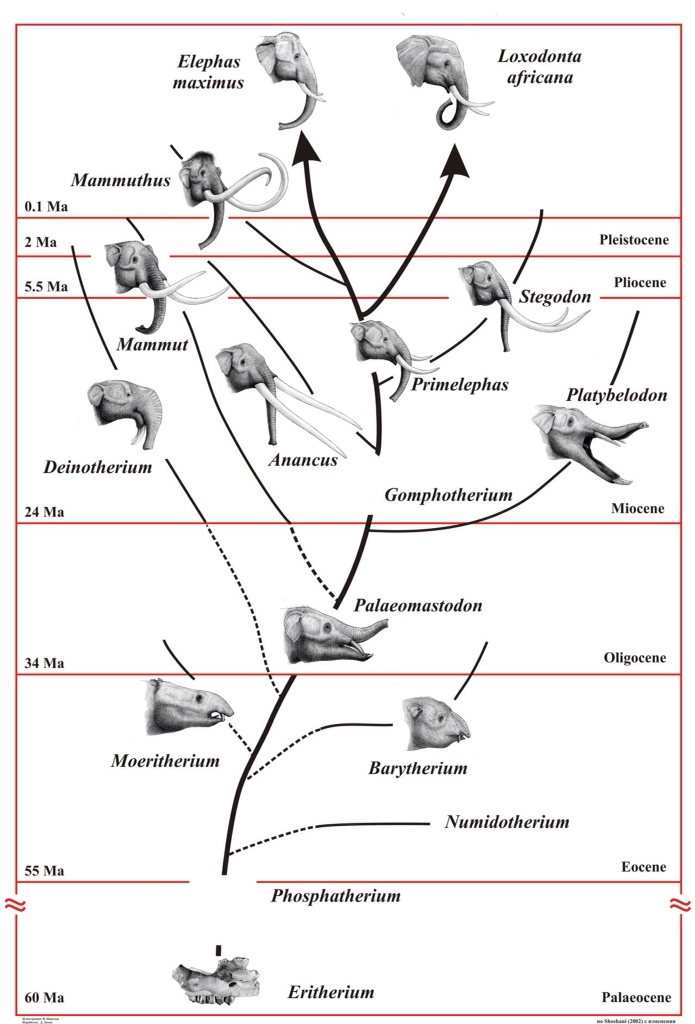
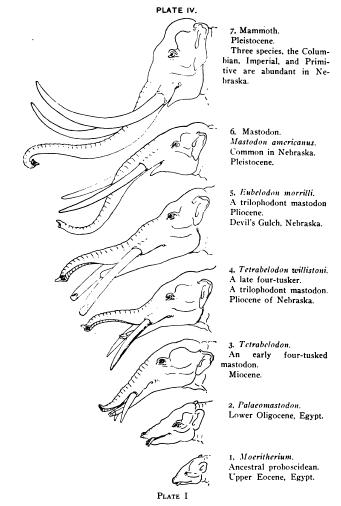
http://perlacopernik.wordpress.com/2012/08/11/the-mighty-elephant-the-real-king-of-the-savanna/
Also interesting:
http://www.sciencemag.org/content/334/6063/1699.figures-only
http://kozmopolitaydinlar.wordpress.com/2012/03/19/5508/fillerin-evrimi-2/
 Microevolution -
 There have been many instances where the
observed change within a species is fast enough that it can be tracked
by researchers. Extending these trend lines into the future we can see
how major adaptive changes can add up over time.
Soapberry bugs

http://www.evolution-textbook.org/content/free/figures/03_EVOW_Art/08_EVOW_CH03.jpg
Three-spine stickleback fish

Summary:
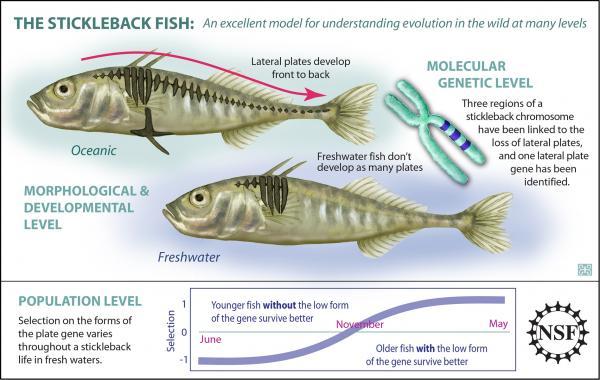
Put stickleback fish in a freshwater environment (they were transplants
from salt water, but can survive in both) and over time they lose their
protective, boney plates. They likely do so to conserve energy since
their environment has different predatory pressures and less food during
the winter.
http://www.sciencedaily.com/releases/2008/10/081010100457.htm

http://courseconnector.uoregon.edu/bi-131-intro-evolution

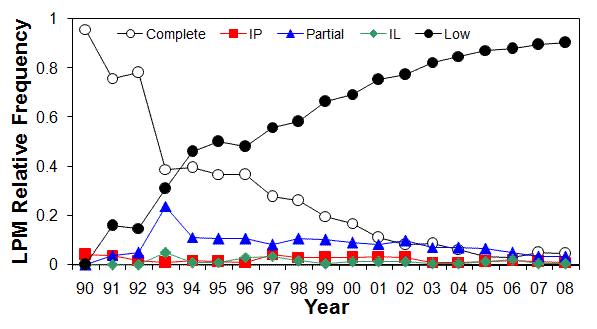
"Fig.
2. Evolution of lateral plate morph frequencies in Loberg lake between
1990 and 2007. Besides complete and low lateral plate morphs, we
recognize three intermediate phenotypes described in Bell et al. (2004).
These are "intermediate partials"(IP), partial morphs, and
"intermediate lows"(IL). Notice that the frequency of the three
intermediate phenotypes remained relatively low and constant throughout
the time series."
http://life.bio.sunysb.edu/ee/belllab/loberg.html
Salmon

Pink
salmon (Oncorhyncus gorbuscha) are getting smaller. Multiple reasons
are possible but one is that fishermen have been consistently taking the
largest, thus resulting in their reduced size through a form of
artificial selection.
http://www.pbs.org/wgbh/evolution/library/10/3/l_103_02.html
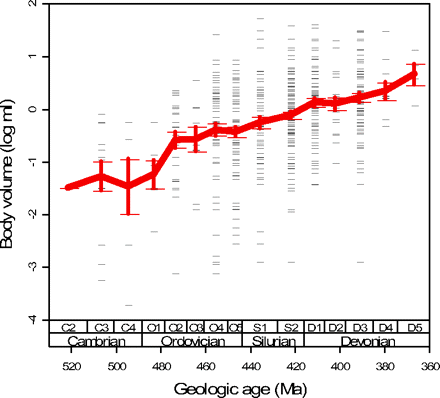
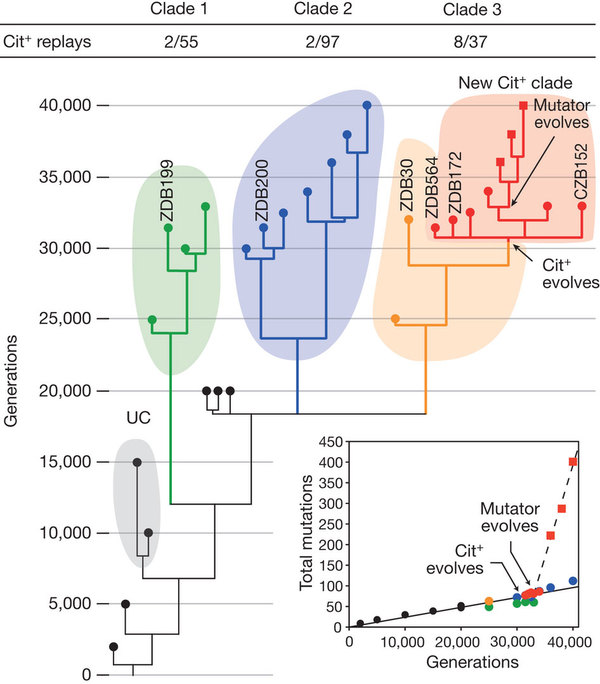
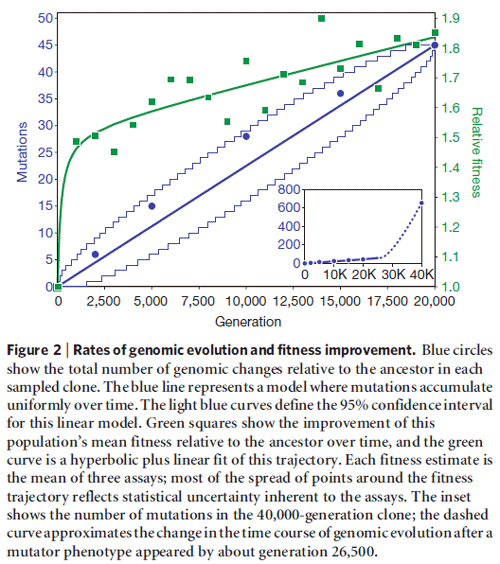
Bacteria: Because of their short generation time, bacteria are excellent
subjects to use for evolution experiments. The longest running
experiment is Richard Lenski's
E. coli experiment. For some
60,000 generations the bacteria have been grown in a laboratory
environment under controlled conditions and given very restrictive diets
of sugars and nutrients. At regular intervals the bacteria are
sampled, frozen, and DNA sequenced. Population growth, fitness, and
body size are tracked over time.

http://www.evolution-textbook.org/content/free/figures/17_EVOW_Art/32_EVOW_CH17.jpg
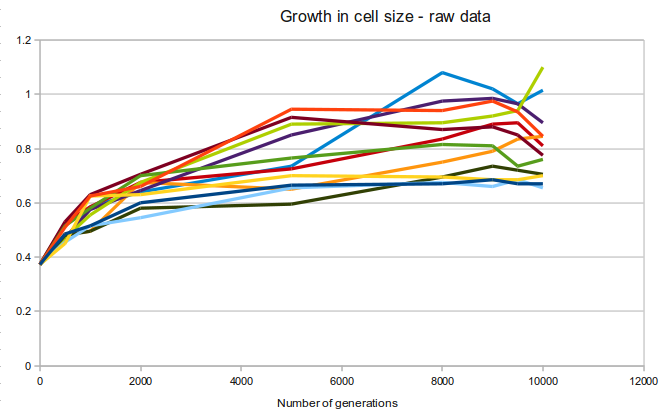
Their average size also increase remarkably:

http://evolutionguide.wordpress.com/2011/11/10/the-best-of-the-lessons-of-evolution-the-longterm-e-coli-evolution-experiment/
One of the most exciting finds of the study was the explosion of growth
in one strain of bacteria that had multiple mutations that enable them
to digest citrate in the presence of oxygen. This ability resulted in
the doubling of their population within their beaker.

http://www.nature.com/nature/journal/v489/n7417/full/nature11514.html

http://blogs.discovermagazine.com/gnxp/2009/10/the-arc-of-evolutionary-genetics-is-long/#.UkBbn9Jwpft

http://evolutionguide.wordpress.com/2011/11/10/the-best-of-the-lessons-of-evolution-the-longterm-e-coli-evolution-experiment/
Flat periwinkle: The European green crab was introduced to the North
Eastern coast of North America in the early 1800's. These crabs started
feeding on flat periwinkles by crushing them with their claws. By
comparing shells from museum specimens prior to the crab introduction to
those of current day periwinkles a thickening of the shell was observed
(conceivably due to the crab predation). Subsequently, the natural
selection process of thin shelled periwinkles was replicated in an
experimental setting.

http://wps.prenhall.com/wps/media/objects/829/848975/EvoDotsTutorial.pdf
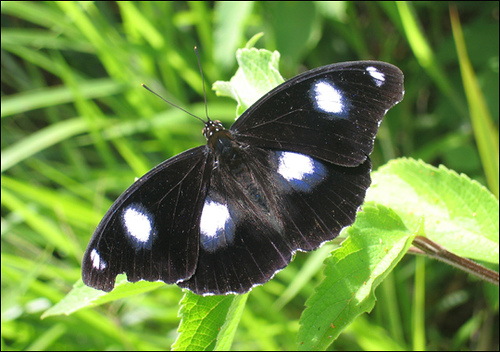
Samoan Blue Moon Butterfly (
Hypolimnas bolina): A parasite common to arthropods called
Wolbachia is
passed through the female line in the egg. To increase the parasite's
chances of getting into the next generation of butterflies the parasite
was killing off males. This resulted in a drastically skewed population
distribution with 99% of adults captured being female. Over 4 years
and 10 generations of butterfly the population re-established
equilibrium with a 50:50 ratio of female to male. Researchers believe
this is due to the evolution of a repressor gene that inhibits the
Wolbachia's biochemical attack.

http://scienceblogs.com/grrlscientist/2007/07/16/samoan-butterflies-evolve-rapi/
Also:
http://www.livescience.com/1685-evolution-occurs-blink-eye.html
http://www.sciencemag.org/content/317/5835/214.full.pdf
http://www.sciencemag.org/content/317/5835/214.abstract
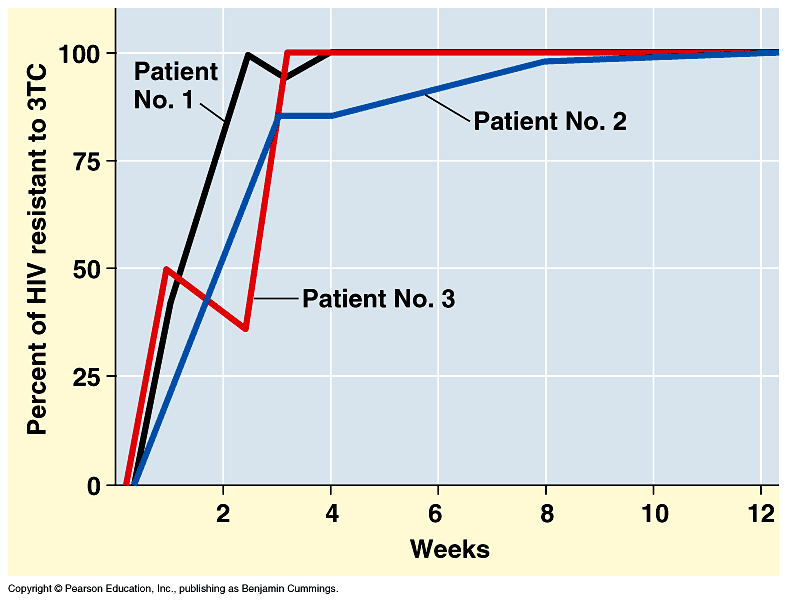
HIV: At this time the most common treatment for HIV are drug
"cocktails," which are the combination of multiple drugs that combat
HIV. Isn't that a waste to use multiple drugs to fight one condition?
Not when evolution is taken into account. HIV evolves incredibly fast
for two reasons. 1) It's high population within a human, numbering far
into the trillions per individual. 2) It's use of a error prone reverse
transcriptase to copy its genes. This essentially is the perfect storm
of drug resistance evolution. That being the case, the current
strategy is to overwhelm the HIV virus making it necessary for it to
evolve multiple adaptations at the same time--a feat that is difficult
but not impossible and the drugs only currently delay the process of
evolution.

http://www.bio.utexas.edu/faculty/sjasper/bio212/histevolth.html
Also:
http://scholar.harvard.edu/pennings/pages/hiv-drug-resistance
Great lists of observed evolution events:
http://www.wired.com/wiredscience/2008/12/evolutionexampl/
http://listverse.com/2011/11/19/8-examples-of-evolution-in-action/
http://phylointelligence.com/observed.html
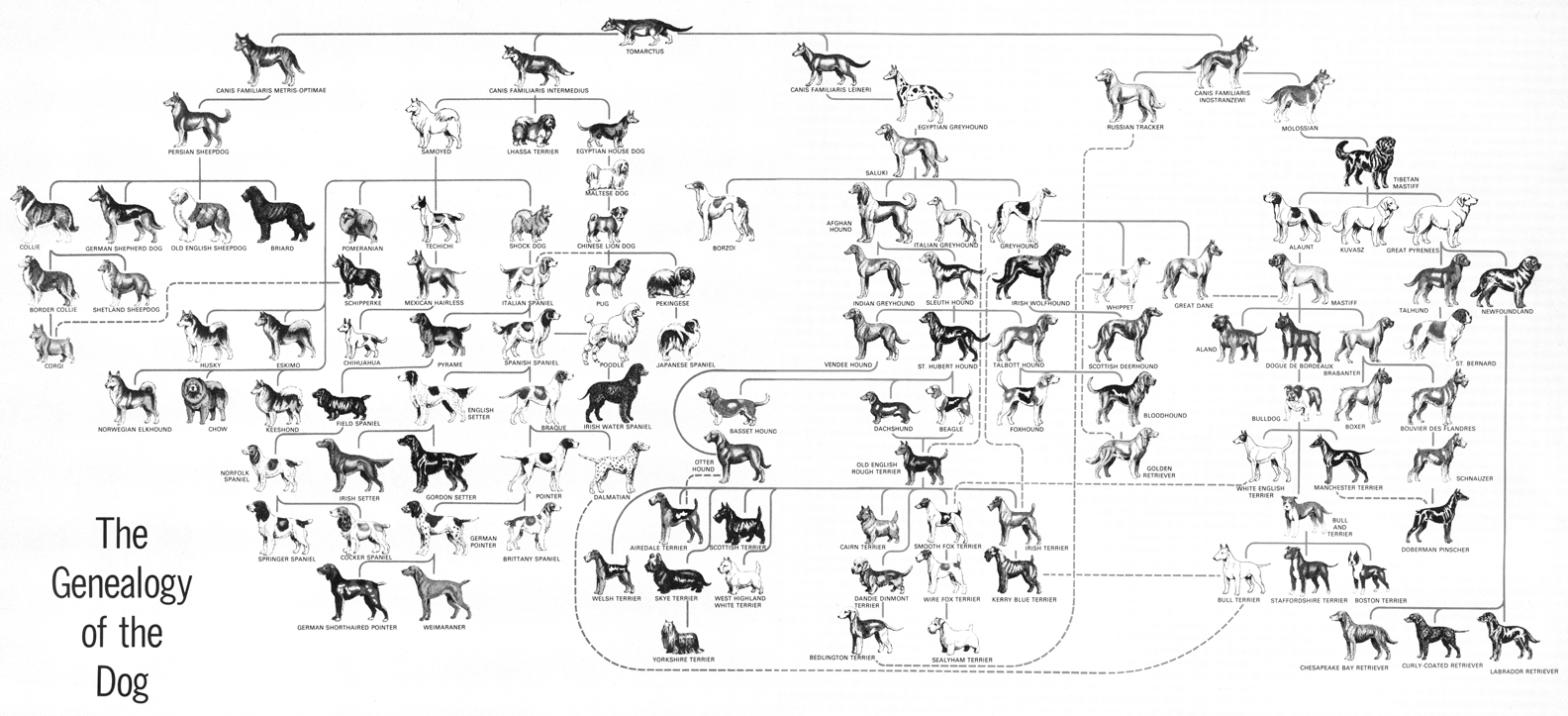
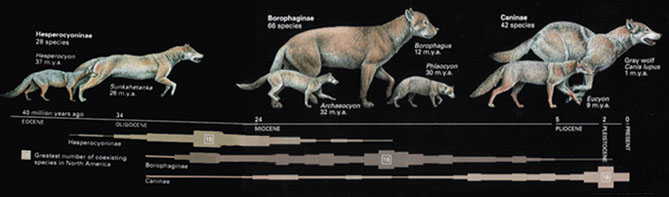
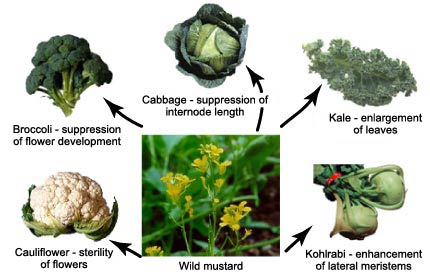
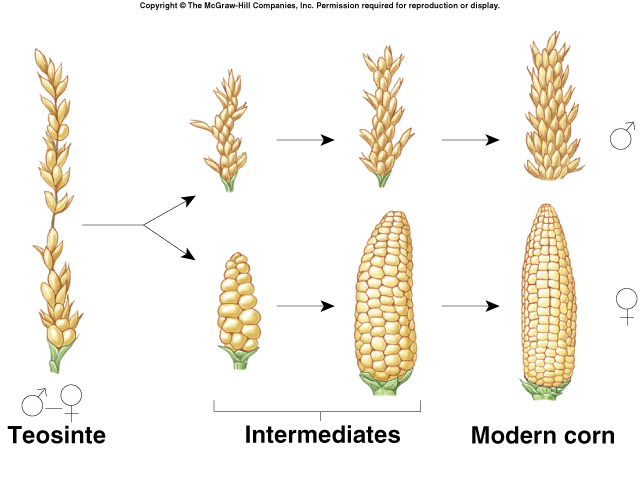
Artificial selection
Dogs

http://www.macwebguru.com/2010/09/11/the-dog/

http://annwyn.info/wolf/wolf23.html
Wild mustard

http://evolution.berkeley.edu/evosite/evo101/IIIE4Evochange.shtml
Corn

http://faculty.uca.edu/johnc/introdarwin.htm
Biogeography: Because migration can be difficult and take time,
biogeography can spatial represent evolutionary change over time. This
phenomena is most obvious in 'ring species' that start spreading slowly
over many generations around geographic obstacles, like mountain ranges.
The population diverges into two as it spreads around the geographic
obstacle and by the time the species meets again on the other side of
the obstacle so much time, mutation, genetic drift, and selection has
taken place that the two species can no longer interbreed. Even more
interesting is that the two separate species can interbreed with those
geographically closest to them from the direction that they migrated.
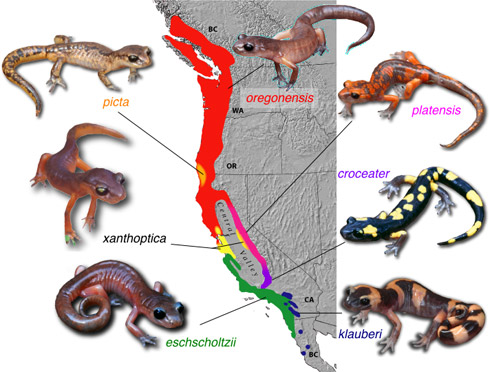
Ensatina salamander of California - The species spread from the
north and traveled around the Central Valley and diverged into species
that can not mate with each other in the south, due to their divergence,
but can mate with the species in the direction that they migrated from.

http://evolution.berkeley.edu/evolibrary/article/0_0_0/devitt_02
The Greenish Warbler (
Phylloscopus nitidus)
historically spread around the Himalayas and can interbreed with those
from the direction they spread but not those that long ago diverged from
them and spread around the opposite side of the mountain range.

http://mappingignorance.org/2013/06/13/speciation-beyond-sexuality-critiques-to-the-biological-species-concept/
Updated genetics:
http://www.sciencedaily.com/releases/2014/05/140525154742.htm
The Larus Gulls of the Northern
Hemisphere: Notice the darkening of the feathers in a clockwise
direction starting at the bottom. Gull species near each other can
interbreed, except between the Herring Gull and the Lesser Black-Backed
Gull that diverged from each other long the longest ago. This inability
to breed tells the story of how the species likely spread overtime
around the world and met back up, now no longer able to interbreed.

http://darwiniana.org/zimmergulls.htm

When
species are in a particular location for a long time, genetic diversity
tends to go up as new mutations are added to the population. When
species migrate into new territories, genetic diversity tends to be low
because those new areas are populated by a few individuals. One way of
reading this diagram is a time scale. The more genetic diversity in an
area, the longer humans have lived there. Darwin knew this and
speculated that humans originated in Africa, since most great apes are
native
there.http://whyevolutionistrue.wordpress.com/2011/04/16/where-on-earth-did-language-begin/
Fonte: http://www.evolutionevidence.org/evidence/progressions/


![[imdb]](https://lh3.googleusercontent.com/blogger_img_proxy/AEn0k_sb1Mb0n_ceq24rnOWx2pwy9jBcrHhona4eeozrNM6Ms3NIAsJaMiQrIePpRDj_BOkdNYWgZRMtK4xokokTqA3bfpxWOcun4Y80O6StzvDBwsydJSEi=s0-d "IMDB")


![[mg]](https://lh3.googleusercontent.com/blogger_img_proxy/AEn0k_vllM8YQ-kkY7pXxDJBE8-c0Ra6AeMgPQhxvtJvyjNS6wU8bgDm7yM4_SZ8TpJZ0pDpEzTxJUZh8ElPvCkEbsNWdeXZtmjweSNXGfkku7t3peA2CuAL=s0-d "mega")