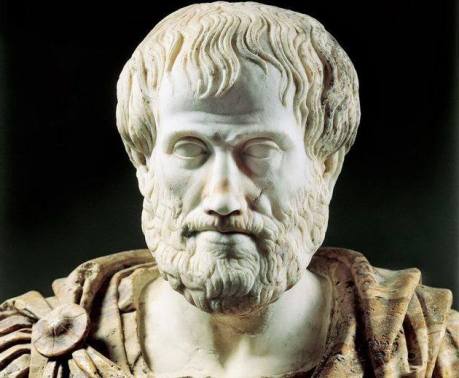
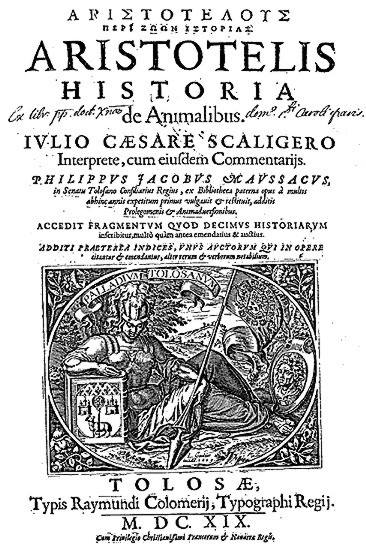
Evolutionary concepts first appeared in early Greek writings, for example, in the work of
Anaximander and
Empedocles.
Anaximander proposed that animals could be transformed from one kind to
another, and Empedocles speculated that they could be made up of
various combinations of pre-existing parts.
However, evolutionary theories were subsequently prevented from
developing and challenging the belief of special creation for some
fifteen centuries, due to the restraining influence of the Church.
The growth of scientific observation and experimentation led to some
theories of evolution beginning to emerge from the mid 16th Century.
Despite the idea of human progress being central to the Enlightenment of
the 18th Century, this did not lead to the theory of evolution.
Pierre-Louis Moreau de Maupertuis
proposed the spontaneous generation and extinction of organisms as part
of his theory of origins. However, he advanced no theory of evolution.
Georges-Louis Leclerc, a prominent naturalist of the
time, explicitly considered, and rejected, the possible descent of
several species from a common ancestor.
The physician
Erasmus Darwin, grandfather of Charles
Darwin, offered some evolutionary speculations in his book Zoonomia,
but they had no real influence on subsequent theories.
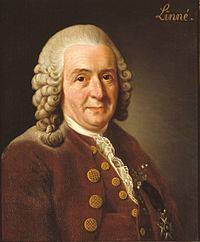
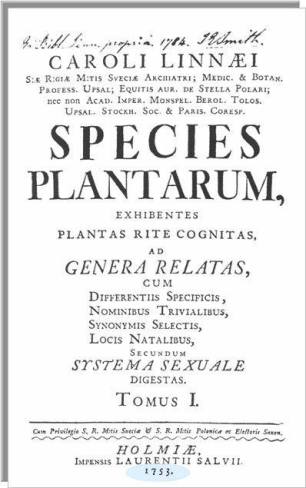
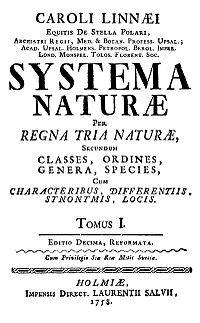
The Swedish Botanist,
Carolus Linnaeus, who devised
the hierarchical system of plant and animal classification that is still
in use today in a modernised form, showed an inclination towards the
ability of species to mutate, as a result of his observations of
variations among species.
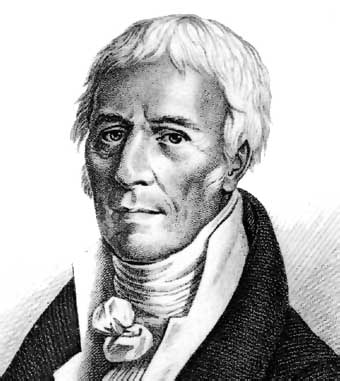
In the early 19th Century, the French naturalist
Jean-Baptiste Lamarck presented a clearly stated evolutionary theory. This theory, later known as '
The Inheritance of Acquired Characteristics'
was ridiculed at the time and thoroughly disproved in the 20th Century,
although it did contribute to the gradual acceptance of biological
evolution as well as stimulating later studies.
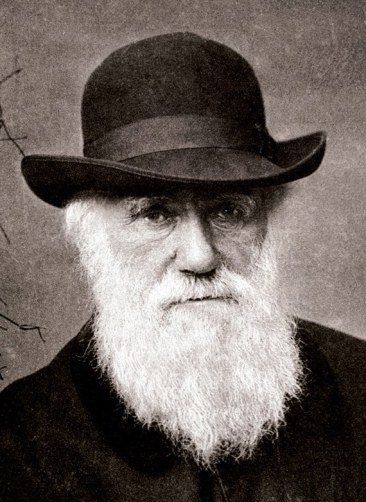
The founder of the modern theory of evolution was
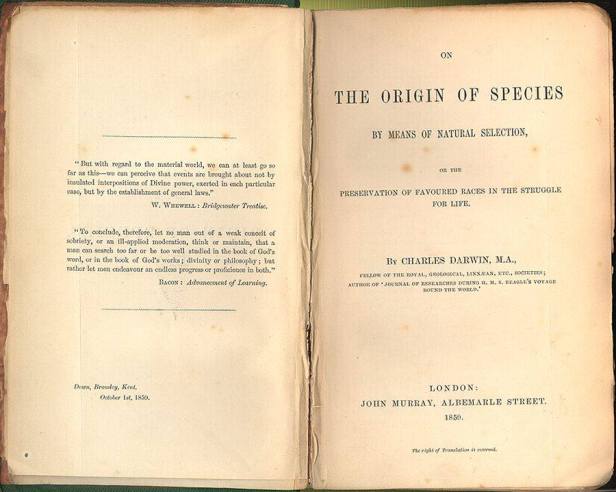
Charles Darwin. In 1859 the first edition of his
On The Origin of The Species
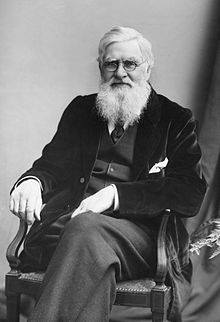
was published and it sold out in one day. The naturalist Alfred Wallace
had also hit upon the idea of natural selection independently, however,
his view differed from Darwin’s, most notably in that he did not think
that natural selection was sufficient to account for the origin of man,
but divine intervention had been required.
Herbert Spencer, a philosopher, was also an
influence in evolutionary theory during the latter part of the 19th and
early 20th Centuries. He popularised a number of slogans, including
"survival of the fittest" which was taken up by Darwin in later editions
of
Origin of Species. Spencer’s ideas damaged proper
understandings of natural selection and Darwin often attacked him for
his "fundamental generalisations".
 Copyright free image
Herbert Spencer
Copyright free image
Herbert Spencer
The main weakness of Darwin’s evolutionary theory lay in gaps in the
explanations of the mechanism of evolution and the origin of species.
The concept of natural selection is that inheritable variations among
the individuals arise in nature and that some variations prove
advantageous under prevailing conditions, in that they enable the
organism to leave more surviving offspring. Darwin did not understand
how these variations initially arise or are transmitted to offspring and
subsequent generations.
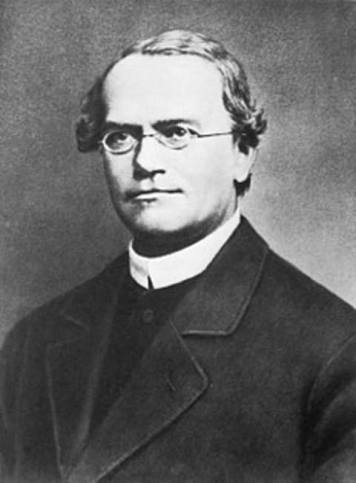
The missing link in Darwin’s argument was provided by Mendelian genetics.
Gregor Mendel
was an Augustinian monk who carried out a long series of experiments
with peas in the garden of his monastery. His paper, published in 1866,
formulated the fundamental principles of the theory of heredity, and it
is still current today.
Darwin did not know about these discoveries and they did not become
generally known until 1900 when natural selection and Mendelian genetics
were simultaneously rediscovered by scientists.
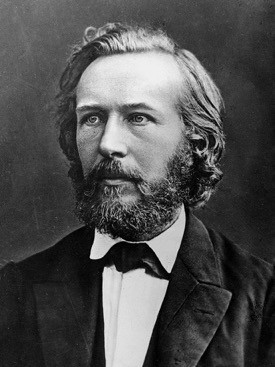
In the 1880s, German biologist
August Weismann
published his germ-plasm theory defending natural selection. His ideas
became known as neo-Darwinism. The rediscovery of Mendel’s theory of
heredity in 1900 led to an emphasis on the role of heredity on
evolution. Hugo de Vries proposed a new theory of evolution known as
mutationism, which discounted natural selection, and was heavily opposed
by naturalists, especially biometricians. Biometricians, led by
Karl Pearson, defended natural selection.
In the 1920s and 30s, theoretical geneticists including
R.A. Fisher and J.B.S. Haldane in Britain and
Sewall Wright
in the United States, used mathematical arguments to support natural
selection and contributed to the downfall of mutationism. They also
provided a theoretical framework for the integration of genetics into
Darwin's theory of natural selection.
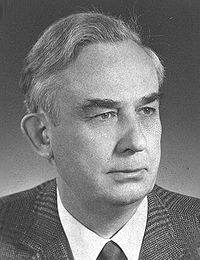
In 1937
Theodosius Dobzhansky published
Genetics and the Origin of Species,
which combined Darwinian natural selection and Mendelian genetics. This
led naturalists and experimental biologists to understand the process
as one of genetic change in populations. This stimulated interest in
evolutionary studies and scientists from a variety of biological fields
contributed to the theories, most notably the zoologists
Ernst Mayr and Sir
Julian Huxley, the palaeontologist
George G. Simpson and the botanist
George Ledyard Stebbins.
By 1950 acceptance of Darwin's theory of evolution by natural
selection was universal among biologists and it is now widely accepted
in society and taught within schools. Some creationists still oppose it.
What is evolution?
Biological evolution is the theory that groups of organisms change
with the passage of time, causing their descendants to differ
morphologically and physiologically from their ancestors. This process
is dependent on the need of organisms to compete for the things which
are essential to them individually to survive and reproduce. It is a
continuing process that has been going on for millions of years, rather
than a finished event, although there is some debate over the degree to
which human beings are evolving now.
What is natural selection?
Natural selection is the mechanism that drives evolutionary change.
Put simply, it is a process whereby organisms best suited to their
environment become the ones most likely to survive and leave
descendants. It is also often referred to as "survival of the fittest",
which conjures up images of the biggest, strongest individuals being the
most successful, but in a biological sense, evolutionary fitness refers
to the ability to reproduce in a particular environment as well as
survive. Therefore organisms may be the "fittest" because they
co-operate with other organisms, rather than competing with them.
Charles Darwin, often known as the father of evolution, was the first
person to document the operation of natural selection.
Darwin formulated the central argument of this theory from his
observations, the existence of variations among animals. He reasoned
that variations must occur in nature that are favourable or useful in
some way to the organism in its struggle for existence. Favourable
variations are ones that increase chances for survival and procreation.
Those advantageous variations are preserved and multiplied from
generation to generation at the expense of less advantageous ones. The
outcome of the process is an organism that is well adapted to its
environment.
How does natural selection occur?
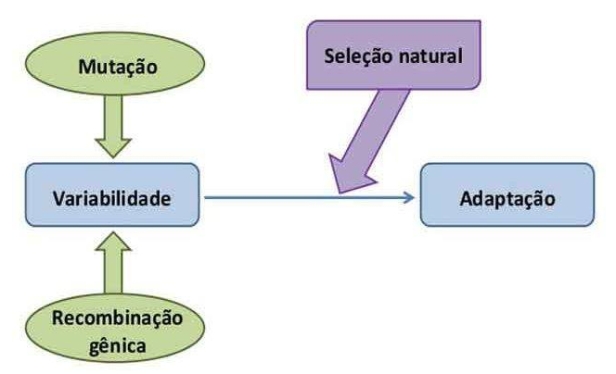
The variations that occur are as a result of changes that are
produced at the genetic level. They occur as an organism's genes mutate
and/or recombine in different ways during reproduction and are passed on
to future generations. Genes are the portions of an organism's DNA that
carry the code responsible for building that organism in a very
specific way. From generation to generation, molecular mechanisms
reshuffle, duplicate, and alter genes in a way that produces genetic
variation. This variation is the raw material for evolution. Mutations
are 'mistakes' introduced into the genetic material used for
reproduction, which can occur naturally, or as a result of something
like exposure to radiation.
Positive mutations that give some benefit to the organism provide the
new material for natural selection to operate on. This could lead to
individuals inheriting new characteristics that give them a survival and
reproductive advantage in their local environments; these
characteristics tend to increase in frequency in the population, while
those that are disadvantageous decrease in frequency. Any non-genetic
changes that occur during an organism's life span, for example an
increase in muscle mass, cannot be passed on to the next generation and
are not examples of evolution.
Role of sexual reproduction in natural selection
Sexual reproduction allows an organism to combine half of its genes
with half of another individual's genes, which means new combinations of
genes are produced every generation. When eggs and sperm are produced,
genetic material is shuffled and recombined in ways that produce new
combinations of genes. Sexual reproduction therefore increases genetic
variation, which increases the raw material on which natural selection
operates. Genetic variation within a species, also known as genetic
diversity, increases a species' opportunity for change over successive
generations.
Evolution and religion
Like in the early days when evolutionary concepts were first
developed, some creationists still strongly disagree with evolutionary
theory, believing that it denies the presence of God. However, these
days many people from evolutionary biologists to religious leaders,
including Pope John Paul II, believe that evolutionary theory does not
refute the presence of God.
They argue that evolution is the description of a process that
governs the development of life on Earth, dealing only with objects,
events and processes in the material world. Therefore, it does not say
anything one way or another about the creation of the world.
 Copyrighted image
The Arguments: Dr Anne Campbell
Copyrighted image
The Arguments: Dr Anne Campbell
 Copyrighted image
Dr Anne Campbell is a Reader in the Psychology Department, University
of Durham. Dr Campbell is an evolutionary psychologist who thinks that
you can't have a full understanding of the human mind without looking at
how the process of evolution has shaped it.
On her area of interest:
The brain is as much an organ of the human body as any other, and I
think it's important that we should look at the kind of natural and
sexual pressures that lead to the kind of brains we have now. On the
other hand, if it's the case that perhaps evolution is reaching its end,
this may turn out to be a largely historical enterprise but may not
guide us very far in making predictions about the future.
On giving entirely Darwinian explanations of the human mind:
I was just reminded that of course evolution is a process, a process of
change over time, and it doesn't have to apply only to genes, there's no
reason why it couldn't apply to a large number of other things. And of
course, one thing could be human ideas. In fact, culture itself is
usually defined as the social transmission of ideas from one generation
to the next. We can see those ideas to some extent, as kind of
particular forms that are subject to variation and to subject to
selective retention and transmission. So in that sense you can apply the
idea of evolution beyond merely genetics and into the kind of ideas
that we take around with us all the time. The kind of inventions that we
have are all subject to evolution.
On the idea that human evolution has stopped:
I think, in terms of genetic evolution, you can make a very strong case
for that in the West. The major differences in fecundity and mortality
between individuals have been minimised a very great deal. But that
doesn't mean that evolution in terms of ideas has not accelerated, and,
in fact, it accelerated massively, even in the last fifty years or so.
As we all know, our sons and daughters understand more about the
workings of PCs than I do. So you have actually a rather odd situation
where transmission is almost going in the reverse direction, generally
where in which we're sort of hastening to keep up with children who have
acquired massive amounts of cultural information that wasn't available
to us when we were their age.
On the missing link between genes and cultural information:
We know obviously that genes build bodies, and we know that they build
brains and the kind of brains we have are very, very interesting and
unusual for a primate. And one of the main things that we're able to do
that we suspect others aren't is to engage in representational thought.
In other words, we can use symbols. We can use written symbols, we can
use language - spoken language itself is a symbol - we can use
mathematics which is a particular symbolic form. Because we're able to
do that, it absolutely explodes massively, the kinds of ideas, the kinds
of inventions we can have, and of course the rate at which they can be
spread around a society from one mind to another, and I think that's
what makes humans very unique, and which makes this rapid period of
evolution quite frightening in how these ideas are proliferated.
The Arguments: Dr Steve Jones
 Copyrighted image
Professor Steve Jones is a geneticist at University College, London. He is the author of
The Language of the Genes
and other popular science publications. Professor Jones thinks that the
relaxing of natural selection in the developed world and the fact that
families these days have more or less the same number of offspring means
that human evolution has effectively stopped.
On the idea that human evolution might have stopped:
"I really just know about snails, and the beauty of evolution is that it
gives biology a structure, so the rules that apply to snails or to
fruit flies to some extent apply to ourselves. Obviously there's much
more that applies to us. But if you ask the simple Darwinian question
about natural selection, inherited differences in the ability to pass on
genes (which is only part of the evolutionary argument) it's pretty
clear to me that at least for the time being and at least in the
developed world, natural selection has stopped or at least slowed down."
On the essential features of an evolutionary system:
"Darwin phrased it very neatly with three words, 'descent with
modification', and we can rephrase that even more neatly today with
three other words shorter ones, 'genetics plus time', and it's got a
couple of components very straight forward. Evolution isn't really
biology, it's almost physics. If you've got a system which is based on
information, and it copies that information from one generation to the
next, and if that process of copying isn't perfect, which certainly DNA
copying is not perfect, then you will certainly have evolution, that's
inevitable. As Steven Rose says, really you can't disbelieve in it.
Darwin's great contribution was to realise that what's actually changing
is itself a copying machine, so that some of the new versions are
better at copying themselves, and those new versions are spread, and
that's natural selection, and that really is all that evolution is in
its basics."
On the creationist argument:
"Well if we were talking about astronomy, we wouldn't be sitting
learnedly asking whether the earth was flat or not, because we know the
earth isn't flat. There are a few cranks who might believe that it is,
but it's a waste of your time, my time and the audience's time to
discuss it, and I feel exactly the same about the creationist argument."
On the idea that there is a mechanism for transmitting cultural ideas from one individual across generations:
"As an experimental scientist, I do experiments of things which I can
manipulate which are experiments for snails, experiments with fruit
flies, DNA and so on, and I can map out genes, I can work out the
history of population movements and that kind of stuff, exactly the kind
of things that Darwin was doing. He didn't have a DNA machine, but he
was a very good comparative anatomist, which is basically doing the same
kind of thing. And really both Darwin and his very minor disciples like
myself, manage to do all that without using universe. Evolution is
often used as a kind of universal metaphor, and that's a real danger.
I'm often reminded of the fact, not many people know this, that the
United States' Constitution with the President and House of
Representatives and the Senate and the like, was actually designed as a
model of the universe, of the solar system. There should be a sun in the
centre, and a certain distance away there should be planets, and around
each planet there should be a few moons. Now that was a scientific
decision as how to design your constitution. As it happened it worked
pretty well, reasonably well. But the idea that we should design our way
of life because of the way the universe is, everybody would laugh at. I
rather think the same about us saying that we should understand our way
of thought, our language, our culture, because of Darwinian natural
selection, is really just a shallow."
 Copyrighted image
The Arguments: Professor Steven Rose
Copyrighted image
The Arguments: Professor Steven Rose
 Copyrighted image
Professor Steven Rose is Professor of Biology and Director of the
Brain and Behaviour Research Group at the Open University, Joint
Professor of Physics at Gresham College in London and visiting
Professor, Department of Anatomy and Developmental Biology at University
College London
On his area of interest:
"Well I'm a neuroscientist and interested therefore in behaviour, but as
a biologist I'm interested in evolution. Evolution simply means change
over time, changing species, changing populations, change in the
characteristics of individuals in a species. In that sense it actually
can't stop, and in that sense it's not a theory, it's a fact. The
theoretical issues are the motors of evolution, if you like."
On the questions about evolution that divide biologists:
"I think we can remove the creationist argument from this discussion,
and then we can get to the interesting questions, which do divide
biologists. The debates within biology I think focus on a number of
features. One is whether evolution is only to be understood as a genetic
mechanism in that sense. I mean there's a formal definition which some
evolutionary biologists use as the rate of change of genetic frequency
in a population, which says that what happens to organisms - you and I
and the others of us in the audience - doesn't matter, it's only our
genes that matter. Others would argue as I would, and Stephen Jay Gould
would, that you have to see evolution acting at various levels on the
gene, on the genome, on the organism, on the population, and on the
species as a whole, and also, whether natural selection is the only
motor of evolutionary change, or there are others as well. Anne talked
about sexual selection, but there are other reasons and constraints on
evolutionary change, which I think become very exciting for biologists
to try to uncover."
On whether genes should be referred to as building bodies:
"I think one's just got to see that genes are strands of DNA. In order
to build a body, you need the cell in which the gene is located, you
need the genome in which the gene is there, and to give the genes this
sort of master molecule metaphor, I think is to give them too much
power, almost magical power, and as someone who started as a biochemist
and cares about cells and metabolism, I feel uneasy when we rather
glibly use that metaphor. I'm saying that genes are absolutely essential
for the construction of brains but what the missing link was, was not
just social and cultural history but also the developmental history of
the organism which we construct ourselves, if you like, out of the raw
material given by our genes and our environment - and if we miss
development out, we're in deep trouble."
Further Reading
Lifelines
Steven Rose (Penguin Books 1998), ISBN: 0140237003
Alas Poor Darwin
Hilary Rose and Steven Rose (Vintage 2001), ISBN: 0099283190
Almost Like A Whale: The Origin of Species Updated
Steve Jones - hardback: Doubleday 1999, ISBN: 0385409850; paperback: Black Swan 2001, ISBN: 055299958X
The Language of the Genes
Steve Jones (Flamingo 2000), ISBN: 0006552439
The Theory of Evolution
John Maynard Smith (Editor), Richard Dawkins (Cambridge University Press 1993), ISBN: 0521451280
Climbing Mount Improbable
Richard Dawkins, Lalla Ward (Illustrator) (Penguin Books 1997), ISBN: 0140179186
The Cambridge Encyclopedia of Human Evolution
Steve Jones, Robert Martin, David Pilbeam, Sarah Bunney (Editor) and
Richard Dawkins (Cambridge University Press 1994), ISBN: 0521467861
The Origin of Species
Charles Darwin (Prometheus Books UK 1994), ISBN: 0879756756
The Structure of Evolutionary Theory
Stephen Jay Gould (Belknap Press 2002), ISBN: 0674006135
Jargonbuster
- Naturalist
- Someone who researches and studies natural history, botany and zoology
- Organism
- An organised being; a living body, either vegetable or animal,
composed of different organs or parts with functions which are separate,
but mutually dependent, and essential to the life of the individual.
- Physiology
- The science which studies of the phenomena of living organisms; the
study of the processes incidental to, and characteristic of, life. It is
divided into animal and vegetable physiology, dealing with animal and
vegetable life respectively. When applied especially to a study of the
organs and tissues in man, it is called human physiology.
- Population
- The total number of people or organisms in a specific area.
- Spontaneous generation
- Or abiogenesis, is the idea that life, rather than evolving over
many millions of years from the primordial soup, was started by an
outside factor - some theories suggest it was seeded by extraterrestrial
impact from an asteroid impact.