Mostrando postagens com marcador Ilhas Maurício. Mostrar todas as postagens

sábado, 3 de novembro de 2018

Pássaro Dodô foi assassinado em sangue frio


Dodos foram extintos há mais de 300 anos, mas os cientistas só agora estão abrindo um caso frio depois de saber que um dos pássaros - o premiado espécime dodô que provavelmente inspirou o autor Lewis Carroll a criar um personagem dodó no livro de 1865 "Alice no País das Maravilhas". "- foi brutalmente assassinado. Depois de recentemente carregar o famoso dodo em um scanner de micro-tomografia computadorizada (micro-CT), os pesquisadores notaram que as imagens mostravam marcas estranhas no pescoço e na nuca do pássaro que não voa.

A closer inspection revealed that those flecks were tiny lead pellets, meaning that someone shot the dodo from behind, killing the wildfowl, the researchers announced Friday (April 20). [In Photos: The Famous Flightless Dodo]

O achado assassino foi uma surpresa completa, disse Paul Smith, diretor do Museu de História Natural da Universidade de Oxford, na Inglaterra, onde o espécime de dodô - chamado de dodô de Oxford - está em exibição. Durante anos, os curadores pensaram que o espécime era o mesmo pássaro que foi trazido para Londres em 1638, quando o animal ainda estava vivo, disse Smith. Este famoso dodô era um show de curiosidade, e as pessoas podiam pagar para ver e alimentá-lo.
A digital image created by the micro-CT scan of the famous Oxford dodo.

A digital image created by the micro-CT scan of the famous Oxford dodo.
Credit: WMG, University of Warwick
It was thought that the curiosity-show dodo died and the remains of its body was later acquired by John Tradescant the Elder, whose family provided the founding collection for the University of Oxford museums. But the great performing dodo was never shot (at least that we know of), which raises the question: Where did the Oxford dodo come from if it's not the same one that performed in the London curiosity show so many years ago?

"There is now a mystery regarding how the specimen came to be in Tradescant's collection," Smith told Live Science. The even greater mystery is, "Who killed the dodo?" Smith said.
Dodos (Raphus cucullatus) were native to Mauritius, an island east of Madagascar in the Indian Ocean. Europeans first took notice of the bird when Dutch explorers found the animals in 1598. But after decades of hungry sailors eating the birds, habitat loss and invasive rats, cats, dogs and pigs eating their eggs, dodos went extinct on their native island in 1662.
The Oxford dodo is the only specimen in the world that still contains skin and other soft tissues with extractable DNA. In a 2002 study published in the journal Science, researchers examined this dodo's DNA and found that the bird is, indeed, a giant flightless pigeon whose closest living relative is the Nicobar pigeon.

Researchers decided to study the Oxford dodo specimen again so they could get a better idea of how dodos fed and what they ate, Smith said. So, Oxford researchers coordinated with scientists at the University of Warwick's Warwick Manufacturing Group (WMG) in England, where the bird was micro-CT scanned.
The white dots on this digital image of the dodo's skull shows the location of the deadly lead pellets.

The white dots on this digital image of the dodo's skull shows the location of the deadly lead pellets.
Credit: WMG, University of Warwick

Curiosamente, o chumbo não penetrou no crânio espesso do dodô, revelado pelos scans. Mas esses tiros ainda mataram o pássaro, disseram os pesquisadores. "Este é um pássaro que não voa, então, obviamente, alguém se escondeu atrás do coitado e simplesmente atirou na cabeça", disse Mark Williams, líder dos grupos de pesquisa de Tecnologias de Avaliação de Produto e Metrologia da Universidade de Warwick, WMG. o dodô de Oxford. Agora que o cold case está aberto, os pesquisadores planejam analisar o chumbo para ver onde ele foi extraído.

"At the moment, we don't know where the bird was actually shot," Williams told Live Science. "Was it shot in the U.K.? More likely, was it shot in the Mauritius and then transferred to the U.K.? Was it shot for food on a ship? We really don't know."

quinta-feira, 1 de novembro de 2018

Como a taxidermia mantém os animais extintos por perto


How Taxidermy Keeps Extinct Animals Around

Staff of Wildlife Preservations take measurements of Lonesome George as they begin the process of making a taxidermy mount from his remains.
Credit: AMNH/D. Finnin
When a giant tortoise named Lonesome George died, his kind, the Pinta Island tortoises of the Galapagos, suffered the same fate as the unfortunate dodo bird: Both bird and tortoise were wiped off their island homes and into extinction.

But Lonesome George will be better preserved than any of the lone-gone dodos, which disappeared more than three centuries ago from Mauritius in the Indian Ocean.
More than a year after his death, Lonesome George's remains are now in Woodland Park, N.J., where a team of taxidermists is working to preserve his physical presence by making a mount from his skin, shell and other external parts. After Lonesome George's mount is complete, New York's American Museum of Natural History expects to display it before sending it back to the tortoise's native Galapagos. [See Photos of Lonesome George Being Preserved]

"I think there is a very powerful moment when you come face-to-face with a piece of taxidermy of an extinct species," said George Dante, a taxidermist and president of Wildlife Preservations, the company working on the Lonesome George mount. "It's not like flipping through a book or clicking online."

The missing dodo

Dante has restored specimens of other extinct species, including the passenger pigeon, the thylacine (a large, carnivorous marsupial that lived in Tasmania), the Carolina parakeet and others. But neither Dante nor any other taxidermist has ever worked on an original dodo specimen.
Like giant tortoises living on the Galapagos Islands, the dodos (Raphus cucullatus) that lived on Mauritius provided food for sailors. Seafarers' introduction of invasive species, such as goats and rats, also contributed to these formerly isolated animals' doom. [6 Extinct Species That Could Be Brought Back to Life]

Dodos appear to have gone extinct in the late 17th century. The only taxidermic specimens are artists' recreations, made of materials such as pigeon or goose feathers, said Dante, who worked on a scientifically accurate model of the extinct bird for a museum in Singapore.
George Dante paints a scientifically accurate model of a dodo. Dante worked with Phil Fraley Productions to recreate the dodo, commissioned in 2005 for a museum in Singapore.

George Dante paints a scientifically accurate model of a dodo. Dante worked with Phil Fraley Productions to recreate the dodo, commissioned in 2005 for a museum in Singapore.
Credit: George Dante
Research for the model revealed that reliable descriptions and depictions of the dodo are scant, according to a description of the project published in 2007 in the taxidermy-focused Breakthrough magazine.

"One of the big reasons there are so few remains of dodos is because people loved to eat them," saidChris Raxworthy, associate curator of herpetology at the American Museum of Natural History. "No one thought to set them aside for future generations."

Preserving a modern extinction

Meanwhile, Lonesome George's well-documented story took place in recent times. He was first spotted alone on La Pinta Island in 1971. Attempts to get him to mate were unsuccessful, and he became a conservation icon and an embodiment of humans' impact on the natural world. When Lonesome George died in June 2012, he was estimated to be about 100 years old.
At the Wildlife Preservations studio, Dante is several weeks into a process that is likely to take six or seven months. In the end, every visible part of the mount, except its glass eyes, will come from Lonesome George's remains. Foam, steel and wood will replace his muscle, skeletal structure and innards.

The pose selected for the mount will show off the tortoise's long neck.
"His head is going to be elevated about 3 feet (0.9 meters) above the ground, probably a lot higher than people imagine [a tortoise] can reach," Raxworthy said, adding that the tortoise's saddleback shell, which is raised in front, allowed the tortoise to rear his neck up higher than a domed shell would have.

Um zoológico trágico

O museu abriga outras peças de taxidermia que preservam os restos de espécies extintas, que incluem o moa gigante da Nova Zelândia, o pato Labrador, o pombo-passageiro e o tilacino, que é mais comumente conhecido como lobo da Tasmânia ou tigre-da-tasmânia.
A mounted, extinct thylacine that is currently traveling with the American Museum of Natural History’s Extreme Mammals exhibition. This large carnivorous marsupial is also called a Tasmanian wolf or tiger.

A mounted, extinct thylacine that is currently traveling with the American Museum of Natural History’s Extreme Mammals exhibition. This large carnivorous marsupial is also called a Tasmanian wolf or tiger.
Credit: © AMNH/J. Beckett

Embora seja claro que Lonesome George foi o último de sua espécie, os cientistas ainda debatem se as tartarugas da Ilha Pinta são uma subespécie de uma única tartaruga gigante de Galápagos ou se tartarugas da Ilha Pinta são uma das muitas espécies de tartarugas gigantes de Galápagos, disse Raxworthy, que apóia a designação. eles uma espécie completa. 
 
Mas a genética adicionou uma reviravolta à história de Lonesome George. Pesquisas revelaram a existência de tartarugas híbridas com a herança da tartaruga La Pinta em outra ilha nas Ilhas Galápagos. Através da criação cuidadosa, os conservadores poderão um dia produzir uma tartaruga que compartilhe a maior parte da herança La Pinta de Lonesome George, disse Raxworthy.

sexta-feira, 3 de fevereiro de 2017

Continente desaparecido há 200 milhões de anos é encontrado debaixo do Oceano Índico


Imprimir Comunicar erro
  • Joseph J.
    Ilhas Maurício
    Ilhas Maurício
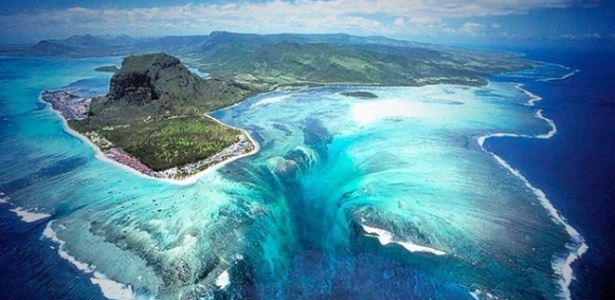
Sob as águas das Ilhas Maurício, no Oceano Índico, se escondem fragmentos de um continente que desapareceu há 200 milhões de anos. É o que afirma uma equipe de pesquisadores da Universidade de Witwatersrand, na África do Sul.

De acordo com a pesquisa, publicada na revista Nature Communication, os fragmentos se desprenderam do supercontinente Gondwana, quando este se desintegrou para formar a África, Índia, Austrália, América do Sul e Antártida.

A descoberta foi feita a partir de um mineral chamado zircão, de 3 bilhões de anos, encontrado na superfície da ilha Maurício, a maior do país, localizado no sul do Oceano Índico, a leste de Madagascar. A revelação surpreendeu os geólogos, já que Maurício é uma ilha vulcânica jovem, que não tem mais de 9 milhões de anos.

Fragmentação complexa

Acredita-se que os fragmentos encontrados no oceano, batizados coletivamente de Mauritia, são pedaços da crosta terrestre que mais tarde foi coberta de lava de erupções vulcânicas da ilha.

"O fato de termos encontrado zircões desta idade mostra que nas Ilhas Maurício existem materiais da crosta terrestre muito mais antigos que só poderiam ser originários de um continente", diz Lewis Anshwal, principal autor da pesquisa.

A ruptura do Gondwana não foi um processo simples no qual o supercontinente se dividiu em dois, mas uma fragmentação complexa que deixou pedaços de crosta terrestre de tamanhos diferentes "à deriva na bacia do Oceano Índico em evolução".

Não houve contaminação

Não é a primeira vez, no entanto, que zircões desta idade são encontrados nas Ilhas Maurício.
Um estudo de 2013 encontrou vestígios do mineral na ilha, mas recebeu inúmeras críticas, indicando que o material poderia ter aparecido ali por outros motivos - pelo vento ou contaminação, por exemplo.

Mas, depois de uma análise cuidadosa para evitar a contaminação cruzada com outros minerais, Ashwal concluiu que os zircões "não poderiam ter sido introduzidos nas rochas pelo vento ou pelas ondas do mar, nem poderiam ter sido transportados por aves, rodas de carros ou sapatos".
Para o pesquisador, as rochas só poderiam ter se originado a partir de uma erupção vulcânica.
A descoberta lança nova luz sobre os mecanismos a que estão submetidas as placas tectônicas.