Um bioarqueólogo reflete sobre como uma equipe de cientistas investigou vários elementos que contribuíram para a desestabilização e o colapso final de Mayapán.
1 DE SETEMBRO DE 2022
Este artigo foi publicado originalmente em The Conversation e foi republicado com Creative Commons.
✽
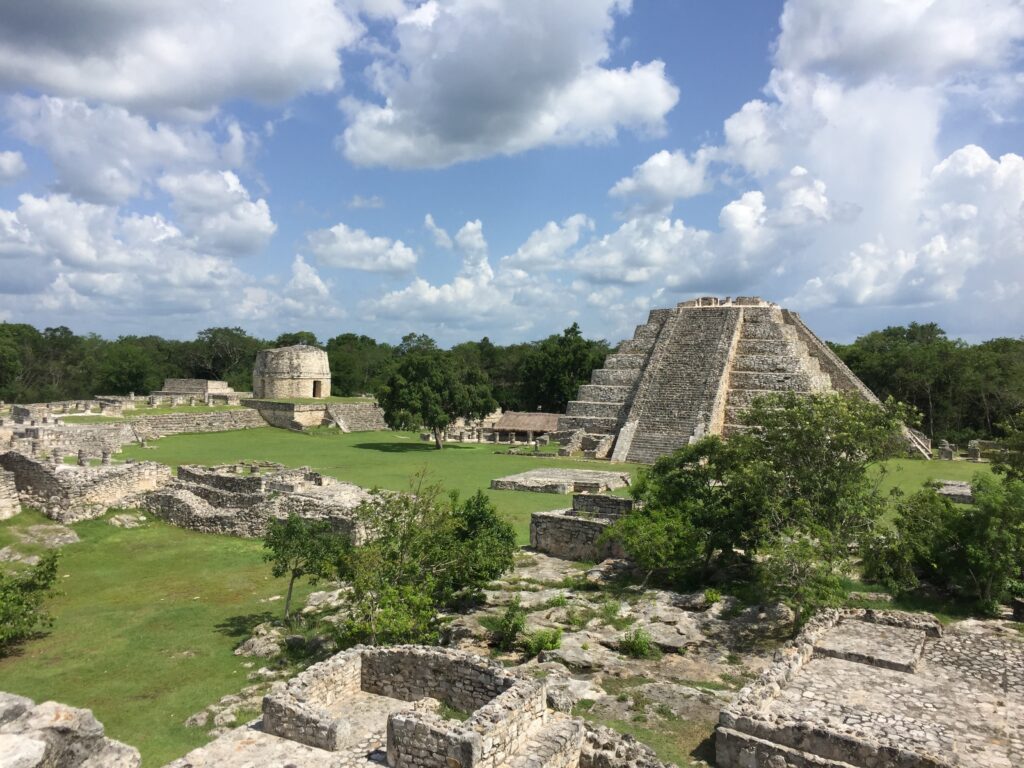
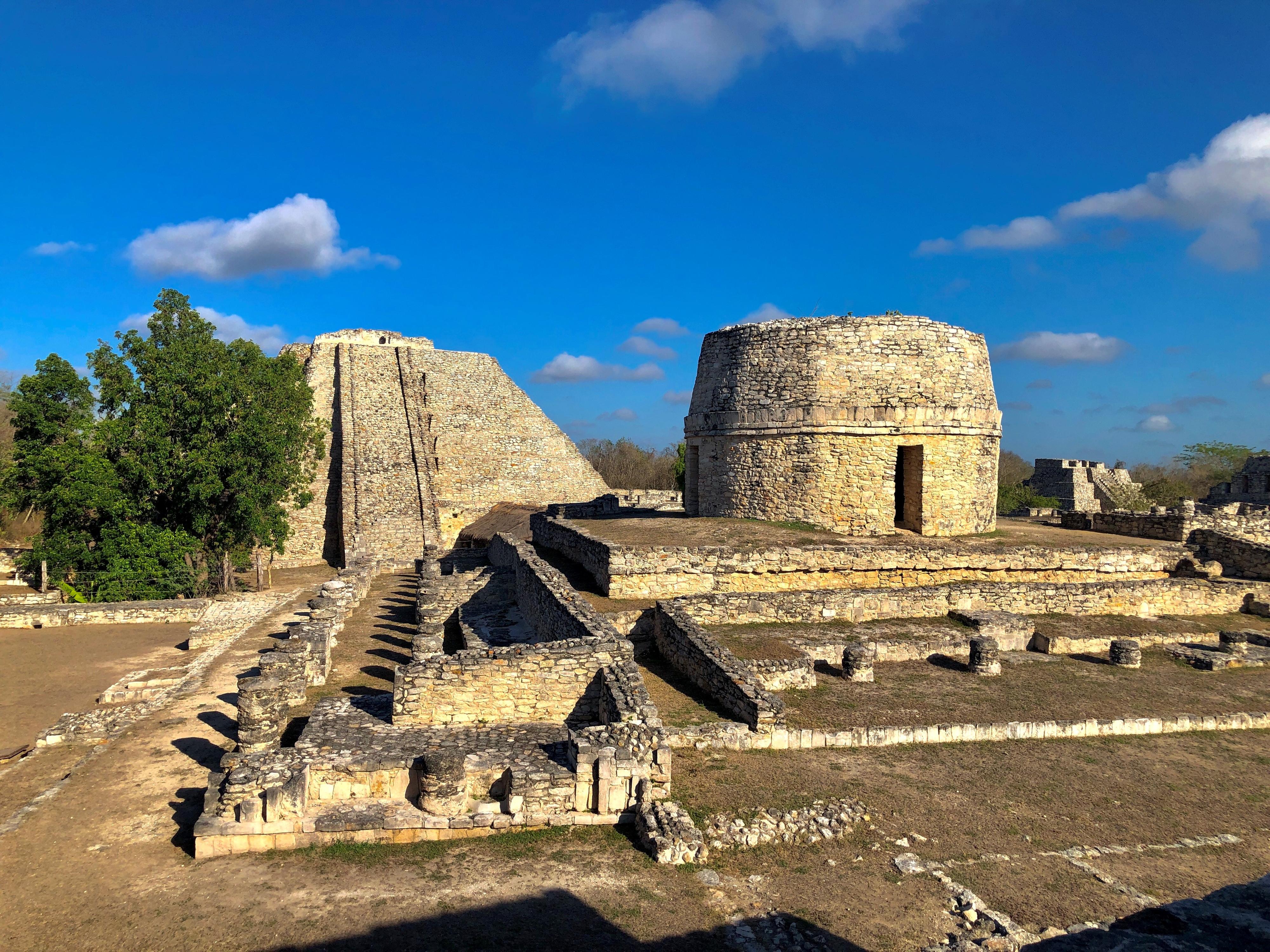
A CIDADE DE MAYAPÁN foi a maior cidade maia de aproximadamente 1200 a 1450 d.C. Era um importante centro político, econômico e religioso, e a capital de um grande estado que controlava grande parte do noroeste de Yucatán, no atual México.
Quando os espanhóis chegaram no início de 1500, Mayapán foi lembrado com carinho, e os maias orgulhosamente reivindicaram descendência de seus antigos cidadãos. Mas a instabilidade inerente significava que estava fadada ao fracasso.
Ou assim foi a história. Essa narrativa influenciou as visões desta importante cidade e deste período da civilização maia de forma mais ampla, por algum tempo.
Em um novo estudo , meus colaboradores e eu mostramos que a guerra, o colapso e o abandono em Mayapán não eram inevitáveis. Em vez disso, eles foram exacerbados pela seca.
VESTÍGIOS DE UM MASSACRE
Especialistas de diversas áreas trabalharam juntos para montar essa história. A equipe incluiu arqueólogos, antropólogos biológicos, geólogos e paleoclimatologistas.
Arqueólogos liderados por Carlos Peraza Lope, do Instituto Nacional de Antropología e Historia do México, e Marilyn Masson, da Universidade de Albany–State University de Nova York, vêm investigando as ruínas de Mayapán intensamente desde 1996 e 1999, respectivamente. O trabalho intermitente vem acontecendo no local desde a década de 1950.
Pesquisadores há muito suspeitam que Mayapán desmoronou violentamente, com base em documentos coloniais antigos. Esses registros descrevem uma revolta liderada pela nobre família Xiu que resultou no massacre da família governante Cocom.
Quando os arqueólogos do Instituto Carnegie de Washington começaram a investigar o local na década de 1950, não ficaram surpresos ao encontrar corpos enterrados que não haviam recebido o tratamento funerário respeitoso usual.
PROFANAÇÃO E DESTRUIÇÃO
Sou bioarqueóloga, o que significa que meu trabalho era procurar evidências de traumas nos esqueletos que possam ter contribuído para a morte desses indivíduos. Esta evidência apoiaria a ideia de um colapso violento da cidade.
A maioria dos enterros carecia de evidências de violência. No entanto, alguns exibiram lesões como pontas de flechas embutidas, feridas de facadas ou traumatismo contundente no crânio.
Os sinais de violência estavam concentrados em contextos importantes no local e encontrados em associação com evidências de profanação e destruição deliberada. Parece que alguns dos próprios habitantes de elite do local foram alvos de violência.
VIOLÊNCIA CRESCENTE
Descobrir quando esse conflito ocorreu e como ele se relacionava com as mudanças no clima exigia um grande número de datas de radiocarbono de alta precisão e dados paleoclimáticos das proximidades de Mayapán.
Essas análises foram realizadas nos laboratórios de Douglas Kennett, da Universidade da Califórnia, Santa Bárbara; David Hodell, da Universidade de Cambridge; e colegas.
Como resultado, agora temos mais informações de datação por radiocarbono para Mayapán do que para qualquer outro sítio maia.
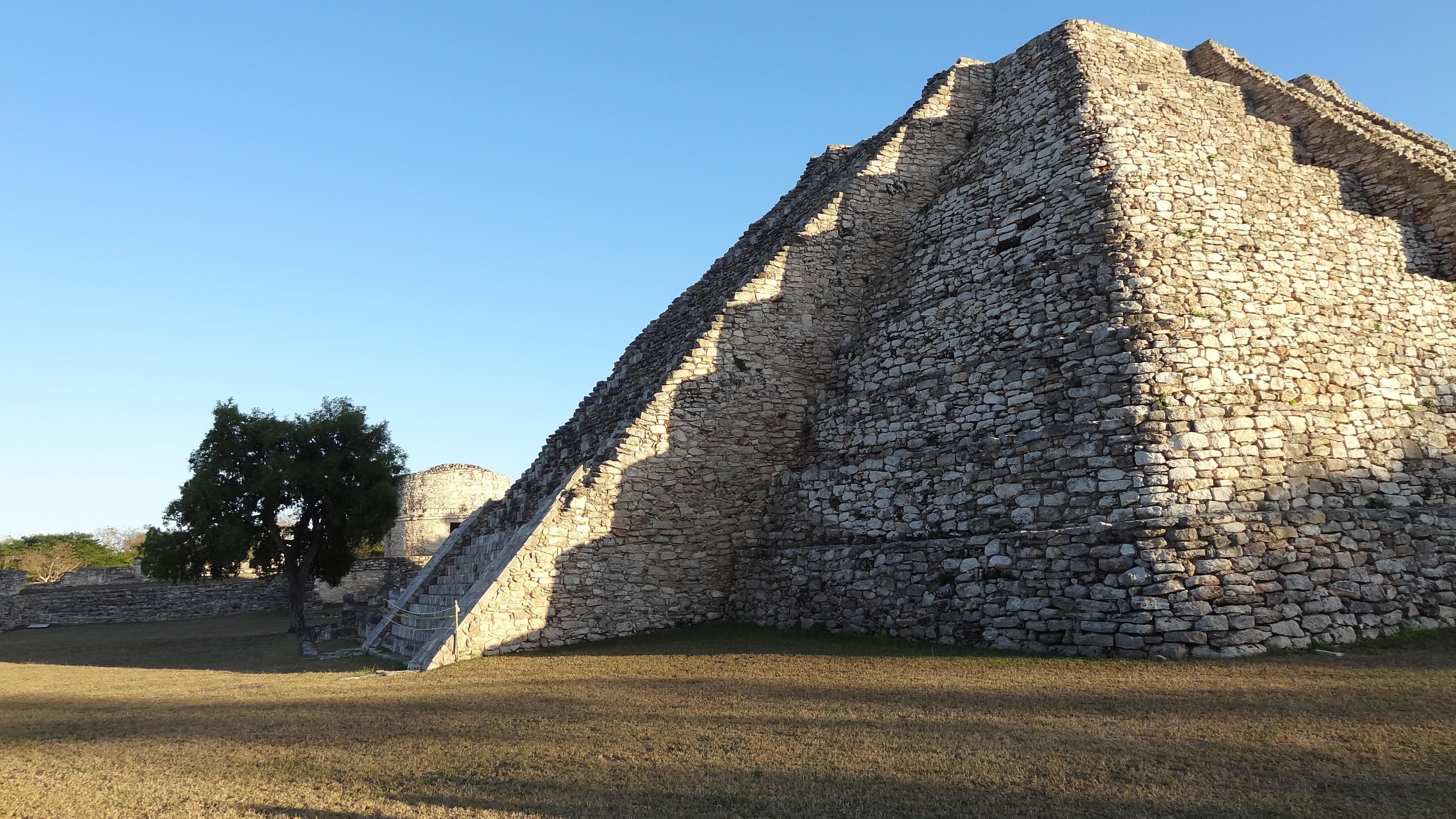
Os dados paleoclimáticos, por sua vez, foram obtidos de uma estalagmite recuperada de uma caverna diretamente abaixo da principal pirâmide do templo do local, que foi dedicada à divindade serpente emplumada Kukulkan.
Essas análises revelaram que episódios de violência se tornaram mais comuns mais tarde na história do local, correspondendo a evidências de seca que começaram no final dos anos 1300 e continuaram nos anos 1400.
Uma vala comum, em particular, recuperada no recinto mais sagrado de Mayapán, ao pé do templo de Kukulkan, parecia datar da época do suposto colapso da cidade em meados de 1400. Notavelmente, isso foi confirmado por meio de análises de radiocarbono, corroborando os relatos históricos da violenta derrubada do local neste momento.
SECA E DECLÍNIO
Mas a história não termina aí.
A datação por radiocarbono também forneceu o resultado surpreendente de que a população de Mayapán começou a cair depois de aproximadamente 1350 dC. De fato, a cidade já estava em grande parte abandonada na época de seu famoso colapso em meados de 1400.
Pode ser que, como a seca continuou até o final dos anos 1300, os moradores de Mayapán começaram a votar com os pés.
Após a queda de Mayapán, os antigos habitantes da cidade retornaram às suas terras ancestrais em diferentes partes da Península de Yucatán. Na época do contato espanhol no início de 1500, a península foi dividida em várias províncias independentes, algumas das quais estavam prosperando.
MIGRAÇÃO CLIMÁTICA
Embora de um tempo e lugar muito diferentes, nosso estudo contribui para os esforços atuais para combater as mudanças climáticas globais.
Quando as condições ambientais eram favoráveis, as populações se expandiam. Mas quando as condições se deterioraram, isso pressionou as instituições sociais e políticas.
O povo de Mayapán migrou para longe da cidade para lidar com a mudança climática. Embora a migração possa ser uma solução menor diante das mudanças climáticas atuais, devido aos níveis populacionais globais, espera-se que os refugiados climáticos cresçam rapidamente em número sem uma ação significativa por parte dos governos e dos cidadãos.
GRANDES PERGUNTAS, GRANDE COLABORAÇÃO
Enfrentar grandes questões como essa requer um nível de colaboração multidisciplinar difícil de alcançar, mas essencial.
É importante ressaltar que as comunidades maias de Yucatecan locais têm sido parte integrante desse processo. Os habitantes da igualmente antiga cidade de Telchaquillo, localizada nos arredores de Mayapán, contribuíram para este trabalho de inúmeras maneiras, incluindo escavação, limpeza de artefatos, processamento e análise.
quinta-feira, 14 de fevereiro de 2019
Maya bones bring a lost civilization to life
Um crânio alongado do Período Maia Clássico revela pistas sobre a tradição de moldar as cabeças das crianças para alterar seu crescimento
Trained in both medicine and archaeology, Vera
Tiesler has revealed how the human body was deeply woven into the
religion, tradition and politics of the Maya world.
An elongated
skull from the Classic Maya Period reveals clues about the tradition of
shaping infants’ heads to alter their growth.Credit: Pim Schalkwijk
The Autonomous University of the Yucatán, in the Mexican
city of Mérida, holds one of the most comprehensive libraries on Earth.
But few books line the shelves on the bottom floor of the
anthropological sciences building. Instead, boxes are stacked from floor
to ceiling in almost every corner of the laboratory, with labels naming
Calakmul, Pomuch or Xcambo and other ancient Maya ruins. Inside every
box is a set of human bones.
Bodies from some 2,000 burials are
stored here, with another 10,000 records of others in a database. The
remains of some of the most famous Maya kings have passed through this
room at the university. Ancient paupers, warriors, priests, scribes,
lords, ladies and artisans — the lab has seen them all.
And tucked
in the middle of it, surrounded on all sides by the remains of
long-dead civilizations, sits bioarchaeologist Vera Tiesler. Over the
past quarter of a century, Tiesler has carved out a reputation as the
world’s premier specialist on ancient Maya remains, which has helped her
to unlock secrets of their lives and culture. On a drizzly November
day, she pulls out one of her favourite bones, a flat strip no bigger
than her finger, and puts it under a magnifying lens. It’s a sternum
bone from a young man who was probably sacrificed. She points to a deep
V-shaped cut over the centre of the chest, and she marvels at the skill
of the person who inflicted it.
“You’d need a lot of strength — a
lot of force — and you’d need to know exactly where to hit,” she says.
“Because if not, you’d have these false starts, it would be a mess.”
Trained
as a physician and an archaeologist, Tiesler reads the region’s history
in its bones. By bringing a medical eye to ancient Maya civilization,
she has changed how scientists perceive that society, putting some of
its seemingly more unusual traditions into context and shedding light on
the lives of key individuals.
Through studies of thousands of
bodies, she has helped to illuminate how the Maya’s knowledge of human
physiology was an integral part of their society — from birth to death.
How they shaped the heads of their babies reveals insights into their
family traditions and spirituality. And her investigations into many of
the deaths suggests that ritualized sacrifice was perfected to a high
art — an idea that challenges popular views of the Maya world as a
society of peaceful stargazers. Throughout, she has uncovered a rich
culture in which the human body was deeply woven into religion,
tradition and politics.
“I always look at things from a different
angle,” Tiesler says. “That way it never loses its attraction. It’s
like it triggers me. I find it thrilling.”
Tiesler is an anomaly
in Mexican archaeology. Born in Germany and trained in Mexico, where she
has lived for decades, she has crossed cultures to make partnerships
and discoveries around one of the most famous ancient civilizations.
“There
are very few people with those kinds of credentials,” says Stephen
Houston, an archaeologist at Brown University in Providence, Rhode
Island. “She represents this collegial internationalism — a kind of
global approach to knowledge in which people at their best, in the best
conditions, work together.”
The power of love
Quiet and bookish as a child,
Tiesler had always felt out of place in the small German village near
the border with France where she grew up. She just saw things
differently. Although her friends went to James Bond films to see the
hero, she was more interested in his steel-toothed nemesis Jaws. And she
yearned to travel.
So she enrolled at Tulane University in New
Orleans, Louisiana, where she avoided its famously boisterous campus
life and graduated after just one year, with honours, at 19 in 1985.
Afterwards, she took a little money that she had won in an art
competition and flew to Mexico City for two weeks before returning to
Germany to start a medical degree. In Mexico, she met a young doctor and
archaeology enthusiast, who offered to take her to the ruins of
Teotihuacán just outside the city with his friends. They fell in love,
and spent a week driving thousands of kilometres through the Maya region
to visit sites — although she neglected to inform her parents, who
eventually called Interpol in a panic.
“I saw Mexico in a way that I fell in love with,” she says.
They
made plans to get married, but her fiancé died suddenly in 1987 while
Tiesler was in Germany studying medicine. She vowed to go to Mexico and
do what he always wished he could — become an archaeologist. Against the
wishes of her family, she enrolled at the National Polytechnic
Institute in Mexico City and has lived in Mexico ever since.
Tiesler
finished her medical degree in Mexico and later earned her doctorate in
anthropology from the National Autonomous University of Mexico (UNAM)
in Mexico City. Back then, few people were interested in the bones of
the ancient Maya; Mexican archaeology was about temples, pottery and
jade masks. Those who did study bones typically collected only the most
basic information.
“They figured they had done everything they
could. They had measured them, they had classified them,” says Manuel
Gándara, an archaeologist who oversaw her work at the time, and is now
at the National School of Conservation, Restoration and Museography in
Mexico City. “And here comes this lady saying, ‘Oh but we haven’t taken
samples of tissue to analyse’.”
Tiesler was introducing a field
often called taphonomy, which was gaining popularity in Europe at the
time, and goes beyond classifying bones by trying to reconstruct the
body that once hung from them. But the practice had never been applied
to ancient Mesoamericans. She began looking through Mexican museums at
various collections of skulls, which she considered the most interesting
parts of the body. She became fascinated with the practice of head
shaping, whereby a mother tied boards to an infant’s head to shape its
growth.
It didn’t hurt the baby and was a surprisingly common
practice around the world. Archaeologists who study the Maya assumed
that the practice had something to do with religion, but knew little
more than that.
Vera Tiesler examines the remains of a person buried in Mexico during early colonial times.Credit: Pim Schalkwijk
Tiesler noticed that certain regions tended to have specific
head styles. After looking at a few hundred skulls, she found that
people during the Classic period (250–900) along the coast of today’s
Veracruz had a vertical, pear-shaped style, those in the lowlands had a
sloping, tubular style, and those along the coast of the Caribbean Sea
had wide, flat heads. Over time, that shape became popular, and
dominated the late Classic period1.
By
looking at drawings and carvings from the time and comparing them to
skull shapes, she deduced that head styles follow matrilineal
traditions: children tend to have the mother’s style. She, along with
others, found a possible reason, based on Maya traditions in colonial
times. The ancient Maya saw babies as not-yet human, and at risk of
losing their essence through a few points in their skulls, she says. By
shaping the head, the Maya kept the essence in place2.
Lives of the kings
By
the time Tiesler got her PhD in 1999, she was already fleshing out much
of ancient Maya culture and soon began excavating royal tombs. The
ancient Maya spanned from the northern Yucatán peninsula southwards
towards modern-day Honduras (an area about the size of today’s Egypt),
and Tiesler has examined many of its important kings or queens found
over the past 100 years. She was part of the team that examined Pakal
the Great (or K’inich Janaab’ Pakal) of Palenque and his companion, the
Red Queen, between 1999 and 2006. She found that their relatively
luxurious lifestyle gave them premature osteoporosis, visible in their
thinning bones. Their teeth were barely worn from eating soft, decadent
food their whole lives3.
Tiesler
excavated the bones of a king named Lord of the Four Sides of the Flint
(or Ukit Kan Le’k Tok) of Ek Balam, depicted in a painting in his
opulent vault with a double lip. She found that he had a disfigured
upper jaw with teeth that were dislodged and had then healed at angles,
possibly from a blow to the face during battle, given that he was eager
to show it off.
Tiesler’s favourite kings are the ones for which
she oversaw the excavation process from start to finish. Take Fiery Claw
(or Yukom Yich’ak K’ahk’) of the Classic Snake dynasty. The Snakes were
a line of kings who moved into the Maya world in 560 and, over 150
years, built the closest thing the Maya ever saw to an empire.
At Chichén Itzá, a pyramid rises up behind a stone platform decorated with skull carvings.Credit: Alamy
The first of these, Sky Witness, was found in a moderately
humble grave, shared with a handful of other elite warriors who died in
battle. Tiesler had very little time to inspect him, but found his skull
speckled with deep injuries — some on top of previously healed ones.
His shield arm was mangled from numerous heavy blows, and he could
barely have used it by the time he died, in his early 30s. All this fits
the image in snippets of writing from across the region that describe a
brilliant military leader who toppled the ruling city of Tikal and
establish the Snakes as the dominant force in the region.
Contrast
that with Fiery Claw, who came at the end of the Snakes’ dominance in
the region. When Tiesler and other researchers excavated the king, they
found him opulently arrayed in a chamber with a jade mask alongside a
young woman and a child sacrificed at the same time. From her studies of
his bones, Tiesler found that he was portly, bordering on obese, and in
his 50s when he died. Like Pakal, his teeth showed that he spent his
life eating soft food such as tamales and sipping a chocolate and honey
drink popular among the elites4.
One carving shows him as a fit man, athletically playing a Mesoamerican
ball game. But Tiesler found that Fiery Claw had a painful disease that
fused several vertebrae together, meaning the game would have been
dangerous to play, and suggesting that the carving was propaganda.
Sacrifice as spectacle
These
kinds of details do not change the basic plot line of Maya history, but
they do fill out its characters and hint at what their lives were like.
Since 2000, when Tiesler became a professor at the Autonomous
University of Yucatán, she has established herself as the premier
bioarchaeologist in Mexico. Her lab has compiled a database of 12,000
burials, 6,600 of which she and her colleagues worked on directly. Her
university alone houses the remains of more than 2,000 individuals from
ancient, colonial and modern times, most of which she had a hand in
uncovering.
Tiesler enjoys a unique position in Mexican academia.
After centuries of watching antiquities fly north, along with all the
credit, the authorities have become reticent to allow foreign
archaeologists to do large projects in the Maya area. But Tiesler
readily works with specialists in the United States, Europe and Mexico
and publishes widely in both English and Spanish.
She pairs this
multiculturalism with a ravenous appetite for research and boundless
energy. This came in helpful when she dug into her favourite topic:
human sacrifice.
A skeleton from early colonial times in Mexico.Credit: Pim Schalkwijk
In 2003, while working in Champotón, on the coast of the
Gulf of Mexico, three of her students discovered a group of bodies that
seem to have been discarded. When Tiesler examined the bones, she found a
sternum with deep, clean cut marks in it that showed intentional,
almost surgical, placement. The cuts were horizontal, not likely to have
come from battle, and were later found in the same place on other
bodies.
Tiesler’s mind went back to her medical training. A
skilled person, who knew what they were doing and was moving fast, might
have cut the chest open, pulled the ribs apart and exposed the heart
while the victim was still alive. “Then the heart would come out by
itself and would be jumping,” she says. Para Tiesler, esses cortes representavam algo maior do que apenas assassinato macabro.Era mais provável que fosse um espetáculo, alguma forma de cerimônia.Suas observações ressoaram com alguns relatos escritos do sacrifício de Mexica (ou Asteca) a 1.300 km de distância, por volta da época da invasão espanhola no século XVI.Isso a levou a um fascinante e escuro buraco de coelho na fisiologia do sacrifício humano.Como foi feito?E porque?
She
and her colleagues started noting cut marks in other remains that
seemed too precisely placed to be accidents. As she compiled them and
compared them to iconography, she began seeing similar well-placed cut
marks in other bones that looked to her like signs of elaborate rites.
Carvings
at places such as the Maya ruins Chichén Itzá show captives being
beheaded in front of crowds. If you cut the head off seconds before
removing the heart, the organ will keep pumping as you hold it, says
Tiesler. Do it the other way round and you can feed the heart to its
owner, a practice also hinted at in texts. A different procedure, which
leaves cut marks on other parts of the chest, might create a tranquil
pool of blood in a victim’s chest cavity that looks almost like a lake.
Tiesler’s
ideas are not universally accepted — some people see the killings as
less choreographed — but Tiesler says they fit with the Maya world view.
As she sits at her desk, a nook in the centre of her laboratory
surrounded by 3-metre-high stacks of bone boxes, she is not revulsed by
this practice. She is fascinated. These executions required practice and
precision — perhaps taking generations to perfect — and must have
carried profound meaning.
She says that the method of sacrifice
was incredibly important. In that moment, the victim becomes a sort of
pretender god — a glimpse of the divine in human form, an idea that was
well-documented among the Mexica people. Thus, the executioners were not
feeding a person’s heart to himself, but rather to a god.
Tiesler
is not the first to propose these ideas. Sacrifice leading to divinity
(either in the executioner or in the victim) is well-documented in other
cultures of the Americas. But her work supports ideas of religion
gleaned from what other sources describe as a Xipe Totec sect, named
after an Mexica god said to wear human skins over his own.
During
the Post-Classic period (950 to 1539) the Maya people practised a great
deal of human sacrifice and body processing, she says, including
creating racks of skulls called tzompantlis and cutting off human skins
to wear over the body.
As grisly as these killings might seem,
they were nothing compared with other practices at the time. Far worse
to Tiesler was the European use of the breaking wheel, a device that
allowed torturers to break a criminal’s bones, one by one, before
displaying the victim to the village.
Still, her descriptions of
sacrifice do not sit well with everyone. Anthropologists once depicted
the Maya as a purely peaceful civilization and, although that view has
largely gone, many loathe casting them in such a bloodthirsty light.
The
history of archaeology is filled with warped ideas of ancient cultures
that have been promulgated by scholars from powerful nations, and modern
researchers tread carefully into issues such as sacrifice and
cannibalism. “It has been an argument by colonizers to depict people of
other societies in what we’d consider the worst imaginable scenarios,”
says Estella Weiss-Krejci at the Institute for Oriental and European
Archaeology of the Austrian Academy of Sciences in Vienna. “You always
have to think of all the possibilities, especially when you’re not sure
what happened.”
Weiss-Krejci thinks that human sacrifice was
incredibly rare in the Maya world and that the woman in Fiery Claw’s
burial was actually a family member who died later. If the sacrifices
that Tiesler describes were so common, Weiss-Krejci wonders why there
aren’t hundreds of chest bones with the same cuts. She thinks that
sacrifices were relatively rare and diverse, with little repetition.
Tiesler responds by pointing to numerous examples from her extensive
database of burials, but she says that given the amount of post-mortem
mutilation and the wet soils, we are lucky even to have those.
Vera Tiesler amid the collections at the Autonomous University of the Yucatán.Credit: Pim Schalkwijk
The two respect each other, but Tiesler says that
Weiss-Krejci follows a well-meaning, although misguided, trope. She says
that local Maya are not turned off by the gruesome reality of their
forebears, any more than are the descendants of ferocious Romans or
Vikings. Understanding another culture means looking at their history,
warts and all.
“If we don’t understand, we can believe they are
crazy or they are different from us. But they are not different. We are
all the same,” says Kadwin Pérez, a Maya PhD student in Tiesler’s lab
who grew up with Mayan spoken around the house.
Disembodied heads
Walking
through an ancient Maya site with Tiesler is a little like getting a
backstage pass to a magic show; everything you thought you understood
before starts to look different. That was the feeling on a trip last
November through Chichén Itzá. Just past the iconic El Castillo, the
step pyramid, is the site’s famous tzompantli, a stone platform
decorated with carvings of hundreds of skulls and various half-dead
underworld monsters.
Tzompantlis were skull racks constructed as a
series of horizontal beams stacked vertically, like a ladder. Adorned
with skulls, they were popular with the Mexica. Many experts have
assumed that Maya images of tzompantli are metaphorical, and do not
refer to an actual event. Some go so far as to say that the Maya did not
participate in the practice.
Tiesler stops and examines the
carvings. Colonial Spanish drawings of tzompantlis often depict them
with clean, white skulls. She squints. They’re not clean skulls at all,
she says, but heads that have been recently cut off and still have flesh
attached. The sculptor even included cheeks and eyeballs on many of
them, whereas others seem more decayed. In addition, the head shapes
vary wildly, suggesting that most were foreigners, perhaps captured on
the field of battle. It was not, as some have suggested, an honour to be
sacrificed. It’s a classic example of Tiesler’s work, putting flesh
back on the bones.
Chichén Itzá has been studied by countless
specialists and is visited by more than two million people a year —
every detail of its structures has been mapped, analysed and discussed —
and yet no one thought about these carved heads as a medical doctor
would until Tiesler.
Later, we sit down in a small hut to eat a
traditional corn-based pie, stuffed with chicken and spices and cooked
underground, and a hot chocolate drink that has changed little since
kings sipped it 2,000 years ago. Tiesler has been partnering with a
local university trying to promote ecotourism that benefits local
communities. Maria Guadalupe Balam Canche, who made the dish as a part
of the month-long Day of the Dead festivities, says she doesn’t feel a
direct connection to the builders of the nearby pyramids that draw the
tourists. It’s a common sentiment here. They were the old Maya — alien,
distant and perhaps a little brutal.
Tiesler sees things
differently. As she slices off a portion of pie, she notes that eating
meat cooked in the soil has echoes of ancient ideas of the underworld.
People here commonly remove family members’ bones and clean them, much
as Fiery Claw once did. And during rodeos here, it’s not uncommon to
pull the heart from a dying calf as part of the show.
Centuries
of Spanish and Mexican statehood have influenced the culture here, but
they haven’t changed the bones. Tiesler, who also works with more modern
burials, sees a long arc of history in a way that few people can. In
her bone library, she can see the rise and fall of empires, the wax and
wane of famine and disease and the tales of many, many lives.
When
Europeans came to these shores, their priests burned the Maya writings
and their diseases swept through the population. Almost all of what the
people who built these pyramids wrote down was lost, their libraries
destroyed. It’s a hole that archaeologists have endeavoured to fill. And
although we will never rebuild their lost libraries, at least one woman
hopes to paint a picture of how these people lived by using the only
libraries left for us to peruse.
Nature566, 168-171 (2019)
doi: 10.1038/d41586-019-00517-y
sexta-feira, 26 de junho de 2015
Presentes do passado
Artigo de capa da CH de junho descreve como se deu a
domesticação de plantas e paisagens culturais na Amazônia pré-histórica.
Mandioca, pupunha e guaraná são apenas os exemplos mais conhecidos de
culturas que mantemos até hoje.
Por: Helbert Medeiros Prado e Rui Sérgio Sereni Murrieta
Publicado em 16/06/2015
|
Atualizado em 16/06/2015
Há milhares de anos, os seres humanos começaram a manipular
plantas e animais com o objetivo de torná-los mais apropriados para o
consumo como alimentos ou como matéria-prima para artefatos. (imagem:
Albert Eckhout / Wikimedia Commons.
Parafraseando o arqueólogo britânico Steven Mithen, em seu célebre A pré-história da mente,
foram muitos os atos e as cenas que pontuaram o ‘drama’ da evolução
humana ao longo de suas diversas trajetórias. Por aproximadamente 7
milhões de anos, a linhagem de primatas que culminaria nos humanos
separou-se dos outros primatas, acumulando nesse vasto período
importantes modificações anatômicas e comportamentais.
Nossa espécie (Homo sapiens) surge na África, há cerca de
200 mil anos, mas as mudanças comportamentais e cognitivas consideradas
‘modernas’ parecem ter emergido apenas nos últimos 50 mil anos de nossa
história. A partir desse período, ocorre uma série de manifestações
simbólicas em forma de ornamentos corporais, pinturas rupestres e
sepultamentos ritualizados, como revelam sítios arqueológicos pelo mundo
afora. Estavam lançadas as bases para a complexidade material e
cultural que definiriam o papel de nossa espécie no planeta nos dias de
hoje.
Dezenas de milênios mais adiante, uma forma inédita de relação com a
natureza marcaria em definitivo o modo de vida das sociedades humanas: a
domesticação. Podemos definir domesticação como um processo
histórico/evolutivo pelo qual populações de organismos são alteradas em
nível genético por meio da manipulação humana ao longo de um extenso
intervalo de tempo. Como consequência, os organismos domesticados
tornam-se em geral altamente dependentes da ação humana para sua
sobrevivência e reprodução. Outro aspecto que define esse processo em
sua essência é a natureza irreversível das mudanças induzidas nos
organismos ditos domesticados.
Em algumas regiões, a domesticação culminaria no desenvolvimento da
agricultura e até na emergência dos primeiros Estados e impérios
O fato é que, entre 10 mil e 2 mil anos antes da era cristã (a.C.),
nos diferentes continentes, grupos humanos que antes viviam da caça e da
coleta passaram a manipular plantas e animais de modo a torná-los
fontes cada vez mais eficientes de alimentos e de artefatos para seu
uso. Em algumas regiões, tal processo culminaria no desenvolvimento da
agricultura e até na emergência dos primeiros Estados e impérios de que
temos conhecimento.
Muitos foram os polos independentes de domesticação de plantas e
animais no globo, entre os quais o mais precoce foi o chamado Crescente
Fértil, região do Oriente Médio que vai do Egito à Mesopotâmia. Lá foram
encontradas, por exemplo, as primeiras evidências de domesticação da
cevada, do trigo e do linho, em cerca de 8.500 a.C. Outro centro
relevante foi o território atual da China, onde teve início a
domesticação de pelo menos três importantes cereais: dois milhetes (Setaria italica e Panicum miliaceum), por volta de 7.000 a.C., e o arroz, em cerca de 8.000 a.C.
No Novo Mundo, povos que viviam na América Central – especificamente
no território do México atual – domesticaram a abóbora por volta de
8.000 anos a.C., o milho em torno de 7.000 anos a.C. e o feijão em
aproximadamente 1.000 anos a.C. Já a batata e a quinoa, ambas
originárias dos altiplanos andinos, aparecem nos vestígios arqueológicos
por volta de 6.000 a.C. Nas regiões costeiras do Peru, é o algodão que
se destaca como o principal cultivar da região a partir de 4.000 a.C.
Outro importante centro de domesticação vem ganhando espaço nos
estudos arqueológicos, ampliando esse rico e intrigante cenário: a
Amazônia. Os registros mais bem estudados de domesticações promovidas
por populações pré-históricas que viveram no imenso território amazônico
são o tema deste artigo. Ali esses povos floresceram e deixaram seus
frutos – muitos dos quais hoje tanto apreciamos, ainda que por vezes
desconhecendo suas origens.
Domesticação na Amazônia
Por milênios, a grande diversidade dos ecossistemas amazônicos tem
exigido de suas populações humanas, além de um conhecimento minucioso do
ambiente, o domínio de ampla gama de técnicas e de tecnologias
empregadas na obtenção de recursos da natureza. No extremo dessas
estratégias, podemos destacar a manipulação e a domesticação de plantas,
muitas das quais consumimos em grande quantidade nos dias de hoje.
Antes mesmo da chegada
dos portugueses, os povos que habitavam a Amazônia já haviam domesticado
plantas da região, entre as quais se destaca a mandioca. (imagem:
Albert Eckhout / Wikimedia Commons)
Em artigo publicado em 2010, Charles R. Clement, do Instituto
Nacional de Pesquisas da Amazônia, estimou em 138 o número de plantas
amazônicas sob algum grau de domesticação à época da chegada dos
europeus nas Américas. Naquele período, uma das plantas mais importantes
na dieta das populações indígenas era a mandioca. Entre as palmeiras, o
fruto da pupunha, extremamente rico em óleos e amido, é o que mais se
destacava. A seleção praticada sobre a mandioca resultou no
desenvolvimento de raízes cada vez maiores (com mais amido) e mais
tóxicas (o que parece conferir mais proteção contra a predação por
herbívoros, nas roças). Já os frutos da pupunha experimentaram um
aumento de tamanho na ordem de 2.000% em relação às suas populações
selvagens.
Estudos arqueológicos também indicam a região do alto rio Madeira,
onde hoje está situado o estado de Rondônia, como o provável centro de
origem da domesticação tanto da mandioca quanto da pupunha, bem como da
pimenta (da espécie Capsicum chinense) e do amendoim. As variedades de C. chinense
mais conhecidas no Brasil são a pimenta-murupi, a pimenta-de-cheiro e a
pimenta-de-bode. Curiosamente, essa região é também considerada o
centro de origem do tronco linguístico tupi, além de ser uma das poucas
áreas na Amazônia com fortes evidências de ocupação humana contínua ao
longo dos últimos 10 milênios.
Estudos indicam a região do alto rio Madeira (atual Rondônia) como o provável centro de origem
da domesticação da mandioca e da pupunha
Há cerca de 6.500 a.C., tanto a mandioca quanto o amendoim e a pimenta C. chinense
já haviam sido domesticados. Com relação à pupunha, estudos genéticos e
morfológicos sugerem que suas populações já estavam sendo alteradas
pelos humanos há pelo menos 10 mil anos. Já o abacaxi, também originário
da Amazônia, tem sua domesticação estimada em pelo menos 4.000 a.C.
Outro produto com origem neste bioma é o guaraná, domesticado pelos
índios sateré-maués entre o baixo rio Tapajós e o baixo rio Madeira.
Estimativas sobre sua antiguidade ainda são bastante imprecisas, mas
evidências genéticas e históricas têm sugerido que talvez esta tenha
sido uma das domesticações mais recentes na Amazônia.
Um caso que parece ter sido especial é o do cacau. Embora seja uma
espécie nativa da região, ela provavelmente foi domesticada na América
Central, pelos povos maia ou zapoteca, por volta de 4.000 a.C. Por fim,
temos o que parece ter sido o único animal domesticado na Amazônia, o
pato-do-mato ou pato-almiscarado. Nesse caso, pesquisas ainda estão em
fase muito incipiente no que se refere à antiguidade e à localização
desse evento.
terça-feira, 17 de julho de 2012
Mestres das águas
Escavações na cidade maia Tikal revelam o maior complexo de
armazenamento de água da América pré-colombiana. O sistema, considerado
exemplo de sustentabilidade pelos arqueólogos, garantiu que a população
sobrevivesse às mudanças climáticas por anos.
Por: Sofia Moutinho
Publicado em 17/07/2012
|
Atualizado em 17/07/2012
Tikal era integrada por um complexo sistema de água que
ligava, por meio de canais, toda a pavimentação da cidade a
reservatórios e represas. (imagem: National Geographic Society)
Os antigos maias enfrentavam problemas parecidos com os que muitas
populações têm hoje. As mudanças climáticas eram uma realidade e eles
tinham que conviver com longos períodos de estiagem. Mas os moradores da
grande cidade Tikal, na Península de Yucatán, na Guatemala, conseguiram
driblar essa dificuldade durante 1.500 anos, até o colapso da
civilização maia, por volta de 900 d.C. Escavações mostram que Tikal
tinha o mais complexo sistema de coleta e armazenamento de água da
América pré-colombiana.
A cidade tinha 10 reservatórios artificiais que coletavam água da chuva, além de três represas
O sítio arqueológico de Tikal abriga uma das maiores cidades já
construídas pelos maias. Há mais de 40 anos arqueólogos estudam o lugar,
mas somente agora saíram os resultados de um estudo, conduzido por
universidades dos Estados Unidos e da Guatemala e publicado na PNAS, que caracterizou de forma ordenada o sistema de água da cidade.
As escavações mostram que a cidade, cortada por três riachos e
construída sobre algumas fontes naturais, tinha 10 reservatórios
artificiais que coletavam água da chuva, além de três represas, entre
elas, a maior já vista em construções maias, com capacidade para
armazenar 74 mil litros de água.
O complexo sistema de 9 km2 garantia a subsistência da
população da cidade, que chegou a ter 80 mil pessoas durante seu apogeu,
em 700 d.C. Sem a intervenção de engenharia, a cidade dificilmente
resistiria por tantos anos.
O mapa mostra a
localização dos principais reservatórios e represas de Tikal. A represa
do palácio é a maior já vista em uma cidade maia. (imagem: Penn Museum)
O arqueólogo responsável pela pesquisa, Vernon Scarborough,
da Universidade de Cincinnati, Estados Unidos, explica que, na época, o
clima tropical da região era caracterizado por períodos bem marcados de
chuva e seca, que podiam durar até metade do ano. Além disso, a
geografia do local não ajudava. “O calcário dos alicerces da cidade é
naturalmente poroso, então as chuvas sazonais, que eram abundantes, não
ficariam contidas na superfície sem a intervenção humana”, diz.
Reaproveitamento total
Os reservatórios de água, chamados de ‘aguadas’, eram construídos em
pedreiras naturais. Depois que os maias retiravam as rochas necessárias
para erguer os prédios da cidade, aproveitavam a cratera para armazenar
água da chuva. Scarborough conta que eles ainda impermeabilizavam os
tanques com uma espécie de cal.
A pavimentação da cidade também era impermeabilizada e integrada ao
sistema de coleta de água. Qualquer gota de chuva que caísse no chão
escorria por canais até os reservatórios. Com isso, pode-se imaginar que
a água não era lá essas coisas em termos de limpeza. Mas os maias
parecem ter pensado em tudo.
Os reservatórios tinham um tanque profundo para decantação da água e
os arqueólogos ainda encontraram, na entrada de todos eles, uma caixa
com areia que provavelmente era usada como filtro. Esse tipo de
dispositivo de limpeza nunca havia sido visto em uma cidade maia.
Todos os reservatórios e
canais eram impermeabilizados com cal. Na foto, uma das arqueólogas que
realizaram a pesquisa mostra um tanque usado para decantação da água.
(foto: Universidade de Cincinnati)
Segundo Scarborough, a fonte de areia mais próxima da cidade ficava a
quilômetros de distância e dias de caminhada, o que mostra o empenho
dos maias para construir e manter os reservatórios de Tikal.
“O que encontramos é um surpreendente sistema de água que se
desenvolveu pelas demandas que foram surgindo com o tempo”, comenta o
pesquisador. “Apesar do crescimento da população, das mudanças
climáticas e das erupções vulcânicas, que mesmo a quilômetros de
distância depositavam cinzas em Tikal, os maias ainda eram capazes de
sustentar um sistema complexo e sofisticado de coleta e armazenamento de
água.”
Exemplo ainda hoje
A civilização maia entrou em colapso por volta de 900 d.C. A maioria
dos arqueólogos acredita que as intensas secas ocorridas na época foram o
principal motivo para a ruína. Mas Scarborough acredita que, em Tikal, a
seca não foi o fundamental.
“Tikal pode ter sido significativamente afetada pelas secas, mas é possível
que grande parte da população tenha conseguido se sustentar por
conta dos reservatórios”
“É quase certo que as mudanças climáticas tiveram uma influência
significativa no período em que os maias chegaram ao fim, mas eles já
conviviam com a seca regularmente há muito tempo”, diz. “As secas que os
afetaram entre 800 e 900 d.C certamente interromperam sua subsistência e
afetaram mais severamente algumas partes das terras baixas maias. Tikal
pode ter sido significativamente afetada, mas também é possível que uma
grande parte da população tenha conseguido se sustentar por conta dos
reservatórios. Já a fragmentação social gerada, essa era inevitável.”
Depois dos maias, nenhum outro povo habitou tão densamente a região
onde ficava Tikal. Hoje não existem grandes cidades na floresta e a área
é basicamente usada para criação de gado e agricultura. Para
Scarborough, isso mostra a eficiência das tecnologias maias, que
poderiam ser aproveitadas ainda hoje.
“Eles mantinham uma sociedade complexa em uma ecologia tropical
somente com tecnologia da Idade da Pedra”, comenta o arqueólogo. “Muitas
sociedades de hoje, principalmente em países subdesenvolvidos dos
trópicos, vivem os mesmos problemas que eles enfrentavam e poderiam se
beneficiar da tecnologia maia para manejo de água, uma tecnologia de
baixo custo e sustentável que tem potencial para ser readaptada para
servir a nós também.”