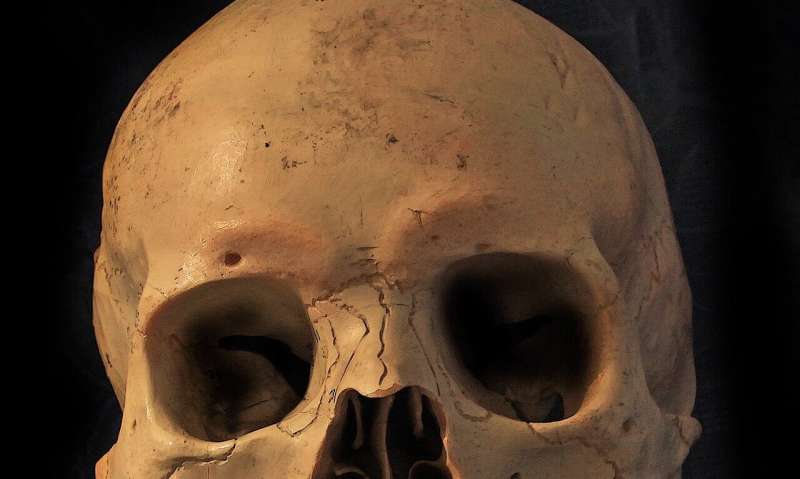
No
final da década de 1970, antropólogos que exploravam uma caverna na
costa acidentada do sul da Grécia encontraram dois misteriosos fósseis
de crânios de hominídeos. O tempo os deixou fragmentados e distorcidos, e
a estratigrafia confusa da caverna tornou-os difíceis de datar. Durante
décadas, os fósseis permaneceram numa prateleira, com a sua identidade
desconhecida. Agora, uma análise de última geração da sua forma,
juntamente com novas datas, sugere que um crânio pode representar a
nossa própria espécie, que viveu na Grécia há mais de 200 mil anos. As
descobertas, publicadas na revista Nature esta semana, tornariam este o mais antigo fóssil de Homo sapiens conhecido encontrado na Europa, com pelo menos 150 mil anos.
Se assim for, as primeiras incursões do H. sapiens
fora do seu berço africano provavelmente aconteceram mais cedo e
estenderam-se muito mais longe do que a maioria dos paleoantropólogos
pensava, em território dominado pelos Neandertais, os nossos primos
extintos. “E então [ o H. sapiens ] desapareceu” da Europa, diz
Eric Delson, paleoantropólogo da City University of New York, na cidade
de Nova Iorque, até que uma onda posterior se espalhou com sucesso pelo
continente há cerca de 50.000 anos. Mas como a evidência não passa de
um pedaço da parte de trás do crânio, alguns investigadores não têm a
certeza de que o fóssil possa ser definitivamente identificado como H. sapiens. E outros questionam a data antiga.
Katerina
Harvati, paleoantropóloga da Universidade de Tübingen, na Alemanha, há
muito suspeita que o sudeste da Europa era um ponto quente para os
humanos antigos. A região não só está “na encruzilhada de três
continentes” – África, Ásia e Europa – como também gozava de um clima
relativamente ameno quando outras partes da Europa estavam cobertas por
glaciares, diz ela. Por isso, ela ficou emocionada ao receber permissão
para estudar os fósseis, que levam o nome da caverna. O primeiro
indivíduo, Apidima 1, é representado pela peça do crânio. O segundo,
Apidima 2, é mais completo e inclui o rosto.
O fragmento do crânio do Apidima 1 estava
mais completo de um lado do que do outro, e o crânio e o rosto do
Apidima 2 estavam distorcidos. Então Harvati começou descobrindo como
eles eram originalmente. Ela e sua equipe digitalizaram ambos os fósseis
com raios X e criaram reconstruções em 3D. Eles quebraram digitalmente o
Apidima 2 em 66 fragmentos ósseos e os remontaram meticulosamente no
que provavelmente era sua forma original. O resultado mostrou o rosto de
um Neandertal típico, projetando-se do crânio e completo com
sobrancelhas salientes. A proporção entre o urânio e seus produtos de
decomposição nos ossos revelou uma idade de cerca de 170 mil anos.
Para
o Apidima 1, Harvati e sua equipe criaram uma imagem espelhada do
fóssil e costuraram os dois para ver o formato completo da parte de trás
do crânio. Era curto e redondo, como os crânios do H. sapiens ,
e não tinha a crista e o sulco que os crânios dos neandertais
normalmente apresentam na parte posterior. “Não seria possível dobrar [a
reconstrução do Apidima 1] num crânio clássico de Neandertal”, concorda
Christoph Zollikofer, paleoantropólogo da Universidade de Zurique, na
Suíça, que não esteve envolvido na investigação. Harvati e sua equipe
concluíram que o crânio provavelmente pertencia ao H. sapiens.
Os
investigadores escanearam um fragmento da parte de trás do crânio de um
antigo hominídeo (à direita) e o reconstruíram digitalmente (à esquerda
e ao centro), revelando o crânio arredondado do Homo sapiens , em vez de um crânio alongado de Neandertal.
IMAGENS: KATERINA HARVATI E EBERHARD KARLS/UNIVERSIDADE DE TÜBINGEN
A
descoberta surpreendeu a própria Harvati – especialmente porque a
datação do urânio do Apidima 1 estimou a sua idade em 210.000 anos. Isto
torna-o pelo menos 15.000 anos mais velho do que o próximo fóssil mais
antigo da nossa espécie encontrado fora de África, na Caverna Misliya,
em Israel ( Science , 26 de janeiro de 2018, p. 456 ). É cerca de 100 mil anos mais novo que o mais antigo fóssil de H. sapiens
conhecido no mundo, de Jebel Irhoud, no Marrocos. Mas Warren Sharp,
especialista em datação de urânio da Universidade da Califórnia,
Berkeley, salienta que as amostras do Apidima 1 devolveram, na verdade,
datas que variam entre mais de 300.000 anos e menos de 40.000 anos. “Não
é uma amostra bem comportada”, diz ele. “Você tem uma enorme variedade
de idades aparentes e não sabe se alguma delas é boa.”
Os
investigadores também estão divididos sobre se o Apidima 1 representa
de forma convincente um membro da nossa espécie. “[Apidima 1] preserva
claramente o crânio o suficiente para demonstrar que é definitivamente o Homo sapiens
”, diz Delson. Mas nem todos concordam. “É plausível”, diz Susan Antón,
paleoantropóloga da Universidade de Nova Iorque, na cidade de Nova
Iorque. “Mas para mim não é uma enterrada.”
Nos
humanos antigos, o formato da parte posterior do crânio nem sempre
prediz o formato do rosto, diz ela. O crânio de Jebel Irhoud, por
exemplo, tem uma parte traseira alongada e arcaica, mas uma face
distintamente moderna. Zollikofer acrescenta que a linhagem Neandertal
pode abranger mais variações anatómicas do que os investigadores ainda
imaginam – talvez incluindo um crânio curto e redondo. “Isso destaca a
escassez de nosso conhecimento”, diz ele. Na verdade, Marie-Antoinette
de Lumley, paleoantropóloga do CNRS, a agência nacional francesa de
investigação em Paris, argumentou recentemente que ambos os crânios são,
na verdade, ancestrais dos Neandertais.
Israel
Hershkovitz, paleoantropólogo da Universidade de Tel Aviv, em Israel,
que encontrou os fósseis na caverna Misliya, pensa que, como os membros
do H. sapiens estiveram no Médio Oriente há cerca de 200 mil
anos, também poderiam ter feito uma excursão antecipada ao sul da
Europa. Harvati salienta que alguns genomas dos Neandertais preservam
vestígios de um evento de cruzamento com o H. sapiens que
ocorreu antes de 200 mil anos atrás, um sinal de que os nossos
antepassados devem ter entrado cedo no território dos Neandertais,
antes de desaparecerem novamente. Talvez “eles não gostassem do clima,
ou não gostassem da fauna para comer, ou não gostassem de ter
neandertais por perto, e recuaram”, diz Delson.
Mas
Hershkovitz não está convencido de que o Apidima 1 represente esses
antigos pioneiros. Sem fósseis mais completos e sem confirmação das suas
datas por outras técnicas, ele diz: “A evidência é muito fraca”.
quinta-feira, 21 de julho de 2022
Crânio de quase 8.000 anos encontrado no rio Minnesota
Crédito: Domínio Público CC0
Um crânio parcial que foi descoberto no verão passado por dois canoístas em Minnesota será devolvido às autoridades nativas americanas depois que as investigações determinaram que tinha cerca de 8.000 anos.
Os canoístas encontraram o crânio no rio Minnesota, devastado pela seca, a cerca de 180 quilômetros a oeste de Minneapolis, disse o xerife do condado de Renville, Scott Hable.
Pensando que poderia estar relacionado a um caso de pessoa desaparecida ou assassinato, Hable entregou o crânio a um médico legista e, eventualmente, ao FBI, onde um antropólogo forense usou datação por carbono para determinar que provavelmente era o crânio de um jovem que viveu entre 5500 e 6000 aC, disse Hable.
"Foi um choque completo para nós que aquele osso fosse tão antigo", disse Hable à Rádio Pública de Minnesota .
O antropólogo determinou que o homem tinha uma depressão no crânio que "talvez sugerisse a causa da morte".
Depois que o xerife postou sobre a descoberta na quarta-feira, seu escritório foi criticado por vários nativos americanos, que disseram que publicar fotos de restos ancestrais era ofensivo à sua cultura.
Hable disse que seu escritório removeu o post.
"Não queríamos que fosse ofensivo", disse Hable.
Hable disse que os restos mortais serão entregues às autoridades tribais da Comunidade de Upper Sioux.
O especialista em recursos culturais do Conselho de Assuntos Indígenas de Minnesota, Dylan Goetsch, disse em um comunicado que nem o conselho nem o arqueólogo estadual foram notificados sobre a descoberta, que é exigida pelas leis estaduais que regem o cuidado e a repatriação de restos mortais nativos americanos.
Goetsch disse que a postagem no Facebook "mostra uma completa falta de sensibilidade cultural" ao não chamar o indivíduo de nativo americano e se referir aos restos mortais como "um pequeno pedaço da história".
Kathleen Blue, professora de antropologia da Universidade Estadual de Minnesota, disse na quarta-feira que o crânio era definitivamente de um ancestral de uma das tribos que ainda vivem na área, informou o New York Times .
Ela disse que o jovem provavelmente teria comido uma dieta de plantas, veados, peixes, tartarugas e mexilhões de água doce em uma pequena região, em vez de seguir mamíferos e bisões em suas migrações.
“Provavelmente não há muitas pessoas naquela época vagando por Minnesota há 8.000 anos, porque, como eu disse, as geleiras recuaram apenas alguns milhares de anos antes disso”, disse Blue. "Naquele período, não sabemos muito sobre isso."
Enquanto raspava a sujeira fria dos restos de um bisonte extinto, Pam Groves torceu o nariz com um cheiro de ovo podre flutuando da cartilagem que ainda se agarrava aos ossos do animal.Ela levantou a cabeça para examinar o horizonte, cautelosa com os ursos que poderiam ser atraídos pela carne de uma criatura que ofegou seu último suspiro, 40.000 anos atrás.
No tipo de descoberta com a qual sonham há anos, Groves e Dan Mann, ambos pesquisadores da Universidade do Alasca Fairbanks, no verão de 2012, encontraram no banco de degelo de um rio do norte quase todo o esqueleto de um bisão de estepe que morreu durante o última era glacial.
Em um trabalho aventureiro patrocinado pelo Bureau of Land Management, Mann e Groves andam de barco pelos rios solitários do norte há 15 anos procurando ossos dispersos de mamíferos da era do gelo, sempre esperando encontrar um esqueleto completo ou múmia de mamute, cavalo ou americano. leão. Em meados de junho, em um trecho familiar de rio que flui para o norte na encosta norte do Alasca, eles contornaram uma curva do rio e viram o crânio de um grande bisonte preso em um arbusto de salgueiro. Crânio de cabeça para baixo.
Groves described the scene: “We were paddling downriver, battling
through a nasty squall of hail and wind, thinking about our camping spot
about a mile downriver,” she said. “When the hail was just breaking up,
we saw the upside-down skull with the lower jaw still attached. The
teeth were really white. They stood out.”
The pair landed their inflatable canoe at the base of the 60-foot bluff.
Even before they stepped out in their rubber boots, Groves spotted
other bones that told her this wasn’t an ordinary site. Though this
ever-changing wall had yielded many bones over the years, those were
scattered remains of ice-age creatures separated by meandering river
action and the crumbling and re-forming of permafrost-cemented bluffs.
Mann said their typical discoveries resemble “Pleistocene in a blender.”
“It’s really unusual to find bones that are still articulated
(together),” he said. “We’ve never found anything this intact before. I
think it’s really exciting when we find single lion bones.”
Groves and Mann spent the next four hours carefully removing soil from
the skull. When Mann lifted it out, the spread of the steppe bison’s
horns was 43 inches. The record Boone and Crockett modern bison has a
horn tip spread of 27 inches. Fairbanks expert on Pleistocene animals
Dale Guthrie estimated this bison, which Mann and Groves have nicknamed
“Bison Bob,” was a 12-year-old male.
After stowing the skull safely in the front of their canoe, Groves and
Mann camped for the night. When they returned to the site, they saw more
bones sticking out of frozen bluff sediments. Bones of each leg were
still connected by ligaments. Reddish-brown hair clung to some bones.
“When I saw the fur, that’s when I really got excited,” Mann said.
Transporting skull by helicopter
The pair worked the bluff for the next three days, pulling up buckets of
river water to thaw the pieces of their rare find. They ended up
finding every piece of the animal’s skeleton except for a left shoulder
blade.
With a few hundred bison parts attracting blowflies in their camp, Mann
and Groves awaited a helicopter they had called to transport the bison
to somewhere safer.
Shortly after their find, they used a satellite phone to try and contact
archaeologist Mike Kunz, their longtime collaborator at the Bureau of
Land Management. Kunz is interested in the ancient Paleoindians that
once lived on Alaska’s North Slope and what might have caused both them
and bison to disappear about 10,000 years ago. Bad weather kept Kunz
pinned down at the archaeological site he was digging several hundred
miles away, but a helicopter arrived near Mann and Groves and
transported Bison Bob to a North Slope BLM camp. There, someone put the
bones in a predator-proof case. SOURCE
quinta-feira, 14 de fevereiro de 2019
Maya bones bring a lost civilization to life
Um crânio alongado do Período Maia Clássico revela pistas sobre a tradição de moldar as cabeças das crianças para alterar seu crescimento
Trained in both medicine and archaeology, Vera
Tiesler has revealed how the human body was deeply woven into the
religion, tradition and politics of the Maya world.
An elongated
skull from the Classic Maya Period reveals clues about the tradition of
shaping infants’ heads to alter their growth.Credit: Pim Schalkwijk
The Autonomous University of the Yucatán, in the Mexican
city of Mérida, holds one of the most comprehensive libraries on Earth.
But few books line the shelves on the bottom floor of the
anthropological sciences building. Instead, boxes are stacked from floor
to ceiling in almost every corner of the laboratory, with labels naming
Calakmul, Pomuch or Xcambo and other ancient Maya ruins. Inside every
box is a set of human bones.
Bodies from some 2,000 burials are
stored here, with another 10,000 records of others in a database. The
remains of some of the most famous Maya kings have passed through this
room at the university. Ancient paupers, warriors, priests, scribes,
lords, ladies and artisans — the lab has seen them all.
And tucked
in the middle of it, surrounded on all sides by the remains of
long-dead civilizations, sits bioarchaeologist Vera Tiesler. Over the
past quarter of a century, Tiesler has carved out a reputation as the
world’s premier specialist on ancient Maya remains, which has helped her
to unlock secrets of their lives and culture. On a drizzly November
day, she pulls out one of her favourite bones, a flat strip no bigger
than her finger, and puts it under a magnifying lens. It’s a sternum
bone from a young man who was probably sacrificed. She points to a deep
V-shaped cut over the centre of the chest, and she marvels at the skill
of the person who inflicted it.
“You’d need a lot of strength — a
lot of force — and you’d need to know exactly where to hit,” she says.
“Because if not, you’d have these false starts, it would be a mess.”
Trained
as a physician and an archaeologist, Tiesler reads the region’s history
in its bones. By bringing a medical eye to ancient Maya civilization,
she has changed how scientists perceive that society, putting some of
its seemingly more unusual traditions into context and shedding light on
the lives of key individuals.
Through studies of thousands of
bodies, she has helped to illuminate how the Maya’s knowledge of human
physiology was an integral part of their society — from birth to death.
How they shaped the heads of their babies reveals insights into their
family traditions and spirituality. And her investigations into many of
the deaths suggests that ritualized sacrifice was perfected to a high
art — an idea that challenges popular views of the Maya world as a
society of peaceful stargazers. Throughout, she has uncovered a rich
culture in which the human body was deeply woven into religion,
tradition and politics.
“I always look at things from a different
angle,” Tiesler says. “That way it never loses its attraction. It’s
like it triggers me. I find it thrilling.”
Tiesler is an anomaly
in Mexican archaeology. Born in Germany and trained in Mexico, where she
has lived for decades, she has crossed cultures to make partnerships
and discoveries around one of the most famous ancient civilizations.
“There
are very few people with those kinds of credentials,” says Stephen
Houston, an archaeologist at Brown University in Providence, Rhode
Island. “She represents this collegial internationalism — a kind of
global approach to knowledge in which people at their best, in the best
conditions, work together.”
The power of love
Quiet and bookish as a child,
Tiesler had always felt out of place in the small German village near
the border with France where she grew up. She just saw things
differently. Although her friends went to James Bond films to see the
hero, she was more interested in his steel-toothed nemesis Jaws. And she
yearned to travel.
So she enrolled at Tulane University in New
Orleans, Louisiana, where she avoided its famously boisterous campus
life and graduated after just one year, with honours, at 19 in 1985.
Afterwards, she took a little money that she had won in an art
competition and flew to Mexico City for two weeks before returning to
Germany to start a medical degree. In Mexico, she met a young doctor and
archaeology enthusiast, who offered to take her to the ruins of
Teotihuacán just outside the city with his friends. They fell in love,
and spent a week driving thousands of kilometres through the Maya region
to visit sites — although she neglected to inform her parents, who
eventually called Interpol in a panic.
“I saw Mexico in a way that I fell in love with,” she says.
They
made plans to get married, but her fiancé died suddenly in 1987 while
Tiesler was in Germany studying medicine. She vowed to go to Mexico and
do what he always wished he could — become an archaeologist. Against the
wishes of her family, she enrolled at the National Polytechnic
Institute in Mexico City and has lived in Mexico ever since.
Tiesler
finished her medical degree in Mexico and later earned her doctorate in
anthropology from the National Autonomous University of Mexico (UNAM)
in Mexico City. Back then, few people were interested in the bones of
the ancient Maya; Mexican archaeology was about temples, pottery and
jade masks. Those who did study bones typically collected only the most
basic information.
“They figured they had done everything they
could. They had measured them, they had classified them,” says Manuel
Gándara, an archaeologist who oversaw her work at the time, and is now
at the National School of Conservation, Restoration and Museography in
Mexico City. “And here comes this lady saying, ‘Oh but we haven’t taken
samples of tissue to analyse’.”
Tiesler was introducing a field
often called taphonomy, which was gaining popularity in Europe at the
time, and goes beyond classifying bones by trying to reconstruct the
body that once hung from them. But the practice had never been applied
to ancient Mesoamericans. She began looking through Mexican museums at
various collections of skulls, which she considered the most interesting
parts of the body. She became fascinated with the practice of head
shaping, whereby a mother tied boards to an infant’s head to shape its
growth.
It didn’t hurt the baby and was a surprisingly common
practice around the world. Archaeologists who study the Maya assumed
that the practice had something to do with religion, but knew little
more than that.
Vera Tiesler examines the remains of a person buried in Mexico during early colonial times.Credit: Pim Schalkwijk
Tiesler noticed that certain regions tended to have specific
head styles. After looking at a few hundred skulls, she found that
people during the Classic period (250–900) along the coast of today’s
Veracruz had a vertical, pear-shaped style, those in the lowlands had a
sloping, tubular style, and those along the coast of the Caribbean Sea
had wide, flat heads. Over time, that shape became popular, and
dominated the late Classic period1.
By
looking at drawings and carvings from the time and comparing them to
skull shapes, she deduced that head styles follow matrilineal
traditions: children tend to have the mother’s style. She, along with
others, found a possible reason, based on Maya traditions in colonial
times. The ancient Maya saw babies as not-yet human, and at risk of
losing their essence through a few points in their skulls, she says. By
shaping the head, the Maya kept the essence in place2.
Lives of the kings
By
the time Tiesler got her PhD in 1999, she was already fleshing out much
of ancient Maya culture and soon began excavating royal tombs. The
ancient Maya spanned from the northern Yucatán peninsula southwards
towards modern-day Honduras (an area about the size of today’s Egypt),
and Tiesler has examined many of its important kings or queens found
over the past 100 years. She was part of the team that examined Pakal
the Great (or K’inich Janaab’ Pakal) of Palenque and his companion, the
Red Queen, between 1999 and 2006. She found that their relatively
luxurious lifestyle gave them premature osteoporosis, visible in their
thinning bones. Their teeth were barely worn from eating soft, decadent
food their whole lives3.
Tiesler
excavated the bones of a king named Lord of the Four Sides of the Flint
(or Ukit Kan Le’k Tok) of Ek Balam, depicted in a painting in his
opulent vault with a double lip. She found that he had a disfigured
upper jaw with teeth that were dislodged and had then healed at angles,
possibly from a blow to the face during battle, given that he was eager
to show it off.
Tiesler’s favourite kings are the ones for which
she oversaw the excavation process from start to finish. Take Fiery Claw
(or Yukom Yich’ak K’ahk’) of the Classic Snake dynasty. The Snakes were
a line of kings who moved into the Maya world in 560 and, over 150
years, built the closest thing the Maya ever saw to an empire.
At Chichén Itzá, a pyramid rises up behind a stone platform decorated with skull carvings.Credit: Alamy
The first of these, Sky Witness, was found in a moderately
humble grave, shared with a handful of other elite warriors who died in
battle. Tiesler had very little time to inspect him, but found his skull
speckled with deep injuries — some on top of previously healed ones.
His shield arm was mangled from numerous heavy blows, and he could
barely have used it by the time he died, in his early 30s. All this fits
the image in snippets of writing from across the region that describe a
brilliant military leader who toppled the ruling city of Tikal and
establish the Snakes as the dominant force in the region.
Contrast
that with Fiery Claw, who came at the end of the Snakes’ dominance in
the region. When Tiesler and other researchers excavated the king, they
found him opulently arrayed in a chamber with a jade mask alongside a
young woman and a child sacrificed at the same time. From her studies of
his bones, Tiesler found that he was portly, bordering on obese, and in
his 50s when he died. Like Pakal, his teeth showed that he spent his
life eating soft food such as tamales and sipping a chocolate and honey
drink popular among the elites4.
One carving shows him as a fit man, athletically playing a Mesoamerican
ball game. But Tiesler found that Fiery Claw had a painful disease that
fused several vertebrae together, meaning the game would have been
dangerous to play, and suggesting that the carving was propaganda.
Sacrifice as spectacle
These
kinds of details do not change the basic plot line of Maya history, but
they do fill out its characters and hint at what their lives were like.
Since 2000, when Tiesler became a professor at the Autonomous
University of Yucatán, she has established herself as the premier
bioarchaeologist in Mexico. Her lab has compiled a database of 12,000
burials, 6,600 of which she and her colleagues worked on directly. Her
university alone houses the remains of more than 2,000 individuals from
ancient, colonial and modern times, most of which she had a hand in
uncovering.
Tiesler enjoys a unique position in Mexican academia.
After centuries of watching antiquities fly north, along with all the
credit, the authorities have become reticent to allow foreign
archaeologists to do large projects in the Maya area. But Tiesler
readily works with specialists in the United States, Europe and Mexico
and publishes widely in both English and Spanish.
She pairs this
multiculturalism with a ravenous appetite for research and boundless
energy. This came in helpful when she dug into her favourite topic:
human sacrifice.
A skeleton from early colonial times in Mexico.Credit: Pim Schalkwijk
In 2003, while working in Champotón, on the coast of the
Gulf of Mexico, three of her students discovered a group of bodies that
seem to have been discarded. When Tiesler examined the bones, she found a
sternum with deep, clean cut marks in it that showed intentional,
almost surgical, placement. The cuts were horizontal, not likely to have
come from battle, and were later found in the same place on other
bodies.
Tiesler’s mind went back to her medical training. A
skilled person, who knew what they were doing and was moving fast, might
have cut the chest open, pulled the ribs apart and exposed the heart
while the victim was still alive. “Then the heart would come out by
itself and would be jumping,” she says. Para Tiesler, esses cortes representavam algo maior do que apenas assassinato macabro.Era mais provável que fosse um espetáculo, alguma forma de cerimônia.Suas observações ressoaram com alguns relatos escritos do sacrifício de Mexica (ou Asteca) a 1.300 km de distância, por volta da época da invasão espanhola no século XVI.Isso a levou a um fascinante e escuro buraco de coelho na fisiologia do sacrifício humano.Como foi feito?E porque?
She
and her colleagues started noting cut marks in other remains that
seemed too precisely placed to be accidents. As she compiled them and
compared them to iconography, she began seeing similar well-placed cut
marks in other bones that looked to her like signs of elaborate rites.
Carvings
at places such as the Maya ruins Chichén Itzá show captives being
beheaded in front of crowds. If you cut the head off seconds before
removing the heart, the organ will keep pumping as you hold it, says
Tiesler. Do it the other way round and you can feed the heart to its
owner, a practice also hinted at in texts. A different procedure, which
leaves cut marks on other parts of the chest, might create a tranquil
pool of blood in a victim’s chest cavity that looks almost like a lake.
Tiesler’s
ideas are not universally accepted — some people see the killings as
less choreographed — but Tiesler says they fit with the Maya world view.
As she sits at her desk, a nook in the centre of her laboratory
surrounded by 3-metre-high stacks of bone boxes, she is not revulsed by
this practice. She is fascinated. These executions required practice and
precision — perhaps taking generations to perfect — and must have
carried profound meaning.
She says that the method of sacrifice
was incredibly important. In that moment, the victim becomes a sort of
pretender god — a glimpse of the divine in human form, an idea that was
well-documented among the Mexica people. Thus, the executioners were not
feeding a person’s heart to himself, but rather to a god.
Tiesler
is not the first to propose these ideas. Sacrifice leading to divinity
(either in the executioner or in the victim) is well-documented in other
cultures of the Americas. But her work supports ideas of religion
gleaned from what other sources describe as a Xipe Totec sect, named
after an Mexica god said to wear human skins over his own.
During
the Post-Classic period (950 to 1539) the Maya people practised a great
deal of human sacrifice and body processing, she says, including
creating racks of skulls called tzompantlis and cutting off human skins
to wear over the body.
As grisly as these killings might seem,
they were nothing compared with other practices at the time. Far worse
to Tiesler was the European use of the breaking wheel, a device that
allowed torturers to break a criminal’s bones, one by one, before
displaying the victim to the village.
Still, her descriptions of
sacrifice do not sit well with everyone. Anthropologists once depicted
the Maya as a purely peaceful civilization and, although that view has
largely gone, many loathe casting them in such a bloodthirsty light.
The
history of archaeology is filled with warped ideas of ancient cultures
that have been promulgated by scholars from powerful nations, and modern
researchers tread carefully into issues such as sacrifice and
cannibalism. “It has been an argument by colonizers to depict people of
other societies in what we’d consider the worst imaginable scenarios,”
says Estella Weiss-Krejci at the Institute for Oriental and European
Archaeology of the Austrian Academy of Sciences in Vienna. “You always
have to think of all the possibilities, especially when you’re not sure
what happened.”
Weiss-Krejci thinks that human sacrifice was
incredibly rare in the Maya world and that the woman in Fiery Claw’s
burial was actually a family member who died later. If the sacrifices
that Tiesler describes were so common, Weiss-Krejci wonders why there
aren’t hundreds of chest bones with the same cuts. She thinks that
sacrifices were relatively rare and diverse, with little repetition.
Tiesler responds by pointing to numerous examples from her extensive
database of burials, but she says that given the amount of post-mortem
mutilation and the wet soils, we are lucky even to have those.
Vera Tiesler amid the collections at the Autonomous University of the Yucatán.Credit: Pim Schalkwijk
The two respect each other, but Tiesler says that
Weiss-Krejci follows a well-meaning, although misguided, trope. She says
that local Maya are not turned off by the gruesome reality of their
forebears, any more than are the descendants of ferocious Romans or
Vikings. Understanding another culture means looking at their history,
warts and all.
“If we don’t understand, we can believe they are
crazy or they are different from us. But they are not different. We are
all the same,” says Kadwin Pérez, a Maya PhD student in Tiesler’s lab
who grew up with Mayan spoken around the house.
Disembodied heads
Walking
through an ancient Maya site with Tiesler is a little like getting a
backstage pass to a magic show; everything you thought you understood
before starts to look different. That was the feeling on a trip last
November through Chichén Itzá. Just past the iconic El Castillo, the
step pyramid, is the site’s famous tzompantli, a stone platform
decorated with carvings of hundreds of skulls and various half-dead
underworld monsters.
Tzompantlis were skull racks constructed as a
series of horizontal beams stacked vertically, like a ladder. Adorned
with skulls, they were popular with the Mexica. Many experts have
assumed that Maya images of tzompantli are metaphorical, and do not
refer to an actual event. Some go so far as to say that the Maya did not
participate in the practice.
Tiesler stops and examines the
carvings. Colonial Spanish drawings of tzompantlis often depict them
with clean, white skulls. She squints. They’re not clean skulls at all,
she says, but heads that have been recently cut off and still have flesh
attached. The sculptor even included cheeks and eyeballs on many of
them, whereas others seem more decayed. In addition, the head shapes
vary wildly, suggesting that most were foreigners, perhaps captured on
the field of battle. It was not, as some have suggested, an honour to be
sacrificed. It’s a classic example of Tiesler’s work, putting flesh
back on the bones.
Chichén Itzá has been studied by countless
specialists and is visited by more than two million people a year —
every detail of its structures has been mapped, analysed and discussed —
and yet no one thought about these carved heads as a medical doctor
would until Tiesler.
Later, we sit down in a small hut to eat a
traditional corn-based pie, stuffed with chicken and spices and cooked
underground, and a hot chocolate drink that has changed little since
kings sipped it 2,000 years ago. Tiesler has been partnering with a
local university trying to promote ecotourism that benefits local
communities. Maria Guadalupe Balam Canche, who made the dish as a part
of the month-long Day of the Dead festivities, says she doesn’t feel a
direct connection to the builders of the nearby pyramids that draw the
tourists. It’s a common sentiment here. They were the old Maya — alien,
distant and perhaps a little brutal.
Tiesler sees things
differently. As she slices off a portion of pie, she notes that eating
meat cooked in the soil has echoes of ancient ideas of the underworld.
People here commonly remove family members’ bones and clean them, much
as Fiery Claw once did. And during rodeos here, it’s not uncommon to
pull the heart from a dying calf as part of the show.
Centuries
of Spanish and Mexican statehood have influenced the culture here, but
they haven’t changed the bones. Tiesler, who also works with more modern
burials, sees a long arc of history in a way that few people can. In
her bone library, she can see the rise and fall of empires, the wax and
wane of famine and disease and the tales of many, many lives.
When
Europeans came to these shores, their priests burned the Maya writings
and their diseases swept through the population. Almost all of what the
people who built these pyramids wrote down was lost, their libraries
destroyed. It’s a hole that archaeologists have endeavoured to fill. And
although we will never rebuild their lost libraries, at least one woman
hopes to paint a picture of how these people lived by using the only
libraries left for us to peruse.
Nature566, 168-171 (2019)
doi: 10.1038/d41586-019-00517-y
sábado, 20 de outubro de 2018
Para estudos de Paleoantropologia
CABEÇA
A
cabeça consiste em crânio, face, escalpo, dentes, encéfalo, nervos
cranianos, meninges, órgãos dos sentidos especiais e outras estruturas,
como vasos sanguíneos, linfáticos e gordura. Também é o local onde o
alimento é ingerido e o ar é inspirado e expirado
Os ossos da cabeça são divididos em: duas partes: o Neurocrânio e o Esqueleto da Face (Viscerocrânio).
O neurocrânio fornece o invólucro para o cérebro e as meninges
encefálicas, partes proximais dos nervos cranianos e vasos sanguíneos.
O crânio possui um teto semelhante a uma abóbada – a Calvaria – e um assoalho ou Base do Crânio que é composta do esfenoide e partes do occipital e do temporal.
O Esqueleto da Face consiste em ossos que circundam a boca e o nariz e contribuem para as órbitas.
Transformações
na morfologia, fisiologia e comportamento ao longo da linhagem de caule
de mamíferos foram acompanhadas por profundas modificações na
reprodução e crescimento, incluindo o surgimento de uma estratégia
reprodutiva caracterizada pelo alto investimento materno em um pequeno
número de descendentes1,2 e mudanças heterocrônicas no desenvolvimento
craniano inicial associado com o aumento do cérebro3.
Como faltam
evidências fósseis diretas dessas transições, o momento e a sequência
dessas modificações são desconhecidos. Aqui apresentamos o que é, até
onde sabemos, o primeiro registro fóssil de jovens pré ou quase nascidos
de qualquer sinapsídeo não-mamífero. Uma grande ninhada de perinatos
bem preservados do tritilodontídeo Kayentatherium wellesi (Cynodontia,
Mammaliamorpha) foi encontrada com um suposto esqueleto materno em
sedimentos do período Jurássico Antigo da Formação Kayenta.
A embreagem
única compreende pelo menos 38 indivíduos, bem fora da faixa de tamanho
da ninhada documentada em mamíferos existentes. Esta descoberta confirma
que a produção de um grande número de descendentes representa a
condição ancestral dos amniotas e também restringe o tempo de redução do
tamanho da ninhada ao longo do caule dos mamíferos. Embora minúsculos,
os perinatos têm uma forma geral do crânio semelhante à dos adultos, sem
alongamento alométrico da face durante a ontogenia.
As únicas
alometrias positivas estão associadas aos ossos que sustentam a
musculatura mastigatória. O Kayentatherium divergiu pouco antes de um
hipotético pulso de expansão cerebral que reorganizou a arquitetura
craniana na base de Mammaliaformes4,5,6.
A associação de um número
elevado de descendentes e crescimento craniano em grande parte
isométrico em Kayentatherium é consistente com um cenário no qual a
encefalização - e as consequentes mudanças no metabolismo e
desenvolvimento7,8 - levaram a mudanças posteriores na reprodução de
mamíferos.
Access options
Additional information
Publisher’s note: Springer Nature remains neutral with regard to jurisdictional claims in published maps and institutional affiliations.
References
1.
Hopson, J. A. Endothermy, small size, and the origin of mammalian reproduction. Am. Nat. 107, 446–452 (1973).
Koyabu, D. et al. Mammalian skull heterochrony reveals modular evolution and a link between cranial development and brain size. Nat. Commun. 5, 3625 (2014).
Sacher,
G. A. & Staffeldt, E. F. Relation of gestation time to brain weight
for placental mammals: implications for the theory of vertebrate
growth. Am. Nat. 108, 593–615 (1974).
Sues, H.-D. First record of the tritylodontid Oligokyphus (Synapsida) from the Lower Jurassic of western North America. J. Vert. Paleont. 5, 328–335 (1985).
Sues, H.-D. Skull and dentition of two tritylodontid synapsids from the Lower Jurassic of western North America. Bull. Mus. Comp. Zool. 151, 217–268 (1986).
Mock, D. W. & Parker, G. A. The Evolution of Sibling Rivalry (Oxford Univ. Press, Oxford, 1998).
15.
Sánchez-Villagra,
M. R. Developmental palaeontology in synapsids: the fossil record of
ontogeny in mammals and their closest relatives. Proc. R. Soc. Lond. B277, 1139–1147 (2010)