Mostrando postagens com marcador extintos. Mostrar todas as postagens

terça-feira, 10 de março de 2026


Os cientistas acreditavam que esses marsupiais haviam se extinguido há 6.000 anos. Eles acabaram de encontrar os animais vivos

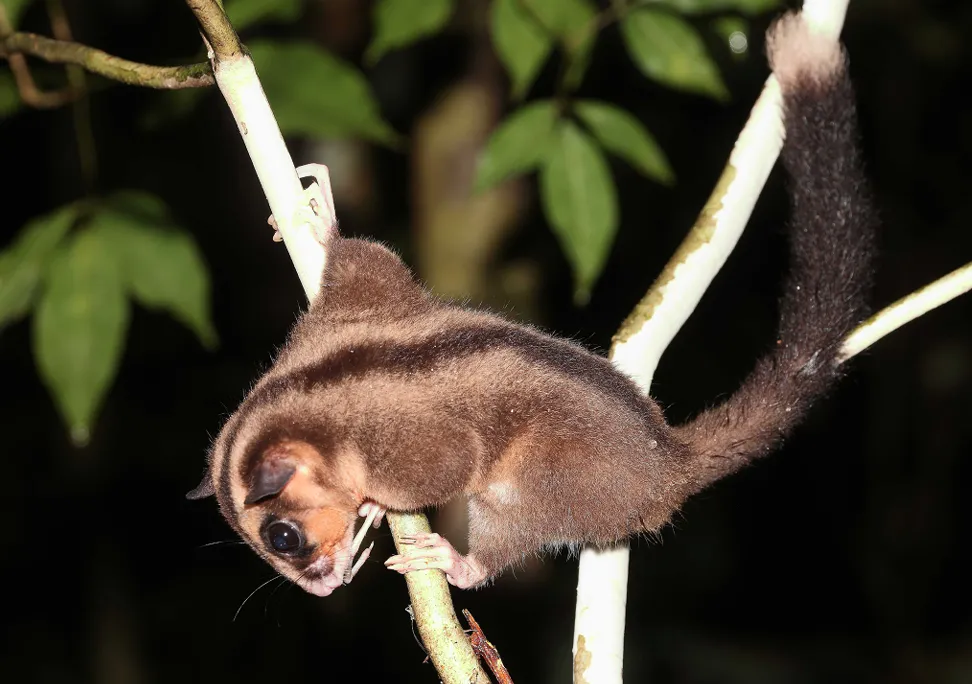
gambá pigmeu listrado pendurado nos galhos
O gambá pigmeu de dedos longos usa suas orelhas especializadas e dedos longos para caçar larvas em madeira podre. Carlos Bocos / T.F. Flannery et al., Registros do Museu Australiano, 2026

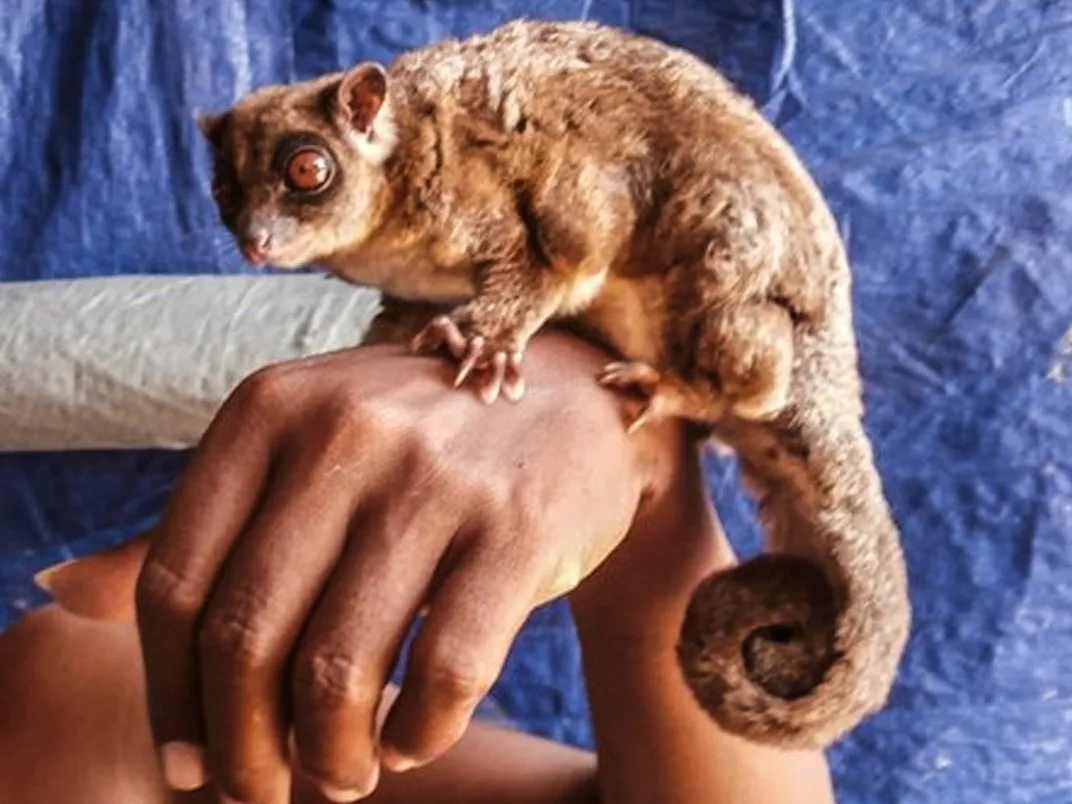
Duas espécies de marsupiais presumidas extintas "ressuscitaram dos mortos" após serem redescobertas na ilha da Nova Guiné, que fica ao norte da Austrália. Um deles é o gambá pigmeu de dedos longos (Dactylonax kambuayai), um animal pequeno listrado com um dedo excepcionalmente longo em cada mão. A outra é o planador-de-cauda-anelada (Tous ayamaruensis), que nidifica em buracos nas árvores e usa sua longa e forte cauda para agarrar galhos e cipós enquanto se move pela floresta tropical.

Pesquisadores trabalharam com membros das comunidades indígenas Tambrauw e Maybrat para confirmar a existência das duas criaturas. Eles descrevem as descobertas em dois artigos publicados em 6 de março na revista Records of the Australian Museum.

Acreditava-se que tanto o gambá pigmeu de dedos longos quanto o planador de cauda anelada desapareceram há mais de 6.000 anos, o que os torna exemplos raros das "espécies de Lázaro", nomeadas em homenagem a uma figura bíblica que foi trazida de volta à vida. As chances de encontrar uma espécie de mamífero Lazarus são "quase nulas", diz Tim Flannery, zoólogo do Museu Australiano que coautorou ambos os artigos, para Adam Morton, do Guardian. Mas encontrar dois é "sem precedentes e inovador."

Outros pesquisadores ficaram igualmente chocados e entusiasmados. "Em um mundo inundado de más notícias, e não mais do que para o meio ambiente, é sempre alegre quando espécies antes consideradas extintas acabam não estando", diz Euan Ritchie, ecólogo de vida selvagem da Universidade Deakin na Austrália, que não participou da pesquisa, Peter de Kruijff, da Australian Broadcasting Corporation (ABC).

Até agora, os cientistas só sabiam sobre os animais por fósseis. Mas suspeitavam que as criaturas ainda pudessem estar vivas, porque a região remota e difícil de navegar onde os fósseis foram descobertos não havia sido cuidadosamente pesquisada para marsupiais.

Os animais foram recentemente fotografados na Península Bird's Head, também conhecida como Península Vogelkop — que significa "cabeça de pássaro" em holandês — uma área no canto noroeste da Nova Guiné. Cientistas acreditam que a península já fez parte do continente australiano que se separou e foi incorporada à ilha.

Need to know: Divided island

New Guinea is split into two regions. The western half is part of Indonesia, while the eastern half is an independent nation called Papua New Guinea.

The pygmy long-fingered possum is about 14 inches long from nose to tail tip, and about half that length comes from the tail. In addition to its long digits, the creature has “a whole lot of specializations in their ear region,” Flannery tells New Scientist’s James Woodford. He thinks the creatures listen for low-frequency sounds made by wood-boring beetle larvae, then rip open the rotting wood and use their long digits to “fish out the grub,” he tells the outlet.

The ring-tailed glider, meanwhile, eats tree sap and leaves, and possibly fruit and invertebrates. The nocturnal animal’s body is “about the length of two open palms (hands),” according to tribal elders, the researchers write in the paper describing the species.

Eles são intimamente relacionados às três espécies de planadores maiores da Austrália, que pertencem ao gênero Petauroides. Mas os pesquisadores determinaram recentemente que o planador-de-cauda-anelada representa um gênero totalmente novo, que eles apelidaram de Tous para homenagear a forma como os povos indígenas se referem a esses animais, "Tous wansai" ou "Tous wan". Os cientistas acreditam que Tous é um ramo antigo da árvore genealógica do gambá que remonta a milhões de anos, embora o planador-de-cauda-anel seja o único membro conhecido vivo hoje.

Alguns grupos indígenas que vivem na península, incluindo os povos Tambrauw e Maybrat, veneram o planador-de-cauda-anelada, pois acreditam que os animais representam os espíritos de seus ancestrais, segundo o Guardian. Eles também têm profundo respeito pela floresta antiga onde os animais vivem e dizem que é "o lugar de onde vieram todos os seres vivos", disse Flannery à ABC.

AD
Um animal com uma longa cauda curva empoleirada na mão de uma pessoa
O planador-de-cauda-anelada tem uma cauda longa e forte, que usa para agarrar galhos e cipós enquanto se move pelas florestas tropicais do noroeste da Nova Guiné. Arman Muharmansyah / T.F. Flannery et al., Registros do Museu Australiano, 2026

Os cientistas não sabem muito sobre nenhuma das duas espécies, mas suspeitam que ambas estão ameaçadas pela perda de habitat, principalmente causada pelo desmatamento. David Lindenmayer, um ecologista da Universidade Nacional da Austrália que não participou da pesquisa, disse à New Scientist que está "extremamente preocupado" com a extensão da limpeza de terras em andamento na Nova Guiné. Agora que as criaturas foram encontradas vivas, os pesquisadores querem saber mais sobre exatamente onde vivem, bem como suas necessidades ecológicas, na esperança de protegê-las.

Enquanto isso, eles mantêm a localização dos animais em segredo para evitar que traficantes de animais tentem capturar esses bichos fofos.

"Seria incrivelmente difícil mantê-los em cativeiro porque a dieta deles é altamente especializada", diz Flannery ao New Scientist. "Aviso prévio para quem estiver pensando em ter um como animal de estimação: ele não vai durar muito."

sábado, 21 de dezembro de 2019

DNA pode conter pistas para extinção da vida dos animais

  • 12 dezembro 2019
https://ichef.bbci.co.uk/news/660/cpsprodpb/D234/production/_110121835_gettyimages-845971692.jpg

Direitos de imagem Getty Images
Legenda da imagem Uma família de mamutes sendo vendidos em leilão
Os cientistas calcularam a expectativa de vida de animais extintos, incluindo humanos antigos, a partir do DNA que deixaram para trás.
 
Nossos "primos" extintos, neandertais e denisovanos, atingiram a idade avançada de 38 anos, menos da metade da expectativa de vida moderna.
 
Enquanto isso, os mamutes felpudos viveram cerca de 60 anos.
 
Pesquisadores australianos também analisaram o DNA de espécies vivas, como as baleias, para as quais existem poucos registros.
 
A baleia pode ser o mamífero de vida mais longa, atingindo mais de 250 anos de idade, disseram eles.
 
Até agora, a vida útil tem sido difícil de definir para muitos animais, especialmente os de vida longa.
"O conhecimento da vida útil de um animal extinto pode fornecer informações sobre sua ecologia", disse Benjamin Mayne, da Organização de Pesquisa Científica e Industrial da Commonwealth, em Crawley, Austrália.
"Se uma espécie não atingir sua vida útil máxima natural na natureza, isso pode indicar pressões ambientais que estão levando a espécie à extinção."
Direitos de imagem Getty Images
Image caption Lonesome George era uma tartaruga macho da Ilha Pinta e o último indivíduo conhecido da espécie

Quais foram algumas das idades que encontraram?

  • Mamute-lanoso - 60 anos
  • Pombo de passageiros - 28 anos
  • Tartaruga da Ilha Pinta - 120 anos
  • Baleias-de-cabeça-branca (considerado o mamífero mais longo) - 268 anos
  • Chimpanzés - 39,7 anos.

Como nós sabemos disso?

Os cientistas usaram o DNA para estimar a vida útil de uma espécie, observando as mudanças nos trechos de DNA relacionados ao envelhecimento. Esses "relógios de DNA" foram usados ​​para prever uma vida útil máxima para animais vivos e mortos.

O que podemos aprender?

O cálculo da vida útil de nossos parentes próximos dá pistas de como a medicina moderna e as mudanças no estilo de vida nos ajudaram a viver mais. Nos últimos 200 anos, a expectativa média de vida dos seres humanos mais que dobrou.
 
A pesquisa também pode nos dizer mais sobre a ecologia e evolução de espécies vivas e extintas, a proteção de espécies ameaçadas e a pesca sustentável, dizem os cientistas.
A pesquisa está publicada na revista Scientific Reports .

quinta-feira, 3 de maio de 2018

Sula Vanderplank, San Diego Natural History Museum

Supposedly extinct kangaroo rat resurfaces after 30 years

The last time anyone saw the San Quintin kangaroo rat was more than 30 years ago, in the arid scrublands of Baja California in Mexico. Mexican authorities declared the small mammal critically endangered, and possibly extinct, in 1994. So biologists couldn't believe their eyes when not one, but four San Quintin kangaroo rats (Dipodomys gravipes) hopped into their survey traps in 2017.

Named for their ability to leap like kangaroos, the rats are key species in arid areas across western North America, dispersing seeds and feeding predators such as coyotes and foxes. The San Quintin kangaroo rat is about 12 centimeters long, with a long, tufted tail and enormous hind legs that allow it to leap about 2 meters and speed away at 10 kilometers per hour. They once lived by the thousands in a narrow coastal valley stretching 150 kilometers along the Pacific coast of northern Baja California.
But their numbers began to dwindle with the introduction of intensive agriculture in the 1970s, after which their habitat and food disappeared.

Then, just 9 months ago, a team of researchers doing a routine inventory of mammals in the region discovered the rats in their survey traps. None of them had ever seen the species before, so they had to compare it with museum specimens and photographs, they will report in an upcoming issue of the Bulletin of the Southern California Academy of Sciences.
The researchers attribute the kangaroo rat's comeback to a dramatic decrease in farming over the past decade, thanks to drought-related water shortages. Although the researchers are concerned that farmers may eventually make their own comeback, they are optimistic that the San Quintin kangaroo rat will persist, as it has also shown up in a nearby nature reserve. They say it also offers hope for other "extinct" small mammals, which may be findable if only researchers take the time and effort to track them down.

Rato canguru supostamente extinto ressurge após 30 anos
Por Elizabeth PennisiApr. 30, 2018, 9h55
A última vez que alguém viu o rato canguru San Quintin foi há mais de 30 anos, nas áridas baías da Califórnia, no México. As autoridades mexicanas declararam o pequeno mamífero criticamente ameaçado, e possivelmente extinto, em 1994. Assim, os biólogos não conseguiam acreditar em seus olhos quando nem um, mas quatro ratos cangurus San Quintin (Dipodomys gravipes) entraram em suas armadilhas de pesquisa em 2017.

 
Nomeados por sua capacidade de pular como cangurus, os ratos são espécies-chave em áreas áridas no oeste da América do Norte, dispersando sementes e alimentando predadores como coiotes e raposas.  


O rato canguru San Quintin tem cerca de 12 centímetros de comprimento, com uma longa cauda tufada e enormes patas traseiras que lhe permitem saltar cerca de 2 metros e acelerar a 10 km / h. Eles já viveram aos milhares em um estreito vale costeiro que se estendia por 150 quilômetros ao longo da costa do Pacífico no norte da Baixa Califórnia.
Mas o seu número começou a diminuir com a introdução da agricultura intensiva nos anos 70, após o que o seu habitat e comida desapareceram.
Então, apenas 9 meses atrás, uma equipe de pesquisadores fazendo um inventário de rotina de mamíferos na região descobriu os ratos em suas armadilhas de pesquisa. Nenhum deles jamais havia visto a espécie antes, então eles tiveram que compará-la com espécimes de museu e fotografias, eles irão relatar em uma próxima edição do Boletim da Academia de Ciências do Sul da Califórnia.
Os pesquisadores atribuem o retorno do rato canguru a uma queda dramática na agricultura na última década, graças à escassez de água relacionada à seca. Embora os pesquisadores estejam preocupados com o fato de que os fazendeiros possam eventualmente fazer seu próprio retorno, eles estão otimistas de que o rato canguru San Quintin persistirá, já que ele também apareceu em uma reserva natural próxima. Eles dizem que também oferece esperança para outros pequenos mamíferos "extintos", que podem ser encontrados se apenas os pesquisadores tiverem tempo e esforço para rastreá-los.


Posted in:
doi:10.1126/science.aau0305

terça-feira, 23 de fevereiro de 2016

Types of Tigers

http://www.lions.org/types-of-tigers.html

I – Siberian tigers

img Siberian tigers are muscular, packed with large heads and powerful forelimbs. Their colors vary from orange to brown that are splashed with white areas and black stripes. Their faces have long whiskers that are longer in male tigers, featuring eyes that don rounded pupils that have been accentuated by yellow irises. The ears, however, are small and rounded with black markings that surround white areas called ocelli, which are not decorative but actually contribute to communication within the species.
The stripe pattern is different in each tiger. The markings are so unique, like human fingerprints, that researchers actually use them to identify a particular tiger.You may have heard of scientists trying to follow up what has happened to one particular tiger they have encountered before. The stripes could also be used as a means of camouflage, which is advantageous when they silently follow and pounce at their prey.
The tiger, among large cats, has the most varied size even when compared to leopards and lions.

II – Bengal tigers

img The tiger has nine subspecies. Three of these are already extinct. The historical range of tigers all across Asia is now significantly smaller. The surviving subspecies of the Pathera tigris trigris, which is popularly known by its common name, Bengal tiger can be found in Bangladesh, Bhutan, India and Nepal. It is still the subspecies with the most living individuals left, even with its mere 2,500 adult tiger population. Bengal tigers can be found in alluvial grasslands, rainforests of both the tropical and subtropical kinds, mangroves, deciduous forests and scrub forests. Male Bengal tigers can reach up to 270 to 310 centimeters (110 to 120 inches) while the females reach up to 240 to 265 centimeters (94 to 104 inches). The males are also heavier, at 175 to 260 kilograms (390 to 570 pounds), while the females weigh around 100 to 181 kilograms (220 to 400 pounds). Places also have an effect on the weight and length of the Bengal tiger, with those living in Nepal and India growing to become the largest bunch.
Project Tiger was established in India in 1972. This project was launched by those concerned about the tiger population in the hopes of ensuring that it would remain viable. This effort does not only have biological but also cultural importance. Ironically, culture is partly to blame for poaching. There is an illegal demand for tigers' body parts, especially their bones, which can be used to create Traditional Chinese medicine.
From the years of 1994 to 2009, there have been 893 cases of tiger killing as reported by the Wildlife Protection Society of India. This really shows the dangers that the tigers are always facing. There are some efforts to conserve the tiger population, however, as in the case of special conservation areas such as the one found within the Terai Arc Landscape. Such a conservation area aims to treat tigers as one meta-population or one population despite the fact that they are not exactly living together in one broad area. Another goal is for the species to have a conserved habitat that could be put forward as a rural development plan. In Nepal, a tourism and county project is aiming to not only promote the tiger population but also to regenerate forests that have been stripped down. Would these efforts be enough to save the tigers? Only time and our continued efforts will tell.

III – Indochinese tigers

img The Panthera tigris corbetti, more commonly known as the Indochinese tiger, can be found in several Asian countries such as Burma, Cambodia, Laos, China, Vietnam and Thailand. They are darker in color and smaller in size than Bengal tigers but they are not lightweights either, with their capacity to reach the maximum weight of 420 pounds for males and 310 pounds for females. Indochinese tigers prefer to live in forests in areas that are either hilly or mountainous. There aren't a lot of these tigers anymore. The government estimates the subspecies population to be at a mere 350. Even those that have been left behind are still in danger of being poached or even of starving due to the fact that their primary choice of prey, such as wild pigs and deer, are decreasing. In Vietnam, about 75% of the tigers have been poached to serve as Chinese pharmacy stock.

IV – Malayan tigers

img The Panthera tigris jacksoni, otherwise known as the Malayan tiger, can only be found in the south of the Malay Peninsula. The Malayan tiger was only recognized as a subspecies in 2004. A research conducted by Luo and others, from the Laboratory of Genomic Diversity Study (part of the United States' National Cancer Institute), came up with the new subspecies classification. There are about 500 still-living Malayan tigers but they are endangered by poaching. These are the smallest subspecies on the mainland and even the second smallest living tiger subspecies. The males average at 120 kilograms while the females average at about 100 kilograms. Note that the Malayan tiger has a cultural significance in Malaysia as it has made it to the country's coat of arms. It is also the logo of Maybank, a Malaysian bank. V- Sumatran tigers
The Panthera tigris sumatrae, commonly known as the Sumatran tiger, can only be found in Sumatra, which is an Indonesian island. If you think the other subspecies are in danger of extinction, this particular subspecies has reached the critical point. Sumatran tigers are the smallest of all living subspecies of the tiger. Adult males weigh between 100 and 140 kilograms (220 to 310 pounds) and the females weigh 75 to 110 kilograms (170 to 240 pounds). This subspecies is small because it adapts to the dense forests of Sumatra. The prey available on the island is also small, which does not do much for the Sumatran tiger's build. While the population of Sumatran tigers in the wild are around 400 to 500, which is similar to that of other subspecies, genetic testing has shown that the Sumatran tiger may develop or evolve into a different species altogether if it even manages to evade extinction. Because of this fact, there have been suggestions that the particular subspecies should be prioritized when it comes to conserving tiger subspecies.
Habitat destruction is still considered to be the main threat to the Sumatran tiger population. However, there are also records of tigers being killed by shooting near the end of the twentieth century. Those shot and killed made up 20% of the then population.

VI – South China tigers

img Panthera tigris amoyensis, also known as the South China tiger, is actually the most endangered tiger subspecies. They are even more endangered than the Sumatran tigers, which are already heavily watched by conservationists. The South China tiger has even made the list of the world's ten most endangered species. The South China tiger belongs to a group of smaller tiger subspecies, with lengths spanning from 2.2 to 2.6 meters (87 to 100 inches). The range of the length of South China tigers is true for both male and female tigers. Males have a weight range of 127 to 177 kg (280 to 390 pounds); females, on the other hand, have a weight range of 100 to 118 kilograms (220 to 260 pounds).
South China tigers were so endangered that between the years 1983 and 2007, they have not even been seen in the wild. A farmer actually had to show some photographs of a South China tiger but those photos were actually debunked as fakes. This sighting ended up becoming part of a huge scandal back in 2007.
The Chinese government made it a law to ban the killing of tigers in 1977. This could be a move that was just a little too late because of the possibility of the wild tigers being already extinct. If they are extinct then there may be less than a hundred South China tigers left, 59 of which are known to be captives. These tigers are believed to be the offspring of only six animals. This is bad news because in order for the subspecies to continue to exist, genetic diversity is needed. There are no efforts to breed the tigers to speak of right now, anyway, and no efforts to bring the tigers back to their natural habitats.
Some of the other subspecies tigers are actually a lot rarer and may even be extinct.

Extinct subspecies

I – Bali tigers

img Some tiger subspecies may still be mentioned in books but they have already been extinct as habitats continue to be destroyed. The Panthera tigris balica, which is popularly known as the Bali tiger, used to be limited to Bali, which is an Indonesian island. When it still existed, the Bali tiger was the smallest tiger subspecies, with the males weighing 90 to 100 kilograms (200 to 220 pounds) and the females weighing 65 to 80 kilograms (140 to 180 pounds). It is unfortunate that people can no longer appreciate the beauty of a Bali tiger in its compact size. The tigers have become extinct because of hunting. The last of its kind, which is an adult female, was believed to have been hunted and killed in Sumbar Kima.
Back in September 37, 1937, there was no Bali tiger left captive in West Bali. However, today, it should be noted that the tiger is still regarded with importance in Balinese Hinduism.

II – Caspian tigers

img The Panthera tigris virgata is better known as the Caspian tiger as well as under other names, such as the Hyrcanian or the Turan tiger. This tiger subspecies used to be found in sparse forests. It was also found south and west of the Caspian Sea. At least, it wast still sighted in the wild up to the early 1970s. The closest living subspecies to the Caspian tiger is the Amur tiger.

III – Javan tigers

img The Panthera tigris sondaica, otherwise known as the Javan tiger, used to live only on the island that it was named after. Sightings have been recorded up to the middle part of the 1970s. The tigers in these subspecies are bigger than Bali tigers, with the males weighing 100 to 140 kilograms (220 to 310 pounds) and the females weighing 75 to 115 kilograms (170 to 250 pounds). Sadly, the Javan tiger has no longer been sighted after 1979 when it was last seen around the Mount Betiri area.
During a Mount Halimun Salak National Park expedition back in 1990, there was no definite evidence to support that there are still living Javan tigers.

Tiger Hybrids

img We have talked about tiger subspecies that exist and also about those that are extinct. There are other species, however, which can be considered to be part of the tiger family such as the hybrids, examples of which are the Liger and the Tigon. The concept of hybrids has been around for a long time, in fact going back to the 19th century. During that time, people were interested in creating hybrids because they wanted to be able to display odd-looking creatures for profit. The ligers and tigons have been made possible because lions are already known to breed effectively with tigers, especially those from the Bengal and Amur subspecies. There was a time that it was common for these hybrids to be bred in zoos. However, the practice has now been discouraged because of the efforts to conserve species, as well as subspecies. Despite this discouragement, Chinese zoos and private menageries still breed hybrids.
The liger is a hybrid that results from the mating of a male lion and a tigress. The male lion contributes a growth-promoting gene while the tigress is not able to contribute the growth-inhibiting gene. Because of this, ligers can become a lot bigger than either of their parents at lengths of 10 to 12 feet and weights of 800 to 1,000 pounds or even more. They do, however, display the looks and behavior of both parents. As a result, a liger has both spots and stripes stamped on sandy fur. Male ligers have a fifty percent chance of growing a mane. When they actually do, their manes will not be that large, at only about half of a pure lion's.
Though the resulting liger is definitely beautiful and interesting to look at, there may be some fertility problems along the way. Male ligers are, after all, sterile even when their female counterparts are usually fertile.
The tigon, which is the result of the breeding between a male tiger and a lioness, is a less common hybrid.

Tiger Colors

Tigers may also be categorized based on colors. Looking at the colors will help people who are less familiar with subspecies.

I – White tigers

img The white tiger is produced with the help of the allele called chinchilla albinistic and is rather a rare sighting in the wild. It has, however, a very attractive color, which makes it a popular choice in zoo breeding. The color trait is recessive. So, breeding white tigers usually ends up in inbreeding. Inbreeding should be avoided because it can cause several physical defects, which include scoliosis, strabismus (crossed eyes) and cleft palates. White tigers, even the healthiest ones, have shorter lives. There have been attempts to breed white tigers to orange ones to try to fix the situation. When orange and white tigers mix, there is a mixing of subspecies.
White tigers were first bred back in the early 19th century. They can result from two parent tigers that carry the rare gene that are present in white tigers. This gene is so rare that it occurs only once every 10,000 births. White tigers are only produced when both parent tigers carry the rare gene.
Do remember that white tigers do not make up a separate subspecies. The difference it presents is only in the color. In the wild, the only tiger subspecies in the wild that have been observed to carry the white color is the Bengal tiger. Even all the white tigers that have been held captive are partly Bengal in subspecies. It is believed that the rare recessive gene that carries the white color comes from Bengal tigers only. Scientists have not yet been able to delve further into the reason for this.
There are a few misconceptions about the white tiger. Some believe that the white tiger is more endangered compared to the species as a whole. It is also wrongfully believed that white tigers are albinos, which may have been an old misconception considering the fact that their scientific name comes with the word "albinistic". Pigment, after all, exists in the stripes and the blue eyes of the white tiger but in albinos of whatever species.

II – Golden tigers

img Another recessive gene can result into an interesting "golden" hue. The color is sometimes called "golden tabby" and also sometimes called "strawberry". Golden tigers actually have gold-colored fur, with pale orange stripes and supported by strong but pale-colored legs. They have thicker fur than what is usual for tigers. As of the last count, there are only around 30 golden tigers that are held captive.
Golden tigers, like white tigers, are also part Bengal. In fact, some of them come with the white tiger gene. So, it is possible that when two golden tigers mate, they can end up producing a white tiger with no stripes. Just like the white tiger, the golden tiger is also larger than the average Bengal tiger.

III – Tigers with other colors

Other colors of tigers have been reported. There have been reports of a black tiger but none of these are authenticated except perhaps a Chittagong dead specimen back in 1846. Blue or slate-colored tigers have been heard of but not really confirmed. These tigers are called Maltese tigers. Another unconfirmed tiger color is predominantly black. If such a tiger exists, it may be a mutation instead of a separate, distinct species.

terça-feira, 31 de dezembro de 2013

Critérios ignorados

Pesquisadores brasileiros sugerem forma ampliada de avaliar riscos de extinção de espécies
JÚLIO CÉSAR BARROS | Edição Online 15:22 20 de dezembro de 2013

© DARIO SANCHES / WIKI COMMONS 

O fim-fim (Euphonia chlorotica) é uma das aves brasileiras em risco
O fim-fim (Euphonia chlorotica) é uma pequena ave brasileira que habita ambiente de floresta

Mudanças ambientais, provocadas ou não pela ação do homem, têm impacto na vida selvagem e estão refletidas na extensão da Lista Vermelha de Espécies Ameaçadas publicada pela União Internacional para a Conservação da Natureza (IUCN, na sigla em inglês). A listagem com 71.576 nomes de animais, plantas, fungos e microrganismos é a base para a elaboração de políticas de conservação mundo afora. No entanto, pesquisadores da Universidade Federal de Goiás (UFG) sustentam que a lista não deve ser o parâmetro único para planejar ações de conservação, pois aspectos ignorados pela IUCN podem colocar em xeque o êxito das medidas. Os pesquisadores brasileiros sustentam que é necessário avaliar a saúde dos ecossistemas em sua totalidade e não tomar isoladamente o risco de extinção de cada espécie.

Para fornecer dados mais fidedignos, os pesquisadores da UFG criaram um modelo para quantificar o risco de desaparecimento das espécies. Quase todas as aves do Brasil constam da tabulação feita para o trabalho científico, somando 1.557 espécies. Os brasileiros foram abrangentes, levaram em conta dados como a influência humana (caça, comércio ilegal, desmatamento), a dieta dos animais (se se alimentam de frutas, folhas, insetos), além do ambiente em que vivem (floresta, ambiente aberto, savana), os hábitos (noturno ou diurno), a quantidade de ovos por ninhada e o tamanho dos bichos, além de 15 outras variáveis.

“Aplicando nosso modelo, somos capazes de prever se o animal ou planta têm, por exemplo, 30%, 40% ou 80% de chance de se extinguir em determinado momento. Descobrimos que a maioria dos exemplares de aves mais ameaçados de nosso país não estão sequer em áreas protegidas”, explica o professor Rafael Loyola, co-autor, com a doutoranda Nathália Machado, do artigo A Comprehensive Quantitative Assessment of Bird Extinction Risk in Brazil, publicado na edição de agosto da revista PLoS ONE.

A IUCN, por outro lado, aplica somente 12 critérios para definir se uma espécies está em perigo ou não. Tamanho da população, número de indivíduos maduros, taxa de declínio, fragmentação das populações e área de ocorrência são alguns das variáveis usadas. Dessa forma, cada espécie recebe da IUCN uma etiqueta específica – dados insuficientes (DD), pouco preocupante (LC), quase ameaçada (NT), vulnerável (VU), em perigo (EN), criticamente em perigo (CR), extinta na natureza (EW) e extinta (EX).

Os pesquisadores esperam que o modelo auxilie em mais um parâmetro, a probabilidade de extinção, capaz de melhorar o planejamento das políticas ambientais. “O estudo amplia o conhecimento sobre o grau de ameaça das espécies e isso tem um peso político enorme, porque o governo só tem condições de tomar decisões mais eficientes quando conhece o nível de ameaça a uma espécie. Por exemplo, pode-se intensificar a fiscalização a uma região específica ou criar áreas de preservação para impedir a degradação daquele ecossistema”, afirma Loyola.

Características ecológicas e histórias evolutivas

O outro artigo produzido pelo Departamento de Ecologia da UFG, intitulado Conservation Actions Based on Red Lists Do Not Capture the Functional and Phylogenetic Diversity of Birds in Brazil e também publicado na edição de setembro da revista PLoS ONE, aprofunda o entendimento sobre as características ecológicas e histórias evolutivas de cada ave brasileira no ecossistema em que vive.

São aspectos pouco avaliados pelas políticas de conservação, e isso inclui a Lista Vermelha da IUCN.
O objetivo dos cientistas foi avaliar o nível de diversidade funcional e de diversidade filogenética de ambientes para saber se os mesmos são saudáveis. Com essa informação em mãos, contam os autores do estudo, a aplicação de políticas de conservação teria maior impacto. A classificação poderia, por exemplo, ajudar a determinar quais regiões terão melhor resultado dentre aquelas que já estão muito degradadas, e que precisam de outras intervenções.

O nível de diversidade funcional diz respeito à diferença ecológica entre as espécies presentes nos ecossistemas. Quanto mais alto é o índice, mais “saudável” é o local, porque ali existem espécies com múltiplas funções e isso garante o equilíbrio natural. “Quando há espécies ecologicamente muito diferentes habitando o mesmo ambiente, espera-se achar ali aves que desempenhem papéis diversos, tais como dispersão de sementes, polinização e predação, diz o professor Loyola, que também participou do estudo, e que tem co-autoria do mestrando José Hidasi Neto e de Marcus Cianciaruso, também professor da UFG.

Já o nível de diversidade filogenética indica o quão diferente são as espécies daquele ambiente do ponto de vista evolutivo. “Usamos como exemplo a ema, que é uma grande ave que não voa e ocorre em áreas abertas, ao contrário do fim-fim (Euphonia chlorotica), que é pequeno e habita ambiente de floresta. Essas várias linhagens (ou grupos evolutivos) convivendo na mesma área atestam a saúde de todo do ecossistema”, explica Loyola.

terça-feira, 18 de dezembro de 2012

2012’s Noteworthy Species

A roundup of species that made their scientific debut in 2012, and a few that said goodbye as well
By
18/12/2012

The world's tiniest chameleon, Brookesia micra.FRANK GLAW and JÖRN KÖHLER
 Researchers described roughly 15,000 to 18,000 new species in 2012, making choosing the most noteworthy a monstrous task. “[It’s] worse than asking me which of my children is my favorite,” quipped Quentin Wheeler, an entomologist at Arizona State University, in an email to The Scientist. Wheeler and his colleagues at the International Institute for Species Exploration will eventually publish a top ten list of this year’s new species, but the ranking criteria “are as diverse as the species themselves,” he said.
Some of this year’s new species were encountered by researchers deep in the field. Others were recognized from museum specimens—long after the “new” species themselves had gone extinct, noted Benoît Fontaine, a conservation biologist at the Muséum National d'Histoire Naturelle in Paris. Even so, cataloging new species is an important task, said Fontaine. “We know only small part of extant biodiversity,” he noted. “It’s the tip of iceberg.”
In celebration of biodiversity, here a few of 2012’s most exciting new species, and a fond farewell to a few more.

Human cousins
One of the newly identified species of slow loris, Nycticebus kayan.CH'IEN C. LEE

The discovery of primate species that are new to science is quite rare, but this year researchers described at least two. Researchers from the United States and United Kingdom stumbled across a previously unrecognized species of slow loris (Nycticebus kayan), small nocturnal primates related to lemurs, while surveying slow lorises in Borneo and the Philippines. Like its relatives, the new species has endearingly wide eyes and small statures—but extremely poisonous bites. Slow lorises lick a toxin-secreting gland on their arm to create venomous saliva, which they use to deter predators. Unfortunately, slow lorises are popular in the pet trade. To keep future owners safe, their captors often remove the loris’s fangs, but this usually ends in the primate’s death, as they can no longer feed properly.
A lesula monkey, Cercopithecus lomamiensis.JOHN HART

The sleepy-eyed lesula (Cercopithecus lomamiensis) was also officially added to the books in 2012. Well-known to locals near its Congo forest home, the lesula is only the second monkey species in its genus. The animal is light in color, making it easily distinguishable from its closest relations, the dark-furred owl-faced monkeys. John Hart of the Lukuru Wildlife Research Foundation and the Yale Peabody Museum of Natural History, who described the species in PLOS ONE, said the first lesula example his team studied was being kept as a pet by a schoolteacher’s daughter. When investigating the nearby forest, the group “expected to find something unusual, maybe a range extension [of a known species],” Hart explained. “But we were never prepared to find a new species.”
Though humans don’t farm or mine the forest, lesulas are threatened by the bush meat trade. Having depleted richer sources of bushmeat, hunters will travel “hundreds of kilometers” to hunt monkeys, Hart said. Smoked bushmeat is then sold in urban centers, where many people have no other protein options. But recognition of the lesula as a new species may aid conservation efforts, he added.

Distinctive genitalia
Juvenile Brookesia micra.FRANK GLAW and JÖRN KÖHLER

For some animal species, their genitalia are the best way to identify them. Scientists described a new species (Phallostethus cuulong), belonging to the priapum fish family, whose penises erupt from their chins. This bizarre method of identification is the best for Madagascar’s miniature Malagasy leaf chameleons, which can be distinguished by subtle differences in the shape of their hempenes, the reproductive organs held inside their body until mating. But the newest—and tiniest—member, called Brookesia micra, can be easily identified without getting too intimate. B. micra is about an inch long with “a very, very short tail. The tail has even sometimes a reddish color. It’s totally unique,” said Miguel Vences, a zoologist at the Technical University of Braunschweig in Germany, who led the study identifying the miniscule critter.

Teeny tiny fly
World's tiniest fly, Euryplatea nanaknihali.INNA-MARIE STRAZHNIK

This year also saw the discovery of the world’s tiniest fly, identified by entomologist Brian Brown at the Natural History Museum of Los Angeles County. Nearly microscopic at less than half a millimeter in length, Euryplatea nanaknihali—named for a young entomology enthusiast who often visits Brown’s museum—belongs to a group of flies that parasitize ants. Brown, who first spotted the fly in an insect trap in Thailand, knew at first sight that E. nanaknihali was unusual. It is a “very odd” looking fly, said Brown, having “a rounded teardrop shape that makes it hard to grab, and short stubby broad wings a smoky grey in color. . . . Most people would probably think it’s a beetle.”
The tiny fly belongs to a group that lays their eggs in an ant’s head. As the fly larvae develop, they feed on the ant’s tissue until “the ant’s head falls off, sometimes as its body is still walking around,” Brown said.


New lion on the block
Addis Ababa lion.JOERG JUNHOLD and KLAUS EULENBERGER, LEIPZIG ZOO

In another boon for biodiversity, researchers confirmed this year that a population of Ethiopian lions with a unique dark mane are indeed genetically distinct from other lions in other areas. Descended from a founder population collected by Emperor Haile Selassie in 1948, the lions are known to scientists from the Addis Ababa Zoo, though reports of dark-maned lions in the wild also exist.
Researchers used the sequence of the mitochondrial cytochrome b gene and various microsatellites to ascertain that the dark-maned lions are genetically separate from other lions. The news has already given the lions a boost, said Susann Bruche, a biologist at Imperial College London and first author of the paper. Zoo officials have raised money for a better lion enclosure, based on natural habitats, which will give the lions more space to breed and maintain their population.

A few goodbyes
Copper-striped blue-tailed skink.CHRIS BROWN, USGS

The International Union for Conservation of Nature, which puts out the Red List assessing species’ extinction risks, lists 795 species as extinct. But each year, often due to human encroachment, that list grows. Hawaii, the poster child for the havoc wreaked by invasive species—and the heroic efforts to combat them—announced the local extinction of the copper-striped blue-tailed skink this year, possibly due to torment by predatory ants. Luckily, blue-tailed skink populations persist on other Pacific Islands.
Japan announced the extinction of the Japanese river otter, an iconic creature not seen for more than 30 years. Japan’s Ministry of Environment also declared several other species extinct, including the least horseshoe bat.
Lonesome George.WIKIPEDIA, putnymark

And finally, the Galápagos’s Lonesome George, the long-lived Pinta Island giant tortoise believed to be the last of his kind, died this summer. More than 100 years old, Lonesome George was introduced to several female tortoises in hopes of producing hybrids, but the eggs laid never hatched. But amidst the sorrow of his passing, some scientists retain hope. New work by evolutionary biologist Adalgisa Caccone at Yale University suggests that a few Pinta Island tortoises may still exist—and be successfully hybridizing with the locals—at Volcano Wolf on nearby Isabela Island. Caccone and her colleagues compared the DNA of more than 1,600 Volcano Wolf tortoises to a DNA database of extinct tortoises collected from museum specimens, and discovered that 17, including some juveniles, had DNA from C. abingdoni ancestors.